The extra price paid for an IE4 electric motor comes back faster the longer and the more heavily the motor runs each year and the more expensive each kilowatt-hour is. The time in hours is found like this: the price difference is divided by the hourly loss difference between the two motors multiplied by the unit price. The result is completely different for a pump running close to full load all day and an auxiliary fan run a few hours a week.
Which formula gives the payback time?
Payback time (hours) = price difference / (loss difference [kW] × electricity unit price). The denominator is the cost of one hour of the difference between the power the two motors draw from the supply while delivering the same shaft power (general information; calculate with your own tariff and quotation values).
The loss difference is found as follows:
ΔP = Pshaft × (1/ηIE3 − 1/ηIE4)
Here Pshaft is the power the motor actually delivers to the shaft, not the nameplate power. The η values are the efficiencies at that load point. Catalogues usually give efficiencies at 100%, 75% and 50% load separately; if the motor runs at half load, the 50% column is used.
Multiplying by annual running hours gives the annual kWh difference, and multiplying by the unit price gives the annual cost difference. Dividing the price difference by this annual value gives payback in years.
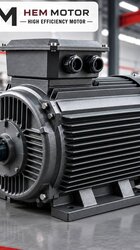
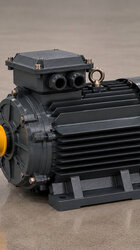
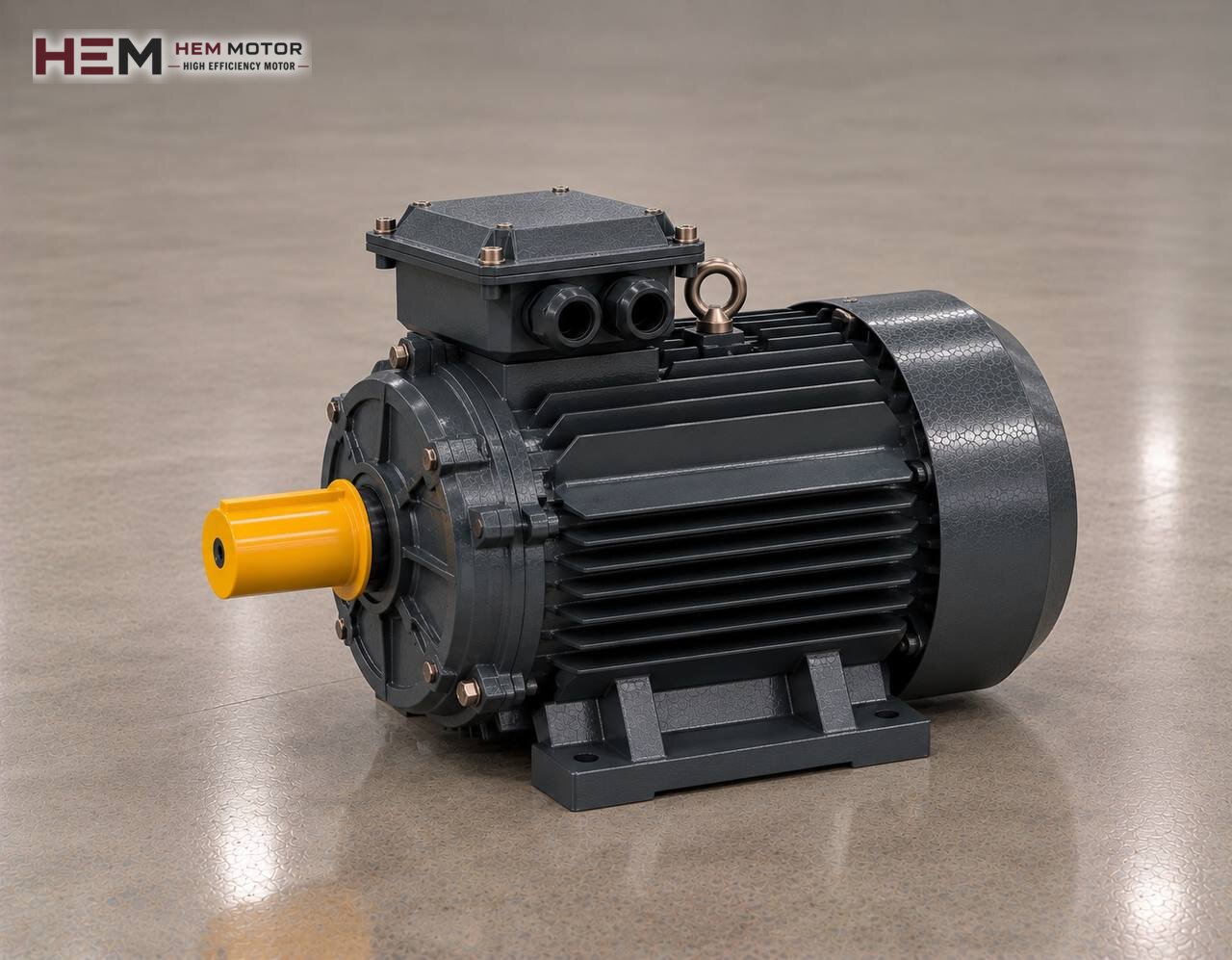
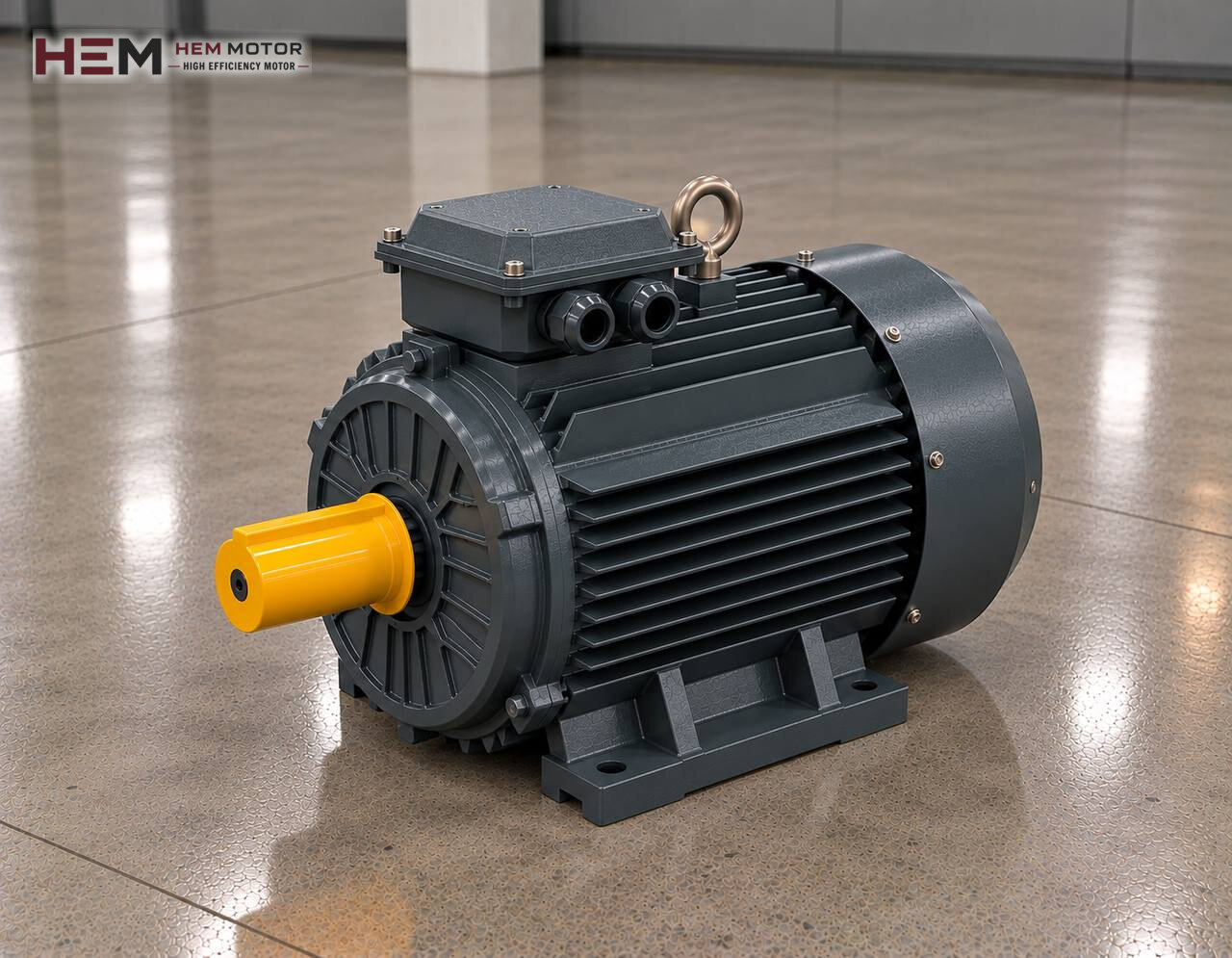
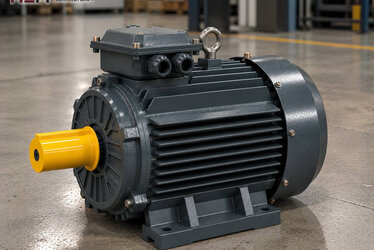
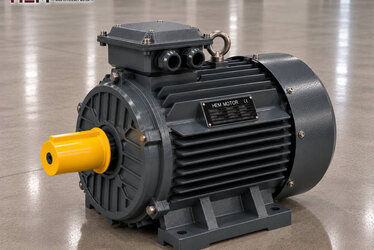
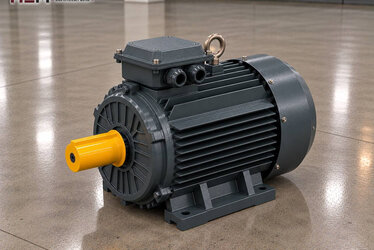
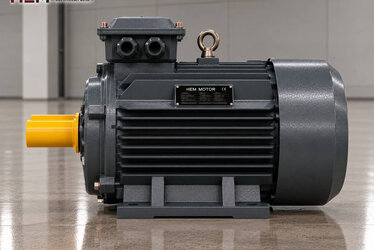
On drives with long running hours, the efficiency class difference is assessed through an annual kWh calculation (representative image).
How is a hypothetical calculation set up?
The example is entirely hypothetical and only shows the method; "units" are used instead of a currency.
Say a cooling water pump delivers 30 kW to the shaft and the difference in supply power between the two motors at this load is calculated as 0.6 kW from the catalogue efficiencies. Assume an electricity unit price of 3 units/kWh and a quotation difference of 9000 units between the two motors.
On a pump running 6000 hours a year this is under one year.
On auxiliary equipment running 1500 hours a year the same difference takes more than three years.
When the numbers change the result changes proportionally, which is why the calculation sheet has to be filled with your own tariff and real quotation figures. You can take current prices from the product pages in the electric motor shop.
How is actual shaft power estimated on site?
The most common mistake is to put nameplate power into the calculation. If a motor rated 37 kW runs at around 25 kW for most of the year, the loss difference must be calculated for that load.
Two routes are used on site. The first is to connect an energy analyser to the motor supply and log active power for a week; the log gives the average and the load profile. The second is rougher: the three phase currents and the voltage are measured with a clamp, supply power is calculated with the plate cosφ and multiplied by efficiency to get shaft power. At light load the power factor drops below the plate value, so this second route inflates the load.
Speed also gives a clue. The closer the speed measured with an optical tachometer is to rated speed, the higher the load; a motor turning near synchronous speed is lightly loaded. On variable-flow systems, measurements taken over several shifts give a truer picture than a single reading.
Prices and technical data are on the product pages; choose a model and order online.
How do load ratio and running hours change the result?
The loss difference grows roughly with shaft power; running hours are a direct multiplier. On a machine running at half load and standing idle for most of the year, the extra price may not come back even within the motor's life.
Application type
Typical duty
Payback tendency
Process water, cooling tower, compressed air compressor
Three shifts, close to full load
Short; IE4 investment usually pays back fast
Ventilation fan, air handling unit
Office hours, variable load
Medium; the real load profile should be checked
Conveyor, mixer
Shift work, frequent start-stop
Variable; standstill time must be counted
Fire pump, standby equipment
A few hours of testing a year
Very long; efficiency difference is not decisive
The table is for orientation; the decision is always made with the plant's own measurement.
The remaining life of the motor also enters the calculation. Buying IE4 to replace a failed motor that has to be changed anyway is not the same calculation as removing a working IE3. In the first case only the difference between two new motors is compared; in the second the whole price of the new motor must be covered by the gain and the time grows several times longer.
That is why maintenance planners often apply an "upgrade on replacement" rule. Keeping an IE4 on the spare shelf prevents a hasty return to the old efficiency class on the day of a failure.
What is often forgotten in the calculation?
The first is the real efficiency of the existing motor. An old motor rewound several times may have dropped below its plate efficiency; if the comparison with IE4 is made against this realistic value rather than the old plate value, payback shortens.
The second is the speed difference. Higher-efficiency motors usually run with slightly less slip, that is, at slightly higher speed. Since load on centrifugal pumps and fans rises with the cube of speed, even a few rpm can raise supply power and eat part of the gain. In that case flow is brought back to its old value by trimming the impeller or adjusting the converter.
The third is the installation and changeover cost. If the new motor needs base, coupling or flange adaptation, this is added to the payback; comparing frame dimensions in advance from the technical drawings keeps this item small.
On systems with a frequency converter, the calculation should also include converter losses. Our three-phase series are suitable for speed control with a frequency converter; for long periods of full-torque operation at low speed an external fan may be needed; if the drive–motor cable is long a dv/dt or sine filter is considered; these conditions are stated with the order.
Power steps that may come into the calculation
Three examples from the four-pole cast iron steps often seen on water, air and process drives running three shifts:
180L-4: 22 kW, 1470 rpm, 39.7 A at 400 V, 142.9 Nm.
225S-4: 37 kW, 1485 rpm, 66.1 A at 400 V, 237.9 Nm.
250M-4: 55 kW, 1485 rpm, 97.6 A at 400 V, 353.7 Nm.
HEM Motor offers IE3, IE4 and IE5 efficiency classes in this power range; which efficiency class and which catalogue efficiencies a specific model code is supplied with is confirmed with the order. For IE4 options see the IE4 high-efficiency electric motors page, and for the comparison side the IE3 premium efficiency motors page. All three-phase frames are gathered on the asynchronous electric motors page.
If you share the motor's load log or your measured current and voltage values, the annual running hours and a photo of the existing motor's nameplate via our contact page, we will set the catalogue efficiencies for IE3 and IE4 options side by side at the same load point and fill in the calculation sheet with you. Prices by model are listed up to date on the HEM Motor sales page.
Frequently Asked Questions
Does an IE4 motor pay for itself in every case?
No; on motors that run rarely or at light load the extra price comes back very late. The decision depends on the load profile and the tariff.
Should the calculation use plate efficiency or part-load efficiency?
Use the efficiency closest to the load the motor actually runs at. The 75% or 50% load efficiency in the catalogue is often more realistic.
How does the calculation change if the old motor has been rewound?
The efficiency of rewound motors usually falls. Calculating with measured supply power gives a better result than trusting the plate value.
Is the reactive power charge included in the calculation?
It is assessed as a separate item. The efficiency calculation is done with active energy; the power factor difference is examined separately depending on the compensation situation.
HEM Motor Models Related to This Article
The cards show example models related to the topic. A suitable motor is not chosen by power alone: compare speed, voltage, mounting, shaft and connection dimensions on the product page; if unsure, send a photo of the existing motor’s nameplate on WhatsApp.
When choosing an IE4 electric motor, a constant load is judged at a single operating point, while a variable load is judged across the whole load profile. For a constant load the c... More Details
IE4 and IE3 electric motor models of the same power do not always share the same frame. The frame number is often kept, but to raise efficiency the core length may be extended, the... More Details
The catalogue efficiency of an IE4 electric motor is measured under laboratory conditions defined in the standard, at rated load, with a balanced, sinusoidal 50 Hz voltage; on site... More Details
Yes, an IE4 electric motor also saves energy when it runs without a drive, fed directly from the supply, because it delivers the work at the shaft while wasting less heat inside, a... More Details
No, they are not the same thing: efficiency shows what share of the active power an electric motor takes from the supply reaches the shaft, while power factor shows what share of t... More Details
For an IE4 electric motor, the efficiency difference is expressed in percentage points, while the reduction in losses and in consumption are each calculated separately as a "percen... More Details
We use necessary and optional cookies to improve your experience, enhance content and analyse traffic. Under the GDPR, optional (analytics/marketing) cookies are only used with your explicit consent. Please choose your preference below.
Cookie Policy
 English
 Français
 Türkçe
 Español
 Русский
 العربية
 Deutsch
 Italiano