Bearing Lubrication and Quiet-Running Monitoring on an IE4 Electric Motor

Bearing Lubrication and Quiet-Running Monitoring on an IE4 Electric Motor

Bearing lubrication on an IE4 electric motor is planned by watching temperature, vibration and sound trends together: on regreasable bearings the grease quantity and interval are set by speed, bearing temperature and environment, while sealed bearings are not lubricated at all, only monitored. A loss of quiet running is often the first warning from a bearing. A higher efficiency class does not change bearing care; the same discipline is needed.

Does the bearing of an IE4 electric motor need different care from an IE3 motor?

No, a higher efficiency class does not change the logic of bearing maintenance; the factors that decide bearing life are the same. The measures that raise efficiency (lower-loss laminations, an improved winding, sometimes a smaller fan) concern the winding and the frame. The bearing lives on load, speed, alignment, temperature and the condition of its grease.

The difference shows up in what the plant expects. In a motor bought to cut energy use, a bearing running dry or packed with too much grease raises friction losses, pushes temperature up and takes back part of the gain. That is why it makes sense to plan bearing monitoring on high-efficiency motors as a separate work item.

HEM Motor offers motors in the IE3, IE4 and IE5 efficiency classes.

For a given model, the bearing type, sealed or regreasable design and grease type should be confirmed when ordering; the methods below are general maintenance knowledge.

How can I tell whether a bearing is regreasable or sealed?

If the bearing cover has a grease nipple and, on the opposite side, a grease drain plug or opening, the bearing is designed for relubrication. If there is no nipple, the bearing is most likely a rolling bearing sealed on both sides and greased for life at the factory.

Sealed bearings are common on small and medium frames; on large frames, especially at high speed and in continuous duty, regreasable bearings are seen more often. This is a general tendency, not a rule. You can see which frame matches which power range in our electric motor shop. If the motor nameplate or the maintenance instructions supplied with it state grease type, quantity and interval, that information always takes priority.

Trying to push grease into a sealed bearing from outside does not work; it strains the seal and brings a risk of contamination. On these bearings the job is condition monitoring, and replacing the bearing when its life is used up.

We have collected the general features of motors in this class on our IE4 Super Premium Efficiency Electric Motors page; the efficiency class in which a listed model is supplied is confirmed with the order.

What information sets the relubrication interval?

The relubrication interval is set mainly by speed, bearing size and bearing operating temperature; dust, humidity, vibration and vertical mounting shorten it. Bearing manufacturers' catalogues provide charts built on these variables. The general rule used in the field is that grease life shortens quickly as temperature rises: once the bearing runs hotter than a certain limit, the interval is halved for roughly every 15 °C increase (general knowledge; confirm with the bearing and grease manufacturer's instructions). If the same motor runs in a stuffy pump room in summer, it should not be greased on the winter interval.

On vertical (V1, V3) mountings grease flows by gravity towards the lower bearing and the upper bearing dries out sooner. The interval also shortens on motors run above rated speed by a frequency converter. Enter both cases separately in the maintenance plan.

How much grease should be added, and why is too much grease harmful?

The quantity of grease to add is proportional to the bearing's outer diameter and width and is given in the motor instructions or the bearing catalogue; guessing at "a few pumps" gives the wrong result. Too much grease does as much harm as too little. When the bearing housing is packed to the brim, the rolling elements churn the grease constantly. This churning raises internal friction, bearing temperature climbs within a few hours, and the grease loses its oil and hardens. The excess can also leak past the seal towards the winding.

  1. Weigh how much grease one stroke of your grease gun delivers by pressing it a few times on a scale; guns differ widely.
  2. Clean the nipple and its surroundings, and open the drain plug if there is one.
  3. If possible with the motor running, slowly add the quantity given in the instructions.
  4. Run the motor for a while with the drain open so the excess grease is expelled; then close the plug.
  5. Watch bearing temperature in the first hours; a temporary rise is normal, a steady rise signals too much grease or the wrong grease.

Do not mix greases with different thickeners. A lithium complex grease and a polyurea-based grease may not be compatible, and the mixture can soften and run. If you need to change grease type, clean the old grease out of the bearing completely.
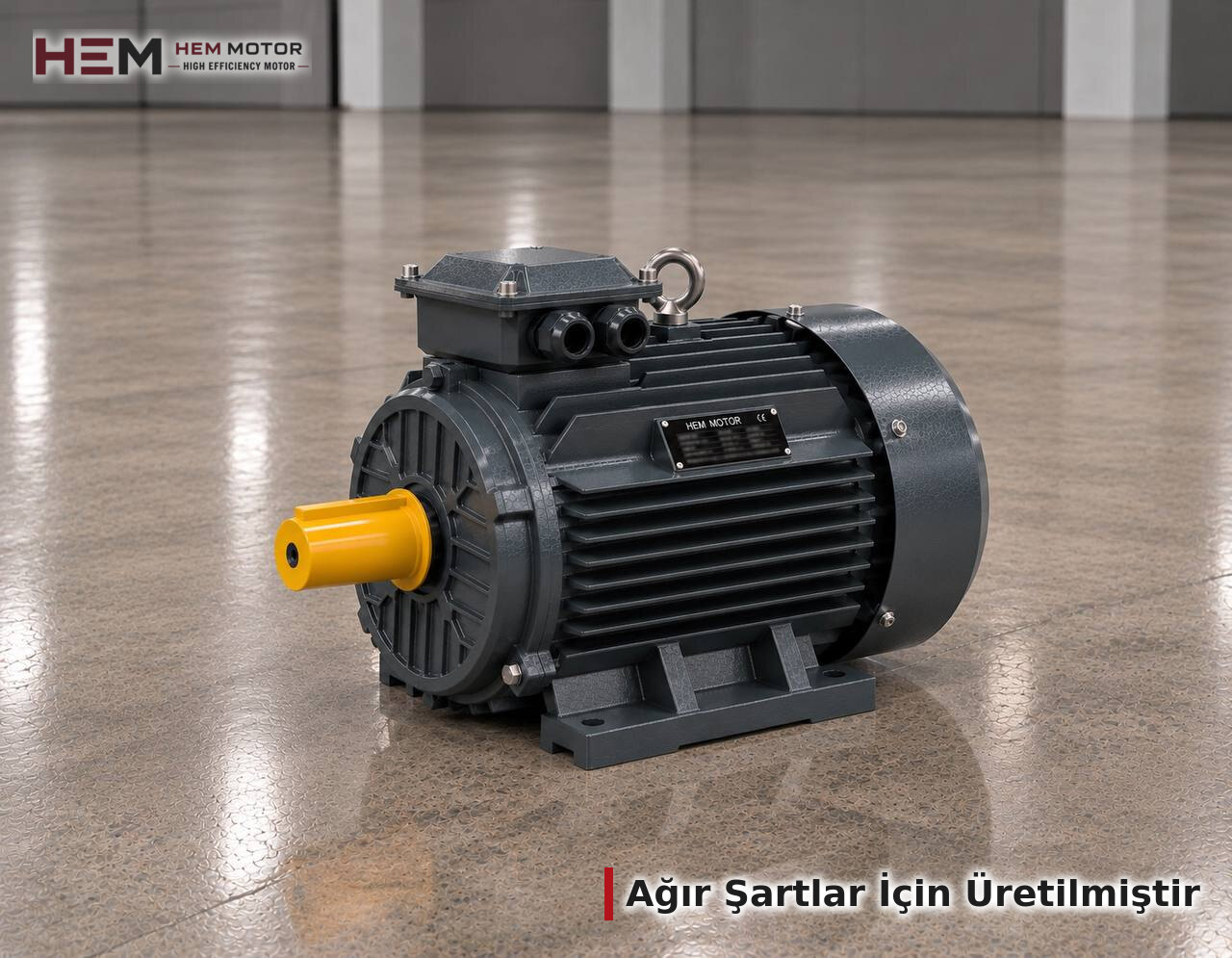

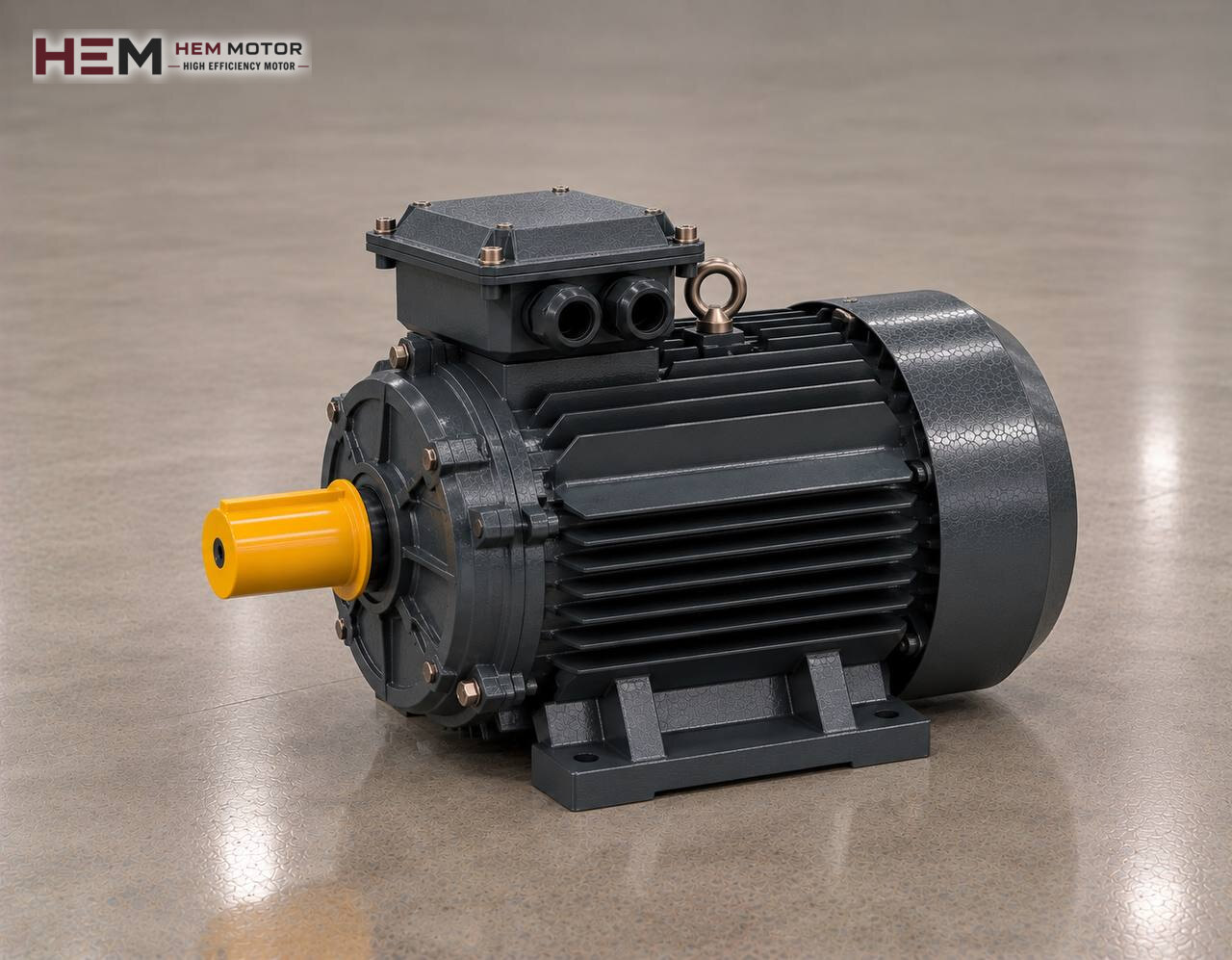
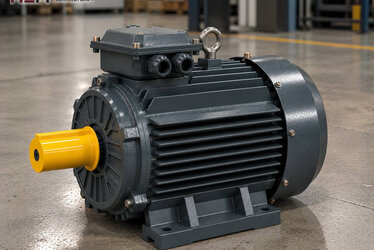
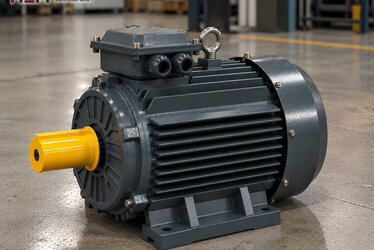
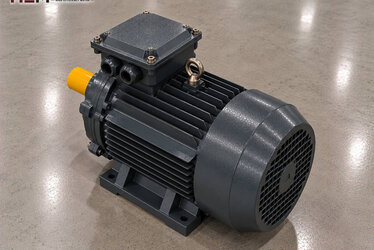
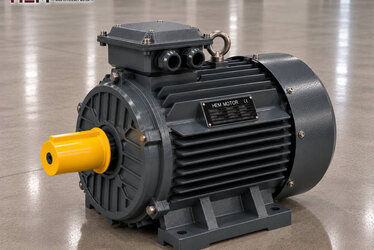
Foot-mounted three-phase electric motor, bearing area
The bearing cover and the fan end are the main points for temperature and vibration readings (representative image).

Prices and technical data are on the product pages; choose a model and order online.

How is a change in quiet running tracked on site?

Quiet running is tracked by measurement and trend, not by ear: vibration, temperature and ultrasonic readings taken at the same points, under the same load and at regular intervals are compared. A single reading tells you little; the change is what matters.

MethodWhat it showsPractical note
Non-contact thermometer or thermal cameraChange in bearing cover temperature relative to the frame and to past readingsAlways measure at the same spot, with the motor in thermal equilibrium
Vibration meter (velocity value)General mechanical condition such as unbalance, misalignment, loosenessRead horizontal, vertical and axial directions separately
Acceleration envelope analysisEarly signs of damage on bearing races and rolling elementsWith a trend chart, damage can be seen months in advance
Ultrasonic listening deviceLubrication condition; friction noise becomes distinct in a dry bearingStop greasing when the reading drops; if it rises again, too much was added
Mechanical stethoscopeRough change in sound: clicking, hissing, hummingUseful for a quick sweep, but no substitute for measurement

For vibration limits, zones by machine class are defined in the IEC 60034 family and the ISO 10816/20816 series. Before applying these zone limits to your own motor, check the current edition of the relevant standard and the motor manufacturer's recommendation.

How do you spot bearing current in an IE4 motor on a frequency converter?

In a motor driven by a frequency converter, bearing current shows up as regular lines on the bearing raceway (fluting) and as peaks at race frequencies in envelope analysis. The grease also turns dark within a short time. Fast voltage changes at the converter output can induce a voltage on the shaft, and this voltage discharges through the bearing. As countermeasures, proper earthing between motor and machine, a symmetrical shielded motor cable and, where needed, an insulated bearing or a shaft grounding brush are considered. If an insulated bearing or shaft grounding is required, state it in the order and get confirmation.

Our three-phase series are suitable for speed control with a frequency converter; for long periods at low speed with full torque an external fan may be needed; if the drive–motor cable is long, a dv/dt or sine filter is considered; these conditions are stated when ordering.

Example electric motors for lines with regular bearing monitoring

Bearing monitoring pays off most on continuously running fan, pump and geared conveyor lines.

The 4-pole cast iron models below are examples of the power steps used in such duties.

  • 132M-4: 7.5 kW, 1460 rpm, 14.3 A at 400 V.
  • 225M-4: 45 kW, 1485 rpm, 80.2 A at 400 V.
  • 280M-4: 90 kW, 1486 rpm, 155 A at 400 V.

For these models, bearing type, regreasability and efficiency class are confirmed when ordering. The general features of the industrial family are on the general purpose industrial motors page. We covered bearing protection for spare motors kept in storage in the article on keeping a spare motor on the shelf.

To pin down the bearing design and grease details that fit your maintenance plan, send us the line's speed, mounting position and whether you use a drive through the contact page. The HEM Motor product list is also at hand for comparing suitable power steps.

Frequently Asked Questions

Is it safe to add a little grease to a regreasable bearing at every service?

No, frequent greasing regardless of the interval leads to grease build-up and heating. Fix quantity and interval according to the instructions and verify with ultrasonic readings.

Bearing temperature rose after greasing; what should I do?

A slight rise in the first hours is normal. If the temperature does not fall, run the motor with the drain open so the excess grease is expelled; if it still does not fall, check the grease type and the bearing.

The motor sounds different but the vibration value is unchanged; what does that mean?

Overall vibration velocity reveals bearing damage late. Check the bearing separately with acceleration envelope analysis or ultrasonic listening.

When is the bearing replaced in a motor with sealed bearings?

It is replaced when envelope analysis shows signs of damage, temperature stays permanently higher or the sound changes clearly. In heavy duties, preventive replacement at a set number of operating hours can also be planned to avoid unplanned stops.

HEM Motor Models Related to This Article

The cards show example models related to the topic. A suitable motor is not chosen by power alone: compare speed, voltage, mounting, shaft and connection dimensions on the product page; if unsure, send a photo of the existing motor’s nameplate on WhatsApp.

7.5 kW 1500 rpm Cast Iron Frame Electric Motor 132M-4

132M-4

7.5 kW · 1500 rpm

  • Cast iron frame · IEC 132M
  • 1460 rpm · IP55
  • Mounting: B3 foot; flange (B5/B14/B35) depending on frame, confirmed with the order

US$387.29 (€354.46)

View product
45 kW 1500 rpm Cast Iron Frame Electric Motor 225M-4

225M-4

45 kW · 1500 rpm

  • Cast iron frame · IEC 225M
  • 1485 rpm · IP55
  • Mounting: B3 foot; flange (B5/B14/B35) depending on frame, confirmed with the order

US$1,656.00 (€1,515.60)

View product
90 kW 1500 rpm Cast Iron Frame Electric Motor 280M-4

280M-4

90 kW · 1500 rpm

  • Cast iron frame · IEC 280M
  • 1486 rpm · IP55
  • Mounting: B3 foot; flange (B5/B14/B35) depending on frame, confirmed with the order

US$3,205.64 (€2,933.87)

View product

Similar Articles