Motor selection for a rotary drum screen starts with the speed at which the drum must turn; the gearbox ratio is calculated backwards from that speed. Drum speed is kept at a certain fraction of the critical speed, which depends on drum diameter, and the motor reaches this low speed through a gearbox and often a chain or drive rollers. The second deciding factor is the starting torque required to turn a heavy drum containing material from standstill.
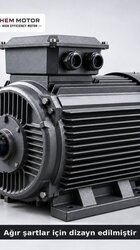
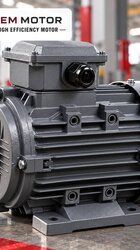
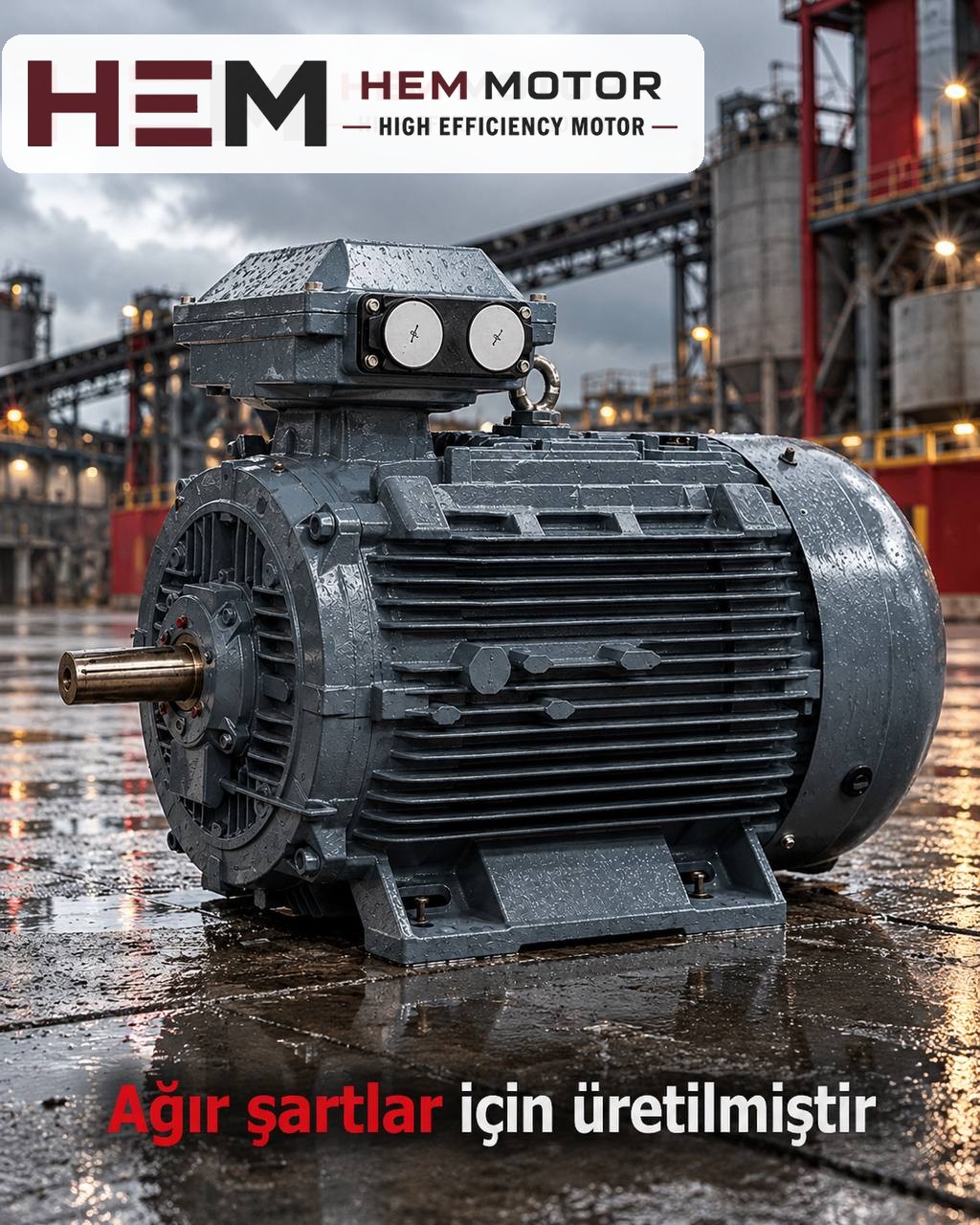
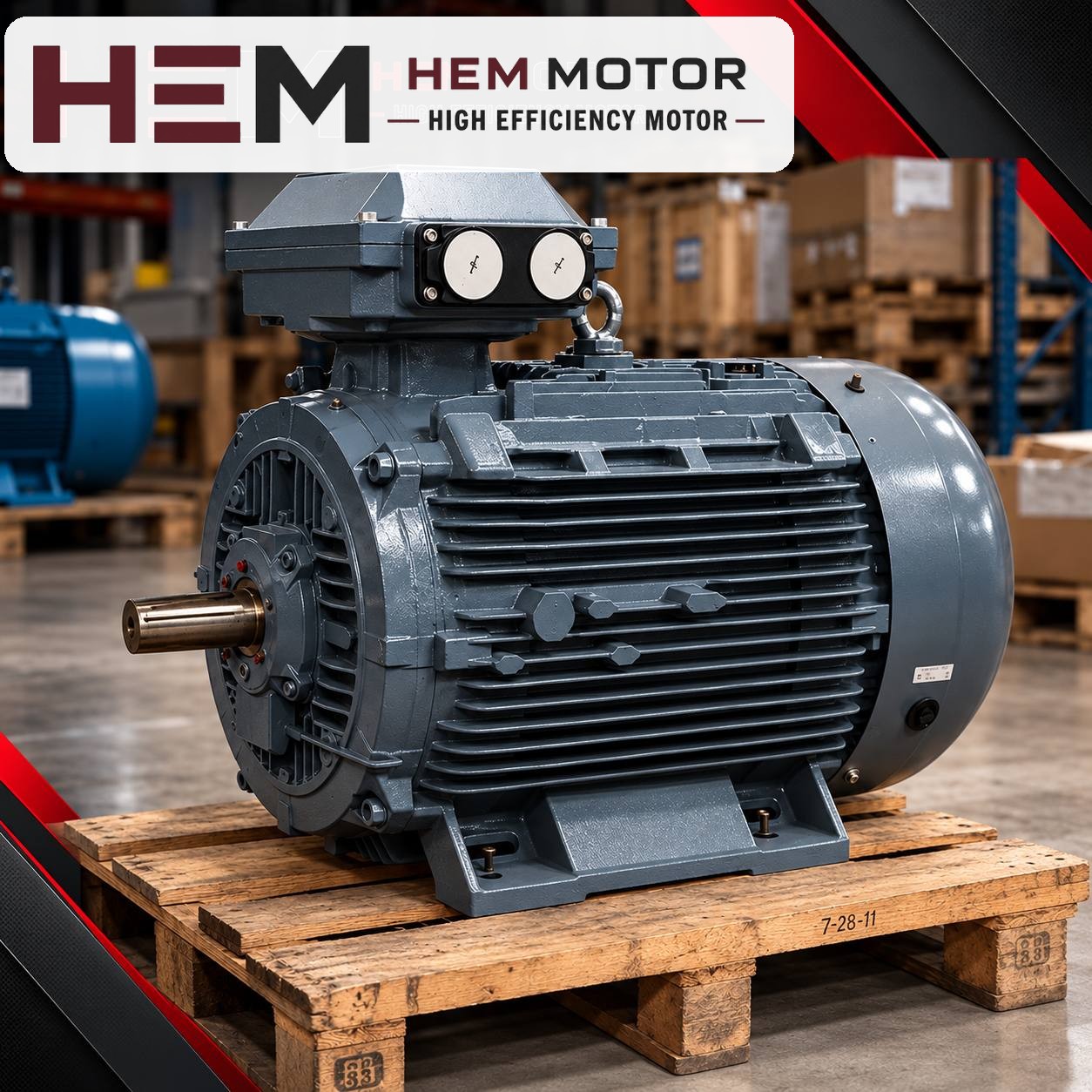
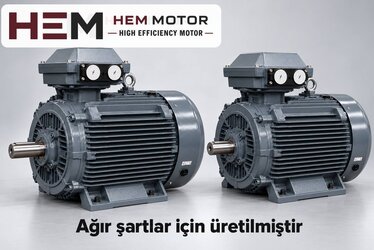
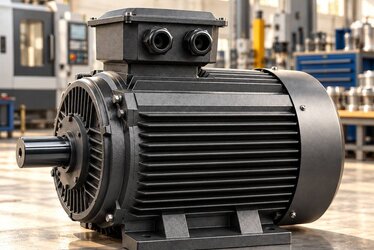
On drum screens the motor is placed with the gearbox on a fixed base frame beside the drum (representative image).
How does a drum screen differ from a vibrating screen?
A rotary drum screen (trommel) is a slightly inclined cylinder made of perforated plate or wire mesh. The drum turns slowly about its own axis; as material tumbles inside, fine particles fall through the holes and coarse particles leave at the end of the drum. It is common in compost, sand and gravel, excavation, recycling and waste sorting plants.
The difference from a vibrating screen is this: there is no vibration here; the motor only turns the drum at a constant, low speed. That is why the motor can be a standard three-phase induction motor fixed to a stationary base frame. The real engineering issues are setting the right speed and starting the loaded drum.
Drum speed: critical speed and operating ratio
If the drum turns too fast, centrifugal effect pins the material to the drum wall, the material no longer tumbles and screening stops. This limit is called the critical speed. Approximately, critical speed (rpm) ≈ 42.3 ÷ √D, where D is the inner drum diameter in metres. Drum screens are usually operated at a certain percentage of critical speed; in practice around one third is often seen. The actual value is determined by the material and the screen manufacturer's design.
The calculation below is a hypothetical example. For a drum with an inner diameter of 2 m, critical speed is 42.3 ÷ 1.41 ≈ 30 rpm. If the drum is to run at 35 percent of critical speed, the target speed is about 10.5 rpm. Rather than reaching such a low speed with a single gearbox, a gearbox and a second stage (sprocket or drive roller) are usually used together.
If the speed changes
Effect on screening
Speed drops below target
Material slides on the bottom and does not tumble enough; capacity drops.
Speed rises above target
Material starts to cling to the wall and fine separation deteriorates.
Speed approaches critical speed
Material turns with the drum and screening practically stops.
Calculating the gearbox ratio
Total reduction ratio = motor rated speed ÷ target drum speed. This ratio is shared between the gearbox and the second stage. If a 4-pole motor with a rated speed of 1,460 rpm is used on the example drum, the total ratio is 1,460 ÷ 10.5 ≈ 139. If a 1:35 gearbox is chosen and the sprockets are set at 1:4, the total ratio is 140 and the drum speed comes out at about 10.4 rpm.
If the same drum is driven by a 6-pole motor with a rated speed of 970 rpm, the total ratio falls to about 92. In this case a gearbox with a smaller ratio may be sufficient. How the number of poles is chosen depends on matters such as gearbox size, the connection of the existing motor and ease of spare parts.
Common drive arrangements on drums
Peripheral chain and girth gear: A girth gear or chain sprocket is wrapped around the outside of the drum and is turned by the pinion on the gearbox output. It is a positive drive with no slip.
Friction rollers: The drum rests on four support rollers, some of which are driven; drive is by friction. Slip may occur at start-up on wet or greasy surfaces.
Central shaft: On small drums the drum sits on a shaft that the gearbox turns directly.
Prices and technical data are on the product pages; choose a model and order online.
When the drum stops, the material inside settles to the bottom. On restarting, the motor must overcome together the drum's large inertia, the friction of the support rollers and the unbalanced load created by lifting the material up inside the drum. That is why starting torque can be markedly higher than running torque. If wet, sticky material forms a cake in the lower part of the drum, this load increases further.
Direct-on-line starting: The motor delivers full starting torque; however, the chain, pinion and gearbox receive a sudden shock.
Star-delta: Starting torque falls to about one third. On a loaded drum the motor may not reach the required speed in star; this arrangement is more suitable when the drum starts empty.
Frequency inverter: Provides starting with a controlled ramp and also allows fine adjustment of drum speed to the material. Our three-phase series are suitable for speed control with a frequency inverter; for long periods of full-torque operation at low speed an external fan may be required, and if the cable between drive and motor is long a dv/dt or sine filter is considered; these conditions are stated with the order.
On the operating side, the most effective measure is to let the drum run empty for a while after the feed is cut off, emptying it, and then stop it. The next start is then light. Before thinking about enlarging the motor, it should also be checked whether the gearbox and chain can withstand the starting shock; the gearbox manufacturer's values are the reference for output torque and service factor.
Example models for drum screens
Cast iron examples for drives that turn the drum through a gearbox from a fixed base frame. The power decision is made together with drum size, material density, capacity and starting condition:
The cast iron frame is preferred on screening sites with heavy dust and impact; the motors have IP55 protection and class F insulation. For motors that will run on open sites, protection against rain and sun should also be considered. Review suitable HEM Motor models and current prices on the buy electric motors page; general information on geared drives is on the electric motors for gearboxes page, and site-oriented options on the mining sector motors page.
Conclusion and what is needed for the order
On a drum screen, first determine the target drum speed from the drum diameter and the manufacturer's values, then share the total ratio between the gearbox and the second stage. Choose the power and starting method according to the loaded-start condition; also take into account the starting shock on the gearbox and chain. For the order we need the drum diameter and speed, drive arrangement, gearbox nameplate, material type and moisture, whether it starts loaded, the current motor nameplate, the starting method and site conditions.
You can find all suitable models and their current prices in our online sales section. Send the nameplate photo, speed and mounting details of your current motor through the send nameplate page and request a quotation for the suitable model. To consult us with your drum data, you can use our contact page.
Frequently Asked Questions
Does speeding up the drum screen motor increase capacity?
It can up to a point; but as the speed approaches critical speed, material clings to the wall and screening deteriorates. Check the screen manufacturer's values before changing the speed.
Should a 4-pole or a 6-pole motor be used on a drum screen?
Both can be used; the difference lies in the total reduction ratio. If the existing gearbox was chosen for a 4-pole motor, keeping the same number of poles is easiest.
Why does the loaded drum not start in the morning?
Wet material may have formed a cake on the bottom, leaving the load unbalanced; star-delta starting also reduces starting torque. Emptying the drum before stopping and reviewing the starting method are the first steps.
Is a vibrating screen motor the same as a drum screen motor?
No. On a drum screen the motor turns the drum from a fixed base and can be a standard induction motor; vibration motors fixed to the screen body are a separate product group.
HEM Motor Models Related to This Article
The cards show example models related to the topic. A suitable motor is not chosen by power alone: compare speed, voltage, mounting, shaft and connection dimensions on the product page; if unsure, send a photo of the existing motor’s nameplate on WhatsApp.
When selecting a ball mill motor, the real challenge is not running but starting: the ball and material charge inside the rotating drum forms a large unbalanced mass that the motor... More Details
On a screw sand washer, the motor and gearbox are selected together: the motor supplies the power, and the gearbox produces the torque needed to turn the screw slowly through water... More Details
In an asphalt plant, the mixer motor drives the twin-shaft mixer (pugmill) that makes the hot mix homogeneous within a short time. Two conditions are decisive for this motor: the h... More Details
In a vertical shaft impact crusher (VSI), the rotor is driven by belt either by a single motor or by two motors placed on either side of the crusher. In a single-motor arrangement,... More Details
The electric motor of a cone crusher usually drives the crusher's countershaft (pinion shaft) by V-belt; the compatibility of a spare motor is therefore checked starting from this ... More Details
When selecting the motor for a metal shredder, the real deciding factor is not the type of material being shredded but the path by which the impact reaches the motor. On a low-spee... More Details
We use necessary and optional cookies to improve your experience, enhance content and analyse traffic. Under the GDPR, optional (analytics/marketing) cookies are only used with your explicit consent. Please choose your preference below.
Cookie Policy
 English
 Français
 Türkçe
 Español
 Русский