How to Cut the Energy Cost of Electric Motors in Concrete Batching Plants

How to Cut the Energy Cost of Electric Motors in Concrete Batching Plants

The quickest way to lower the electricity bill of a concrete batching plant is to stop motors from running when there is no load and to move the few drives that run continuously to the right efficiency class and speed control. The mixer, aggregate belt, cement screws, compressor and water pump all see intermittent load during a production day; a large share of the energy is lost in the minutes when no concrete is being mixed. Below we go machine by machine through where in the plant this loss occurs and what can be changed on site.

Which drives draw power during a batching cycle?

In a typical plant, once a recipe is confirmed, the aggregate bin gates open, the weigh belt discharges material into the scale, and an inclined belt or skip hoist carries the aggregate up to the mixer. At the same time the cement screws feed the cement scale from the silo, the water pump fills the water scale and the admixture pumps complete dosing. The mixer then blends the batch for a few tens of seconds, opens its gate and discharges into the truck mixer hopper.

In this cycle the time during which each drive actually carries load is short. The mixer keeps turning after discharge while it waits for the next batch, the inclined belt runs empty when a truck is late, and the compressor cuts in even at night to feed leaks in the pneumatic gates.

To reduce energy cost, these idle periods must first be made visible.

DriveLoad patternWhere energy is wastedMeasure that can be applied on site
Twin-shaft mixerHeavy with a full drum, light between batchesIdle running during long waits, worn armsStop logic based on waiting time, arm and liner maintenance
Inclined aggregate beltContinuous, varies with material quantityEmpty running while trucks wait, seized carrying idlersIdle timeout, idler and scraper inspection
Cement screwShort, intensive dosingRunning on after the scale is full, cement caked on the troughStop on scale signal, aeration and cleaning
CompressorLoad/unload cyclingHose and valve leaks, high pressure settingLeak survey, review of the pressure setting
Water and admixture pumpsShort fillingFlow set by throttling a valveCorrect pump duty point, speed control where needed

Why does the mixer keep burning energy between batches?

The electric motor of a twin-shaft mixer is selected to shear and knead the mix in a full drum, yet for most of the day the drum is empty. The motor still turns. An idling mixer motor draws only a small fraction of its rated power, but at low load the power factor also gets worse and the compensation panel works harder. In hours when orders arrive sparsely, an automation step that stops the mixer a set time after discharge shortens this idle running.

The point to watch here is the number of starts. Each time the mixer is stopped it restarts with an empty drum; starting with a full drum strains the motor and coupling heavily, so the stop logic should only act once the drum is completely empty.

The number of starts per hour and the starting method should be agreed with the mixer manufacturer.

Worn mixing arms and liner plates are another consumption item that is often overlooked. As the gap between arms and liner opens, the mix takes longer to become homogeneous and the operator extends the mixing time. Adding an arm-gap measurement to the maintenance plan reduces both batch time and the seconds the motor runs fully loaded.
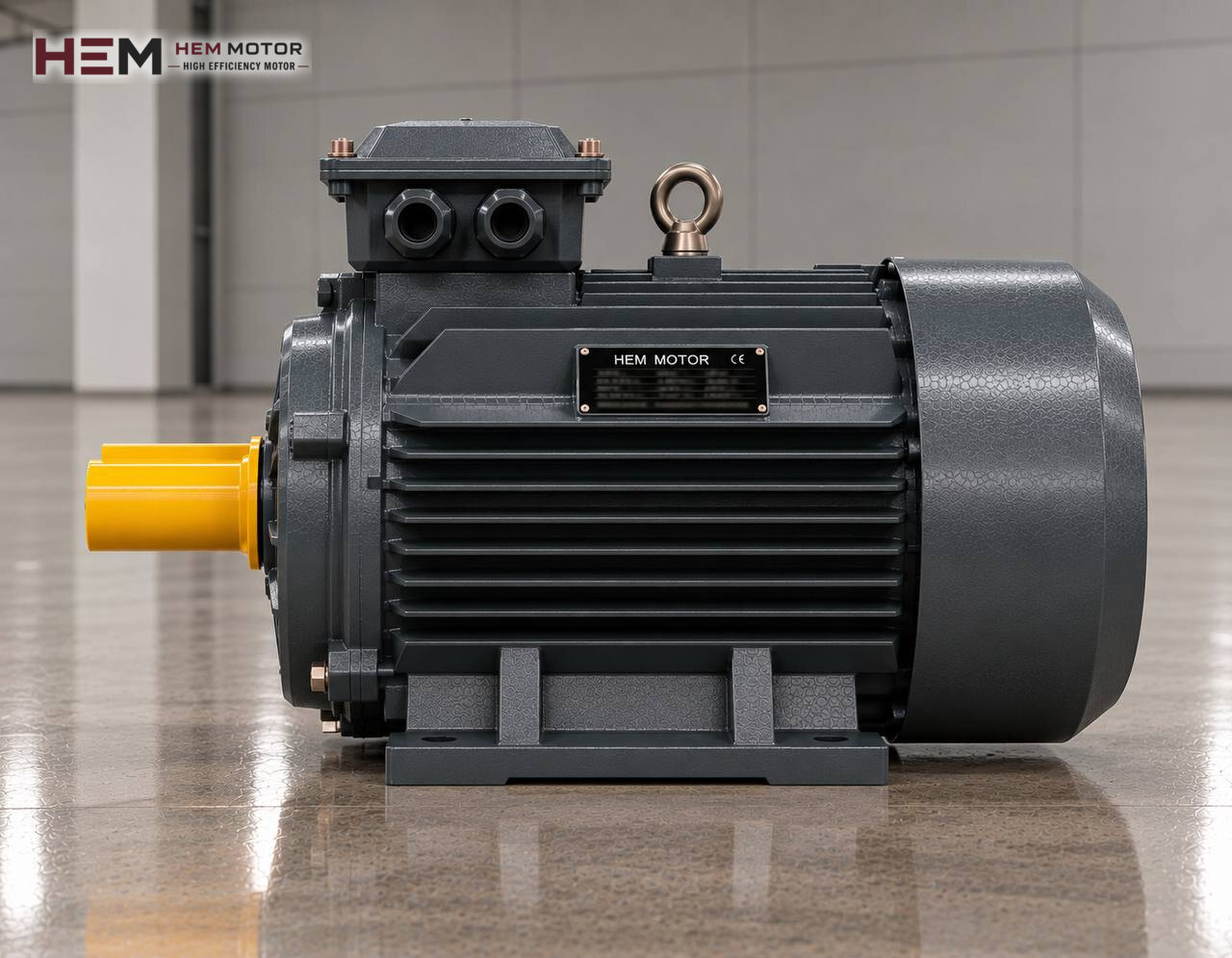
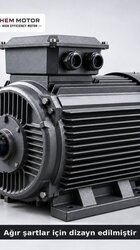
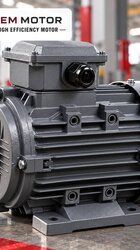
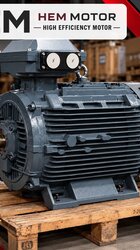
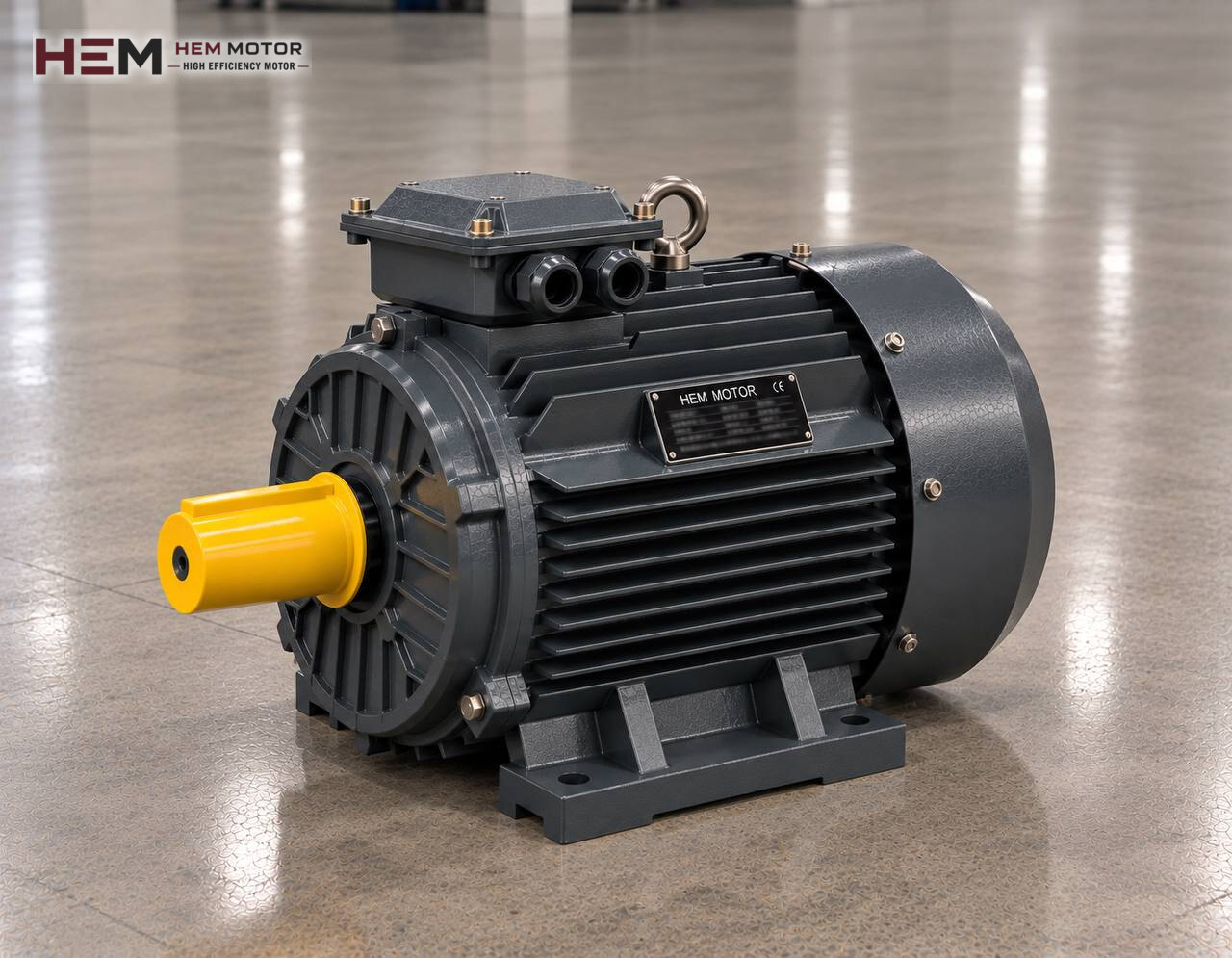
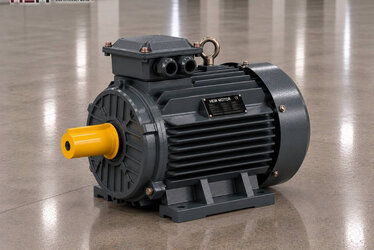
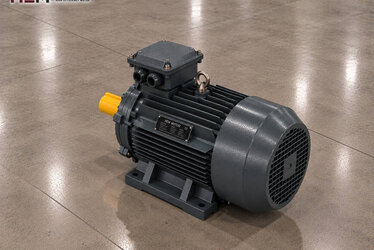
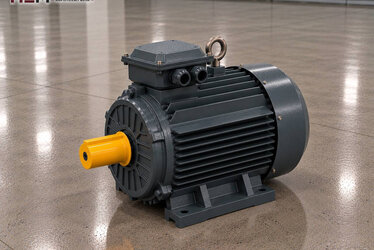
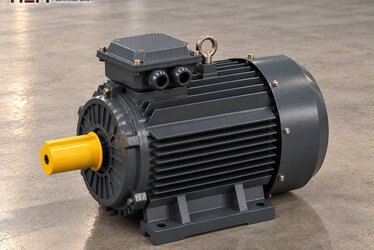
Electric motor driving a twin-shaft mixer in a concrete plant
Twin-shaft concrete mixer drive (representative image).

Cutting empty running on the aggregate belt and skip hoist

The inclined belt is one of the longest-running drives in the plant; even when no aggregate is being carried, operators prefer to leave the line on. Stopping the empty belt with a timeout linked to the scale discharge signal directly cuts the hours the motor turns for nothing.

A hypothetical example: if an 11 kW belt motor runs empty two hours a day drawing about 3 kW, over 250 working days a year that comes to roughly 1,500 kWh of wasted energy.

Seized carrying idlers and belt mistracking to one side also increase friction. A seized idler raises current. In winter, frozen aggregate arches at the bin outlet and loads the belt unevenly; the motor runs at higher current during this period. Checking idler bearing rotation and scraper pressure at the start of the season brings the power demanded from the motor back to normal.

In plants with a skip bucket, the hoist makes short but heavy cycles. Here the motor already runs only during movement; on the energy side, the real issue is the extra load caused by poorly maintained ropes and sheaves, plus the current peaks at starting.

If the hoist itself uses a brake motor, this duty requires a special motor; the standard range in HEM Motor's 2026 catalogue may not cover it, so send us the existing nameplate and hoist details and ask for an assessment.

Overlooked consumption at the cement screw and silo filter

The cement screw should stop once the scale is full; in many plants, however, the screw stops a few seconds after the scale signal and compacts the cement left in its trough. In humid weather this cement sticks to the wall, friction between flights and trough increases, and the electric motor draws slightly more current at every dosing. Working aeration pads at the silo outlet and periodic screw cleaning protect both energy use and dosing accuracy. A clean screw draws less current.

The dust filter fan on top of the silo and its jet cleaning system are also supplied from the compressed air line. As the filter bags clog, cleaning frequency increases and the compressor goes on load more often.

Monitoring filter differential pressure, changing bags on time and adjusting the cleaning interval to the actual pressure reduce the loss here.


Prices and technical data are on the product pages; choose a model and order online.

Where do the compressor, water pump and speed control pay off?

The plant's compressed air demand comes from pneumatic gates, butterfly valves and filter cleaning. Leaks at hose connections and cylinder seals keep the compressor running even outside production hours. Leaks consume energy even at night. Doing a leak survey by listening to the line after the evening shift ends, then lowering the pressure setting to the real requirement, shortens the time the compressor motor stays on load.

On the water pump, flow is often set by throttling a valve; the pump turns at full speed while the energy turns into heat at the valve. In plants where flow changes frequently with the recipe, a frequency converter is an option; it is general knowledge that the power drawn by pumps and fans falls quickly as speed drops, but confirm with the machine manufacturer. On the mixer drive, by contrast, speed control is usually not preferred; the mixer needs heavy shearing torque at constant speed.

Our three-phase ranges can be run from a frequency converter. If you will run a belt or screw at low speed and full load for long periods, the motor's own fan may not be enough and a separate cooling fan may be needed; if the cable between panel and motor is long, a dv/dt or sine filter should be considered. Please tell us these operating conditions along with the order.

Efficiency class and correct power: which drive should a retrofit start with?

The payback of an efficiency-class upgrade depends on how many hours a year the motor runs under load. In a small plant that works seasonally, renewing the mixer motor pays back over a long time; in a large ready-mix plant, by contrast, the inclined belt and compressor that turn all day are the drives where an IE3, IE4 or IE5 comparison makes the most sense. Taking running hours per motor from meters or panel records keeps the decision from being left to guesswork.

Oversized motors also run inefficiently at low load. Replacing a burnt motor with one "a size bigger to be safe" means years of extra reactive energy on that drive.

The real requirement should be determined by measuring the existing motor's current under load.

Example selections: for a 1 m³ class twin-shaft mixer, the 18.5 kW cast iron 180M-4 can be considered for each shaft; its rated speed is 1470 rpm. For a medium inclined aggregate belt the 11 kW 160M-4, and for a cement screw the 5.5 kW 132S-4 can serve as examples; all three are 400/690 V connected. The actual power is finalised from the mixer and screw manufacturer's data. You can compare power and speed combinations on our store page.

Mechanical fit is a separate check during a retrofit. The IEC frame number gives the first clue; for a firm decision, mounting arrangement, shaft diameter and length, foot hole spacing, flange and nameplate values are laid side by side. Foot-mounted B3, flange-mounted B5 and B14, combined B34 and B35, and vertical V1, V3, V5, V6 and V15 versions are offered depending on frame; the flange size is confirmed at the time of order.

A practical short list for the plant owner

On the energy side, the first-week tasks are not expensive: an idle timeout for the belt and screw, an empty-drum stop step for the mixer, an evening leak survey and stopping on the scale signal. Steps that need investment, namely efficiency-class upgrades and speed control, should be ranked by measured running hours. The concrete plant electric motors page lists groups suited to mixer, screw and pump drives, while the conveyor belt electric motors page covers options for the aggregate transport line.

Photograph the nameplate and terminal connection of the mixer, belt or screw motor you plan to renew and send them to us via the nameplate submission page; if you add your daily batch count, we can discuss power and efficiency class based on how your plant actually runs. You can filter suitable models by frame type in the electric motor store.

Frequently Asked Questions

Does fitting a frequency converter to the mixer motor lower the energy bill?

Because the mixer needs heavy shearing torque at constant speed, the gain from speed control is usually limited. On the mixer, the real difference comes from shortening idle running between batches and from arm maintenance.

Does stopping the inclined belt after every batch wear out the motor?

Starts with an empty belt do not strain the motor; what matters is that starts per hour stay within the limit allowed by the motor and gearbox manufacturer. The timeout should be set to the batching rhythm.

The cement screw motor's current rises every year; should the motor be replaced?

First check cement build-up in the screw trough, flight wear and the condition of the bearings. If the current is still high once mechanical resistance is removed, the motor's winding and bearing condition are assessed.

Does moving to IE4 make sense in a small seasonal plant?

If annual running hours are low, the payback of the efficiency difference takes a long time. In such plants it is better to cut idle running first and to make the efficiency-class decision together with a motor that burns out or is due for renewal.

HEM Motor Models Related to This Article

The cards show example models related to the topic. A suitable motor is not chosen by power alone: compare speed, voltage, mounting, shaft and connection dimensions on the product page; if unsure, send a photo of the existing motor’s nameplate on WhatsApp.

18.5 kW 1500 rpm Cast Iron Frame Electric Motor 180M-4

180M-4

18.5 kW · 1500 rpm

  • Cast iron frame · IEC 180M
  • 1470 rpm · IP55
  • Mounting: B3 foot; flange (B5/B14/B35) depending on frame, confirmed with the order

US$856.68 (€784.05)

View product
11 kW 1500 rpm Cast Iron Frame Electric Motor 160M-4

160M-4

11 kW · 1500 rpm

  • Cast iron frame · IEC 160M
  • 1465 rpm · IP55
  • Mounting: B3 foot; flange (B5/B14/B35) depending on frame, confirmed with the order

US$557.82 (€510.52)

View product
5.5 kW 1500 rpm Cast Iron Frame Electric Motor 132S-4

132S-4

5.5 kW · 1500 rpm

  • Cast iron frame · IEC 132S
  • 1460 rpm · IP55
  • Mounting: B3 foot; flange (B5/B14/B35) depending on frame, confirmed with the order

US$335.43 (€306.99)

View product

Similar Articles