English
 Français
 Türkçe
 Español
 Русский
 العربية
 Deutsch
 Italiano

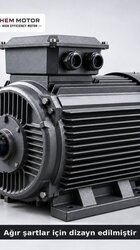
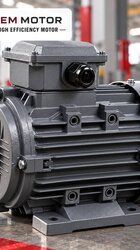
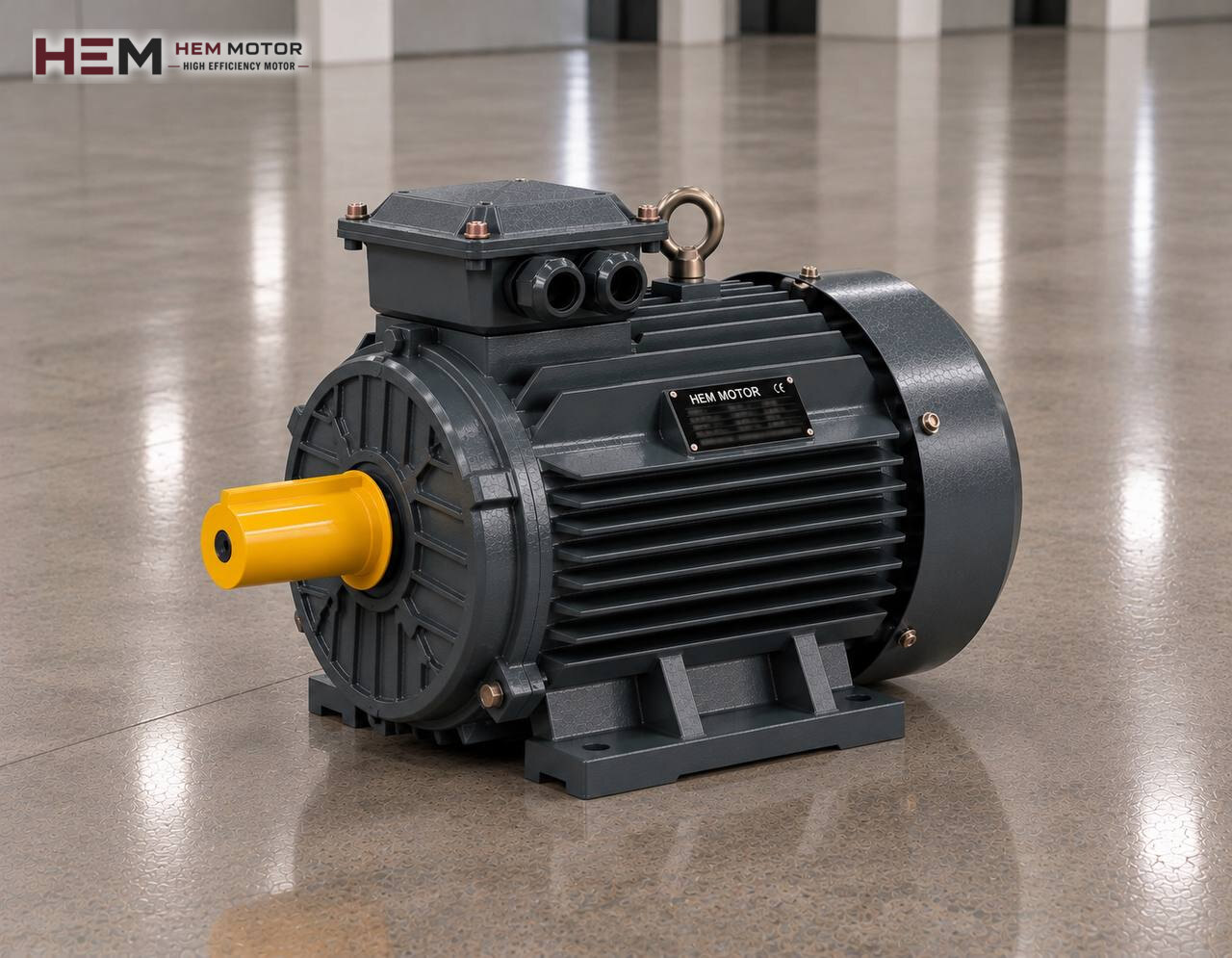

An electric motor suited to harsh conditions in mining is one that can run without overheating or losing its insulation while dust, vibration, moisture, temperature swings and heavy starting are all present at once.
In an open pit, crushers and belt conveyors run outdoors in winter frost and summer sun; in a mineral processing plant, mills, flotation cells and slurry pumps work for hours in a wet, abrasive environment. The right choice is made by looking at frame material, starting method, cooling and monitoring sensors as much as at the motor's protection class.
What are the five factors that strain a motor in mining?
Dust, vibration, water, temperature swings and heavy load are the five factors that strain a motor. The first is dust: fine particles raised during blasting, crushing and screening settle on the motor's fan cover and frame ribs.
The second is vibration: the shaking of a jaw crusher and a vibrating screen is transmitted through the base and chassis to the motor bearings. The third is water: in processing, slurry, wash water and hose cleaning reach the motor.
Nights at a mountain pit are cold. The fourth is temperature swing: at a mountain pit the difference between night and day is large and condensation can form in the winding. The fifth is load character: a crusher left full from the night shift or a belt loaded with ore demands high torque from the motor in the first second. Each of these five factors should be treated as a separate question when selecting a motor.
Why do crushers and belt conveyors struggle with heavy starting?
A full start demands high torque from the motor, and star-delta starting may not be enough. Jaw and impact crushers may have to start full of material left over from the night shift. In this case star-delta starting may not be enough; in star connection the starting torque the motor can deliver drops to roughly one third (general information; confirm with the machine builder). For heavy-start crushers, starting with a soft starter or frequency converter should be assessed in the panel design.
Current stays high for seconds. Long belt conveyors also struggle with a loaded start; as the belt tensions and material begins to move, current stays at starting level for seconds. The motor heats up during this time, and heating accumulates as the number of starts grows. Options for crusher drives are gathered on the crusher and stone crushing electric motors page.
Dust and cooling: what happens when the fan cover clogs?
A clogged cover heats the winding. A standard three-phase motor cools its own frame with the fan on its shaft. In a crushing and screening plant, when the fan cover grille and frame ribs fill with dust, airflow decreases and the winding runs a few degrees hotter even while the crusher handles the same tonnage. As winding temperature rises, insulation ages faster.
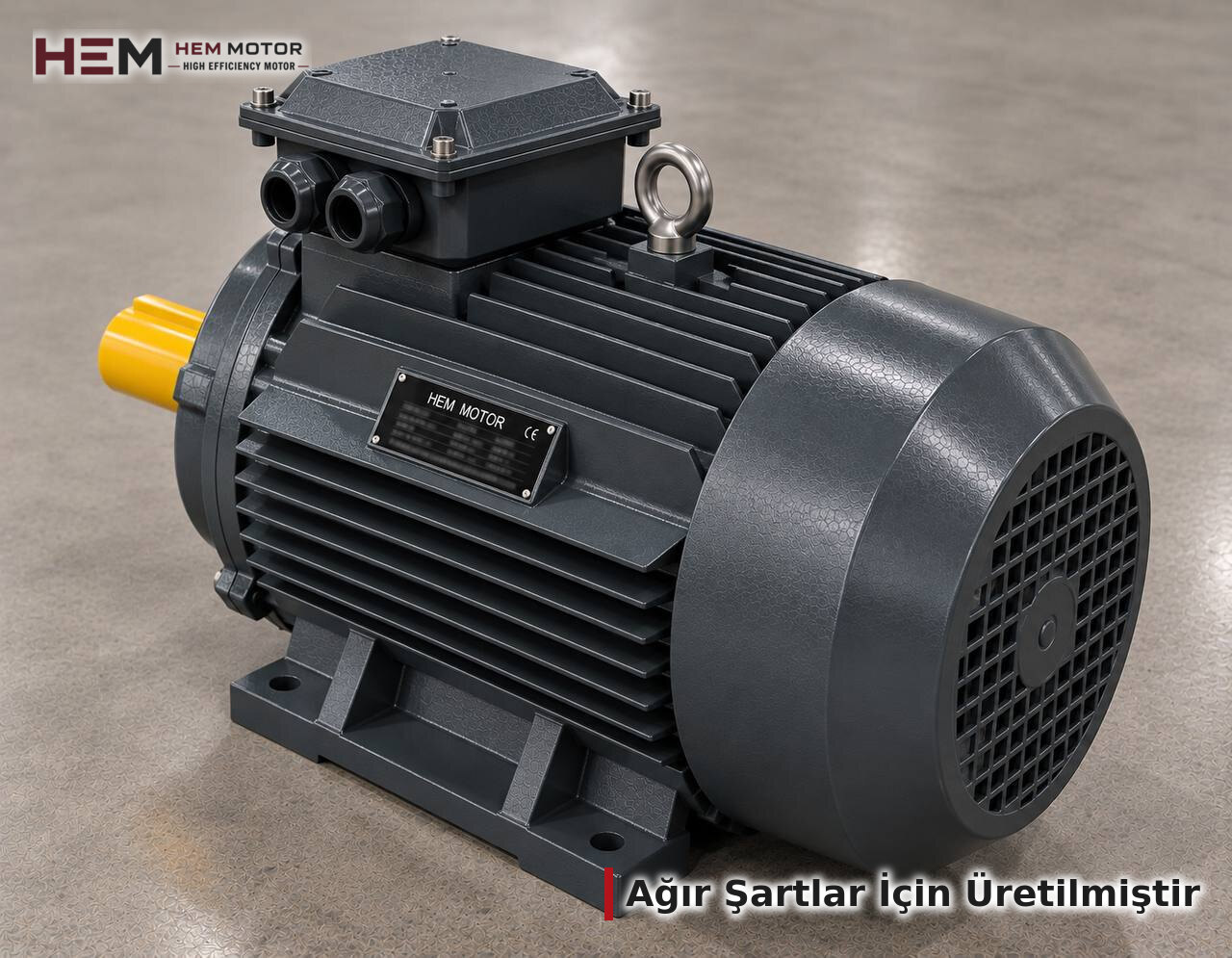
That is why motor selection in mining should be considered together with a mounting location where the maintenance team can easily reach the fan cover and frame. Series motors have IP55 protection and class F insulation; for points with heavy dust and pressure-water cleaning, IP56 is a special order option. A PTC sensor embedded in the winding signals temperature rising due to clogging before the motor is damaged.
| Mining equipment | Dominant challenge | Key point in motor selection |
|---|---|---|
| Jaw and impact crusher | Full start, impact and vibration | Cast iron frame, starting method, PTC |
| Long belt conveyor | Loaded start, outdoor environment, dust | Starting time, IP55/IP56, anti-condensation heater |
| Vibrating screen and trommel | Constant shaking, dust and water | Base rigidity, belt tension, bearing monitoring |
| Ball mill | High inertia, long start | Starting method with the panel design, winding sensor |
| Slurry and pulp pump | Abrasive fluid, wet environment | Coupling alignment, keeping seal leakage away from the motor |
Why must the base of a vibrating screen or trommel be rigid?
A base that is not rigid carries the screen's shaking into the motor bearings. A vibrating screen is driven either by special vibration motors or by a standard motor turning the eccentric shaft through a belt. On eccentric-driven screens, the standard motor sits on a base separate from the screen body; if the base is not rigid enough, the screen's shaking passes to the motor and the bearings tire early.
The vibration motor duty, however, requires a special motor; this duty may fall outside the scope of the standard series in HEM Motor's 2026 catalogue, so consult us with nameplate and application details.
A trommel turns slowly through gears. A rotary screen (trommel) turns more slowly and is mostly driven through a gearbox. On washing trommels water splashes around constantly; placing the motor on the side the wash water does not reach directly makes a difference in the long run. On belt drives, an over-tensioned belt creates side load on the motor shaft and strains the front bearing.
How do wet, abrasive conditions affect mill and pulp pump motors?
Long starts burden the grid, while pulp leakage threatens the motor's front end shield. In a mineral processing plant, ball and rod mills are high-inertia loads; starting takes long and burdens the grid.
The starting method of these drives is determined together with the plant's electrical design. Hydrocyclone feed and thickener underflow pumps deliver abrasive pulp; when the pump seal leaks, pulp can reach the motor's front end shield.
In the wet section a heater helps. To keep motors in the wet section from absorbing moisture during long stops, an anti-condensation heater can be added to the order. Coupling alignment between pump and motor should be rechecked after pump maintenance. Options dedicated to mining applications are listed on the mining sector electric motor page.