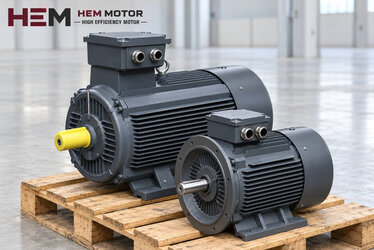
Switching to IE3 and IE4 Electric Motors in Mining Operations

Switching to IE3 and IE4 Electric Motors in Mining Operations

Switching to IE3 and IE4 electric motors in mining operations does not mean replacing every motor at once; it is a renewal plan that starts with the drives running the most hours under load and ties the others to the failure and overhaul schedule.

Pit dewatering pumps, underground ventilation fans, long belt conveyors and mills go to the top of this list, because the return of an efficiency class difference grows with the energy the motor draws from the grid. Feeders, sampling drives and intermittently running auxiliary machines are moved to the new class only when they fail.

What does the difference between IE3 and IE4 change on an ore line?

The IEC 60034-30-1 standard sorts two motors of equal power and equal speed into steps according to their losses and gives these steps an IE number. Losses decide the step. A drive labelled IE4 turns less energy into heat than its IE3 counterpart while delivering the same kilowatts to a pump or belt; the difference is energy that is neither shed as heat from the frame nor drawn from the grid.

The difference looks small per motor, but when hundreds of kilowatts of drives turn for thousands of hours a year on a mine site, it adds up to a meaningful amount of energy.

Lower losses mean the winding runs a little cooler. In a dusty, hot crushing building or an underground gallery with limited ventilation, the insulation sees less thermal stress. On the other hand, some motor characteristics also change as the efficiency class rises: rated speed usually goes up slightly and starting current may increase. These two points need to be checked separately in the transition plan (general information; confirm with the motor and machine manufacturer).

Which drive is renewed first, based on operating hours and load factor?

The drive running the most hours at the highest load is renewed first. The priority of the transition is set by a simple question: how many hours a year does the motor run, and how close to its nameplate load? On a dewatering pump running day and night, the efficiency difference earns every hour; on a stockyard feeder running two hours a day, the same difference does not show for years. The table below is an example ranking for a typical open pit and processing plant.

DriveOperating patternLoad characterTransition priority
Pit water (dewatering) pumpContinuous, varying with seasonSteady, high load factorHigh
Underground main ventilation fanContinuousSteady, may be variable speedHigh
Main belt conveyorContinuous through the shiftVaries with tonnage, heavy startHigh
Ball or rod millContinuousSteady and heavyHigh; often a special drive
Primary and secondary crusherDepends on feed, idling occursShock, fluctuatingMedium
Feeder, sampler, auxiliary pumpIntermittentLight or short-durationReplace on failure

The general framework for drive types on a mine site is on the mining sector electric motor page, and options for belt lines under conveyor belt electric motors; cast iron models matching the powers on the list are sorted by kilowatt in the store.

How large is the annual energy difference on a pit dewatering pump?

In the hypothetical example the difference comes to about 8.4 MWh a year. Consider a pump drive of 90 kW lifting groundwater and rainwater collected at the bottom of an open pit up the benches. For the sake of example, take the existing motor's efficiency as 0.950 and the proposed high-efficiency motor's as 0.965; these values are hypothetical, and real values must be read from the motor's catalogue and nameplate. When 90 kW is needed at the pump shaft, the old motor draws about 94.7 kW from the grid and the new one about 93.3 kW; the difference is around 1.4 kW per hour.

If the pump runs 6,000 hours a year at this load, the difference comes to about 8.4 MWh.

When the same calculation is applied to a three-pump dewatering station, a main fan and a few long belts, it becomes clear why the renewal decision is ranked by running hours. The operation's own electricity tariff should be used to calculate the amount; this calculation makes no promise of monetary savings.

The second half of the calculation matters too: if the higher-efficiency motor's rotor turns a few revolutions faster, the pump and fan also move more water or air and more load falls on their shafts. Since power on pumps and fans rises quickly with speed, a difference of a few revolutions can take back part of the gain. The speed difference eats into the gain. That is why during the transition the new motor's rated speed should be compared with the old one, and if necessary the operating point corrected by impeller trimming, valve adjustment or a drive.
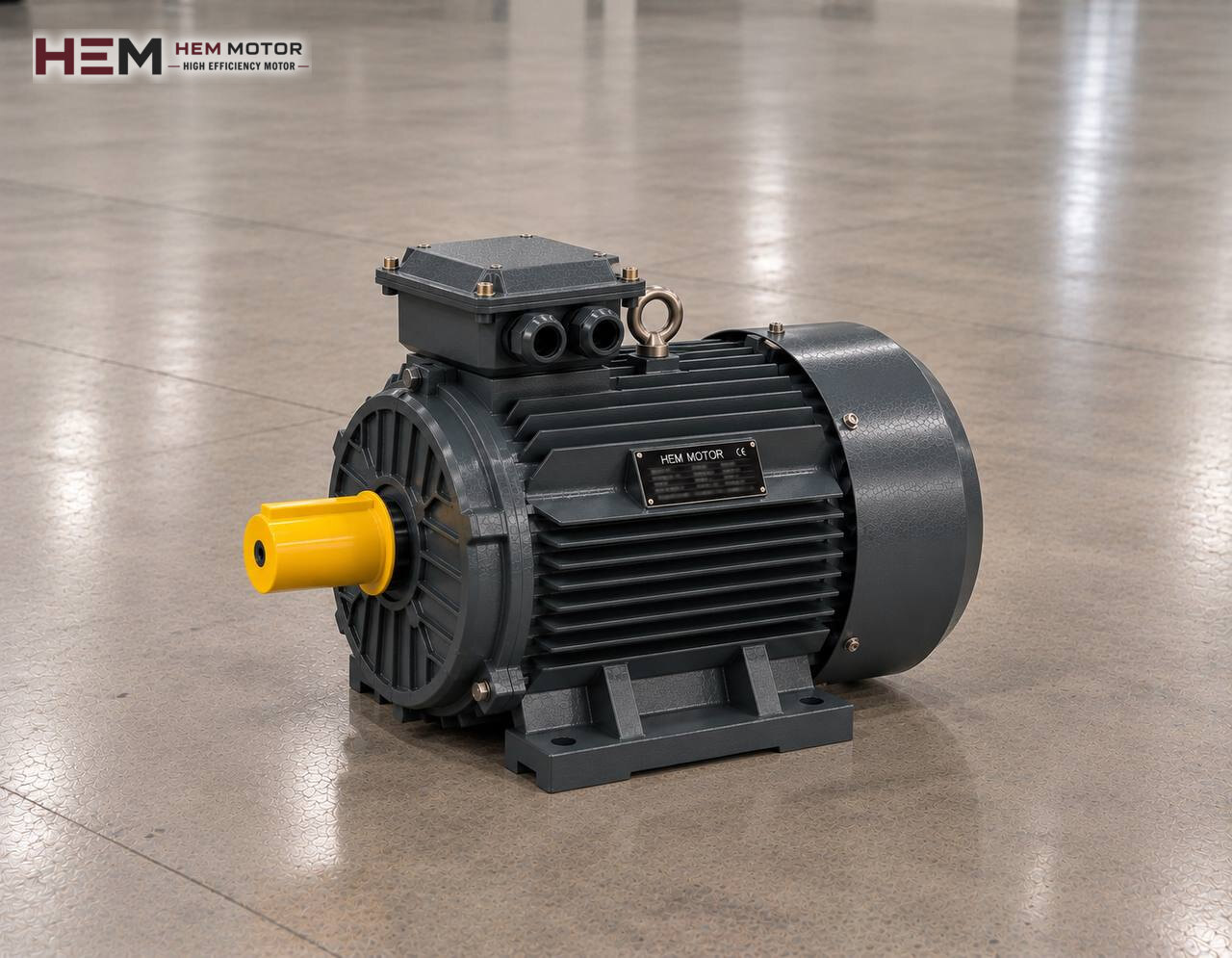
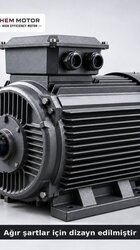
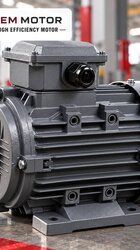
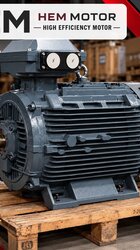
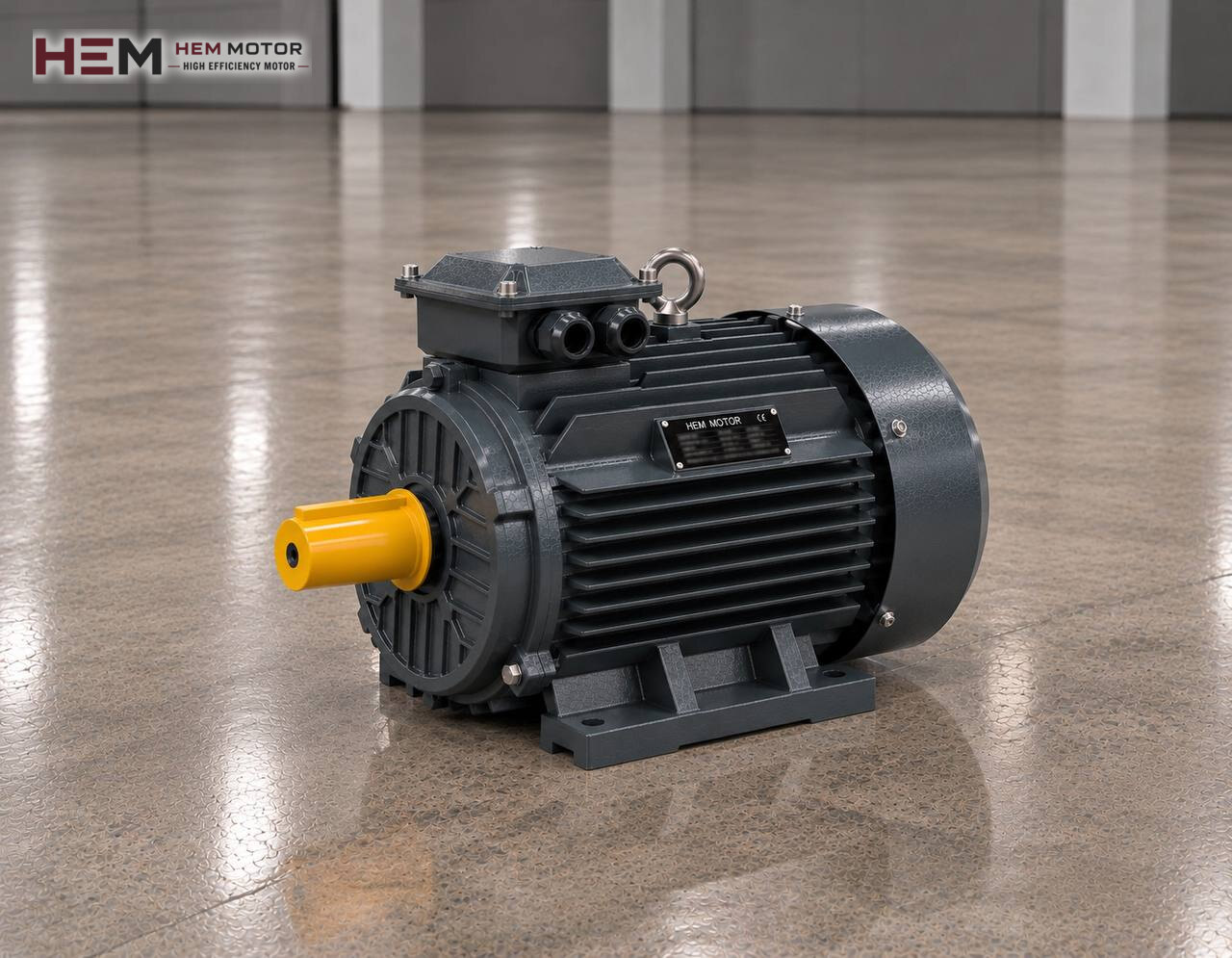
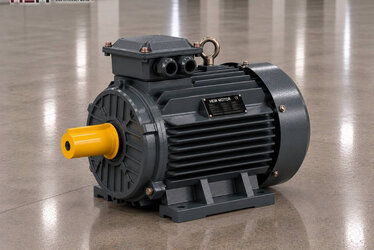
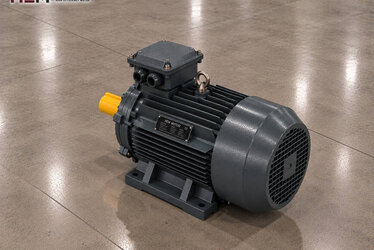
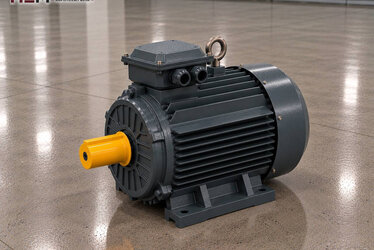
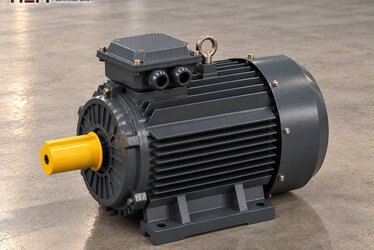
Cast iron electric motor suitable for feeder and belt drives on a mine site
Cast iron frame electric motor usable on feeder and belt drives (representative image).

Why are starting and torque checked before efficiency class on crushers and mills?

On these machines, the first question is whether the motor can carry the load. A crusher motor spends most of the shift below its nameplate power, under a load that rises and falls with the rhythm of the feed; it idles while waiting for a truck and is momentarily strained when a large block enters. For these drives, starting torque, flywheel inertia and the belt arrangement are checked first when deciding on the transition; efficiency class is discussed only after these are satisfied.

Motor selection for jaw, cone and impact crushers is explained in detail under crusher drives.

Large ball mills usually turn with medium-voltage, girth-gear or twin-pinion special drives; their renewal is a separate project. Mill renewal is a separate project. The hydrocyclone feed pumps around the mill, the agitators of flotation cells and the thickener drives, however, run on standard three-phase motors and can readily enter the transition list.

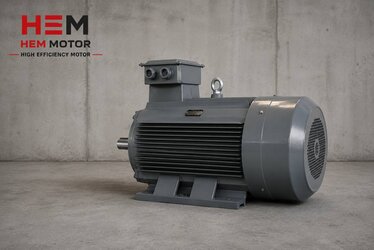
Prices and technical data are on the product pages; choose a model and order online.

How is a mining motor equipped for dust, water, altitude and explosive atmospheres?

A mining motor is equipped with a cast iron frame, IP55 sealing and a class F winding, with extra options added where needed. Whatever its IE number, the first test of a motor working in a mine is dust, water and shaking. At most open pits and processing plants, a cast iron frame, the series' standard IP55 sealing and a class F winding pass this test.

Where water constantly splashes, such as a dewatering station, IP56 is a special-order option; for standby pumps waiting for weeks in the rainy season, a heater that keeps the winding dry and a PTC thermistor that reports overheating to the panel can also be added to the order. At high-altitude sites thinner air weakens cooling; ambient temperature and altitude should be stated in the order.

Coal mines and underground galleries with firedamp or combustible dust risk are a separate class. Firedamp risk changes everything. A drive turning in such a zone calls for a special motor and may fall outside the standard series in HEM Motor's 2026 catalogue; you can consult us by sending the existing motor's nameplate and the zone classification. Other duties need special assessment in the same way: submersible pumps lowered to the pit floor and braked hoist drives.

When removing an old motor in the pit, how are frame, connection and drive compatibility checked?

Frame length, connection dimensions and drive arrangement are compared one by one with the old motor. As the efficiency step rises, the frame length of a motor of the same kilowatts can change; that is why the dimensions are laid on the table before replacing an old pump or belt motor with a new one. The IEC number is the first clue; fit is not settled until foot or flange mounting, shaft thickness and length, foot fixing holes, flange and the current and voltage values on the nameplate are compared one by one. Current and voltage values are compared too. Depending on frame, horizontal arrangements B3, B5, B14, B34, B35 and vertical V1/V3/V5/V6/V15 are available; flange size is settled when the order is placed. For a dimension check, see the technical drawings.

Higher starting current requires the protection relay and soft starter set for the old motor to be checked again. If belts and fans are slowed by a drive, three-phase HEM Motor series can be used in this arrangement.

On a motor carrying a loaded belt at low speed for hours, its own impeller may be insufficient and a separately powered fan is added; if the drive is in the central electrical room and the motor inside the pit, fitting a dv/dt or sine filter at the output comes up because of the long line. This information needs to be in the order.

Which models are good examples for mining drives?

The models below are examples for typical duties; the motors are offered in IE3, IE4 and IE5 efficiency classes, and which class is available at which power is settled at the quotation stage. Exact power must be verified with the machine and pump manufacturer's data.

  • For a flotation agitator or a medium-flow process pump, the 15 kW cast iron 160L-4; rated speed 1465 rpm, voltage 400/690 V.
  • For an in-plant belt conveyor or hydrocyclone feed pump, the 30 kW cast iron 200L-4; 1475 rpm, 400/690 V.
  • For the pit water pump in the example above, the 90 kW cast iron 280M-4; rated speed 1486 rpm, voltage 400/690 V.

How is the changeover tied to overhaul shutdowns?

The motor change is timed to an overhaul shutdown that is already planned. The best time for motor replacement on a mine site is the overhaul and maintenance shutdowns already planned; renewing the motor while crusher liners are changed or a belt is spliced creates no extra downtime.

You can compare the drives on the priority list by power and speed with the cast iron models in the store and add them to the material list of the next shutdown. If you share a nameplate photo of the pump, fan or belt motor you plan to replace via the find an equivalent from the nameplate page, we will determine together a suitable equivalent for the transition by comparing frame, speed and starting conditions; suitable power steps for drives outside the pit are also listed in the store.

Frequently Asked Questions

Which motors should the switch to IE4 on a mine site start with?

Start with the dewatering pumps, main ventilation fans and long belts that run the most hours a year under high load. Intermittent feeders and auxiliary machines can be replaced on failure.

Why might a high-efficiency motor show less gain than expected on a pump?

If the new motor's speed is a few revolutions higher, the pump moves more water and part of the gain goes into this extra work. Rated speed should be compared and the operating point corrected if necessary.

When renewing a crusher motor, does efficiency class or starting torque come first?

Starting torque, flywheel inertia and the belt arrangement are checked first. Efficiency class is chosen after these conditions are met.

Can the standard series be used in a coal mine?

Zones with firedamp or combustible dust risk require a special motor. They should be assessed separately with the nameplate and zone information.

HEM Motor Models Related to This Article

The cards show example models related to the topic. A suitable motor is not chosen by power alone: compare speed, voltage, mounting, shaft and connection dimensions on the product page; if unsure, send a photo of the existing motor’s nameplate on WhatsApp.

15 kW 1500 rpm Cast Iron Frame Electric Motor 160L-4

160L-4

15 kW · 1500 rpm

  • Cast iron frame · IEC 160L
  • 1465 rpm · IP55
  • Mounting: B3 foot; flange (B5/B14/B35) depending on frame, confirmed with the order

US$665.08 (€608.69)

View product
30 kW 1500 rpm Cast Iron Frame Electric Motor 200L-4

200L-4

30 kW · 1500 rpm

  • Cast iron frame · IEC 200L
  • 1475 rpm · IP55
  • Mounting: B3 foot; flange (B5/B14/B35) depending on frame, confirmed with the order

US$1,211.23 (€1,108.54)

View product
90 kW 1500 rpm Cast Iron Frame Electric Motor 280M-4

280M-4

90 kW · 1500 rpm

  • Cast iron frame · IEC 280M
  • 1486 rpm · IP55
  • Mounting: B3 foot; flange (B5/B14/B35) depending on frame, confirmed with the order

US$3,205.64 (€2,933.87)

View product

Similar Articles