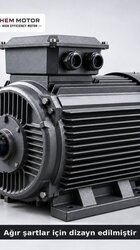
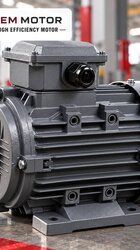
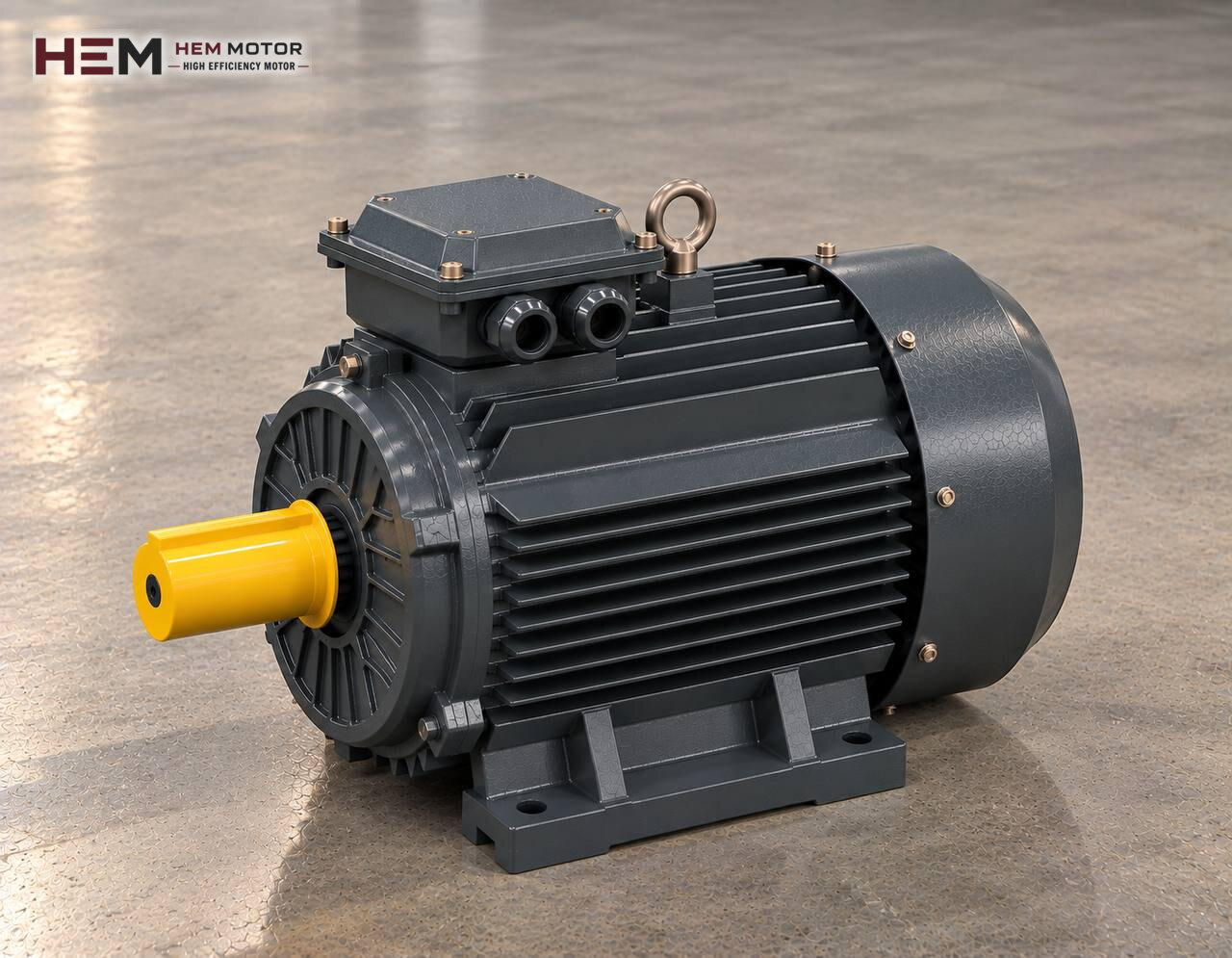
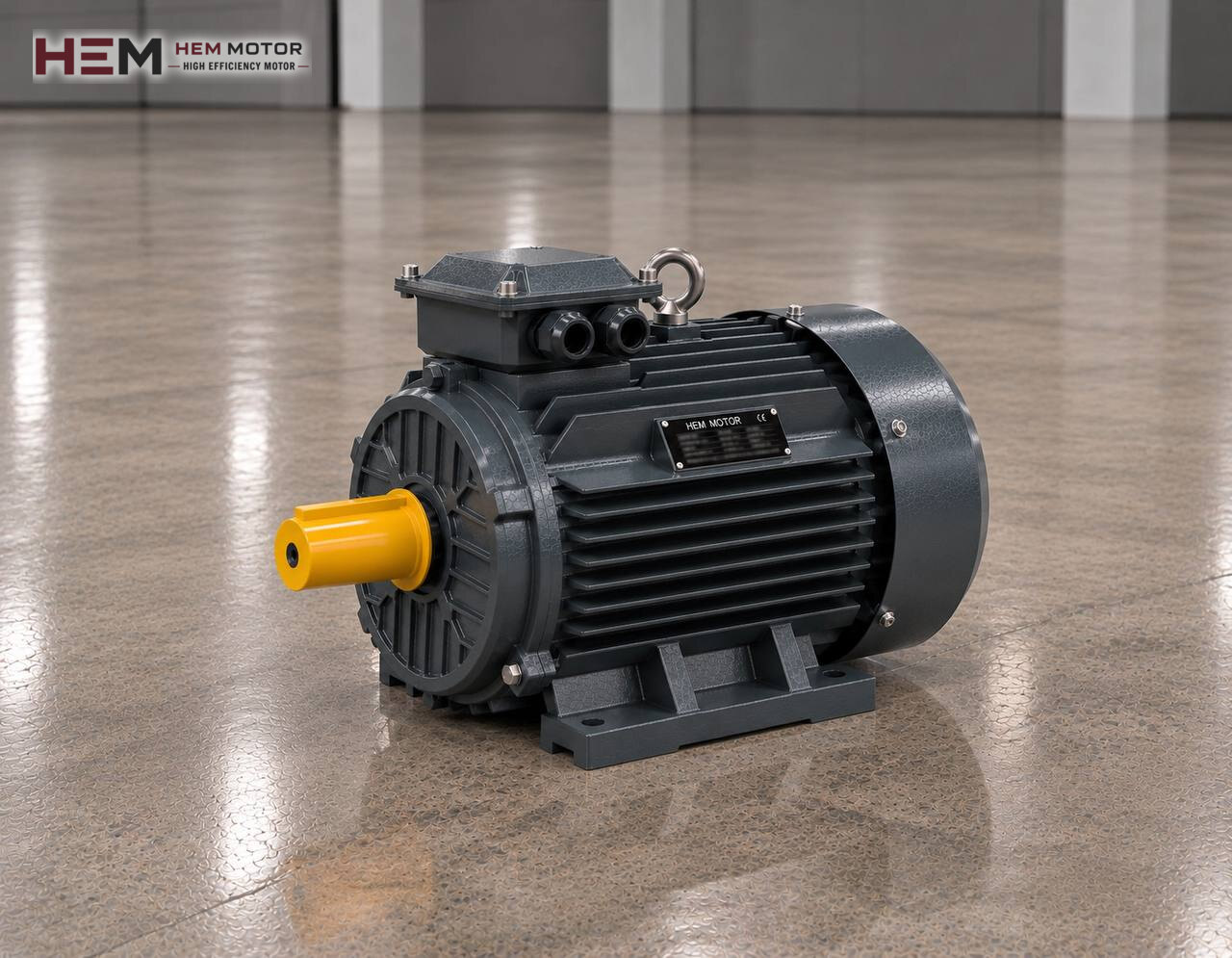
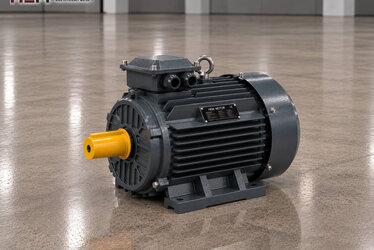
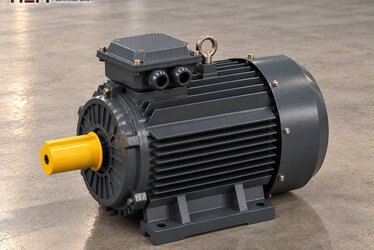
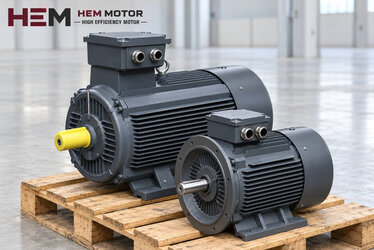
When moving crushers and mills to IE3 and IE4 electric motors, the first question is how long the machine actually spends crushing material: a grinder that turns at steady load all day, such as a ball mill, converts the efficiency class difference fully into kilowatt-hours, whereas on a jaw crusher idling while it waits for feed, the same difference stays much smaller. The transition list is therefore built according to machine type, feed pattern and starting condition. If motor power, starting torque and belt arrangement are not right, simply raising the efficiency class will not deliver the expected result.
Why does a crusher not draw the same power every hour?
In a quarry, the primary crusher is fed with material brought by truck or loader. When the hopper is full the motor is loaded; when feed stops, the flywheel and jaw spin idle. Over a shift, motor current rises and falls continuously with the loader cycle; average load can stay well below nameplate power.
In impact and hammer crushers the rotor turns with high inertia. When a large lump enters, current jumps momentarily and then drops again.
This picture shows that the efficiency class calculation for crusher motors should start with a one-shift current log. An IE4 calculation made without knowing average current and time at full load overstates the gain. A vibrating feeder or hopper level control that ensures even feed runs the crusher motor at a smoother and more efficient point.
Why does moving ball and roller mills to IE4 give a clear gain?
Because the load is steady and running hours are long, the efficiency difference turns almost entirely into kilowatt-hours. A ball mill lifts and drops the grinding balls and material inside as the drum turns. As long as drum filling does not change, power at the motor shaft is fairly constant, and in most plants the mill runs for more than twenty hours a day. In plants grinding ceramic slip, lime, ore and cement raw material, these mills are often the largest item on the bill.
Roller mills in flour mills likewise run at balanced load for long hours. Such drives go at the top of the IE4 transition list. Steady load, high hours, reliable calculation. Because the mill drum is a large mass, reaching normal speed also takes time.
When choosing the new motor, the torque at the first moment and the run-up time should be placed side by side with the old motor's values.
How large is the annual difference on a 45 kW mill drive?
In a hypothetical calculation the difference is roughly 4900 kWh a year. Consider a grinding drive running 7000 hours a year and requiring an average of 40 kW at the motor shaft. If motor efficiency is 0.93, it draws 40 / 0.93 ≈ 43.0 kW from the grid; at 0.945 it draws 40 / 0.945 ≈ 42.3 kW. The difference of about 0.7 kW amounts to roughly 4900 kWh over 7000 hours.
These efficiency values were chosen only to show how the calculation is set up (general information; take real values from the catalogue data of the chosen model). When the same operation is applied to a secondary crusher that spends half the shift idling, the figure shrinks noticeably. That is why each grinder and crusher in the plant needs to be calculated separately with its own current log.
Ball mill drive (representative image).
How is the motor chosen for a heavy start with a loaded crusher and drum?
It is chosen by assessing the starting method, starting torque and winding heating time together with the efficiency class. When power drops out and returns, or when the operator presses the emergency stop, the crusher chamber stays full of stone and the mill drum full of balls and material. The motor has to start again with this load. On jaw and cone crushers, starting without emptying the chamber is one of the moments that strains the motor and belts most. The crusher starts fully loaded.
In IE4-level motors the rotor turns a little closer to synchronous speed. Their behaviour at the first moment may therefore differ somewhat from the old motor. During the transition, the torque the motor delivers at start-up and the current it draws from the grid should be compared with the values required by the crusher manufacturer (general information; confirm with the crusher manufacturer). If the crusher accelerates with a star-to-delta starter, the new motor's winding must be 400/690 V.
Only such a winding can be connected in delta on a 400 V line.
Belt, flywheel and pulley: what does a speed increase change on a crusher?
A speed increase raises crusher speed only very slightly. Most crushers are driven by V-belts; the ratio between the motor pulley and the crusher flywheel sets the crusher speed. The rated speed of a high-efficiency motor may be a few rpm higher than the old one; this raises jaw or rotor speed very slightly. In most cases it is negligible, but on hammer crushers and vertical shaft crushers rotor speed affects product grain size, so this small difference should not be ignored.
When the motor is changed, the whole belt set should be renewed together. That the two pulleys lie in the same plane should be checked with a straightedge, and belt deflection by pressing by hand. A worn pulley groove puts unnecessary side load on the new motor's bearing. Because crusher vibration also passes to the motor base, anchor bolts and base welds are inspected at this opportunity.
Prices and technical data are on the product pages; choose a model and order online.
How is a motor equipped against dust, vibration and temperature in a crushing plant?
The basic equipment is an IP55 enclosure and class F insulation; IP56 and a PTC can be added for harsh conditions. In stone crushing and grinding plants, fine airborne dust quickly forms a crust on the fan cover grille and between the frame fins. The crust spoils cooling. On crushers in open sites the motor is also exposed to rain and sun. Constant crusher vibration can loosen terminal box connections and cable glands over time.
The basic equipment of the series is an IP55 enclosure with class F winding insulation. At points with heavy dust and water splashing, IP56 can be requested as a special order option. A PTC sensor embedded in the winding can be added as an order option to monitor winding temperature on crushers with heavy starts and frequent blockages. General options suitable for crushing plants are brought together on the crusher and quarry electric motors page.
Which machine on a crushing and grinding line should be moved first?
Drives that turn at steady load for long hours, such as the ball mill and roller mill, are moved first.
Machine
Load and operating pattern
Transition approach
Ball mill
Steady load, long hours
First candidate; IE4 is considered, starting torque compared
Roller mill in a flour mill
Balanced load, continuous
Among the first candidates; group renewal can be planned
Hammer mill and feed grinder
Depends on feed, pulsating
Based on current log; rotor speed is checked
Primary jaw crusher
Intermittent feed, high idle time
Feed pattern first; IE3 or IE4 on failure
Secondary and tertiary crushers, VSI crusher
Medium load, speed sensitive
With speed and pulley ratio checked
Screen, feeder and belt
Small power, long hours
Replace on failure, at least IE3
Frame and speed values of models with the same power and poles as the drives at the top of your list can be seen side by side in the HEM Motor product store.
How is frame compatibility checked when replacing a crusher or mill motor?
It is checked by starting from the IEC frame number and matching mounting type, shaft, foot holes, flange and nameplate values. Crusher motors usually sit foot-mounted (B3) on a slide-rail base. The rails are used to adjust belt tension. In mills, the motor is connected to the drum via a gearbox or coupling. B3, B5, B14, B34, B35 and vertical V1/V3/V5/V6/V15 mounting arrangements are offered according to frame; the flange size is confirmed in the order.
The IEC frame number is the first piece of compatibility information. However, the replacement is not final until mounting type, shaft diameter and length, foot hole spacing, flange and nameplate electrical values all match one by one.
On mills and feeders running with a frequency converter, our three-phase series are suitable for speed control. Long periods at full torque and low speed may require an external fan. If the cable between drive and motor is long, a dv/dt or sine filter is considered. Options for flour and feed mills are on the flour mill electric motors and feed machinery electric motors pages.
Which electric motors can be used for crusher and mill duties?
For a mill drive, an impact crusher and a hammer mill, the cast iron models below can be used as examples.
For the mill drive in the hypothetical example or a medium-sized jaw crusher, the 45 kW 6-pole cast iron 280S-6: rated speed 985 rpm, rated current 81.6 A at 400 V, rated torque 436.3 Nm, voltage 400/690 V.
For a secondary impact crusher or roller mill, the 30 kW 4-pole 200L-4: 1475 rpm, 53.8 A, 194.2 Nm.
For a hammer mill in a feed plant or a small crusher, the 11 kW 4-pole 160M-4: rated speed 1465 rpm, 71.7 Nm, voltage 400/690 V.
IE3, IE4 and IE5 are available as classes; which one each model is supplied in is determined at the order stage.
Which shutdown should the motor transition be timed with?
The motor change should be timed with a liner change or a major maintenance shutdown. On crushers, jaw plates, hammers and liners are changed, and on mills liners are renewed and balls topped up, at set intervals. That way the line does not stop separately. If the motor's current log, bearing condition and insulation resistance are measured before the shutdown, these data make clear which drive should be renewed. Measuring makes the decision easier.
You can send nameplate photos of your crusher and mill motors, together with pictures of the pulley and base, via the find an equivalent from the nameplate page. We will match the IE3 and IE4 equivalent of each drive with its connection dimensions and get back to you. The other ratings on the crushing line can be reached through the frame lists in our online store.
Frequently Asked Questions
Does an IE4 motor make a difference on a crusher that mostly runs idle?
The difference stays limited; the feed pattern and hopper level should be improved first. The effect of the efficiency class grows as time at full load increases.
Does a high-efficiency motor change the crusher's product grain size?
Because rated speed may rise by a few rpm, rotor speed on hammer and vertical shaft crushers increases slightly. If necessary, the pulley ratio is corrected according to the crusher manufacturer's recommendation.
What should be checked when choosing a motor for starting with a full chamber?
Starting torque, starting current and run-up time should be compared with the old motor and with the values required by the crusher manufacturer. Star-delta starting requires a 400/690 V winding.
Why is the ball mill at the top of the transition list?
Because its load is steady and its annual running time long, the efficiency class difference turns almost entirely into energy. This makes the calculation reliable.
HEM Motor Models Related to This Article
The cards show example models related to the topic. A suitable motor is not chosen by power alone: compare speed, voltage, mounting, shaft and connection dimensions on the product page; if unsure, send a photo of the existing motor’s nameplate on WhatsApp.
An electric motor suited to harsh conditions in mining is one that can run without overheating or losing its insulation while dust, vibration, moisture, temperature swings and heav... More Details
An electric motor suited to the harsh conditions of cement and building materials plants is one that can withstand fine clinker and raw meal dust, high ambient temperature around t... More Details
In cement and building materials plants, the switch to IE3 and IE4 electric motors starts with the drives that never stop as long as the kiln runs: bag filter and kiln ID fans, cli... More Details
Switching to IE3 and IE4 electric motors in mining operations does not mean replacing every motor at once; it is a renewal plan that starts with the drives running the most hours u... More Details
A spare electric motor plan for a crushing and milling line means finding which machines cut off the entire flow when they stop, and then setting up either a ready motor on the she... More Details
Spare electric motor planning in mining operations means determining how much production would be lost, and for how long, if each drive at the mine stopped, and deciding in advance... More Details
We use necessary and optional cookies to improve your experience, enhance content and analyse traffic. Under the GDPR, optional (analytics/marketing) cookies are only used with your explicit consent. Please choose your preference below.
Cookie Policy
 English
 Français
 Türkçe
 Español
 Русский
 العربية
 Deutsch
 Italiano