English
 Français
 Türkçe
 Español
 Русский
 العربية
 Deutsch
 Italiano

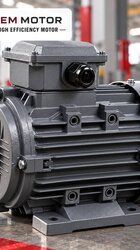
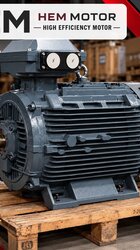
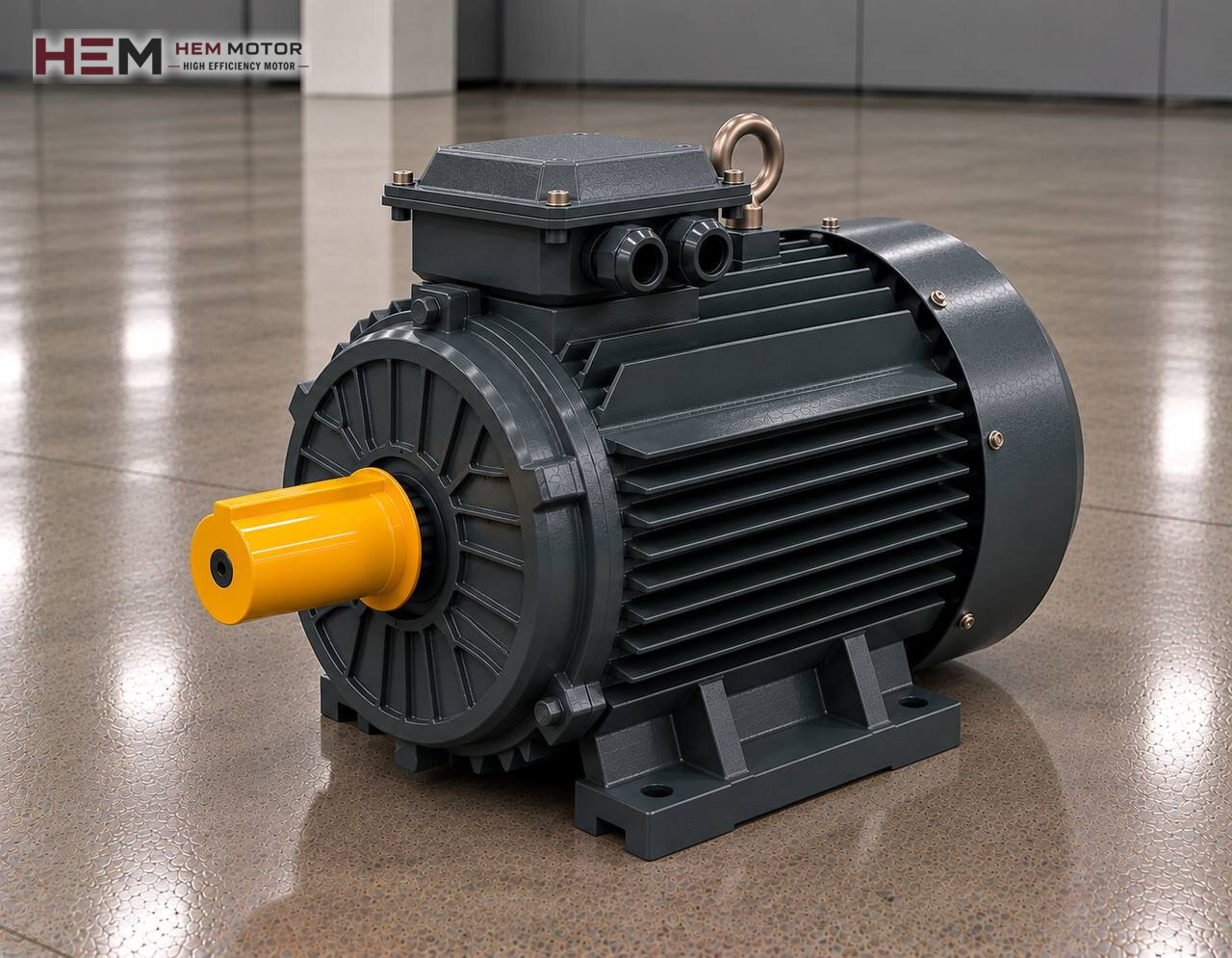

In cement and building materials plants, the energy cost of electric motors falls mostly in three places: adjusting speed to demand on large fans and pumps that run continuously, sizing oversized motors that run far below their rating to the real load, and raising the efficiency class on drives that run long hours. Measurement, not guesswork, decides which of these comes first in your plant. Below we walk through where electricity is spent, from raw meal preparation to packing and from brick and tile lines to the sand pit, and when each step makes sense.
Where does the electricity go in the plant?
On a clinker line most of the electricity is spent on grinding and moving gas. The raw mill, the cement mill, the rotary kiln's induced-draught fan (ID fan), the cooler fans, the separator and the bag filter fans sit at the top of the load chart. After them come bucket elevators, screw conveyors, belt conveyors, pneumatic conveying compressors and water pumps.
In brick and tile plants the picture differs: in clay preparation the crushers, roller crushers and mixers come first, followed by the vacuum extruder, drying fans and kiln fans. In ready-mix and aggregate plants crushers, screens and belts dominate. Whichever group weighs most in your plant is where the energy work should start.
Note: Main mill drives of several hundred kilowatts or megawatts are usually fed at medium voltage; this article covers the low-voltage motor fleet up to 355 kW.
What is the first step in cutting energy cost?
The first step in cutting energy cost is to draw up a motor list. For each drive, the rated power, how many hours a year it runs and the actual power drawn are entered in a table. Actual power is measured with a portable energy analyser over several shifts. A single instantaneous clamp-meter reading can mislead on machines with fluctuating load such as fans or mills.
The table produces two lists. The first is drives that run more than 6000 hours a year and draw large power; efficiency class and speed control investments pay back here. The second is motors loaded far below their rated power; for these, correct sizing comes into play.
Replacing a gate motor on top of a silo that opens and closes a few times a day, by contrast, barely shows on the bill.
Why does speed control bring the biggest saving on kiln, cooler and filter fans?
Controlling flow by speed instead of a damper recovers the energy that turns into heat at the damper. In most plants the kiln ID fan or the bag filter fan runs at full speed and the air volume is throttled with a damper. As the damper closes the fan delivers less air. The motor, though, is still at full speed. The lost energy turns into heat and noise at the damper. Because power demand on fans and centrifugal pumps drops very quickly with speed, controlling flow by speed instead of a damper becomes the biggest saving item (general information based on the affinity laws; confirm with the fan manufacturer).
Our three-phase models driving kiln and filter fans can be operated with their speed set by a frequency converter. If the fan is to be held at low speed for long periods, for example when the kiln is slowed down, the fan impeller on the shaft may not be enough to cool the housing and a separately motorised cooling fan is added.
If the drive sits in the electrical room and the fan on the filter roof, a dv/dt or sine filter is looked at because of the long cable between them. Sharing the kiln slow-down scenario and the cable route with the order is enough for the right configuration.
Rather than putting all the many fans of the clinker cooler on drives, starting with the few largest and most throttled ones keeps the first investment small. The experience gained helps when planning the remaining fans.
Why is an oversized motor a problem on mill and crusher auxiliaries?
In an induction machine running at less than half its rated power, both efficiency and cos φ fall. Building materials plants often have motors fitted over the years on the logic of "go one size up so nothing goes wrong". Extra reactive power is drawn from the grid and the compensation panel works harder.
If measurement shows, for example, that a separator drive or a bucket elevator runs at continuously low load, stepping down one power size can be considered when the motor fails or is due for renewal. The starting condition must however be checked: a loaded elevator, a screw packed with material or a full crusher mouth needs far more torque than running empty. Low load in normal operation does not show the starting need; the machine manufacturer's calculation should be the basis.
The coal mill and pulverised coal conveying line are a separate matter; these areas can be classified as explosive dust atmospheres. A drive working there requires a special motor, and this need may fall outside the standard series in HEM Motor's 2026 catalogue; send us the zone classification, the old motor's nameplate and the task, and we will look at it together.
IE3, IE4 and IE5: on which drive does the efficiency class pay back?
HEM Motor offers motors in the IE3, IE4 and IE5 efficiency classes. Which class makes sense depends on operating hours and load. On a gate or sampling drive that is switched on for only a few hundred hours a year, the extra cost of a higher class takes a long time to recover; on fans, separators and main belts running three shifts all year, the loss difference between classes is added to the meter reading every month.
A hypothetical example: consider a filter fan with a shaft power of 90 kW running 7000 hours a year. At a motor efficiency of 0.95 about 94.7 kW is drawn from the grid, at 0.96 about 93.8 kW. The difference of roughly 1 kW corresponds to about 6900 kWh over 7000 hours. By putting your own plant's efficiency values and unit electricity price into this calculation you can work out the payback period.
When upgrading the efficiency class, mounting compatibility must also be reviewed. Depending on frame size we supply horizontal B3, B5, B14, B34, B35 and vertical V1/V3/V5/V6/V15 arrangements, and we settle the flange size with you during ordering. The IEC frame number is the first point of comparison; for a trouble-free replacement, the foot fixing holes, shaft thickness and length, flange and nameplate values are compared one by one with the old motor.
Dimension drawings are on the technical drawings page; you can compare options with the power and speed filter in the electric motor shop.