English
 Français
 Türkçe
 Español
 Русский

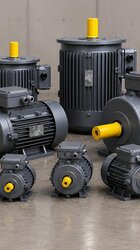
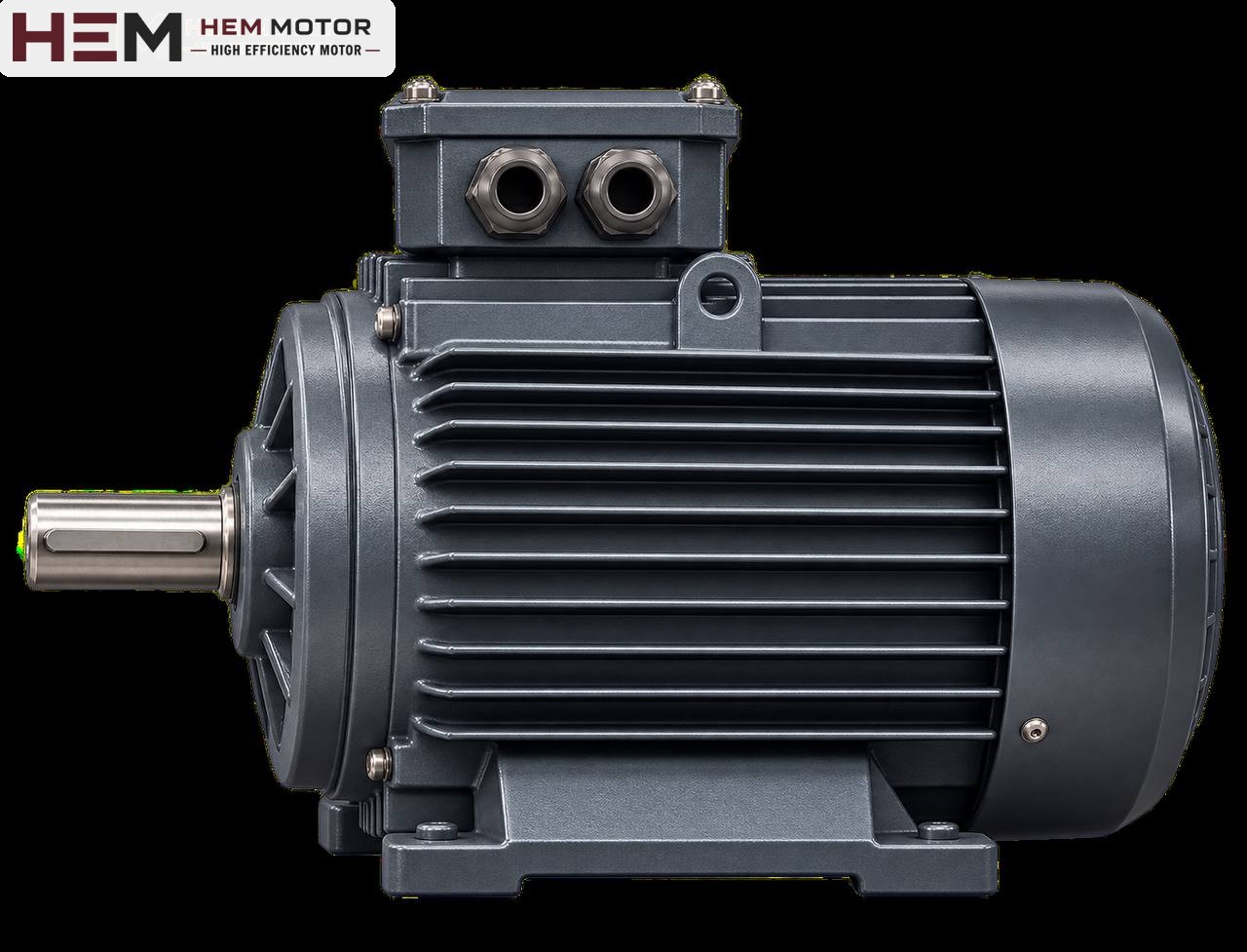

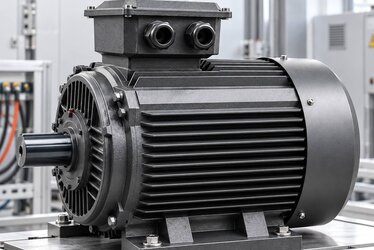
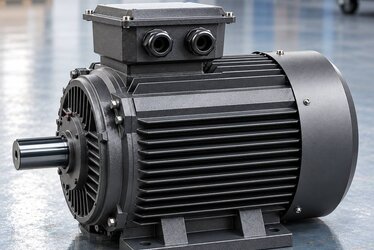
18.5 kW (25 HP) is the transition zone between small motors, which many plants start direct-on-line without any trouble, and large motors, whose starting method requires serious planning. Connecting a motor of this rating directly to the supply may or may not cause problems, depending on the plant's transformer capacity and the condition of the line. A wrong connection, on the other hand, can burn the motor at its first start. This article explains how to match an 18.5 kW motor's nameplate voltage to the supply and which questions to ask when choosing between star-delta, direct-on-line, a soft starter or a frequency inverter.
Electrical values of the 18.5 kW models
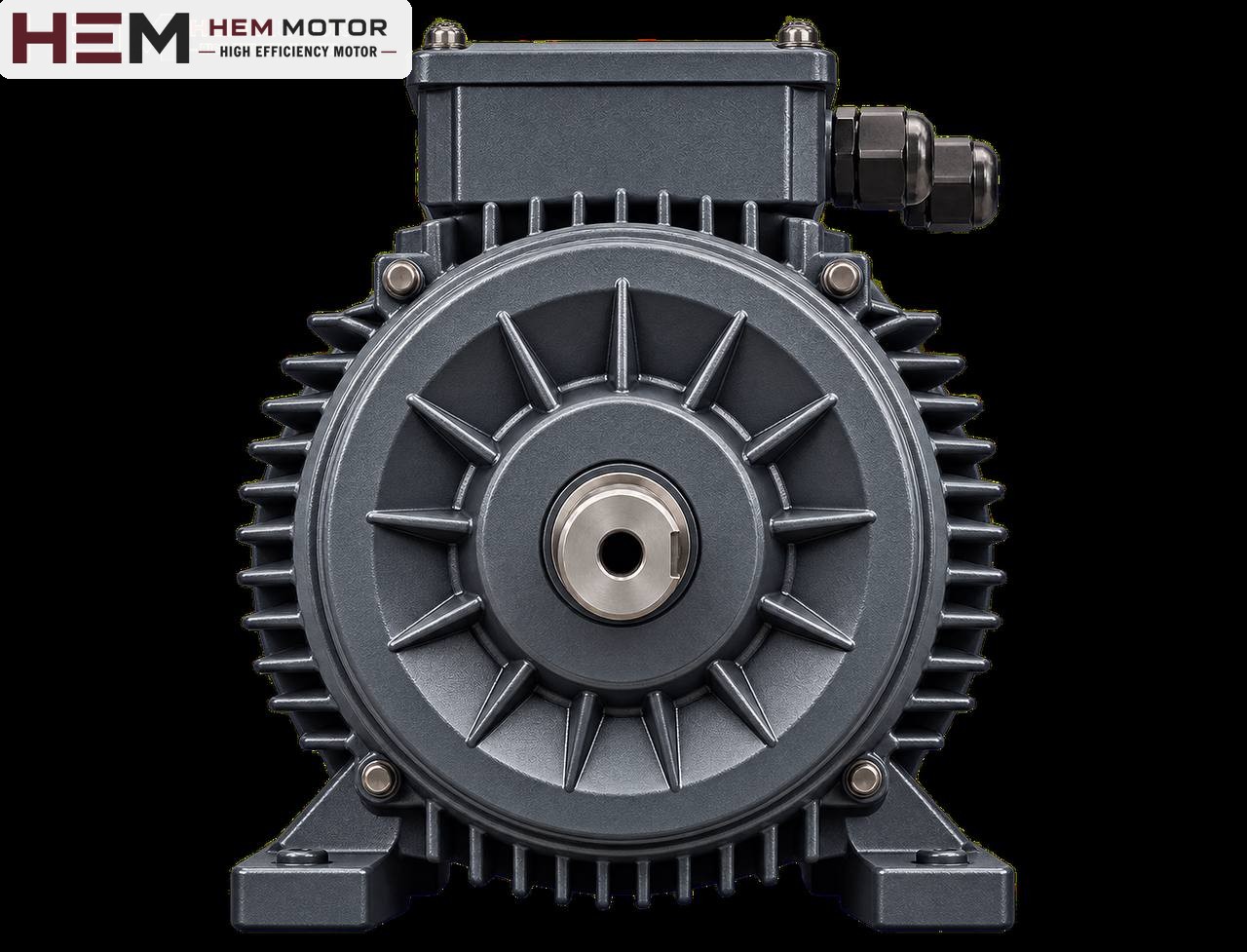
At HEM Motor, 18.5 kW is offered with a cast iron frame at three speeds. All three models have a nameplate voltage of 400/690 V (Δ/Y), 50 Hz; the protection class is IP55 and the insulation class is F.
| Model code | Synchronous / rated speed | IEC frame | Rated current (400 V) | Rated torque | Product page |
|---|---|---|---|---|---|
| 200L1-6 | 1,000 / 980 rpm | 200L | 35.9 A | 180.3 Nm | 200L1-6 cast iron |
| 180M-4 | 1,500 / 1,470 rpm | 180M | 33.5 A | 120.2 Nm | 180M-4 cast iron |
| 160L-2 | 3,000 / 2,940 rpm | 160L | 32.5 A | 60.1 Nm | 160L-2 cast iron |
The current in the table is the rated current drawn at 400 V and full load. The current drawn at the moment of starting is several times higher, and that is the value that really determines the starting method.
What does a 400/690 V nameplate tell you?
The two voltages on the nameplate show that the motor windings can be connected to suit two different supplies. Each winding phase is designed for 400 V:
- Delta (Δ) on a 400 V supply: each phase winding is connected directly between two lines and sees 400 V. On the standard industrial supply in Türkiye and Europe, an 18.5 kW motor runs with this connection.
- Star (Y) on a 690 V supply: each phase winding sees the line voltage divided by √3, which is again about 400 V. This connection is for plants with 690 V distribution.
A common mistake is to leave the motor connected in star on a 400 V supply. In that case each winding sees about 230 V and the motor torque drops noticeably; under load the motor loses speed, its current rises and it overheats. Conversely, connecting a motor with a 230/400 V nameplate in delta on a 400 V supply applies overvoltage to the windings and burns the motor in a short time. So when replacing a motor, always look at the old motor's nameplate voltage and how the terminal links were fitted.
Older nameplates may show values such as 380/660 V. These come from earlier nominal supply values and follow the same connection logic as today's 400/690 V motors; even so, note the voltage actually measured on the supply when replacing.
Starting methods and decision questions at 18.5 kW
Direct-on-line starting
The motor is connected straight to the supply by a contactor. It is the simplest and cheapest arrangement; the motor delivers its full torque at start. The drawback is the high current drawn at start. If the transformer capacity is sufficient, the line is short and there are no sensitive loads fed from the same panel, direct-on-line starting at 18.5 kW is applied without problems in many plants. Whether it is possible is decided by the person who designed the plant's electrical installation and by the rules of the distribution company.
Star-delta starting
The motor first starts in star and switches to delta once it reaches a certain speed. Because each winding sees a lower voltage in star, the starting current and starting torque drop to about one third. This method requires two conditions:
- The motor's running connection at the supply voltage must be delta. The 18.5 kW models with a 400/690 V nameplate are suitable because they run in delta on a 400 V supply. On a 690 V supply they already run in star, so they are not suitable for star-delta starting.
- The links in the terminal box must be removed and all six ends run separately to the panel. That means a six-core cable or two separate cables.
The weak point of star-delta is torque. Because the starting torque drops to one third, it works well only on machines that start with a light load (a fan or pump starting unloaded, a compressor, a crusher starting empty). On machines that start under load, such as a loaded belt, a full screw conveyor or a full mixer, the motor may not reach enough speed in star; a large current surge occurs at the changeover to delta and the purpose of the method is lost.
Soft starter
It limits current by raising the voltage steplessly during start. It reduces mechanical shock and protects transmission elements such as belts and couplings. However, when the voltage is reduced the torque also falls; on its own it is not a solution for heavy-load starting. The motor's terminal connection stays as its normal running connection (delta at 400 V).
Frequency inverter (drive)
This method can both limit current and provide high torque at low speed; it also allows speed adjustment. Our three-phase series are suitable for speed control with a frequency inverter; for long periods of full-torque operation at low speed, an external fan may be needed, and if the cable between the drive and the motor is long, a dv/dt or sine filter is considered; these conditions are stated with the order. For details, see the question on use with a frequency inverter.