When the motor of a geared drive fails, the gearbox is usually sound and stays in place; only the motor is replaced. In that case the new motor has to match two things at once: the mounting face on the input side of the gearbox and the input speed on which the gearbox ratio was calculated. In this article we explain in which order you should check the IEC frame code, the input flange, the input bush and the speed before fitting the motor to the gearbox. We do not go into a general flange dimension comparison here; the focus is on what the gearbox expects from the motor.
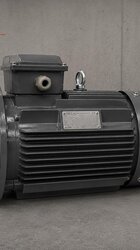
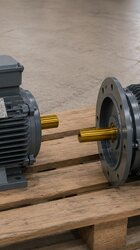
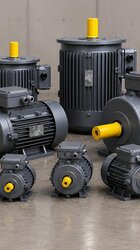
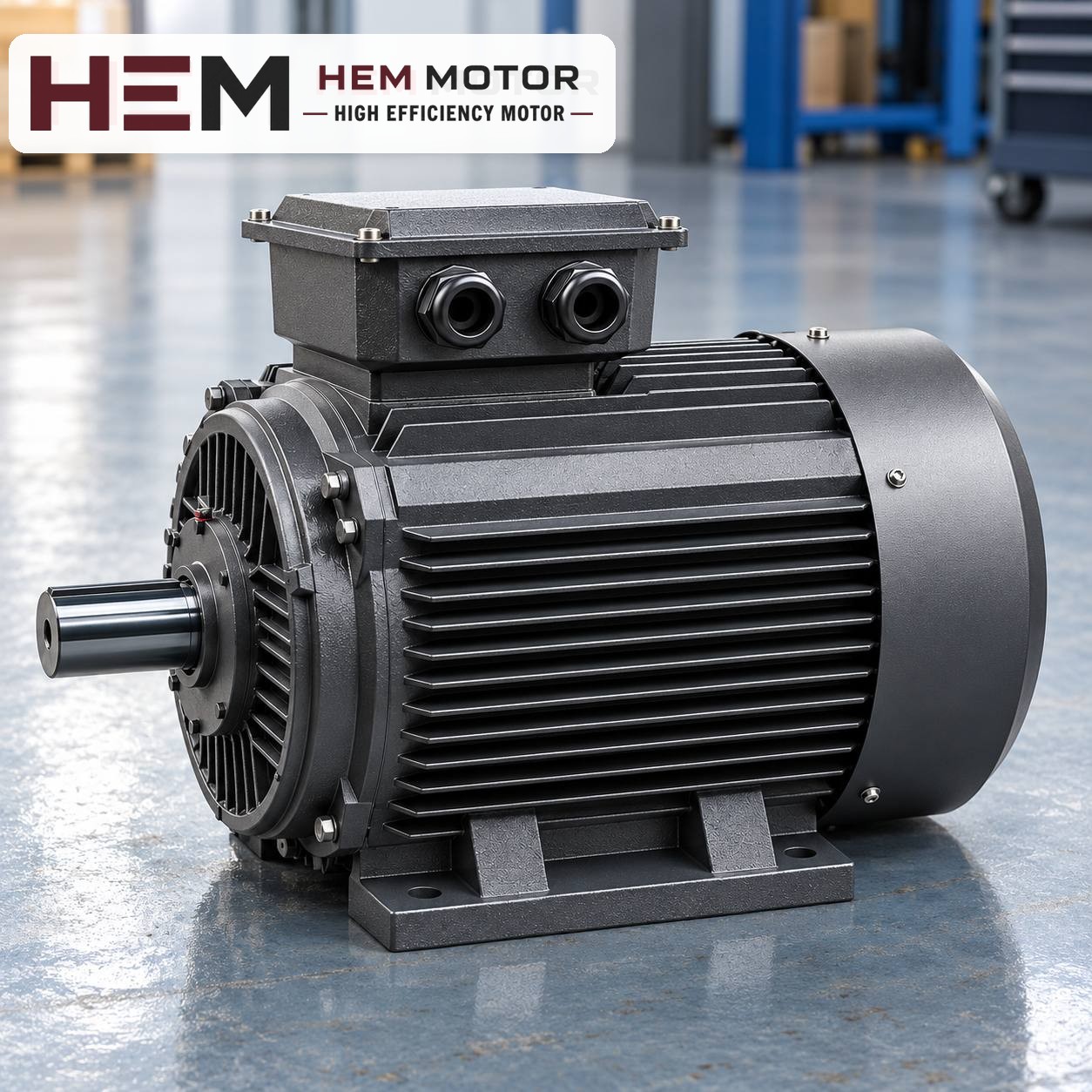
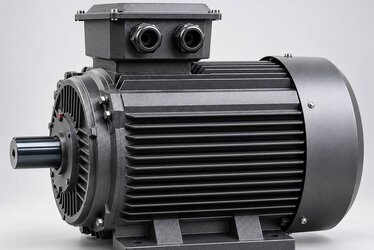
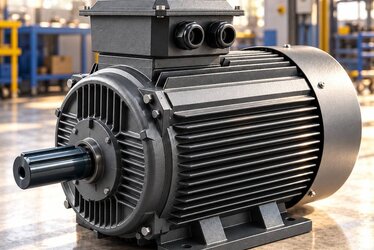
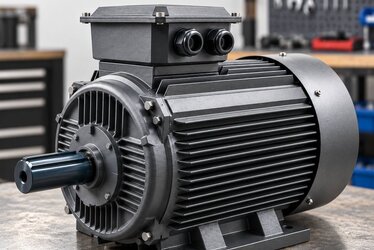
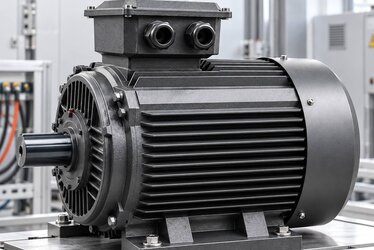
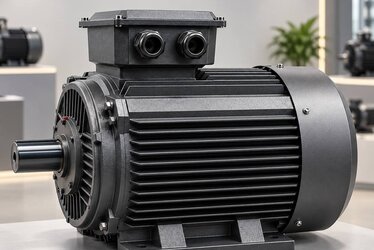
On a motor that will be connected to a gearbox, the frame code and shaft end are checked first (representative image).
What determines the motor at the gearbox input?
In a drive made up of a separate motor and gearbox, the motor usually sits on the input side of the gearbox through a motor mounting flange (IEC adapter). The motor shaft enters the gearbox input bush and torque is transmitted through a key. For this connection to work, four elements are assessed together:
IEC frame code: The gearbox input is prepared for a specific motor frame. The frame code indirectly determines the shaft diameter and the flange size family.
Flange type: The input adapter is made to receive the motor's B5 or B14 flange. Which one it is will be written on the gearbox nameplate, in its catalogue or on the input adapter.
Input bush: The bore and keyway of the bush must suit the motor shaft, and its depth must suit the motor shaft length.
Input speed and power: The gearbox ratio was selected for a particular motor speed; the input power and torque the gearbox accepts are also limited.
If one of these four elements does not match, the motor either cannot be fitted physically, or it can be fitted but the machine runs at the wrong speed or under strain.
Same power, same frame? Reading the IEC code
When choosing a motor for a gearbox, the most reliable starting point is the old motor's frame code, not its power. This is because one frame can hold more than one power rating, and the same power can move to a different frame depending on speed. Two examples from the HEM Motor range show this clearly:
The 4-pole 2.2 kW (100L1-4) and 3 kW (100L2-4) models are both in an IEC 100L frame. Because the frame is the same, they belong to the same family as far as the gearbox input is concerned; the difference in power is checked separately against the input power the gearbox accepts.
When you go up to 4 kW at 4 poles, the model becomes 112M-4 and the frame moves to 112M. In other words, a decision to "fit a slightly more powerful motor" can mean that the gearbox input adapter has to change.
The frame can also change when the speed changes at the same power. For example, at 7.5 kW the 4-pole model is in a 132M frame while the 6-pole model is in a 160M frame. Changing speed without changing the gearbox input is therefore often not possible. You can look up the relationship between frame codes and power ranges in the IEC frame–power table.
Input flange and input bush: on-site checklist
Carrying out the following checks before removing the old motor, or immediately after, largely prevents a wrong order:
Photograph the gearbox nameplate. Many gearbox nameplates show the ratio, the output speed and the motor frame or flange type suitable for the input. This information can be even more decisive than the motor nameplate.
Identify the flange of the input adapter. Do the bolts pass through the adapter and screw into the motor end shield, or do they pass through the holes of the motor flange and fasten to the adapter? The first indicates a B14 connection, the second a B5 connection.
Inspect the input bush. Note the bore of the bush, the width of the keyway and the depth of the bush. If the bush is worn, oval, or the keyway has spread, the new motor will soon suffer the same problem; the bush may need replacing.
Compare the shaft length with the bush depth. The motor shaft must go fully into the bush, but must not bottom out and stop the flange from seating on the face.
Clean the spigot recess. Old gasket, rust or paint residue disturbs the centring of the new motor and shortens bearing and seal life.
The values of the shaft, flange and spigot dimensions per frame are given in the technical and product catalogue and the 2D technical drawings. At HEM Motor mounting arrangements are offered according to the frame and the flange size is confirmed with the order; so add the measurements you took on the gearbox side to the order note.
Prices and technical data are on the product pages; choose a model and order online.
The output speed of the gearbox is found by dividing the motor's rated speed by the gearbox ratio. That is why, when changing the motor on a gearbox, speed matters as much as the flange.
Keep the number of poles. If a 2-pole motor is fitted in place of a 4-pole motor, the gearbox output runs roughly twice as fast; if a 6-pole motor is fitted, it slows down by about a third. The machine speed and the load balance are not prepared for such a change.
Know the rated speed difference. The speed on the nameplate is slightly below the synchronous speed. Hypothetically, with a motor of 1,450 rpm rated speed and a gearbox with a 30:1 ratio, the output is about 48 rpm. If the old motor's rated speed differs by a few rpm, the change at the output is not noticeable in most applications.
If speed adjustment is needed, discuss a drive. If the aim is to change the output speed, the right way is often to recalculate the gearbox ratio or to use a frequency inverter. Our three-phase series are suitable for speed control with a frequency inverter; for long periods of operation at low speed with full torque a separately driven fan may be needed, and if the cable between drive and motor is long a dv/dt or sine filter is considered; these conditions are stated with the order. For details, see the question on inverter use.
The gearbox also has a power and torque limit
Upsizing the motor can mean sending more torque than the gearbox can handle. Check the input power allowed by the gearbox and the service factor selected for the application on the gearbox nameplate or in its manufacturer's documents. Determine motor power not from the name of the machine but together with the load, duty, starting frequency and environment.
Example: renewing the motor on a conveyor gearbox (hypothetical)
The sequence below is a hypothetical example constructed for illustration; it is not a real customer application. Suppose the motor of a worm gearbox on a packaging line is to be replaced because of a winding fault. The old motor's nameplate reads 3 kW, 1,500 rpm and frame 100L; the gearbox nameplate shows the ratio and a flanged connection for the input.
Match the frame: For 3 kW, 4 poles, the HEM Motor range includes the 100L2-4 model; the frame is 100L. The same frame code as the old motor points to the same family at the gearbox input.
Confirm the flange type: From the direction of the bolts, determine whether the adapter is B5 or B14; the spigot diameter and hole details are compared with the 100 frame values in the catalogue.
Check the bush: The bore, keyway and depth of the input bush are compared with the motor shaft dimensions.
Confirm the environment and supply: If the line is dusty, a cast iron frame is considered. The 100L2-4 is rated 230/400 V (Δ/Y); on a 400 V supply it is connected in star (Y). If the old motor was rated 400/690 V, remember that the terminal connection will change.
Example models for geared drives
The models below were chosen from the 4-pole power range frequently found at gearbox inputs. Because their frame codes differ, each one also corresponds to a different input adapter family.
100L2-4 cast iron frame: 3 kW (4 HP), 4 poles, 1,450 rpm, IEC 100L, 230/400 V (Δ/Y), 50 Hz, IP55, insulation class F.
132M-4 cast iron frame: 7.5 kW (10 HP), 4 poles, 1,460 rpm, IEC 132M, 400/690 V (Δ/Y), 50 Hz, IP55, insulation class F.
160M-4 cast iron frame: 11 kW (15 HP), 4 poles, 1,465 rpm, IEC 160M, 400/690 V (Δ/Y), 50 Hz, IP55, insulation class F.
General information on geared applications is collected on the electric motors for gearboxes page. Current prices are on the product pages.
Information to send when ordering a motor for a gearbox
The old motor's power, speed and frame code (with a nameplate photo)
A photo of the gearbox nameplate: ratio, output speed and, if given, the frame/flange specified for the input
The flange type of the input adapter (B5 or B14), spigot diameter, pitch circle diameter and hole details
The bore, keyway and depth of the input bush
Supply voltage, starting method and drive details, if any
The type of machine, duty and ambient conditions
Review suitable models and current prices on the buy electric motors page. To determine the model that will fit your gearbox, you can share the motor and gearbox nameplates through the nameplate submission page or write to us via our contact page.
HEM Motor Models Related to This Article
The cards show example models related to the topic. A suitable motor is not chosen by power alone: compare speed, voltage, mounting, shaft and connection dimensions on the product page; if unsure, send a photo of the existing motor’s nameplate on WhatsApp.
The IEC frame number gives the height from the motor's foot base to the shaft centre in millimetres. In the HEM Motor sales range, the small frames between 63 and 112 mostly carry ... More Details
When replacing a motor in a tight installation space, the same IEC frame code alone is not a sufficient guarantee. The frame code defines shaft height, foot hole spacing and shaft ... More Details
When replacing a car lift motor, two checks cause more trouble than power and speed: how the hydraulic pump is attached to the motor and the duty regime in which the lift runs the ... More Details
When the motor of a press brake's hydraulic unit is replaced, flange and coupling compatibility is checked at three points: the new motor's flange must seat in the spigot recess an... More Details
On many machines that have run for years, the belt-and-pulley arrangement is questioned because of its maintenance burden: the belt stretches, needs re-tensioning, the pulley groov... More Details
The conversation that wastes the most time in flange motor orders goes like this: someone says "we need a B5" or "we need a B14", the motor arrives, and the flange does not fit the... More Details
We use necessary and optional cookies to improve your experience, enhance content and analyse traffic. Under the GDPR, optional (analytics/marketing) cookies are only used with your explicit consent. Please choose your preference below.
Cookie Policy
 English
 Français
 Türkçe
 Español
 Русский