English
 Français
 Türkçe
 Español
 Русский

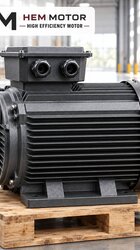

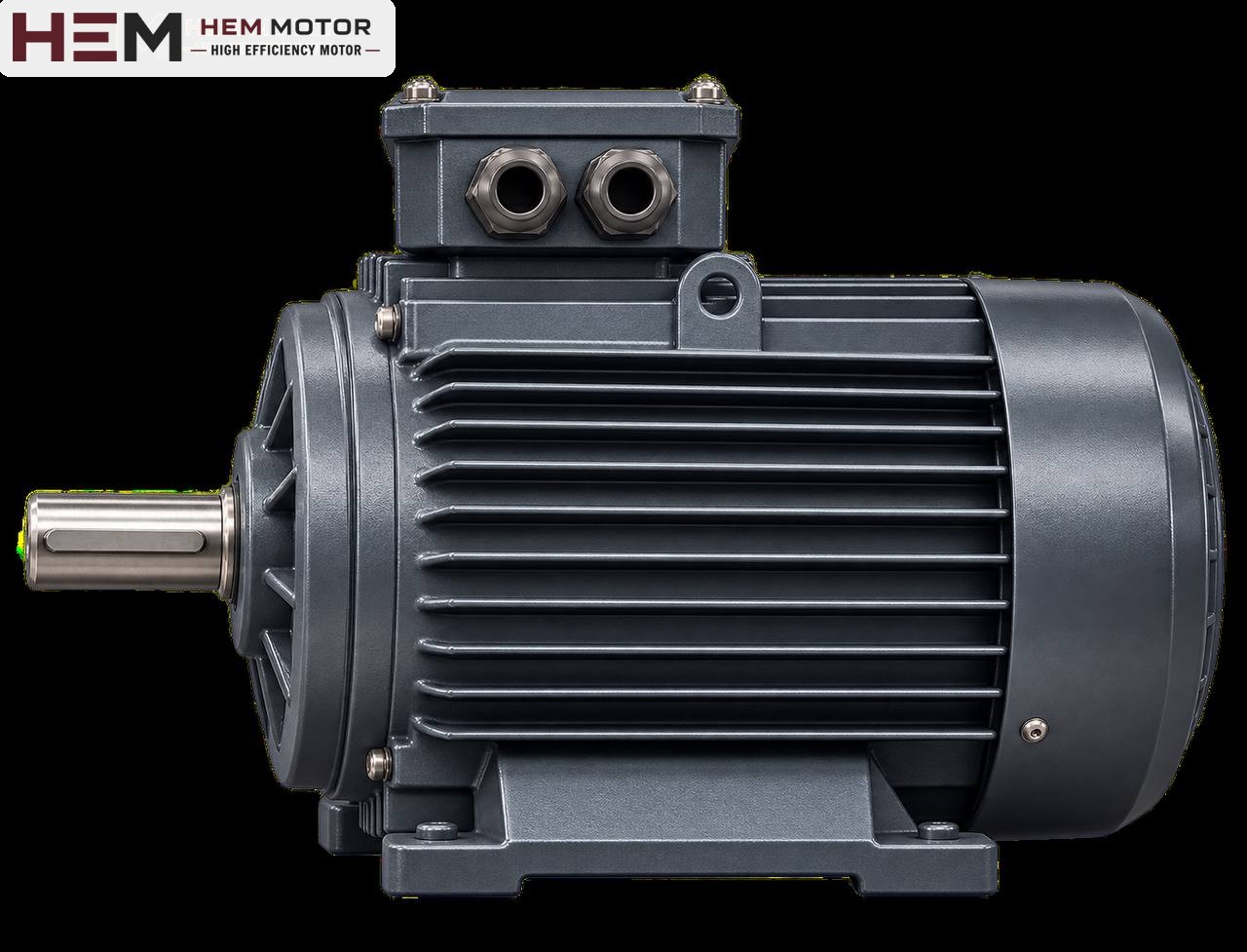

What determines motor selection for a surface planer is the speed at which the cutter block (cutter head) must turn and how that speed is obtained from the motor by belt. On most planers the cutter block speed is above standard motor speed; the motor is therefore usually 2-pole and the belt-pulley ratio raises the speed. The new motor must keep the old motor's pole count and pulley arrangement, while power should be assessed against the chip load and the mass of the cutter block accelerated at start-up.
Why is cutter block speed so important?
On a planer, the measure that determines surface quality is the distance travelled each time a knife touches the wood; in workshop language the “knife mark” or cutting pitch. The knife mark is set by the feed rate, the number of knives in the cutter block and the block speed. If the block speed drops, the knife mark lengthens at the same feed rate, ripples appear on the surface and grain tear-out increases.
With a hypothetical calculation: if a two-knife cutter block turns at 6,000 rpm, it makes 12,000 cuts per minute. If the wood is fed at 6 metres per minute, each knife mark is about 0.5 mm. If the block speed drops to 4,000 rpm, the mark grows to 0.75 mm. That is why keeping the cutter block speed at its previous value after a motor replacement is a condition that comes even before power.
Pole count and pulley ratio are considered together
Cutter block speed is motor speed multiplied by the ratio of the pulley diameters. The nameplate speed of a 2-pole motor is about 2,900 rpm; on the 3 kW 100L-2 model, for example, it is 2,895 rpm. By making the motor pulley larger than the machine pulley, the block speed is raised above the motor speed. If a 4-pole motor is fitted to the same machine, the cutter block speed halves; trying to compensate with the pulleys leads to a very large motor pulley and belt-speed problems.
Belt drive: speed, alignment and tension
On a planer the belt runs at high speed and the load changes suddenly: the cutter block takes load the moment the wood enters the table and unloads the moment it leaves. This brings several points of the belt drive to the fore:
- Belt type: Older machines use V-belts, newer ones mostly poly-V (ribbed flat) belts. The pulley profile matches the belt type; when the motor pulley is fitted to the new shaft, the same profile must be kept.
- Pulley balance: A small imbalance in a pulley turning at high speed shows up in the motor bearing and in surface quality. A damaged pulley, or one with extra holes drilled in it, should not be reused.
- Alignment: The motor and cutter block pulleys must be in the same plane. If the new motor's shaft height or shaft length differs, the pulley line shifts and the belt wears at the edge.
- Tension: An over-tight belt puts side load on the motor bearing; a slack belt slips at start-up and under load, and the block speed drops. On planers the motor usually sits on a hinged or slotted base; the foot holes of the new motor must fit that base.
Shaft and foot dimensions are not given in the text; they can be compared by frame size in the 2D technical drawings. B3, B5, B14, B34, B35 and vertical V1/V3/V5/V6/V15 mounting arrangements are offered according to the frame; the flange size is confirmed with the order.
Power: chip load and start-up
On a planer, motor load rises with the amount of chip removed during a pass. The factors that increase the chip are clear: depth of cut, width of the board, hand-feed rate, hardness of the wood species and dull knives. Feeding a wide hardwood board quickly with a deep pass is the machine's heaviest working moment. A dull knife does the same work at higher current; knife maintenance should be regarded as part of motor selection.
Start-up is a separate load. The cutter block is a heavy, high-speed rotating mass; at start-up the motor has to bring it up to full speed, even when unloaded. On machines with large blocks this can take several seconds, and the starting current stays high during that time. The thermal relay and fuses must be set to carry this start. If star-delta starting is used on powerful planers, allow for the fact that motor torque drops in the star position and start-up takes longer.
You can review suitable HEM Motor models and current prices on the buy electric motors page.
Chips, dust and cooling
The most common cause of a planer motor running hot is not the load but impaired cooling. The motor runs inside the body, close to the chip collection compartment; if the fan cover grille clogs with fine dust, cooling air decreases and the motor heats up even at normal load. Heat dissipation also drops when the spaces between the frame fins fill with chips.
- The fan cover and frame fins should be cleaned at regular intervals.
- Long use without the dust extraction system running speeds up dust build-up in the motor compartment.
- HEM Motor's standard models have IP55 protection and class F insulation; this class protects against harmful dust deposits, but it does not remove the need to keep the fan cover clean.
Because the woodworking environment is exposed to vibration and impact, cast iron frame models are often preferred on these machines. General information on the sector is on the woodworking machine motors page.