Agglomerator Electric Motor: Heating, Starting and Continuous Load Conditions

Agglomerator Electric Motor: Heating, Starting and Continuous Load Conditions

What strains the motor of an agglomerator is not a single load but a load curve that repeats with every batch: it starts light with an empty drum, the current climbs as the film heats up and softens, peaks the moment water is added and then falls. For this reason, when an agglomerator motor is selected, it is assessed not only by its rated power but also by whether it can carry this peak in every batch and whether it has time to cool down between batches. The start, if handled correctly, can be the easiest moment; if handled wrongly, it becomes the heaviest.
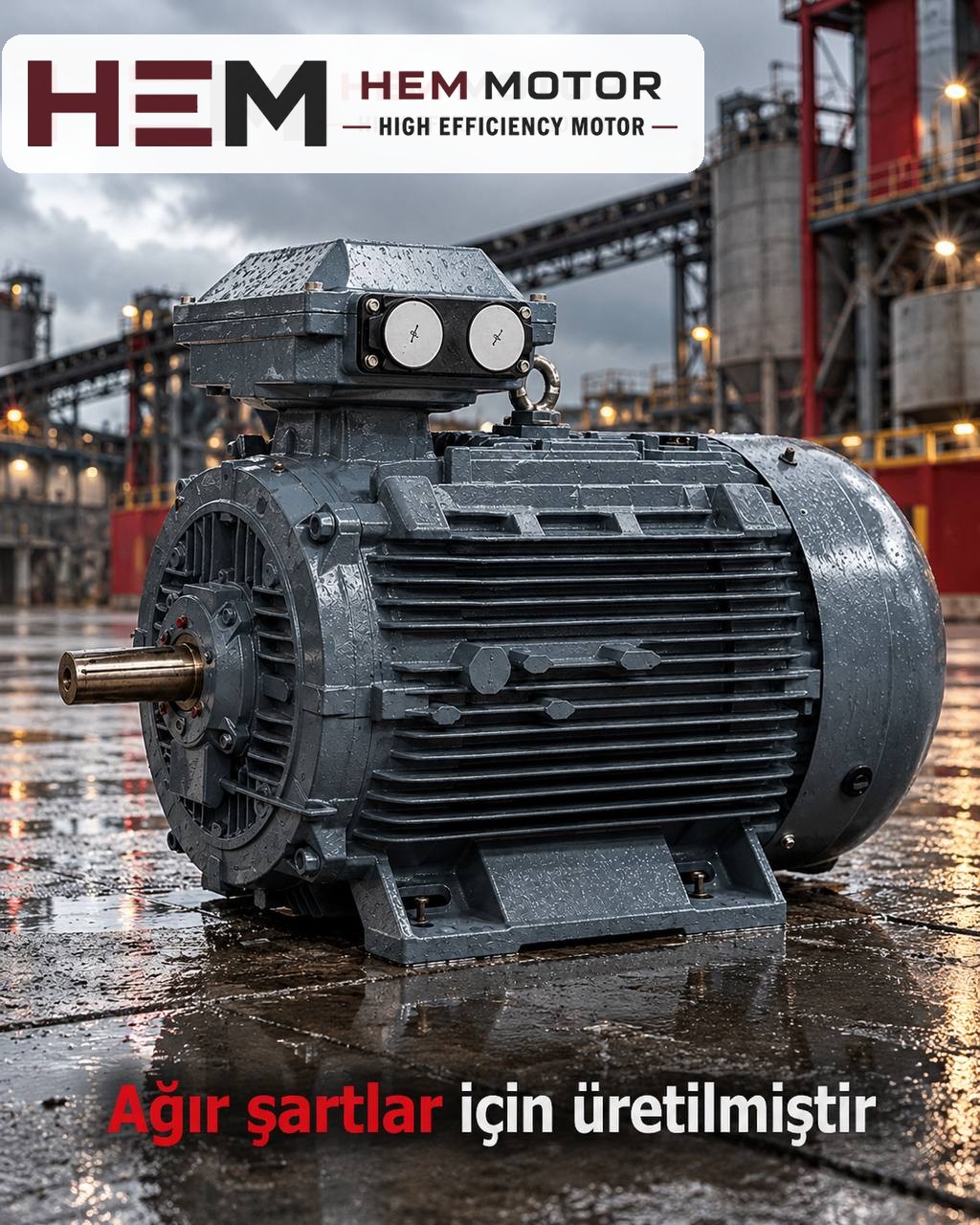
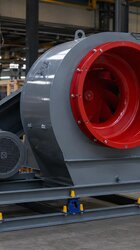
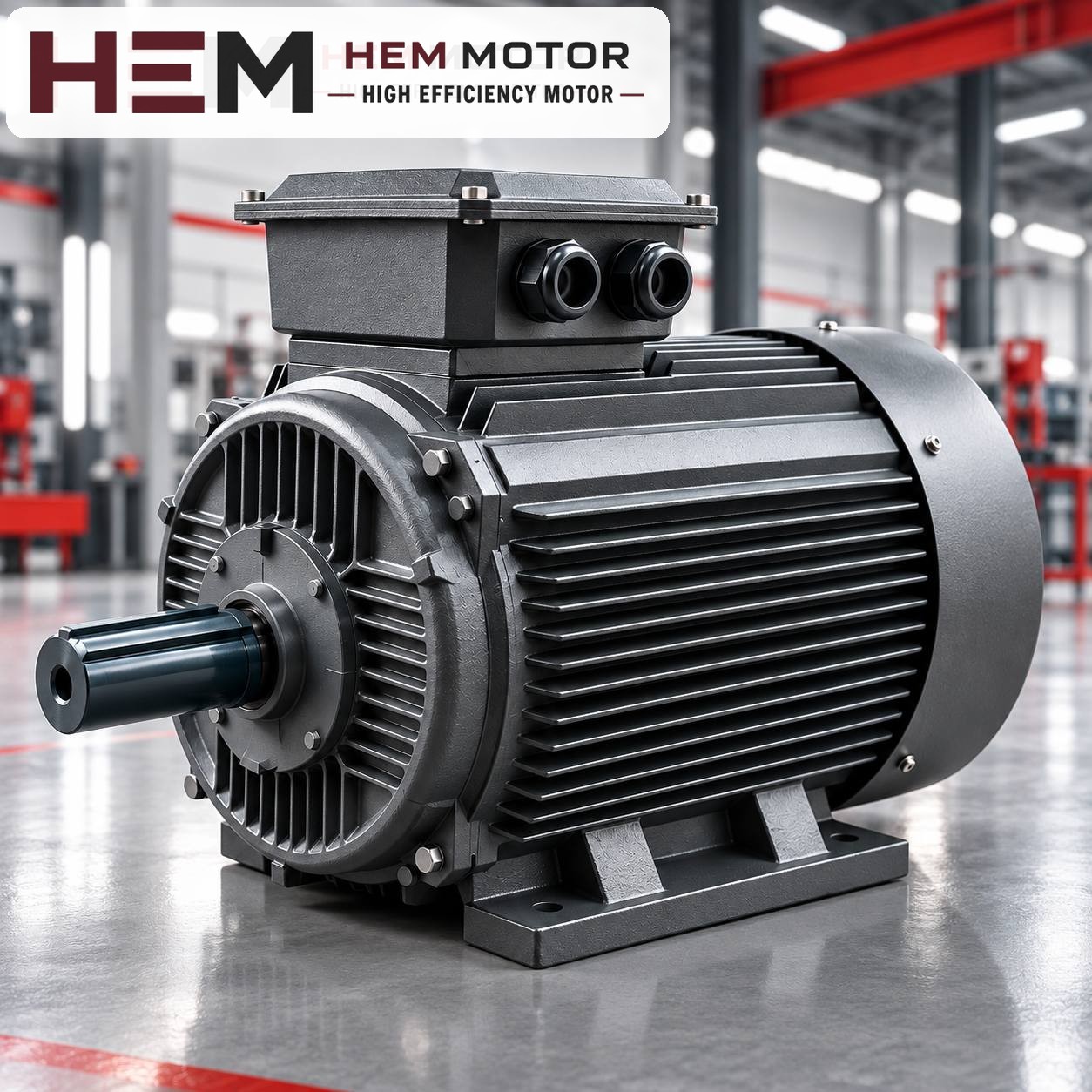
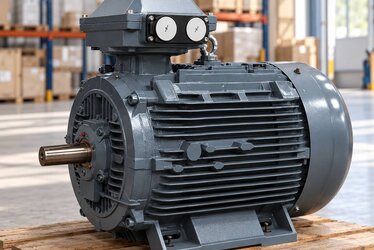
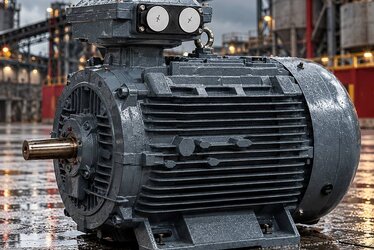
Three-phase electric motor working in a heavy industrial environment
An agglomerator motor works in a dusty, hot and steamy environment (representative image).

How does the load change during an agglomerator batch?

An agglomerator is a drum with a fast-rotating blade disc at its base, used to densify thin film and fibre waste. The motor usually turns this blade assembly through a belt and pulley. A batch roughly goes through four phases, and each phase asks something different of the motor.

  1. Loading and cutting: light film is fed into the drum and the blades shred it. Current is at a medium level.
  2. Frictional heating: the shredded material heats up as it rubs against the blades and the drum wall. As the plastic softens it becomes sticky and resistance against the blades increases; current rises steadily.
  3. Water shock: when the material reaches its softening point, a small amount of water is added to the drum. The sudden cooling makes the sticky mass clump and break up. The highest current is usually reached during this transition.
  4. Granulation and discharge: the lumps are broken by the blades, the load falls and the agglomerate is discharged through the door.

In many plants the operator times the water addition by watching the ammeter on the panel. This means the motor current is also a process indicator; motor selection and protection settings must take this into account.

Heating: the motor or the material?

The "heating" in the title covers two separate topics, and they should not be confused.

Heating of the material

This is the process itself; energy is transferred from the blades to the material by friction. That energy is supplied by the motor. The more material, or the heavier the material, put into a batch, the longer high current is drawn to reach the softening point.

Heating of the motor

The motor winding heats up in proportion to the square of the current. In an agglomerator, the motor goes above its rated value for a few minutes in every batch and then drops back. What determines heating is how long these peaks last and how much rest there is between batches. Enlarging the batch, delaying the water addition or reloading without emptying the drum lengthens the peak and strains the winding.

The environment around the motor also matters. Heat radiating from the drum and steam released during the water shock warm and humidify the motor's cooling air. The motor should be placed away from the drum's steam outlet and hot surfaces, in a position where it can draw clean air. If the ambient temperature is high, it should be stated with the order; IP55 protection is against water splashes and is not designed for continuous operation in steam.

Starting: the price of starting with a full drum

The agglomerator's blade disc and large pulley create a considerable moment of inertia. When starting with an empty drum, the motor draws high current for a few seconds to accelerate this mass; this is an acceptable load.

The problem arises when restarting a machine that stopped in the middle of a batch. If semi-molten plastic cools and hardens around the blades, the motor has to overcome both the inertia and this stuck mass at the same time. The torque an induction motor can deliver at start is limited; if this limit is exceeded, the motor cannot start and the protection trips. Forcing it in such cases without cleaning the drum wears the belts, bearings and winding.

  • Start with an empty drum; check the drum after a power cut.
  • With star-delta starting, the low torque in star lengthens acceleration of a large inertia; the changeover timer should not switch to delta before the motor approaches full speed.
  • Check belt tension regularly; a slipping belt both generates heat and cannot transmit the peak load at the moment of water shock.

Prices and technical data are on the product pages; choose a model and order online.

Power and speed according to continuous load conditions

In an agglomerator, drum volume alone does not determine motor power; material type, batch weight and batch frequency all play a part. The table below summarises the signs to look at when assessing whether the existing motor is sufficient.

Situation seen on sitePossible meaningFirst action
Thermal relay trips at water additionThe peak lasts too long or the batch is too largeReview the batch quantity and water timing
Motor frame gets very hot towards the end of the dayInsufficient rest between batches, hot cooling airCheck the motor position and fan inlet
Current always low, process slowBelt slipping or blades bluntCarry out mechanical maintenance; do not replace the motor
Capacity is to be increasedMotor, belt and blades must be assessed togetherPlan the power increase together with the machine builder

On the speed side, the blade tip speed determines how the agglomerator works. Motor speed and pulley ratio together create this speed; when replacing the motor, the pole count should be kept, otherwise the pulleys must be recalculated. If the power and speed of the existing motor are known, review suitable HEM Motor models and current prices.

Example models

Three models from the power range commonly seen on agglomerators are listed below. All are 4-pole, cast iron frame, IP55 protection and insulation class F, supplied at 400/690 V (Δ/Y), 50 Hz.

  • 225S-4: 37 kW, 1,485 rpm, IEC 225S, rated torque 237.9 Nm.
  • 250M-4: 55 kW, 1,485 rpm, IEC 250M, rated torque 353.7 Nm.
  • 280M-4: 90 kW, 1,486 rpm, IEC 280M, rated torque 578.4 Nm, service factor 1.15. This reserve is a safety margin; it is not used to enlarge the batch or to undersize the motor.

Mounting arrangements are offered according to the frame and the flange size is confirmed with the order; for dimensions, see the technical drawings page. For other motors in plastic recycling, the plastic and rubber processing motors page may also be useful.

Conclusion and what we need for a quotation

An agglomerator motor carries a peak load repeated with every batch; its life is determined by batch size, water timing, starting habits and cooling air. In a replacement the power and speed of the existing motor are kept; if there is a problem, the process and mechanical side are examined first. Please send us:

  • A nameplate photo of the existing motor and the pulley diameters
  • Drum volume, material processed and approximate batch time
  • Starting method and thermal relay setting
  • Mounting arrangement and the position of the motor relative to the drum

You can see suitable models and current prices on the buy electric motors page. Send the nameplate photo, speed and mounting details of your existing motor through the nameplate submission page and request a quotation for a suitable model. You can also use our contact page for questions.

Frequently Asked Questions

Why does the agglomerator motor current peak at the moment water is added?

The softened, sticky plastic suddenly clumps with the water shock; the blades meet the greatest resistance while breaking this mass. This short peak is repeated in every batch.

If the agglomerator motor trips the thermal relay, must the motor be enlarged?

Not always. Batch quantity, water timing, belt tension and the motor's cooling air should be checked first; a power increase is planned together with the blades and belt.

How should an agglomerator that stopped mid-batch be restarted?

If semi-molten material in the drum has cooled and stuck to the blades, it should be cleaned out first. Starting with a full drum strains the motor and the drive train.

Can a 2-pole motor be used instead of a 4-pole motor on an agglomerator?

Because the blade tip speed would double, it is not recommended without recalculating the pulley ratio. The speed of the existing motor should be kept in a replacement.

HEM Motor Models Related to This Article

The cards show example models related to the topic. A suitable motor is not chosen by power alone: compare speed, voltage, mounting, shaft and connection dimensions on the product page; if unsure, send a photo of the existing motor’s nameplate on WhatsApp.

37 kW 1500 rpm Cast Iron Frame Electric Motor 225S-4

225S-4

37 kW · 1500 rpm

  • Cast iron frame · IEC 225S
  • 1485 rpm · IP55
  • Mounting: B3 foot; flange (B5/B14/B35) depending on frame — confirmed with the order

US$1,517.45 (€1,354.22)

View product
55 kW 1500 rpm Cast Iron Frame Electric Motor 250M-4

250M-4

55 kW · 1500 rpm

  • Cast iron frame · IEC 250M
  • 1485 rpm · IP55
  • Mounting: B3 foot; flange (B5/B14/B35) depending on frame — confirmed with the order

US$2,052.56 (€1,831.77)

View product
90 kW 1500 rpm Cast Iron Frame Electric Motor 280M-4

280M-4

90 kW · 1500 rpm

  • Cast iron frame · IEC 280M
  • 1486 rpm · IP55
  • Mounting: B3 foot; flange (B5/B14/B35) depending on frame — confirmed with the order

US$3,247.73 (€2,898.37)

View product

Similar Articles