An electric motor should be stopped as soon as the energy cost of waiting exceeds the energy cost of a start; for a direct-on-line motor of medium power this threshold is usually somewhere between seconds and a few minutes. That is why the decision to leave a motor idling is set not by energy but by the permitted number of starts per hour, mechanical wear and the time the process needs to be ready again.
How much power does an idling motor really draw?
An idling motor delivers no work to the shaft, yet it still has to cover iron losses, friction and windage losses, and the copper loss that magnetising current creates in the winding. On top of this comes the no-load demand of the driven machine: an empty belt, a turning fan impeller or a belt drive also needs power. A clamp meter is misleading here. Badly. No-load current can be a considerable share of rated current, but most of it is reactive and cosφ is very low. Seeing the current and saying “the motor draws half power” is wrong; the correct value is found by measuring active power (kW) on all three phases with an energy analyser.
The sequence on site is simple: with the machine unloaded but coupled, the analyser records for a few minutes; then a second recording is made with the coupling or belt removed, and the difference between the two values is noted as the machine's own no-load demand. That is all. Figures vary from model to model, so do not carry another motor's no-load value into your own calculation.
How many seconds of idling is one start worth?
In direct-on-line starting, the extra energy taken from the grid during a start includes a rotor loss roughly as large as the kinetic energy gained by the rotor and load. As a rough approach the extra energy can be taken as E ≈ J × ω², where J is total inertia and ω is angular speed (general information; confirm with the machine manufacturer).
Hypothetical example: let a motor running at 1460 rpm and its load have a total inertia of 0.5 kilogram·square metre. Angular speed ω = 2π × 1460 / 60 ≈ 152.9 rad/s, so the extra energy ≈ 0.5 × 152.9² ≈ 11,690 J, or about 0.0032 kWh. Suppose the idling active power of the same system has been measured as 0.9 kW with an analyser. Break-even time = 11,690 / 900 ≈ 13 seconds.
The result may come as a surprise.
From an energy point of view alone, any wait longer than ten seconds justifies stopping. Even when line losses and the voltage drop at starting are added, the order of magnitude hardly changes. On presses with heavy flywheels, large fans or conveyors that start loaded, inertia rises and the threshold stretches to minutes; that is why the calculation is made separately for every machine.
How does frequent stopping and starting wear the motor?
The energy calculation is not enough on its own, because the real limit is thermal.
At every direct-on-line start several times the rated current flows through the winding and the rotor heats up quickly. As starts become more frequent, the motor cannot cool down between two starts, and winding temperature climbs step by step, each cycle beginning a little above the last while the thermal relay still shows nothing at all. Manufacturers state the permitted number of starts per hour according to motor and load inertia. This value changes with frame, number of poles and load inertia; it must be taken from the catalogue or from the manufacturer. Do not forget that consecutive starts with a hot motor must be kept more limited than with a cold one.
There is a mechanical price too. Coupling elements take a blow. Belts, gears and contactor contacts share the same shock at every start. On a belt drive you can hear the belt slip briefly and squeal at starting; if this sound has become frequent, tensioning or the starting method should be reviewed.
Before deciding on waiting periods, the motor's idling active power is measured with an analyser (representative image).
Prices and technical data are on the product pages; choose a model and order online.
The table below summarises the decision according to the length of the wait and the starting conditions. The time limits are not fixed; your own break-even calculation and the manufacturer's permitted number of starts are assessed together.
Waiting situation
General tendency
Point to check
Pauses shorter than the break-even time
Leaving it idling makes sense
If these pauses are frequent, can the machine cycle be rearranged?
Longer than the break-even time, often repeated
Stopping saves energy, the thermal limit decides
Does the number of starts per hour exceed the catalogue value?
Between shifts, lunch break
Stop
Does the process need time to warm up again or to refill?
High-inertia load, loaded start
The calculation is made for the specific machine
Starting time and rotor heating must be confirmed with the manufacturer
The process itself also has a say. Oil pressure building up again in a hydraulic unit, airflow settling in an oven fan or a line refilling at a pump all take time. If this delay causes a production loss, leaving the motor idling during short waits may be the better choice.
How does a soft starter or drive change the decision?
A soft starter reduces starting current and mechanical shock, so coupling and belt wear become lighter. The heat the rotor produces while gaining kinetic energy does not disappear, though, and may even increase as the start gets longer. So do not expect miracles regarding the permitted number of starts. A frequency converter changes the situation more fundamentally: with a drive the starting current is kept close to the rated value and rotor loss drops clearly. In short pauses, reducing the motor to a very low speed instead of stopping it is also an option. Even then, the adequacy of cooling during long running at low speed must be checked separately.
A plant that leaves the whole line idling during the lunch break often does not notice what it costs.
Once a recording shows the idle hours as kWh, decisions usually become clear on their own.
Which example models fit this calculation?
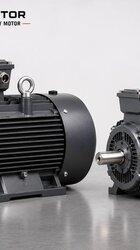
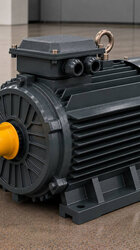
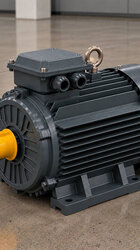
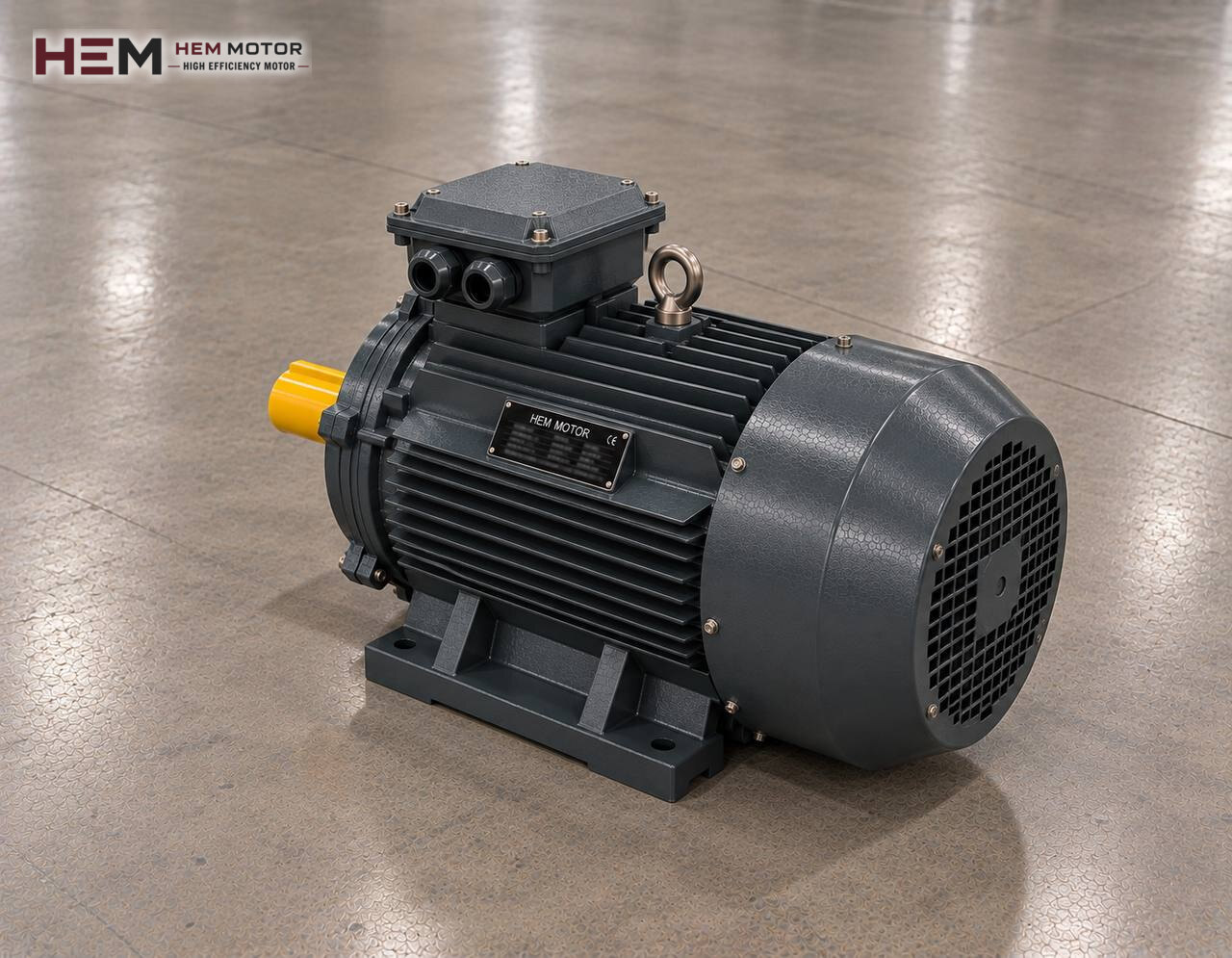
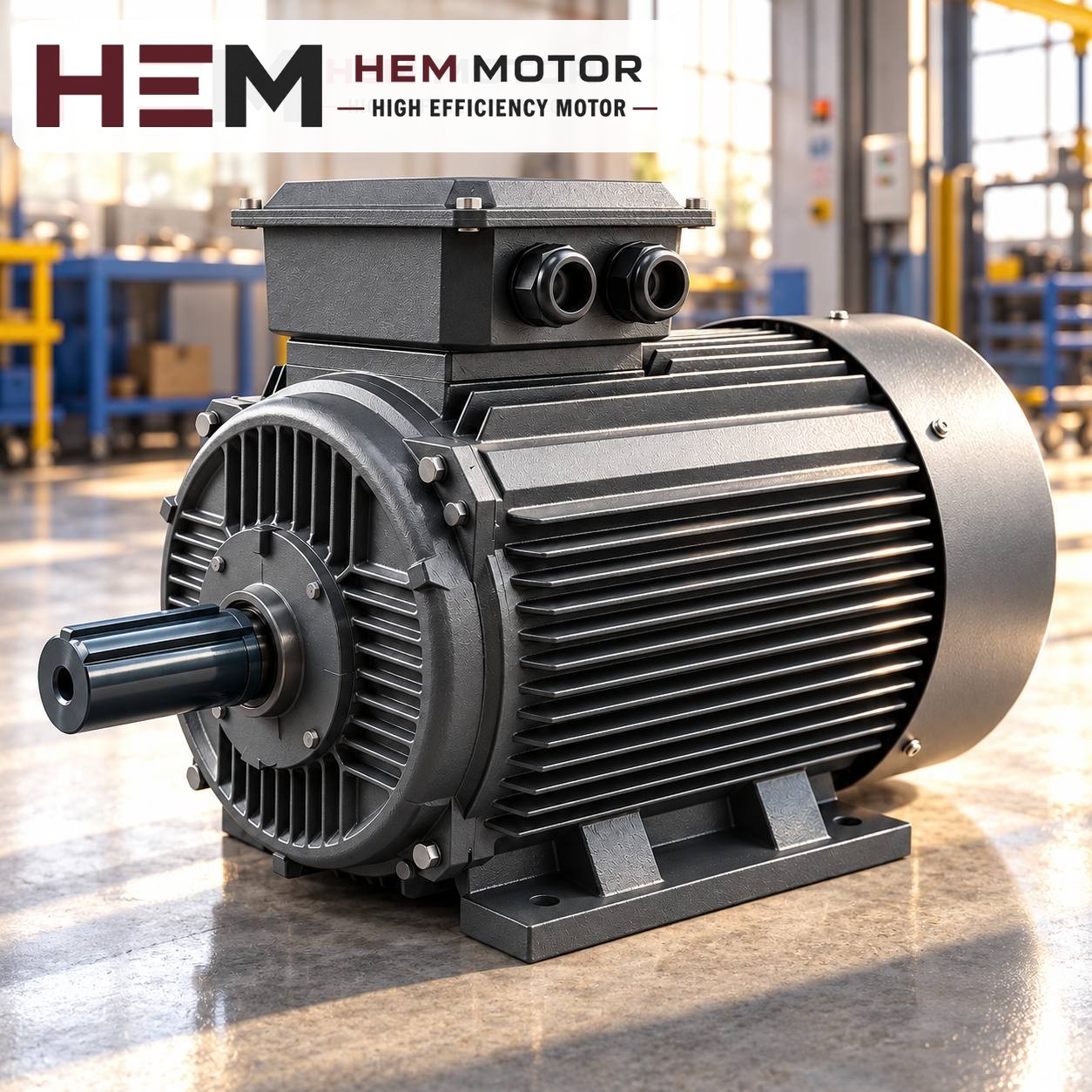
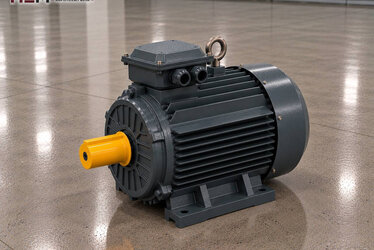
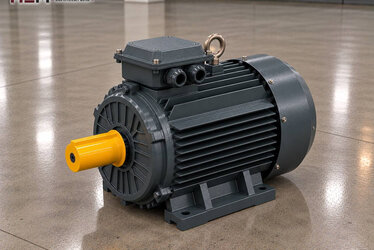
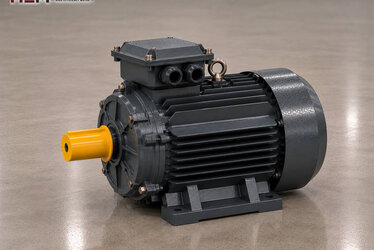
Three aluminium frame models that suit the 1460 rpm motor of the hypothetical example and loads with high inertia that stop and start frequently are listed below. All have IP55 protection and class F insulation; the full power and speed table is in the HEM Motor shop.
132S-4: 5.5 kW, 1460 rpm, 10.7 A at 400 V, rated torque 36 Nm. The model matching the speed in the example calculation.
132M2-6: 5.5 kW, 968 rpm, 12.0 A at 400 V, rated torque 54.3 Nm. Lower speed at the same power; as ω gets smaller, starting energy shrinks too.
160M-6: 7.5 kW, 970 rpm, 15.4 A at 400 V, rated torque 73.8 Nm. For those looking for torque margin on flywheel or high-inertia machines.
Those who want to reduce idling losses can consider the IE4 high efficiency series; which efficiency class is available for each model is confirmed with the order. The general table of frame and speed options is on the asynchronous electric motors page.
If you share your machine's idling power recording and the number of stops per hour via our contact page, we can assess the break-even time and the permitted start limit together. For current model information, take a look at our sales page.
Frequently Asked Questions
Does stopping a motor often increase the electricity bill?
No. The extra energy of a single start equals somewhere between a few seconds and a few minutes of idling. What really inflates the bill is motors idling for hours.
Where can I find how many starts per hour are allowed?
This value depends on motor frame, number of poles and load inertia. It should be obtained from the manufacturer's catalogue or directly from the manufacturer, stating the load inertia.
Does idling harm the motor?
Not thermally; the winding stays cooler than at full load. The harm appears rather as energy loss, low power factor and unnecessary bearing running hours.
Does contactor life affect the decision?
Yes, with very frequent switching the contactor contacts wear. The suitability of the contactor selection and utilisation category should be checked by the person responsible for the panel.
HEM Motor Models Related to This Article
The cards show example models related to the topic. A suitable motor is not chosen by power alone: compare speed, voltage, mounting, shaft and connection dimensions on the product page; if unsure, send a photo of the existing motor’s nameplate on WhatsApp.
In electric motor modernisation, motor, pump and pipeline are assessed as a single system: first the flow and head the line really needs are determined, then where the pump works o... More Details
In an energy audit for an electric motor, the measuring points should be set as the panel outgoing feeder that supplies the motor, the motor terminal box and, where possible, the s... More Details
Yes. The power drawn by the cooling fan mounted on the motor's own shaft is included in the total losses under "friction and windage loss" when efficiency is measured; the catalogu... More Details
A copper rotor has lower electrical resistance than an aluminium rotor, so it reduces rotor losses and can deliver higher efficiency in the same frame; but the efficiency class can... More Details
The test method in an efficiency report should be asked about because the same electric motor can give different efficiency values when measured by different methods, and when two ... More Details
In an electric motor replacement project, the reduction in carbon emissions is calculated by taking the difference in energy that the old and new motors draw from the supply for th... More Details
We use necessary and optional cookies to improve your experience, enhance content and analyse traffic. Under the GDPR, optional (analytics/marketing) cookies are only used with your explicit consent. Please choose your preference below.
Cookie Policy
 English
 Français
 Türkçe
 Español
 Русский
 العربية
 Deutsch
 Italiano