A copper rotor has lower electrical resistance than an aluminium rotor, so it reduces rotor losses and can deliver higher efficiency in the same frame; but the efficiency class cannot be read from rotor material alone. When assessing an electric motor, what decides is the efficiency value and IE class stated on the nameplate and in the test report; rotor material is only one of the design options that lead to that result.
Through which loss does rotor material affect efficiency?
Rotor material directly affects rotor copper loss, that is the heat produced by the current flowing in the rotor bars and short-circuit rings. The size of the loss equals slip multiplied by the power crossing the air gap: Protor ≈ s × Pair gap.
The resistivity of copper is roughly two thirds that of aluminium (general information; confirm with material data sheets). With the same slot geometry, a copper-bar rotor works with lower resistance, slips less for the same torque and its rotor loss shrinks. Lower slip means the motor turns at a slightly higher speed at rated load.
Stator copper loss, iron loss, friction and fan loss and stray losses depend little on rotor material. The difference in total efficiency depends on the share of rotor loss in total losses.
In a small motor this share is large. In a large motor it shrinks.
What differences does a copper rotor bring in manufacture and operation?
Copper melts at a much higher temperature than aluminium, so pressure die-casting moulds wear faster and production is harder. The difference is reflected in production cost and supply options.
On the operating side a few points stand out. When rotor resistance drops, starting torque may change depending on design; with the same slot shape, a copper rotor can give lower starting torque and higher starting current than aluminium. Designers balance this through slot geometry. Copper is also denser, so rotor inertia rises, and on a packaging or cutting machine with frequent stop-start this can cause an acceleration delay too small for the operator to notice but clear enough for the process engineer calculating cycle time to see in the table.
Saying "a copper rotor is better in every case" is not correct. On pumps and fans running at steady load for long periods, lower rotor loss matters; on a machine with heavy starting or very frequent starts, starting characteristics and inertia must also be taken into account.
How do you compare two motors' rotor types without measuring them?
You cannot see the rotor type without dismantling, but you can read its consequences from the nameplate and simple measurements. The basis of comparison is the nameplate efficiency, IE class and rated speed.
Value to check
Where to read it
Relation to rotor loss
Rated efficiency and IE class
Nameplate, catalogue, test report
Overall result of all losses; the main comparison criterion
Rated speed
Nameplate
At the same power and pole count, higher rated speed means lower slip and lower rotor loss
Starting current and starting torque ratio
Catalogue
Shows the effect of the rotor resistance difference on starting
Rotor inertia
Catalogue or data sheet
Affects acceleration time in stop-start applications
Slip from rated speed is simple to calculate: s = (ns − n) / ns. Hypothetical example: if two 4-pole motors are marked 1465 and 1475 rpm, their slips are about 2.3% and 1.7%; the second has clearly lower rotor loss at the same load. The comparison only makes sense between motors of the same power, pole count and voltage. Rated speeds of HEM Motor's 4-pole models are shown on each product card in the electric motor shop.
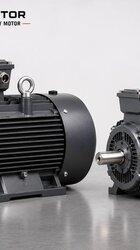
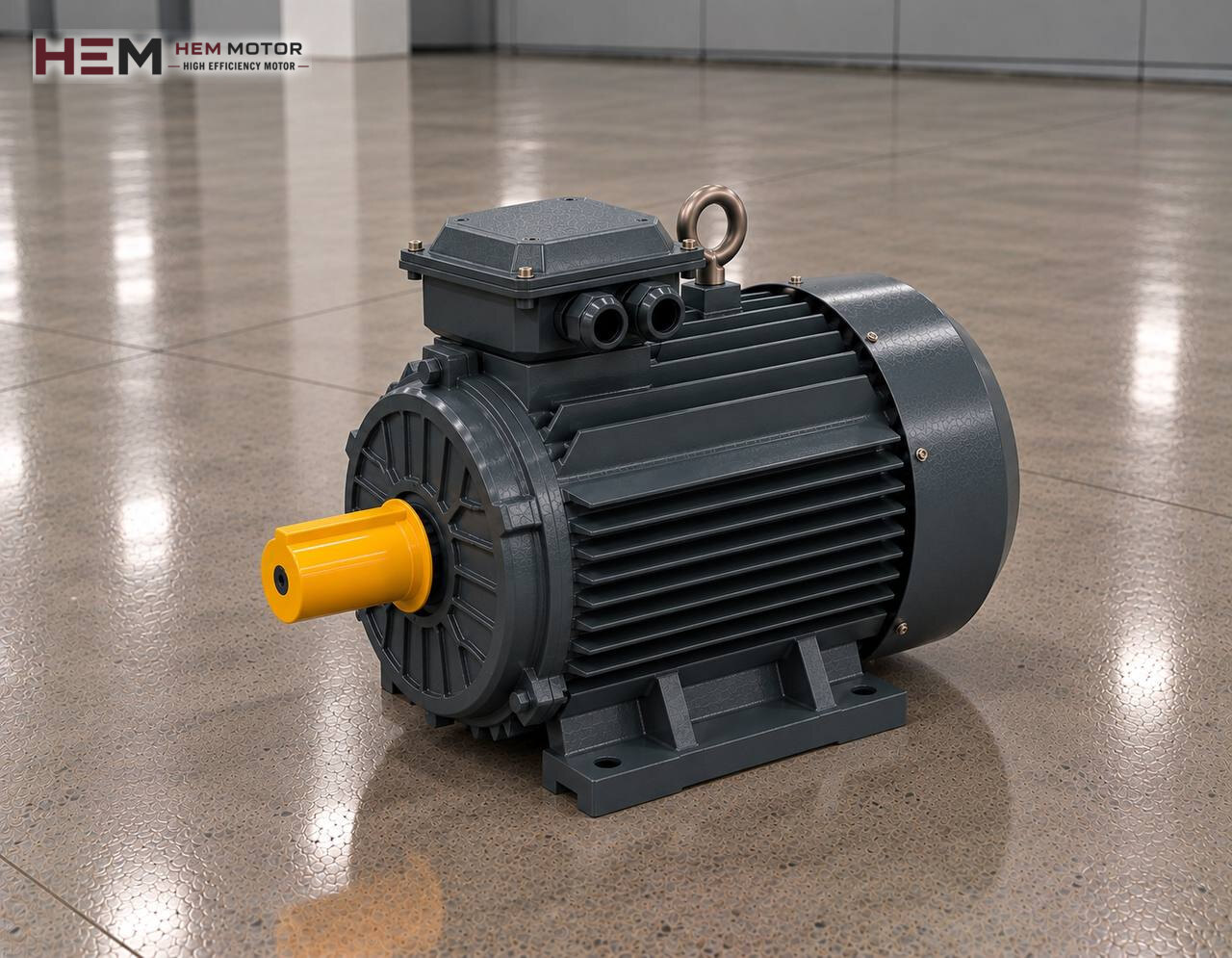
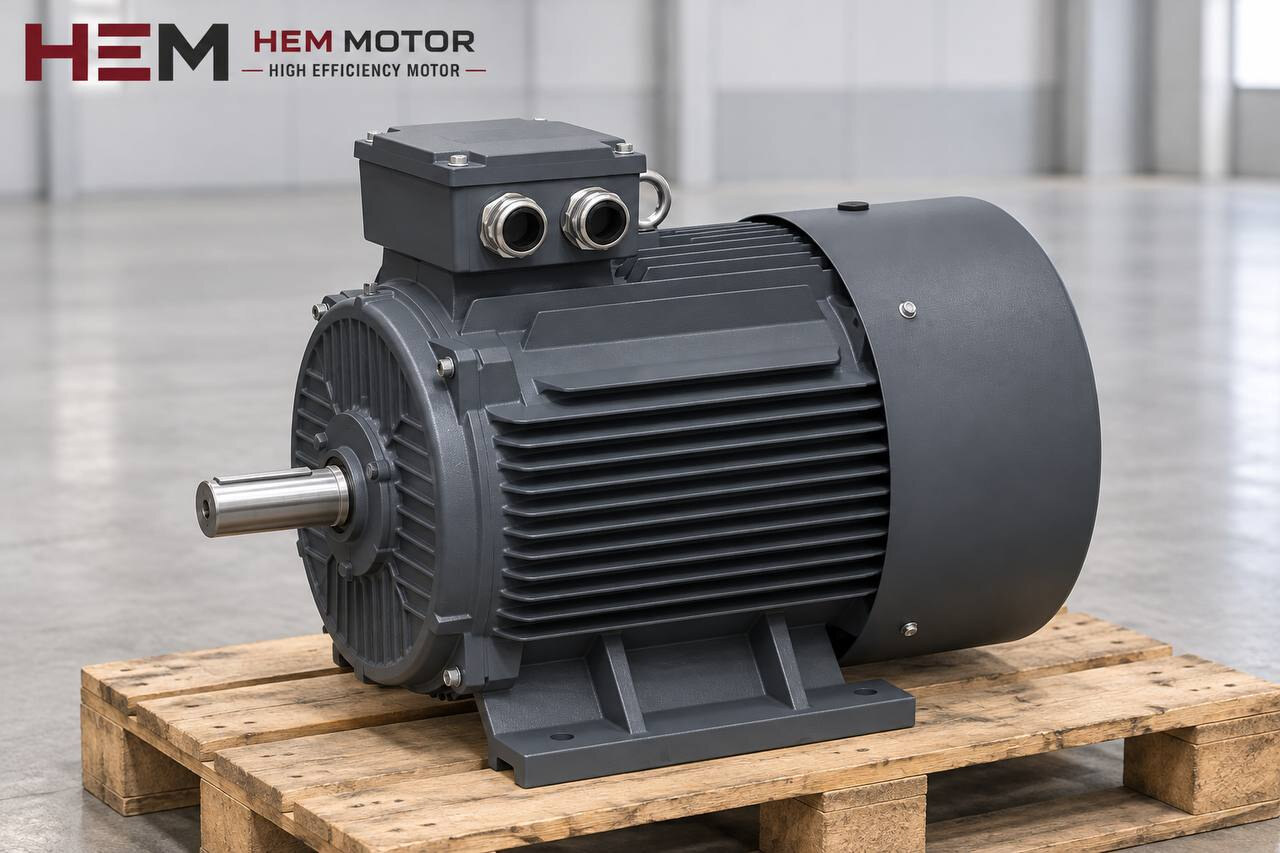
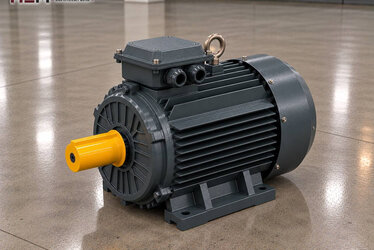
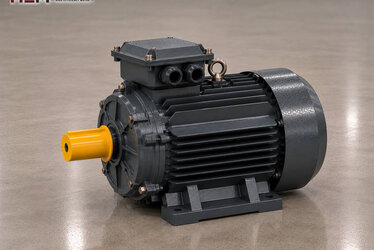
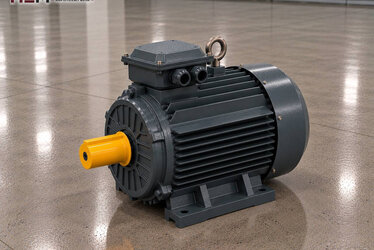
The rotor type is not visible from outside; comparison is made with nameplate efficiency and rated speed (representative image).
Prices and technical data are on the product pages; choose a model and order online.
How is the loss difference between two motors calculated on site?
The most reliable way is to run both motors on the same machine, at the same load and the same voltage, and measure input power with a power analyser. With shaft power unchanged, the difference in input power is directly the difference in losses.
Fit the first motor and, once the machine has reached thermal equilibrium under load, record active power, voltage and speed with a three-phase power analyser.
Fit the second motor with the same coupling and alignment and repeat the measurement under the same process condition.
If speeds differ, shaft power also changes on loads such as pumps and fans; so also note a process value such as flow or pressure.
Multiply the input power difference by annual running hours to find the kWh difference.
Hypothetical example: if the second motor draws 0.5 kW less on the same pump and the pump runs 5000 hours a year, the difference is 2500 kWh. Multiplying this figure by your own unit energy price gives the annual difference. One caution: a low-slip motor turns slightly faster, so a centrifugal pump delivers more flow and draws more power, which can eat part of the gain. That is why the comparison should be made with the process value held constant.
Does rotor material or the test result decide the efficiency class?
The test result decides, not the material. The IE class is determined by comparing efficiency measured with the methods in IEC 60034-2-1 against the limit in IEC 60034-30-1 (general information; confirm with the current texts of the standards); rotor material is not a requirement in the standard.
The same IE class can also be reached with an aluminium rotor, a longer lamination stack, better electrical steel and a lower-resistance stator winding. Rather than writing "copper rotor" into a purchase specification, it is a sounder approach to write the required IE class, rated efficiency and, if needed, starting values.
HEM Motor offers motors in IE3, IE4 and IE5 efficiency classes. The rotor material of a specific model and the IE class in which it is supplied are not verified information for HEM; confirm them with the order. General information by class is on the IE3 premium efficiency electric motors and IE4 super premium efficiency electric motors pages.
Which information should be requested when selecting a high-efficiency motor?
The buyer should request at least the following in writing from the supplier: IE class, efficiency values at 100%, 75% and 50% load, rated speed, starting current and torque ratios and the measurement standard applied. Rotor material can be requested as additional data but should not be made a decision criterion on its own.
Example steps from the 4-pole cast iron series for applications running at steady load for long periods:
160L-4: 15 kW, 1465 rpm, 27.3 A at 400 V, rated torque 97.8 Nm.
200L-4: 30 kW, 1475 rpm, 53.8 A at 400 V, rated torque 194.2 Nm.
225M-4: 45 kW, 1485 rpm, 80.2 A at 400 V, rated torque 289.4 Nm.
The family of these steps is on the three-phase asynchronous electric motors page; they come with IP55 and Class F insulation. IE class and rotor material per model are confirmed with the order.
If you are comparing two offers, send the nameplate or catalogue values of both motors and the application's annual running hours through our contact page; we will calculate the loss difference together and select a suitable step from the product list.
Frequently Asked Questions
Does a copper rotor motor always use less energy?
In the same design rotor loss is smaller, but total consumption depends on all losses and on how the load behaves with speed. Comparison should be made with nameplate efficiency and input power measured on site at the same load.
Can rotor material be read from the nameplate?
Usually not. The nameplate shows efficiency and IE class; rotor material is found in the catalogue or from the manufacturer.
Does a copper rotor make starting harder?
It depends on slot geometry. With low rotor resistance, starting torque may fall and starting current rise; these values are checked in the catalogue.
Is it necessary to write rotor material into the specification?
It is not necessary. Writing the required IE class, efficiency at the load points and starting values secures the outcome more directly.
HEM Motor Models Related to This Article
The cards show example models related to the topic. A suitable motor is not chosen by power alone: compare speed, voltage, mounting, shaft and connection dimensions on the product page; if unsure, send a photo of the existing motor’s nameplate on WhatsApp.
In electric motor modernisation, motor, pump and pipeline are assessed as a single system: first the flow and head the line really needs are determined, then where the pump works o... More Details
In an energy audit for an electric motor, the measuring points should be set as the panel outgoing feeder that supplies the motor, the motor terminal box and, where possible, the s... More Details
Yes. The power drawn by the cooling fan mounted on the motor's own shaft is included in the total losses under "friction and windage loss" when efficiency is measured; the catalogu... More Details
The test method in an efficiency report should be asked about because the same electric motor can give different efficiency values when measured by different methods, and when two ... More Details
In an electric motor replacement project, the reduction in carbon emissions is calculated by taking the difference in energy that the old and new motors draw from the supply for th... More Details
Excess power margin keeps the electric motor running permanently at part load: the motor does not fail, but at low load its efficiency slips a little, its power factor drops notice... More Details
We use necessary and optional cookies to improve your experience, enhance content and analyse traffic. Under the GDPR, optional (analytics/marketing) cookies are only used with your explicit consent. Please choose your preference below.
Cookie Policy
 English
 Français
 Türkçe
 Español
 Русский
 العربية
 Deutsch
 Italiano