Which Measuring Points Should Be Set in an Energy Audit for an Electric Motor?

Which Measuring Points Should Be Set in an Energy Audit for an Electric Motor?

In an energy audit for an electric motor, the measuring points should be set as the panel outgoing feeder that supplies the motor, the motor terminal box and, where possible, the shaft or driven machine side. The differences read between these three points separate cable loss, motor loss and how much work the machine really demands.

Why is a single measuring point not enough for an audit?

A single analyser reading in the panel gives the total consumption of motor, cable and machine. That figure does not show which item is large.

For example, when power on a pump line comes out high, the cause may be winding loss, a long feeder with a small cross-section, a throttled valve or a worn impeller. All four lead to the same kW reading. As measuring points multiply, these items are separated one by one and the list of recommendations stops being guesswork.

There is also a time dimension.

A five-minute measurement taken in the first hour of the morning shift shows nothing of a compressor running at half load all night. So point selection and recording time are planned together.

Which values are recorded at the panel outgoing feeder?

At the panel outgoing feeder three phase voltages, three phase currents, active power, reactive power, power factor and total harmonic distortion are recorded. This point is the reference for what the motor really draws from the supply.

The analyser's current clamps go on the cable to the motor, after the contactor or the drive input. Voltage leads are taken from the same point; voltage taken from another busbar mixes the cable drop into the measurement.

The recording interval is usually chosen between one and ten seconds and covers at least one full production cycle. For a batch mixer this is one batch, for a continuously running fan at least one full day, and for a line that stops at weekends one working week (general information; settle it with the engineer defining the audit scope).

What is measured in the motor terminal box?

In the terminal box the three phase voltages are measured with the motor running. The voltage difference between panel outgoing feeder and terminals shows the cable drop directly.

This is the step most often skipped in energy audits. On a long borehole line or an extractor at the far end of a plant, even a drop of a few percent strains the winding: as voltage falls, current rises to deliver the same shaft power, copper loss grows with the square of current and the frame runs hotter than expected. In the audit report this item is often wrongly written up as "inefficient motor"; in fact the problem lies not in the motor but in the line carrying energy to it.

Before the terminal cover is opened, the motor's rating plate is photographed. Whether the links are in star or delta and whether cable lugs show oxide or heat marks are also noted; a loose terminal screw causes resistance and unbalanced current on one phase.

As the measurement is made on a live circuit, an authorised electrician, suitable personal protective equipment and a meter of adequate category rating are essential.

What are the measuring points on the shaft and machine side?

On the shaft side speed, frame temperature and vibration are measured; on the machine side, the process values that show the work the machine does. For pumps these are mainly flow and head, for fans air volume and static pressure, for compressors discharge pressure and the loaded/unloaded time ratio.

Speed is read with an optical tachometer from reflective tape stuck on the shaft. Deviation from rated speed gives a rough idea of the motor's load ratio: at no load it approaches synchronous speed, at full load it drops to plate speed.

Frame temperature is taken with a non-contact thermometer or thermal camera, from the same spot on the motor and under the same load condition. The bearing housing area and the middle of the frame are recorded separately.

An audit without process values can state the motor's efficiency but not the system's efficiency. On a pump running against a throttled valve, the biggest loss is not in the motor but in the valve.

Prices and technical data are on the product pages; choose a model and order online.

How are the measuring points gathered in a table?

A table filled in with the same template for every motor forms the backbone of the audit report. The layout below is a common starting point on site:

Measuring pointMeasured valueInstrumentWhat does it separate?
Panel outgoing feederV, A, kW, kVAr, cosφ, THDPower analyser (logging)Total consumption and load profile
Terminal boxThree phase voltagesTrue RMS multimeterCable voltage drop
ShaftSpeedOptical tachometerApproximate load ratio
Frame and bearingsTemperature, vibrationThermal camera, vibration meterMechanical problems and overheating
MachineFlow, pressure, duty ratioProcess instrumentsSystem loss and unnecessary throttling

The motor's plate data, its running hours, whether it has been rewound and its starting method are added next to the table. This information is used directly in the payback calculation of a replacement proposal. The current list of motors that are candidates for replacement after an audit is in the HEM Motor store.

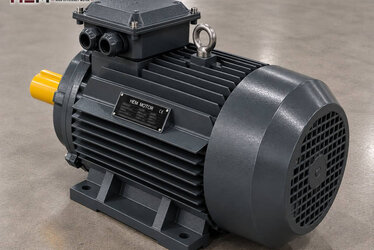
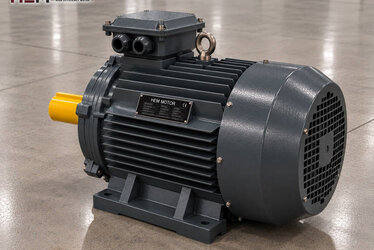
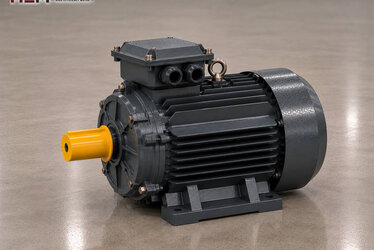
Three-phase electric motor on a test bench
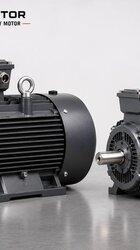
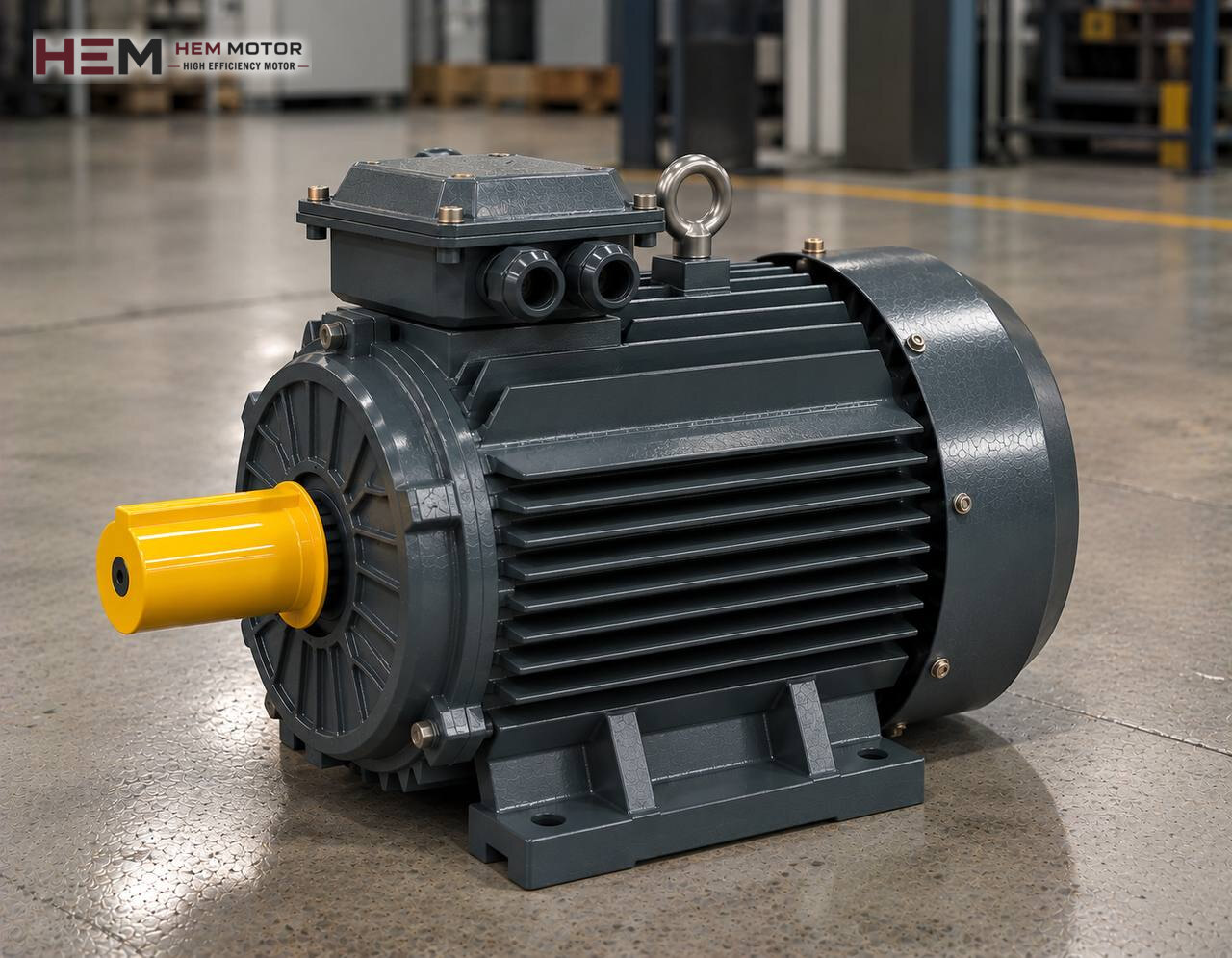
In the audit the motor's plate data, terminal voltage and shaft speed are collected in the same recording template (representative image).

Which measurement errors are most common in audits?

The first is connecting the analyser to the drive output on a drive-fed motor. The pulse-width-modulated voltage at the drive output is misread by ordinary analysers; for supply consumption the measurement is taken at the drive input.

The second is fitting a current clamp the wrong way round. Active power reads negative or the three phases do not add up. Before measuring, each clamp's arrow is turned towards the load and the phase sequence is checked on the vector diagram on the analyser screen.

The third is taking plate power as real load. A motor with a 30 kW plate may be delivering around 15 kW of shaft power at half load.

On site it is as common as a reversed clamp.

The fourth is recording time. A one-hour measurement does not represent the annual consumption of a line whose load changes on the night shift; calculations inflate accordingly.

How is motor replacement assessed after the audit?

Measured input power, load ratio and how many hours a year the machine runs are put on the same table. The loss difference is calculated by comparing the new motor's efficiency at that load with the existing motor's measured input power; its monetary value, using the site's unit energy price, is your own calculation.

The efficiency classes HEM Motor offers are IE3, IE4 and IE5; which class a given model comes with is confirmed with the order. For class comparison see the IE4 class product page, and for frame and speed options the asynchronous electric motors page.

Three continuously running steps often met in audits (all cast iron, 400/690 V):

  • 132S-4: 5.5 kW and 1460 rpm; plate current 10.7 A on a 400 V supply.
  • 160L-4: 15 kW and 1465 rpm; plate current 27.3 A on a 400 V supply.
  • 200L-4: 30 kW and 1475 rpm; plate current 53.8 A on a 400 V supply.

If you share your audit table and motor plates through the contact page, we will decide together on the step that matches the measured load ratio and find its counterpart in the sales list.

Frequently Asked Questions

How long should measurement last in an energy audit?

It should cover at least one full production cycle. One day is preferred for continuously running machines, and one working week for lines whose load differs between weekdays and weekends.

Where is the analyser connected on a drive-fed motor?

For energy drawn from the supply it is connected at the drive input. Measuring at the drive output requires a special analyser that can read PWM voltage correctly.

Why is it necessary to measure terminal voltage?

The difference between panel outgoing feeder and terminals shows the voltage drop in the cable. On long lines this drop raises current and the winding runs hotter.

HEM Motor Models Related to This Article

The cards show example models related to the topic. A suitable motor is not chosen by power alone: compare speed, voltage, mounting, shaft and connection dimensions on the product page; if unsure, send a photo of the existing motor’s nameplate on WhatsApp.

5.5 kW 1500 rpm Cast Iron Frame Electric Motor 132S-4

132S-4

5.5 kW · 1500 rpm

  • Cast iron frame · IEC 132S
  • 1460 rpm · IP55
  • Mounting: B3 foot; flange (B5/B14/B35) depending on frame, confirmed with the order

US$335.43 (€306.99)

View product
15 kW 1500 rpm Cast Iron Frame Electric Motor 160L-4

160L-4

15 kW · 1500 rpm

  • Cast iron frame · IEC 160L
  • 1465 rpm · IP55
  • Mounting: B3 foot; flange (B5/B14/B35) depending on frame, confirmed with the order

US$665.08 (€608.69)

View product
30 kW 1500 rpm Cast Iron Frame Electric Motor 200L-4

200L-4

30 kW · 1500 rpm

  • Cast iron frame · IEC 200L
  • 1475 rpm · IP55
  • Mounting: B3 foot; flange (B5/B14/B35) depending on frame, confirmed with the order

US$1,211.23 (€1,108.54)

View product

Similar Articles