In an electric motor replacement project, the reduction in carbon emissions is calculated by taking the difference in energy that the old and new motors draw from the supply for the same shaft power, multiplying it by the annual operating hours and then by the emission factor of the electricity used. The reliability of the result comes not from an assumed efficiency but from the load measured on site and a correctly chosen emission factor.
What is the basic formula for the calculation?
Power difference, operating time and emission factor are multiplied.
ΔCO₂ (t/year) = Pshaft × (1/ηold − 1/ηnew) × t / 1000 × EF
Here Pshaft is the motor's real average shaft power (kW), η the efficiencies, t the annual operating hours, and EF the emission factor of the electricity consumed per MWh (t CO₂/MWh). The first two factors give the loss difference in kW. Multiplying by hours and dividing by a thousand gives the annual difference in MWh; multiplying by EF shows the emission difference in tonnes.
The formula looks simple. The source of each term, however, is a separate job, and whoever reviews the report looks at these sources first. The most disputed item is writing the plate power instead of Pshaft; that assumes the motor runs at full load and makes the reduction look larger than it is.
How is shaft power determined on site?
The soundest way is to log the active power drawn from the supply with a three-phase power analyser over a shift or a full production cycle. Average active power is converted to shaft power by multiplying it by the old motor's known or estimated part-load efficiency.
While logging, the whole load profile has to be visible. On a block cutting machine, current changes clearly between the moment the saw enters the stone and the return stroke; a single instantaneous reading skews the calculation depending on where in that swing it falls. Reduce the logging interval to one second and take the average over the whole record.
Without an analyser, a clamp meter, voltage and speed are read together. Slip is calculated from speed, and a rough load ratio is found from the roughly linear relation between slip and load (general information; confirm with the motor manufacturer's data). This method is quick, but for an emission calculation that will be reported, an analyser log is preferable.
Where do the efficiencies of the old and new motor come from?
The new motor's efficiency is taken from its catalogue, preferably the part-load value at the measured load ratio. The old motor's efficiency is often unknown, and this is the weakest link in the calculation.
If the plate shows an efficiency, that is the starting point, but a motor that has been rewound several times may no longer match its plate value. Changes to the winding data during repair, heating of the core or increased bearing friction raise the losses. In that case, one of the low values in standard tables for motors built before IE classes were defined can be used; the chosen value and its source must be stated clearly in the report.
The example calculation uses 0.86 for the old motor and 0.92 for the new motor at the measured load ratio. Both are assumptions.
How is the emission factor chosen?
The emission factor shows how much CO₂ equivalent the electricity consumed by the plant produces per unit of energy, and it is the term that moves the calculation most. The value to use depends on the purpose of the report and on the standard it is prepared to.
For the national grid average, the current factor published by the relevant public body is used. If the plant has a renewable energy contract, the market-based method gives a different value. In corporate greenhouse gas inventories the two methods can be reported separately (general information; confirm with the consultant or verifier preparing the inventory).
The year and source of the factor go into the report. Because the renewable share in the grid changes over the years, the same motor replacement yields a different emission reduction in different years.
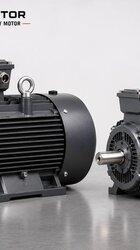
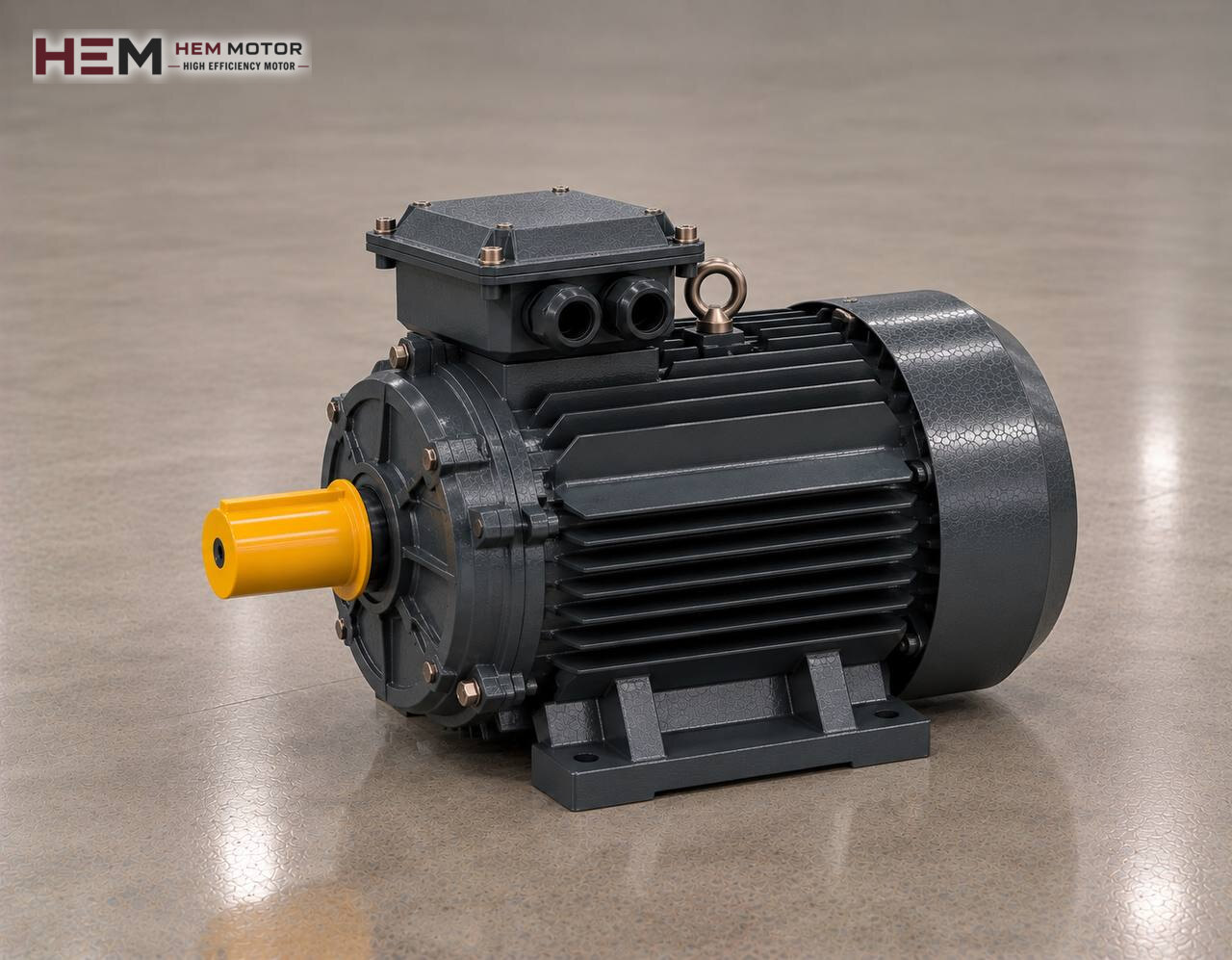
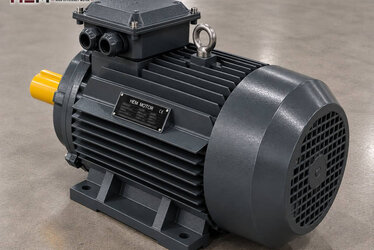
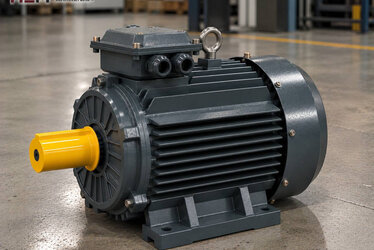
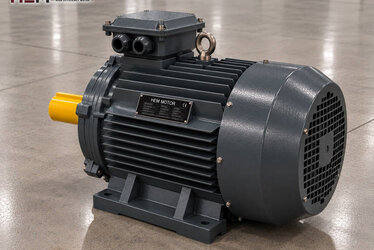
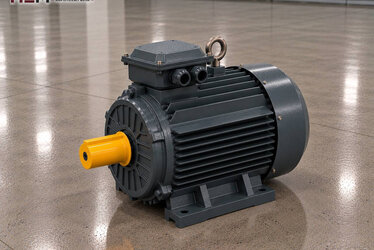
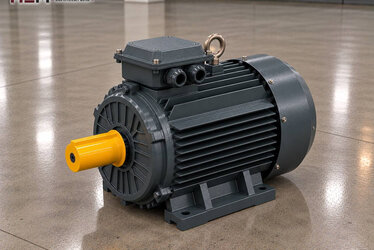
On machines with varying load, average shaft power is determined from a log of at least one cycle rather than a single reading (representative image).
Prices and technical data are on the product pages; choose a model and order online.
How is a hypothetical calculation set up step by step?
The table below is an example built with invented data for replacing an old 15 kW motor on a block cutting line. The emission factor is clearly hypothetical as well; use the current official value in your own calculation.
Step
Value (hypothetical)
Note
Average shaft power
11.2 kW
From the analyser log, with the old motor's part-load efficiency
Old motor efficiency
0.86
Assumed for a rewound motor
New motor efficiency
0.92
Part-load catalogue value assumed
Loss difference
11.2 × (1/0.86 − 1/0.92) ≈ 0.85 kW
For the same shaft power
Annual operation
5,000 hours
From the shift plan
Annual energy difference
≈ 4.25 MWh
0.85 × 5,000 / 1000
Emission factor
0.45 t CO₂/MWh
Example only; replace with the current official value
Annual reduction
≈ 1.9 t CO₂
4.25 × 0.45
The result depends linearly on shaft power. Had the plate's 15 kW been entered, the reduction would have come out about a third larger, and that difference alone would be enough reason for an auditor to reject the calculation.
Which mistakes inflate the calculation most?
The most common mistake is using plate power. The second is taking operating hours from every hour of the year instead of the shift calendar; hours when the motor stands still for maintenance, weekends or product changes must not be counted.
Speed difference is overlooked too. A higher-efficiency motor may turn slightly faster; on a centrifugal pump or fan this raises the power drawn and eats back part of the gain. Taking a second log with the same analyser after the new motor is commissioned is the easiest way to verify the calculation. If the motor is driven by a frequency converter, drive losses enter the calculation as well; our three-phase series are suitable for speed control with a frequency converter; for long periods of full torque at low speed an external fan may be needed; if the drive-to-motor cable is long, a dv/dt or sine filter is considered; these conditions are stated with the order.
Embodied emissions are a separate item.
Some reports ask for the emissions from manufacturing and transporting the new motor. This item needs product-specific data from the manufacturer; it should not be filled in by guesswork.
Which new motor options suit this calculation?
On the new motor side, HEM Motor has IE3, IE4 and IE5 options. The efficiency entered in the calculation is taken from the catalogue value of that class once it is clear which class the chosen code will come in; this match is confirmed with the order. Information on the classes can be found on the IE4 super premium and IE3 premium pages.
The four-pole, cast iron frame sizes worth looking at for the 11.2 kW shaft power in the example appear as follows in our electric motor shop:
160M-4, 11 kW; 20.4 A; 1465 rpm: very close to the measured average power; not chosen without a peak load and starting calculation.
160L-4, 15 kW; 27.3 A; 1465 rpm: for those who want to stay at the same power and move up a class.
180M-4, 18.5 kW; 33.5 A; 1470 rpm: the next size up to look at if cutting depth will increase.
These frames have IP55 protection, class F insulation and a 400/690 V winding. Other powers and speeds can be seen on the three-phase asynchronous series page.
Share your analyser log and the old motor's nameplate through our contact page, and we will confirm the new motor efficiency for the emission calculation model by model and fill in your table together. Aluminium-frame equivalents and other speeds are available on the HEM Motor sales list.
Frequently Asked Questions
Can the motor's plate power be used in the emission reduction calculation?
It should not be; plate power assumes full load. Average shaft power is found by measurement, and the calculation is built on that value.
What do you do if the old motor's efficiency is unknown?
Choose the plate value or a conservative value consistent with age and repair history. The chosen value and its justification are stated clearly in the report.
Should the calculation be verified after the new motor is commissioned?
Yes. A second log with the same analyser, under the same product and shift conditions, shows whether the calculated difference was achieved.
Does the emission factor change every year?
It changes as the generation mix in the grid changes. Whichever year's factor the report uses should be stated clearly.
HEM Motor Models Related to This Article
The cards show example models related to the topic. A suitable motor is not chosen by power alone: compare speed, voltage, mounting, shaft and connection dimensions on the product page; if unsure, send a photo of the existing motor’s nameplate on WhatsApp.
In electric motor modernisation, motor, pump and pipeline are assessed as a single system: first the flow and head the line really needs are determined, then where the pump works o... More Details
In an energy audit for an electric motor, the measuring points should be set as the panel outgoing feeder that supplies the motor, the motor terminal box and, where possible, the s... More Details
Yes. The power drawn by the cooling fan mounted on the motor's own shaft is included in the total losses under "friction and windage loss" when efficiency is measured; the catalogu... More Details
A copper rotor has lower electrical resistance than an aluminium rotor, so it reduces rotor losses and can deliver higher efficiency in the same frame; but the efficiency class can... More Details
The test method in an efficiency report should be asked about because the same electric motor can give different efficiency values when measured by different methods, and when two ... More Details
Excess power margin keeps the electric motor running permanently at part load: the motor does not fail, but at low load its efficiency slips a little, its power factor drops notice... More Details
We use necessary and optional cookies to improve your experience, enhance content and analyse traffic. Under the GDPR, optional (analytics/marketing) cookies are only used with your explicit consent. Please choose your preference below.
Cookie Policy
 English
 Français
 Türkçe
 Español
 Русский
 العربية
 Deutsch
 Italiano