English
 Français
 Türkçe
 Español
 Русский
 العربية
 Deutsch
 Italiano



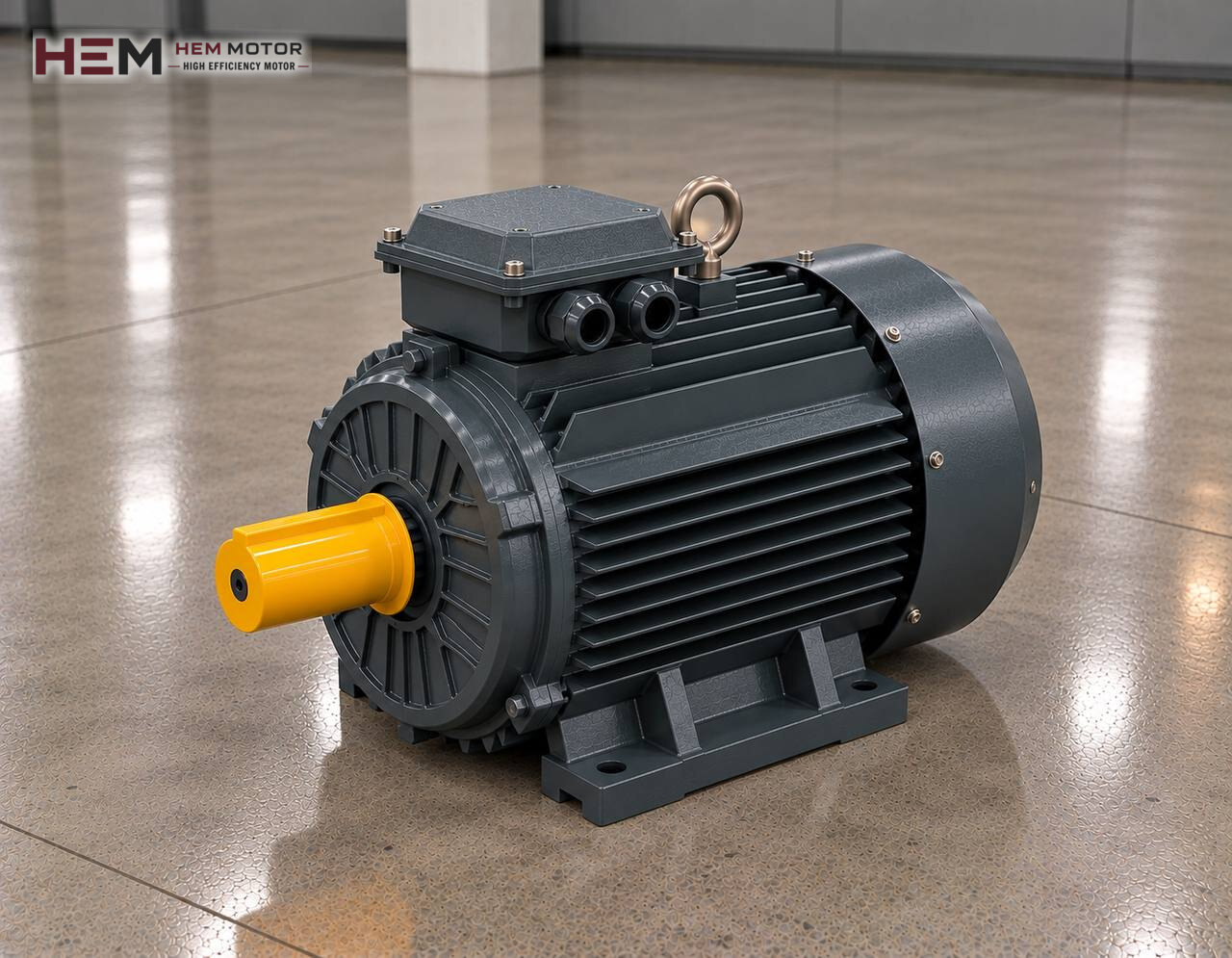

The test method in an efficiency report should be asked about because the same electric motor can give different efficiency values when measured by different methods, and when two quotes are compared this difference can be as large as the gap between efficiency classes. The method shows whether losses were measured, at what temperature they were corrected and how additional load losses were determined.
Why can efficiency be measured differently on the same motor?
Efficiency is the ratio of output to input power; but that ratio is obtained either by measuring both powers directly or by finding the losses one by one and adding them up. The route chosen changes the measurement uncertainty and which losses the result contains.
On high-efficiency machines the loss share is small. Hypothetically, on a frame in the 30 kW class with 0.94 efficiency, losses come to about 1.9 kW. Reading the power coming from the supply and the power leaving the shaft with two separate instruments and taking the difference means finding the small difference between two large numbers; a one percent error in each measurement turns into a much bigger error in the loss estimate.
Small difference, big error. That is why IEC 60034-2-1 defines which method is preferred according to motor size and efficiency level and requires the report to state which method was used (general information; confirm with the machine manufacturer).
What is the difference between the direct and indirect methods?
In the direct method the motor is coupled to a load machine; electrical power drawn from the supply is measured with a power analyser and mechanical power at the shaft with a torque meter and speed. The result is simple but depends heavily on the accuracy of the torque meter.
In the indirect method losses are determined separately: stator and rotor copper losses from winding resistance and slip, iron and friction losses from the no-load test, and additional load losses by a separate method. With the losses added up, efficiency is calculated by subtracting the losses from input power. Within the indirect method there is a further split.
Additional load losses can be found by measurement (residual loss method) or assigned with an estimated value from the standard. When an assigned value is used, efficiency can come out different from the measured value; in a report claiming a high efficiency class this detail must be asked about.
| Method | What is measured | Point to check in the report |
|---|---|---|
| Direct (input-output) | Electrical input power, shaft torque and speed | Torque meter class and calibration date |
| Indirect, additional load loss measured | Winding resistance, no-load and load tests, residual loss analysis | Load points and the reference used for temperature correction |
| Indirect, additional load loss assigned | Other losses measured, additional load loss taken from a table | Whether use of an assigned value is clearly stated |
| Calculated value | No measurement, design calculation | Whether a separate type test report exists |
Which information should be looked for in the report?
More than the number itself, what matters is how that number was obtained. The buyer and the maintenance engineer look for these lines in the report:
- The standard and method name used: direct or indirect; additional load loss measured or assigned.
- Test voltage and frequency: the same as on the plate?
- Temperature: to which reference temperature winding resistance was corrected, and the ambient temperature.
- Load points: are values given at half and three-quarter load as well as full load?
- Type of supply: sinusoidal grid or frequency converter?
- The model code and frame the report belongs to: does it match the quoted motor exactly?
The sixth item is the one most often skipped on site. A report for a different rating or a different pole number of the same family is not proof for the quoted motor.
How do temperature and voltage change the result?
Because winding resistance rises with temperature, copper losses are higher in a hot motor; if a measurement made on a cold motor is given without correction, efficiency looks better than it is. That is why the measured resistance enters the calculation converted to the reference temperature defined in the standard.
Voltage also moves the result.
A test made slightly below or above plate voltage changes magnetising current and iron losses. If voltage in your supply differs clearly from the plate value, efficiency on site will also differ from the report.
Two measurements are enough to see this difference on site, and both can be taken without stopping production. After the motor reaches thermal equilibrium, input power is read with a power analyser and speed with an optical tachometer at the same time. On a load with known shaft power, these two values give a rough but useful idea of how the report's efficiency translates to the site.