English
 Français
 Türkçe
 Español
 Русский

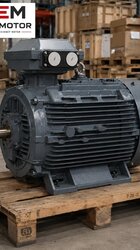
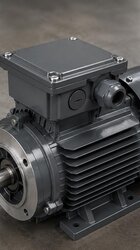

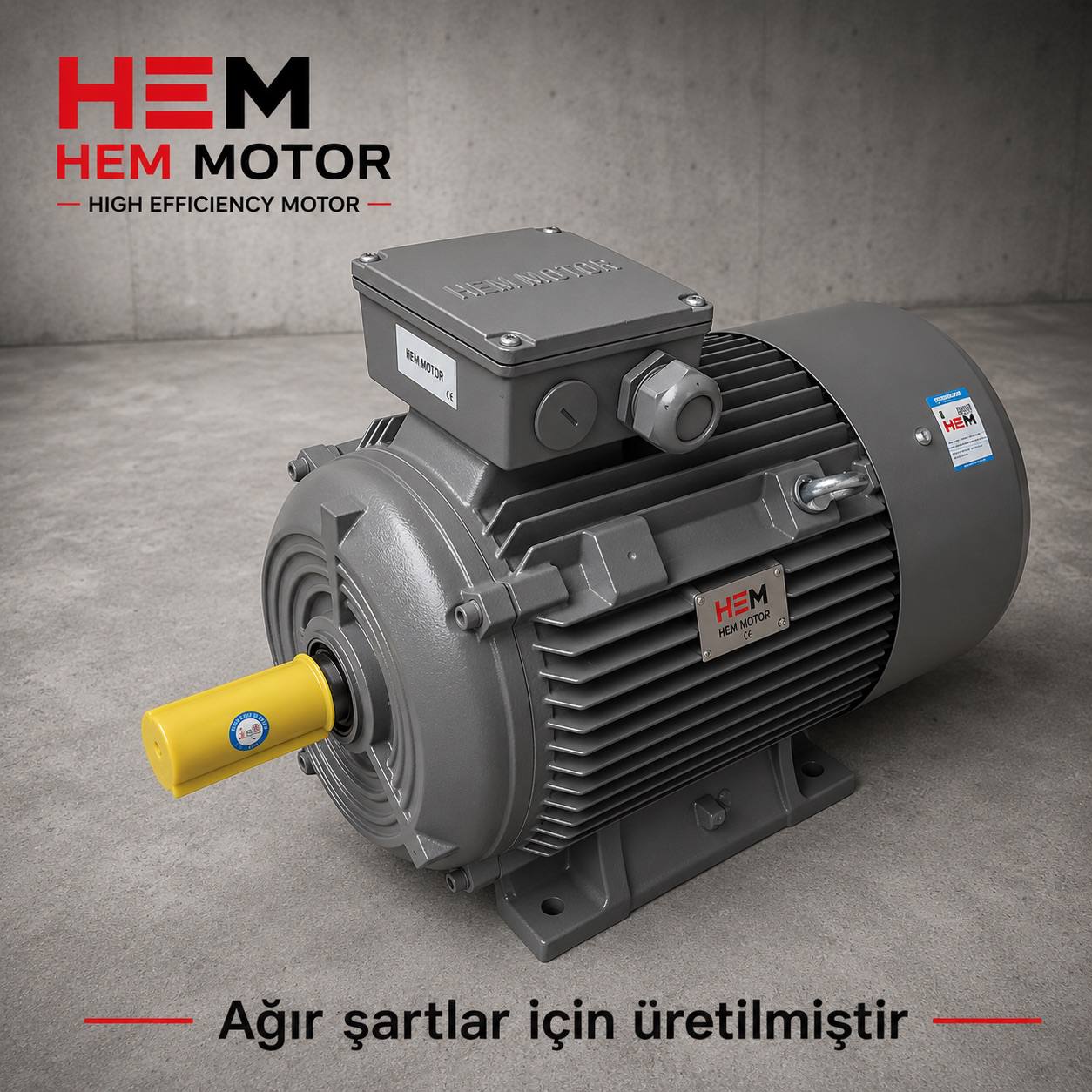

Most electric motors used in industry and everyday life fall into two groups according to the supply they run on: three-phase and single-phase motors. From the outside they look very similar; both have a frame, fan, shaft and terminal box. The real difference is inside the motor: how the windings are arranged and how the motor starts turning.
In this article we compare the two motor types in terms of design, starting, connection and applications, explain the sub-types of single-phase motors, and describe in plain language which one to choose for which job. For a general overview of all motor families (AC-DC, synchronous, servo etc.), see our Electric Motor Types guide.

What is a three-phase electric motor?
A three-phase motor runs on a 380–400 V three-phase supply. Its stator (the stationary part) carries three separate winding groups spaced evenly from each other. When the three phases energise these windings in turn, a magnetic field that rotates by itself is created inside the motor, and the rotor turns by following this field.
That is why a three-phase motor starts on its own without any additional part. There is no capacitor, centrifugal switch or auxiliary winding. Fewer parts mean fewer points of failure.
- Power range: From small ratings up to hundreds of kilowatts. HEM Motor’s three-phase range covers 0.25 kW to 355 kW.
- Starting: High starting torque; easily turns machines that start under load.
- Applications: Factories, workshops, pumping stations, compressors, conveyors, cranes, mills.
What is a single-phase electric motor?
A single-phase motor runs on the 220–230 V single-phase supply found in homes and small businesses. A single phase does not create a rotating field inside the motor, only a field that “pulsates” back and forth. For this reason a single-phase motor cannot start turning on its own.
To solve this, a main winding and an auxiliary winding are placed in the stator. A capacitor is usually connected to the auxiliary winding. The capacitor shifts the current in the auxiliary winding in time, creating an effect similar to a rotating field and setting the motor in motion.
- Power range: Generally small ratings. HEM Motor’s single-phase range covers 0.18 kW to 5.5 kW.
- Starting: Depends on the capacitor arrangement; more limited than three-phase.
- Applications: Booster sets and small pumps, fans, small compressors, workshop benches, agricultural machines.
4 types of single-phase motor
Single-phase motors are divided into four types according to how they start. You can tell which one you have from the nameplate or by counting the capacitors on the terminal box.
- Split-phase motor: Uses no capacitor; starting is achieved by winding the auxiliary coil differently. Low starting power, used for very light jobs.
- Capacitor-start motor: A large capacitor is switched in at start, and a centrifugal switch disconnects it once the motor speeds up. High starting power.
- Permanent split capacitor motor: A small capacitor stays in circuit all the time. Quiet and smooth running, but medium starting power. Common in fans and extractors.
- Capacitor-start capacitor-run motor: Uses both capacitors together. It starts strongly and runs smoothly. The most suitable single-phase type for hard jobs such as compressors and pumps that start under load.