Electric Motor for a Mono Pump: Starting Conditions with Dense Fluids

Electric Motor for a Mono Pump: Starting Conditions with Dense Fluids

When choosing an electric motor for a mono pump (progressive cavity pump with a helical rotor), the decisive factor is often not running power but the breakaway torque at the first start. The tight fit between rubber stator and metal rotor, combined with a dense fluid that sticks or settles after a long standstill, creates resistance on the shaft above rated torque; the motor and its starting arrangement must be chosen together to overcome this resistance.

Why is a mono pump a hard-starting load?

On a centrifugal pump the start is light; torque rises with speed. A mono pump, by contrast, is a positive displacement machine. The rotor turns inside the stator with a tight fit and pushes a set volume forward on every revolution. The torque required depends more on pressure than on speed, so almost full torque is needed even at zero speed.

Stator friction adds to this. The elastomer stator grips the rotor tightly; when the pump stands for a while, the rubber settles onto the rotor surface. The first turn of a pump that has stood overnight demands noticeably more than the torque the same pump needs while running. The difference is not small.

How does a dense fluid make starting harder?

Fluids such as sludge, treatment plant sediment, molasses, tomato paste or adhesive stay motionless when they stop. Solid particles settle, and some products cool and thicken. When the pump starts again it has to push this plug and set the column in the pipeline moving. As viscosity rises, pipe losses and internal pump resistance increase. In winter an outdoor treatment pump starts harder with the same fluid than in summer. The calculation is not made for a summer day. The starting condition is assessed for a pump that has had the longest standstill after the coldest night.

  • Product that dries and hardens after a long standstill,
  • Sludge with settled solid content,
  • Oil or syrup that thickens in the cold,
  • A closed or partly throttled discharge valve.

Even one of these four conditions raises starting torque noticeably. If two occur together the motor often does not budge.

How is starting torque assessed?

The pump manufacturer usually gives the required breakaway torque or its ratio to rated torque. This value is compared with the motor's starting torque. The motor's rated torque is found as follows:

T [Nm] = 9550 × P [kW] / n [rpm]

On a geared drive, torque at the pump shaft is motor torque multiplied by the reduction ratio and gearbox efficiency (general information; confirm values with the pump and gearbox manufacturer). The motor's starting torque is given in the catalogue as a multiple of rated torque; this ratio is read from the model catalogue.

A simple rule: the breakaway torque the pump needs must lie below the torque the motor can give with that starting method, with a reasonable margin between them. Since voltage drop reduces torque with its square, this safety margin is opened a little wider on sites with long cables and weak supply.
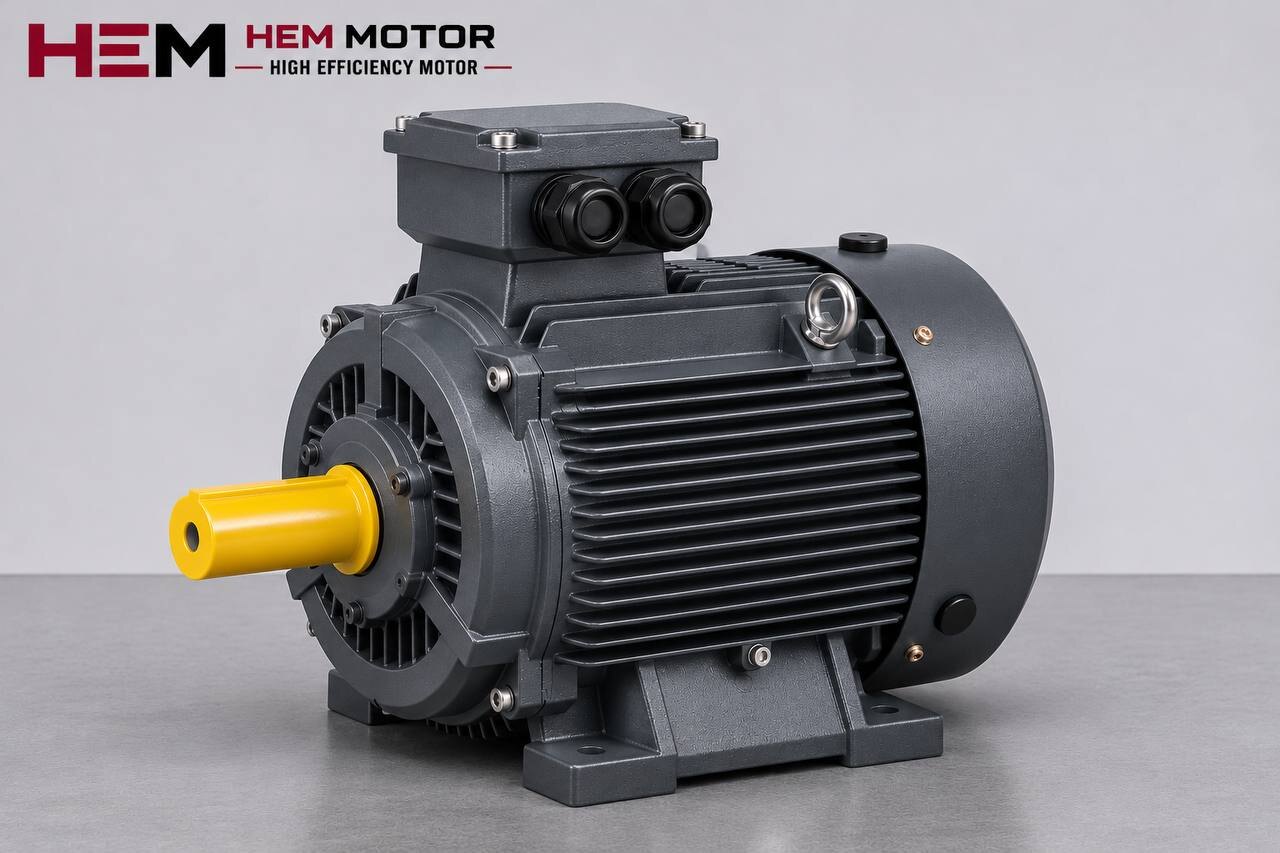
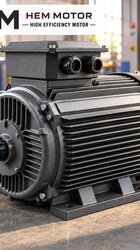
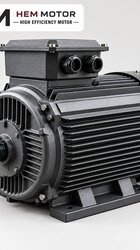
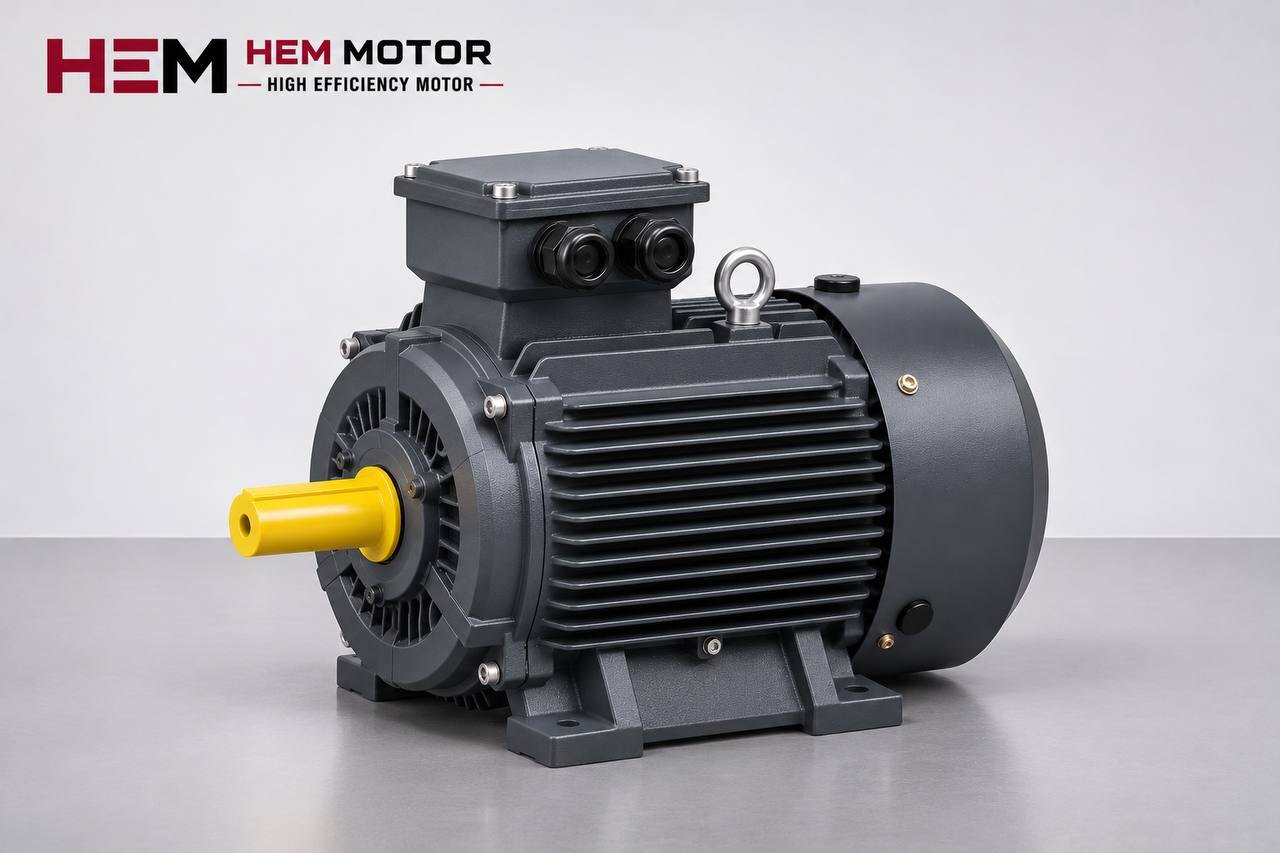
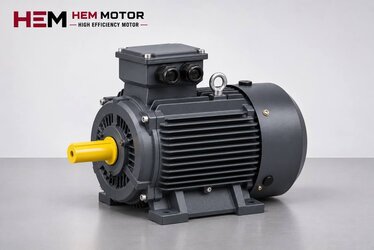
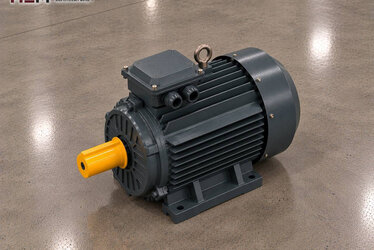
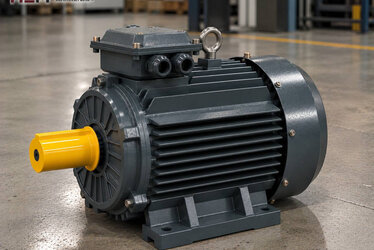
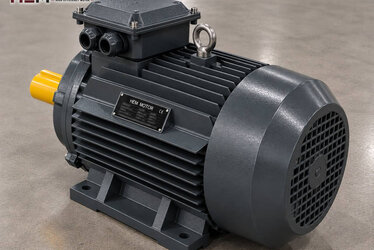
Foot-mounted B3 three-phase electric motor
On positive displacement pumps the motor is chosen by starting torque as well as running power (representative image).

Which starting method is suitable?

MethodTorque given at startComment for a mono pump
Direct-on-line startThe motor's full starting torqueMost reliable route at small powers; starting current must suit the supply
Star-deltaRoughly one third of direct startingOften insufficient for starting under load; assess carefully
Soft starterFalls together with voltageReduces torque while limiting current; limited with dense fluids
Frequency converterCan give high torque at low speedUsually the most suitable option for flow adjustment and controlled starting

Star-delta is a frequently chosen method that causes trouble on mono pumps. In star the voltage per winding falls and torque drops to roughly one third; the rotor may stay motionless inside the rubber. The motor groans in this state, and when the timer switches to delta a hard current surge passes through the winding and the breaker may trip.

A frequency converter can give the motor's rated torque at low frequency, and briefly more. With the current limit setting the start becomes soft. Torque stays where it is. Pump speed can also be adjusted to the process.

Our three-phase series are suitable for speed control with a frequency converter; for long periods of full-torque operation at low speed an external fan may be needed; if the drive–motor cable is long a dv/dt or sine filter is considered; these conditions are stated with the order.

Prices and technical data are on the product pages; choose a model and order online.

How are motor power and speed chosen?

Mono pumps mostly run at low speed, around a few hundred rpm. In most plants this slowness is achieved by combining a four-pole drive with a gearbox. On converter systems motor frequency is lowered too; however, during long low-speed operation the fan of a self-cooled motor slows down as well.

When choosing power, a margin is added to the shaft power given by the pump manufacturer, allowing for the fact that fluid viscosity and pressure may change. The motor should stay below plate current at real load and have enough torque reserve at start. General options for pump drives can be found on the pump electric motors page.

For motors combined with a gearbox, flange and shaft dimensions matter; you can compare frame dimensions in the technical drawings and power steps in the electric motor shop.

Which measures on site make starting easier?

  • Flushing the line briefly with clean water or a light fluid before stopping the pump,
  • Making sure the discharge valve is open at start,
  • Heating or insulating pipe and pump casing in cold surroundings,
  • Never running the pump dry; dry running can heat and ruin the stator within minutes,
  • Fitting a pressure switch or relief valve on the discharge line.

If the motor does not turn at start or the protection trips, first try to turn the shaft by hand or with a lever. It is a simple but telling test. If the shaft does not turn by hand, the problem most likely lies in the pump, not the motor.

Models that can serve as examples for mono pump drives

Three four-pole cast iron steps often used on pump drives brought down to low speed through a gearbox:

  • 100L1-4: 2.2 kW, 1450 rpm, 4.52 A at 400 V, 14.5 Nm.
  • 112M-4: 4 kW, 1450 rpm, 7.95 A at 400 V, 26.3 Nm.
  • 132S-4: 5.5 kW, 1460 rpm, 10.7 A at 400 V, 36 Nm.

The 2.2 kW model has a 230/400 V winding, the 4 kW and 5.5 kW models 400/690 V Δ/Y; all three have IP55 protection and insulation class F. The starting torque ratio of each model is given on the catalogue page. For similar drives such as fans and compressors, see also the fan and extractor motors and compressor electric motors pages.

If you share the pump model, type of fluid, discharge pressure, gearbox ratio and starting arrangement via our contact page, we will assess together the motor power suitable in terms of starting torque. Current prices by model are listed on the HEM Motor sales page.

Frequently Asked Questions

Can star-delta be used on a mono pump?

With low pressure and free-flowing products it is sometimes enough. With dense fluids and starts under load, the low torque in star is often not enough to turn the rotor.

Does choosing a larger motor solve the starting problem?

Starting torque rises, but the motor runs at light load. Converter operation or a suitable starting arrangement is generally more balanced.

The pump turns hard at first installation; is that normal?

A new stator grips the rotor tightly and friction is high in the first hours. The pump manufacturer's running-in instructions should be followed, and the pump must not be run dry.

Which settings matter on a converter system?

Starting current limit, torque boost at low frequency and acceleration time are set according to the pump condition. During slow and long operation, cooling is considered separately.

HEM Motor Models Related to This Article

The cards show example models related to the topic. A suitable motor is not chosen by power alone: compare speed, voltage, mounting, shaft and connection dimensions on the product page; if unsure, send a photo of the existing motor’s nameplate on WhatsApp.

2.2 kW 1500 rpm Cast Iron Frame Electric Motor 100L1-4

100L1-4

2.2 kW · 1500 rpm

  • Cast iron frame · IEC 100L
  • 1450 rpm · IP55
  • Mounting: B3 foot; flange (B5/B14/B35) depending on frame, confirmed with the order

US$184.70 (€169.04)

View product
4 kW 1500 rpm Cast Iron Frame Electric Motor 112M-4

112M-4

4 kW · 1500 rpm

  • Cast iron frame · IEC 112M
  • 1450 rpm · IP55
  • Mounting: B3 foot; flange (B5/B14/B35) depending on frame, confirmed with the order

US$249.49 (€228.34)

View product
5.5 kW 1500 rpm Cast Iron Frame Electric Motor 132S-4

132S-4

5.5 kW · 1500 rpm

  • Cast iron frame · IEC 132S
  • 1460 rpm · IP55
  • Mounting: B3 foot; flange (B5/B14/B35) depending on frame, confirmed with the order

US$335.43 (€306.99)

View product

Similar Articles