A pellet mill turns a powdered feed mix into compressed pellets by forcing it through a die under pressure and heat. Although it looks like a single machine from the outside, it is in fact a system made up of several separate drives: the main motor that turns the die and rollers, the feeder screw that meters the mix into the machine, the conditioner that treats it with steam, and the cooler, crumbler, screen and conveying equipment further down the line. Each has a different load character; consequently, each drive must be considered separately when choosing motors. In this article we sort the motors of a pellet line by their duty and explain what is decisive in the selection of each one and which information is needed with the order.
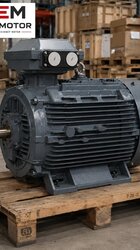
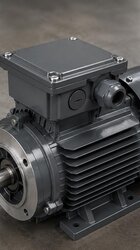
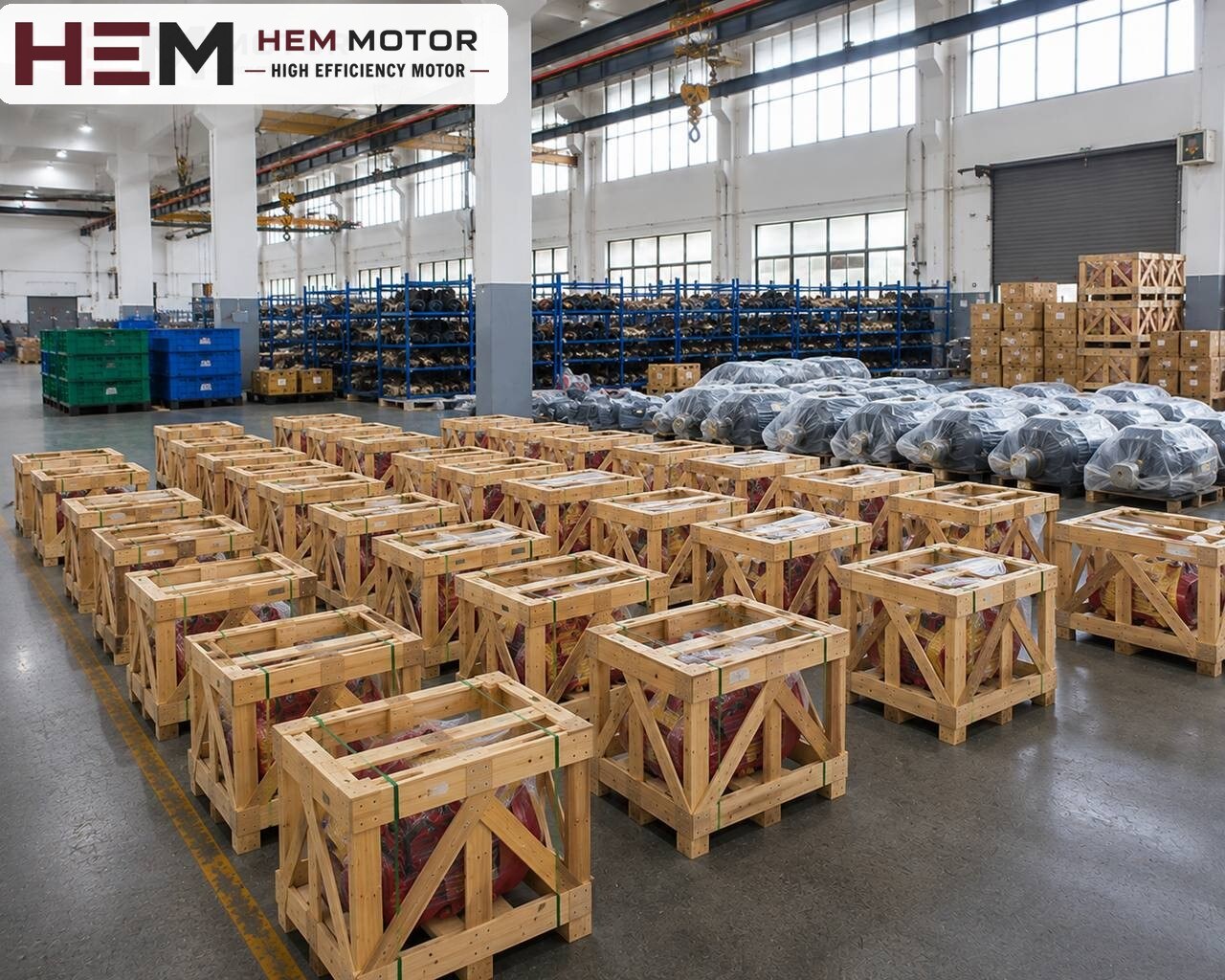
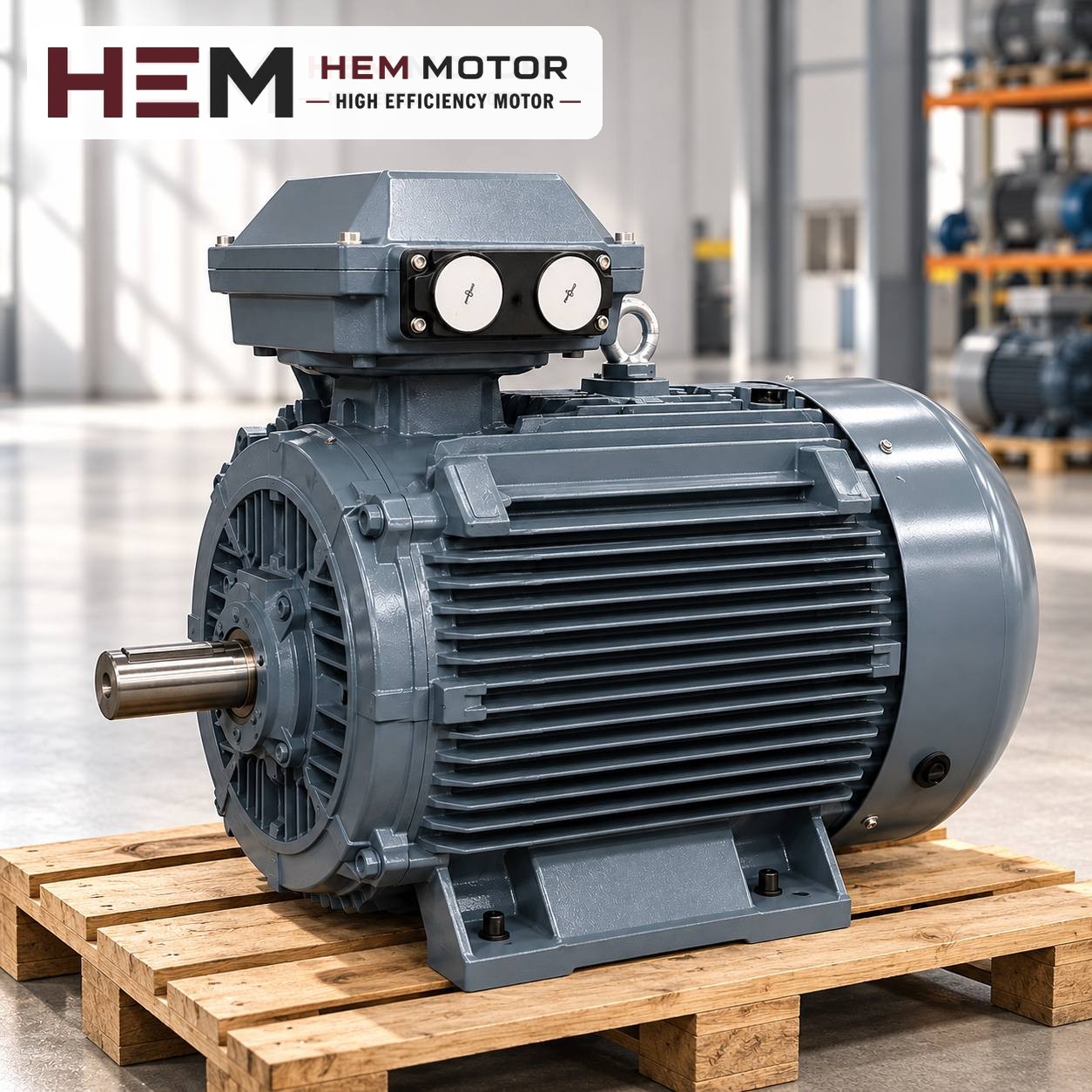
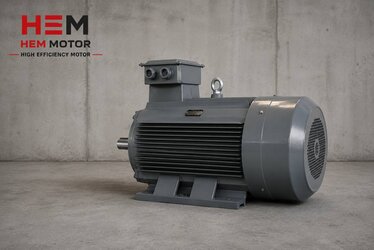
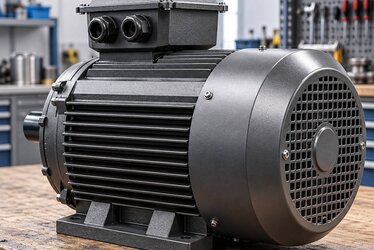
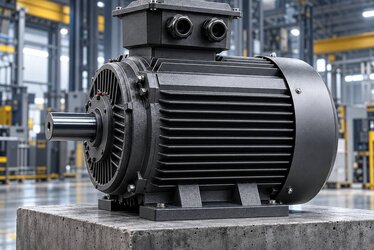
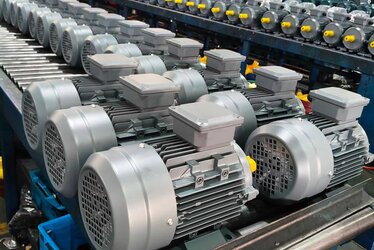
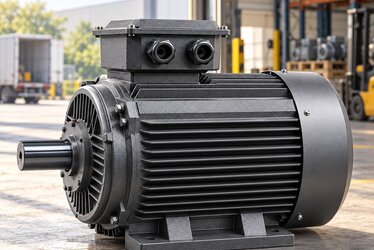
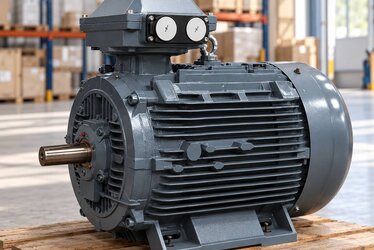
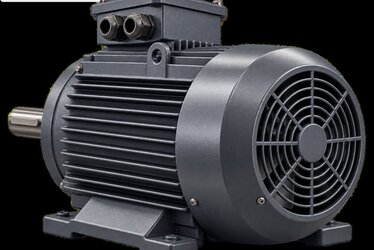
Besides the main drive, a pellet line contains many small auxiliary motors (representative image).
Which motors are found on a pellet line?
On a typical feed pellet line, the motors fall roughly into three groups. This division makes it easier to understand which motor is chosen for heavy duty and which for precise speed control.
Main drive: On ring die presses, this is the motor that turns the die and, through the rollers, forces the mix through the die holes. The largest power of the line is here, and the load changes constantly with the condition of the die and the properties of the mix.
Feeding and conditioning: The feeder screw delivers the mix into the machine at a controlled rate; the conditioner mixes it while adding steam and, if needed, liquid additives. The feeder screw usually runs on a frequency inverter, because the feed rate is adjusted according to the main motor's current.
Rest of the line: Pellet cooler, cooler exhaust fan, pellet crumbler, screen, bucket elevator and screw conveyors. These are usually low and medium power drives, independent of one another.
Main drive motor: load character and power decision
The main motor of a pellet press directly determines the capacity of the line. The energy needed for the mix to pass through the die holes depends on the raw material recipe, the fat and fibre content, the conditioning temperature, the hole diameter and thickness of the die (compression ratio) and the gap between roller and die. The same machine can draw a completely different current with a different recipe.
For this reason the main motor power is the machine manufacturer's value. The manufacturer designs the die diameter, number of rollers, gearbox or belt arrangement and target capacity around this power. If the motor of an existing press is being replaced, the power, speed, voltage and IEC frame code on the old motor's nameplate are the reference. If a larger motor is being considered for a capacity increase, whether the gearbox, die bearing and shaft can withstand the new power should be assessed together with the machine manufacturer; increasing motor power on its own strains the weakest link of the mechanical chain.
Choking and sudden load
The hardest moment for the main drive is when the die chokes. When a wet or overfed mix fills the die holes, the rollers slip and the current rises rapidly. In this case, what protects the motor is a correctly set motor protection circuit breaker and the shear pin or shear coupling found on most machines. Slowing the feeder screw automatically according to the main motor current reduces the frequency of choking; this contributes directly to the life of the main motor.
About the service factor
HEM Motor's models of 75 kW and above have a service factor of 1.15; in other words, these motors carry a 15% power reserve above the nameplate power. On fluctuating loads such as a pellet press, this reserve is a safety margin. It should not be used as a justification for choosing a smaller motor than needed; power is still selected according to the machine manufacturer's value.
Main motor connection, speed and starting
On pellet presses, the main motor is connected to the die either through a gearbox or with a belt and pulley arrangement. On gearbox presses the motor is usually a foot-mounted (B3) motor connected by a coupling; on belt presses the pulley ratio determines the die speed. In both cases the motor speed must be the same as the speed specified by the machine manufacturer. In common practice 4-pole (1,500 rpm synchronous) motors are used; however, confirm the speed your machine requires from the nameplate or the manufacturer. In a belt arrangement, changing the speed without recalculating the pulley ratio changes the die speed and spoils pellet quality.
On high-power main motors, star-delta starters, soft starters or frequency inverters are used to protect the network and the mechanical parts. Presses normally start empty and the feed is switched on after the motor has reached speed; as long as this sequence is kept, star-delta starting is sufficient in most cases. If the die stopped full, cleaning it before starting protects both the motor and the gearbox. The general rule for operation with a frequency inverter is explained in the inverter use question.
Prices and technical data are on the product pages; choose a model and order online.
Auxiliary motors: small drives that must not falter
If one of the auxiliary motors stops while the main motor is running, the line stops too. That is why choosing the small motors needs at least as much care as the main motor.
Feeder screw: Usually runs geared and on a frequency inverter; it is expected to turn smoothly over a wide speed range. If it will run at full torque at low speed for long periods, the need for a separate fan is discussed with the order.
Conditioner: Continuously mixes the steam-conditioned mash. The motor may be exposed to steam leaks and hot, humid air; terminal box gaskets and cable glands matter in this respect. Care should be taken that the motor frame is not positioned directly next to the steam line.
Cooler and exhaust fan: The fan that provides the air flow of the pellet cooler is a continuously running load. The fan motor's speed is determined by the fan impeller; the speed is not changed when the motor is replaced.
Crumbler, screen, elevator and conveyors: Mostly low-power geared or belt drives. In spare motor planning, standardising motors of the same frame and voltage speeds up replacement in the event of a failure.
A pellet line is dusty from end to end, and the area around the conditioner and cooler is humid. The IP55 class protects the motor against dust ingress and water splashes, but a layer of dust built up on the frame fins prevents heat from being dissipated; the fins and fan cover should therefore be cleaned periodically. In plants where condensation occurs, an anti-condensation heater and a winding sensor (PTC or PT100) can be requested as order options.
Example models
We have chosen four cast iron models to show the power levels encountered in main and auxiliary duties on pellet lines. The values in the list are not a recommendation; what applies to your press is the power stated by the manufacturer and the nameplate of the removed motor. All four models have IP55 protection and class F insulation and are all for 50 Hz networks; the first three are rated 400/690 V (Δ/Y) and therefore run in delta connection at 400 V.
280S-4: 75 kW (100 HP), 4 poles, 1,486 rpm, IEC 280S, 129 A at 400 V, rated torque 482 Nm, service factor 1.15. For the main drive of medium-to-large capacity presses.
250M-4: 55 kW (75 HP), 4 poles, 1,485 rpm, IEC 250M, 97.6 A at 400 V, rated torque 353.7 Nm. For the main drive of smaller presses.
132S-4: 5.5 kW, a 4-pole model with a rated speed of 1,460 rpm; IEC 132S frame, rated current 10.7 A (400 V), rated torque 36 Nm. For auxiliary duties such as the conditioner or cooler drive.
100L1-4: 2.2 kW (3 HP), 4 poles, 1,450 rpm, IEC 100L, 4.52 A at 400 V, rated torque 14.5 Nm. For the feeder screw and small conveyors; as it is rated 230/400 V (Δ/Y), it is connected in star on a 400 V line.
Hypothetical example: assessing the main motor and the feeder motor together
The situation we describe did not actually happen; it is a scenario designed to show how the main and auxiliary motors should be considered together. Suppose that in a feed mill the winding of the 75 kW main motor of a gearbox press has burned out. The nameplate shows 75 kW, around 1,486 rpm, a 280S frame and 400/690 V. The candidate model is the 280S-4. However, the failure history shows that the die choked frequently and that the feeder screw ran at a fixed speed. In this case, along with replacing the main motor, putting the feeder screw on a frequency inverter and adjusting the feed automatically according to the main motor current is considered. If the feeder motor's nameplate reads 2.2 kW and a 100L frame, the 100L1-4 is a candidate for this duty; if long operation at low speed on the inverter is planned, this information is stated with the order.
What to send with the order
So that we can identify the right model for the motors on your pellet line, send the following information separately for each drive:
The duty of the drive (main press, feeder, conditioner, cooler, fan, conveyor)
The nameplate of the removed motor (a photo is enough) or the power and speed stated by the press manufacturer
Connection type: gearbox and coupling, belt and pulley, or flange connection to a reducer
Network voltage, starting method and whether the drive has a frequency inverter
Ambient conditions: dust, steam, humidity and daily operating time
All models on sale and the current price of each are listed on the buy electric motors page. Ask for the right model with the nameplates of the motors on your line; you can also send a combined list for several drives. For other matters, write to us via the contact page.
HEM Motor Models Related to This Article
The cards show example models related to the topic. A suitable motor is not chosen by power alone: compare speed, voltage, mounting, shaft and connection dimensions on the product page; if unsure, send a photo of the existing motor’s nameplate on WhatsApp.
There is no single "seed cleaner motor" in a seed cleaning and grading machine; the machine consists of several motors, each carrying a different load: the drive that shakes the si... More Details
If a compressor motor cannot start against tank pressure, the cause is usually not the motor's power. The most common causes are a faulty unloader or check valve, low supply voltag... More Details
On a dough kneading machine, the spiral or fork arm folds the dough with a slow but powerful movement; on most models the bowl also turns about its own axis. This need for low spee... More Details
On a circular saw, the toothed blade cuts the material at dozens of revolutions per second; on most machines the blade is attached to the motor shaft or to a shaft very close to th... More Details
On a wood band saw, the blade that does the cutting runs over two large wheels; the motor usually turns the lower wheel through a belt and pulley. Thanks to this arrangement, a ban... More Details
On a bridge-type marble cutting machine, the main motor is the part that turns the diamond blade and carries the heaviest load throughout the cut. When this motor has to be replace... More Details
We use necessary and optional cookies to improve your experience, enhance content and analyse traffic. Under the GDPR, optional (analytics/marketing) cookies are only used with your explicit consent. Please choose your preference below.
Cookie Policy
 English
 Français
 Türkçe
 Español
 Русский