English
 Français
 Türkçe
 Español
 Русский

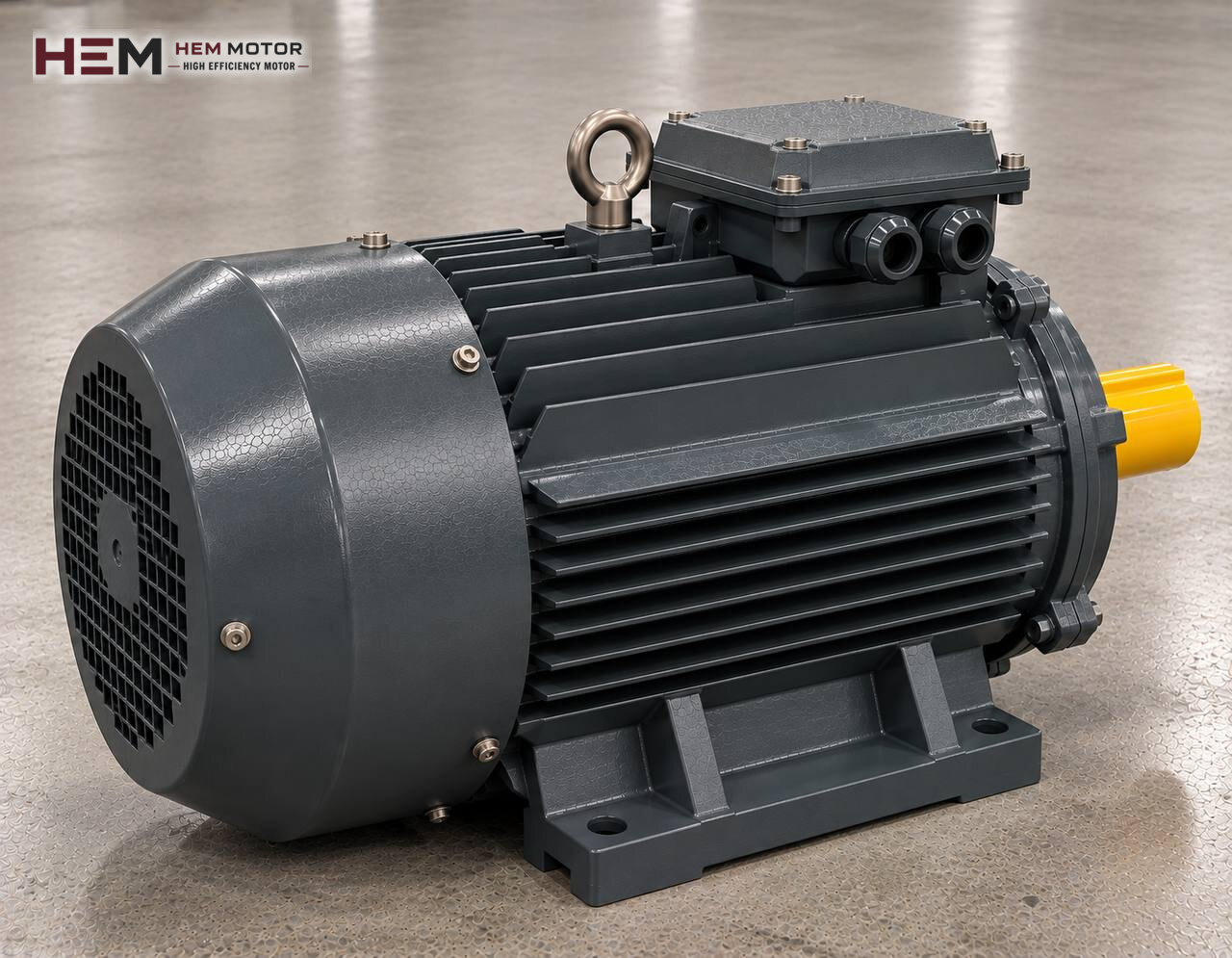
A telescopic conveyor is belt loading equipment whose nested sections extend into a truck or container, carrying cartons and parcels into the vehicle or out of it. It is used in parcel hubs, distribution warehouses and e-commerce shipping docks so that the operator can hand over or pick up goods without walking deep into the vehicle. This page explains which movements the motors perform on a telescopic conveyor and how they are selected; the other machines in the sector are on the electric motors for handling systems page.

Two Separate Movements: Running the Belt and Extending the Sections
On a telescopic conveyor the motor's job is not a single one; two different movements are made by two different drives. The first is the belt drive: one motor turns the drive pulley through a gearbox and the belt carries the load. The second is the extend and retract drive: another motor, again through a gearbox, pulls a chain, rack or cable arrangement that moves the sections forwards and backwards.
These two drives are not interchangeable and are not selected by the same criteria. The belt motor runs for long periods throughout the shift; the extension motor runs a few times per vehicle, briefly and in both directions. Some models also have a small hydraulic unit or an electric lifting mechanism to tilt the conveyor's front end up and down; that drive is likewise assessed with its own data.
There are also things the motors do not do: the alignment of the sections, keeping the front end at a constant height and stopping the section movement at the desired point are ensured by the machine's mechanical and control arrangement, not by the motor.
Belt Drive: Changing Conveying Length and Load
As the telescopic conveyor extends, the distance the load travels on the belt increases, but the total belt length does not change; the extra belt is held in a take-up and storage loop inside the machine body. The belt drive load therefore does not rise linearly with length, but it increases with the number of cartons on the belt and with pulley friction. Starting the belt on a fully extended conveyor covered with cartons is the hardest condition.
The conveyor manufacturer determines the belt motor power according to belt speed, the largest load to be carried, belt type and number of pulleys. Belt speed is usually constant; if speed adjustment is wanted, a frequency converter is used. Since the belt direction is reversed for loading and unloading, the motor must be able to run in both directions; on a three-phase motor the direction change is made by the control circuit or the drive.
General selection topics for a classic belt conveyor are on the belt conveyor motor page; here we only cover the differences brought by the telescopic design.
Extend and Retract Drive: Short, Reversing Operation
The extension motor slides the sections along rails. The movement is short, but each time the heavy mass of the sections has to be set in motion; at the first moment friction and inertia strain the motor together. The conveyor extends as it enters the vehicle and retracts when the job is done; the motor runs in at least two directions for every vehicle, and the operator may start it frequently with short jogs to correct the position.
Stopping the sections at the desired place and preventing them from sliding on their own when the vehicle leaves the dock are ensured by the brake in the extension drive, the gearbox's holding behaviour and the limit switches. This arrangement is the conveyor manufacturer's design. If the design calls for a brake motor, state it in the order; brake selection and adjustment remain on the machine side.
Information to Gather for a Quotation
In a motor request for a telescopic conveyor, the drive concerned must be stated first; the belt motor and the extension motor may have different power and speed. For each of them we need: the existing motor's nameplate values, the type and input flange of the gearbox it is connected to, the motor's mounting arrangement, supply voltage, whether a drive is used and the number of starts per hour.
At machine level, the number of sections, the longest extension length, belt speed, the heaviest carton carried and the daily operating time are useful. The manufacturer calculates the conveyor's power from these data; it cannot be said that a single kW value suits every telescopic conveyor.
Power and Speed: Gearbox Input Versus Pulley Speed
In both drives the motor turns the gearbox input. The motor speed (usually 4-pole, 1,500 rpm synchronous) drops through the gearbox ratio; the speed of the pulley or extension sprocket is the value at the gearbox output. To avoid confusing motor speed and output speed in the order, both must be written separately. Gearbox selection is the conveyor manufacturer's job; when only the motor is changed, the input speed and flange size the gearbox accepts are the basis. Related page: electric motors for gearboxes.
The most reliable source for power is the existing motor's nameplate. If the conveyor's belt speed has been increased or heavier cartons have started to be carried, this change must be reported separately; the power on the old nameplate may be insufficient under the new conditions.
Where the Motor Sits on the Body and Connection Dimensions
On most telescopic conveyors the belt drive motor sits inside the fixed body near the drive pulley; to fit into a narrow space the motor is generally flange-mounted to a 90° output gearbox. For such connections see the bevel helical gearboxes or worm gearboxes pages. The extension motor is also located under the body or at its rear, again with a gearbox.
In the dimensional comparison the IEC frame number comes first. Then the B5 or B14 flange type and diameter, bolt circle, shaft diameter and length, key, terminal box position and cable entry direction are compared with the old motor. Voltage and rated current are also compared on the electrical side. Until these checks are made, it cannot be said that the new motor will seat on the existing gearbox. Use the frame size table for frame dimensions and the mounting arrangements page for mounting options.
Working at the Dock Door: Dust, Cold and an Enclosed Body
A telescopic conveyor is installed right behind the dock door. When the door opens, outside air, cold in winter and hot in summer, reaches the machine directly. Cardboard dust and pieces of stretch film collect inside the body; if the motor's fan cover is clogged, cooling decreases. For a motor inside an enclosed body, periodic cleaning and keeping the air inlet clear are important.
The motors in our catalogue have IP55 protection and class F insulation and are specified for ambient temperatures in the −15…+40 degrees Celsius range and altitudes up to 1000 m. Installations outside this range, such as a cold store shipping dock, must be stated in the order. For machines standing overnight at an open dock, an anti-condensation heater, and a PTC or PT100 sensor for monitoring winding temperature, are order options.
Drive, Reversing and Frequent Starts
In the belt drive a frequency converter provides a soft start and reduces cartons toppling on a loaded belt; speed-adjusted operation also becomes possible. In the extension drive, the converter helps the sections accelerate and decelerate without jolts. Our three-phase range can run on a frequency converter; if there is long full-load operation at low speed, an external fan is considered, and if the cable between drive and motor is long, a dv/dt or sine filter. Details: inverter compatible electric motors.
On extension motors where the operator jogs frequently to adjust position, the number of starts per hour determines winding heating. Stating this figure and whether a drive is present in the order makes the selection easier.
What to Send for a Faulty Conveyor Motor
On a telescopic conveyor the belt and extension motors often look similar; state clearly in your message which one has failed. You can send the information via WhatsApp; how to photograph the nameplate is in the finding an equivalent motor from the nameplate article, and our numbers are on the contact page.
- Failed drive: belt motor, extension motor or front-end lift drive
- Motor nameplate photo: power, speed, voltage, current
- Gearbox nameplate and input flange size
- Mounting arrangement (B5/B14 flange) and terminal box orientation
- Drive use and reversing operation details
- Starts per hour, brake motor requirement and quantity
Motors to Review in the Store for Telescopic Conveyors
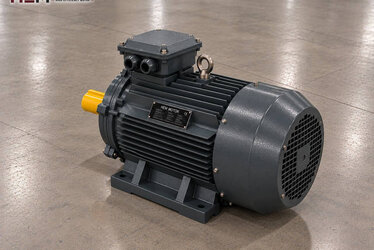
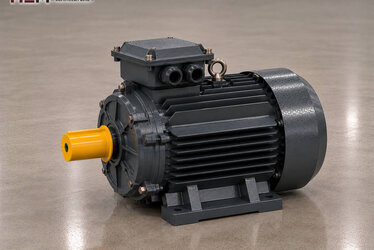
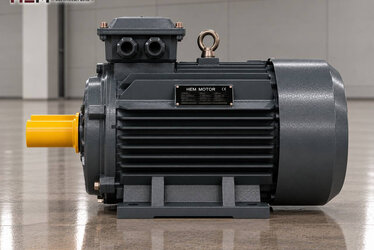
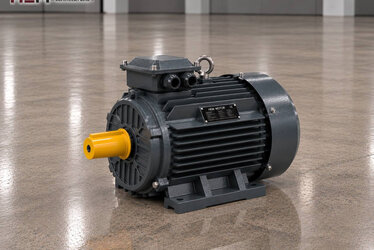
All models are on the electric motor store page. For drives with limited space inside the body, lightweight aluminium frame motors stand out; for heavier and longer conveyors cast iron frame motors can also be reviewed.
| Drive | Operating pattern | Store example |
|---|---|---|
| Belt drive (medium-size conveyor) | Continuous throughout the shift, reversing | 2.2 kW aluminium, 100L1-4 |
| Belt drive (long, multi-section conveyor) | Heavy start with a loaded belt | 4 kW aluminium, 112M-4 |
| Extend and retract drive | Short, frequent, reversing movement | 0.55 kW aluminium, 80M1-4 |
The models are examples, not a final selection; suitability for the machine is verified separately with the conveyor manufacturer's data, the gearbox input and mounting dimensions.
Frequently Asked Questions
Can the belt motor and the extension motor be the same model?
They can, but they do not have to be. Since the two see different loads and operating patterns, power and speed are determined separately for each; check their nameplates separately.
Why does the belt motor struggle when the conveyor is fully extended?
On a fully extended conveyor there are more cartons on the belt and more pulley friction. The load increases especially when starting with a loaded belt; the motor power must have been selected for this condition according to the manufacturer's data.
The sections slide by themselves inside the vehicle; is it related to the motor?
What holds the sections in place is the brake in the extension drive, the gearbox's holding behaviour and the machine's locking arrangement. This symptom should be checked by the conveyor manufacturer's service.
Can I reverse the belt for both loading and unloading?
A three-phase motor can run in both directions; the direction change is made by the control circuit or the drive. The belt should come to a complete stop before reversing; this sequence belongs to the machine's control system.
Can I also find a motor for the hydraulic unit that lifts the front end?
If it is a mains-powered hydraulic unit, our three-phase models can be reviewed according to the pump data; general information is on the hydraulic power unit motor page.