English
 Français
 Türkçe
 Español
 Русский

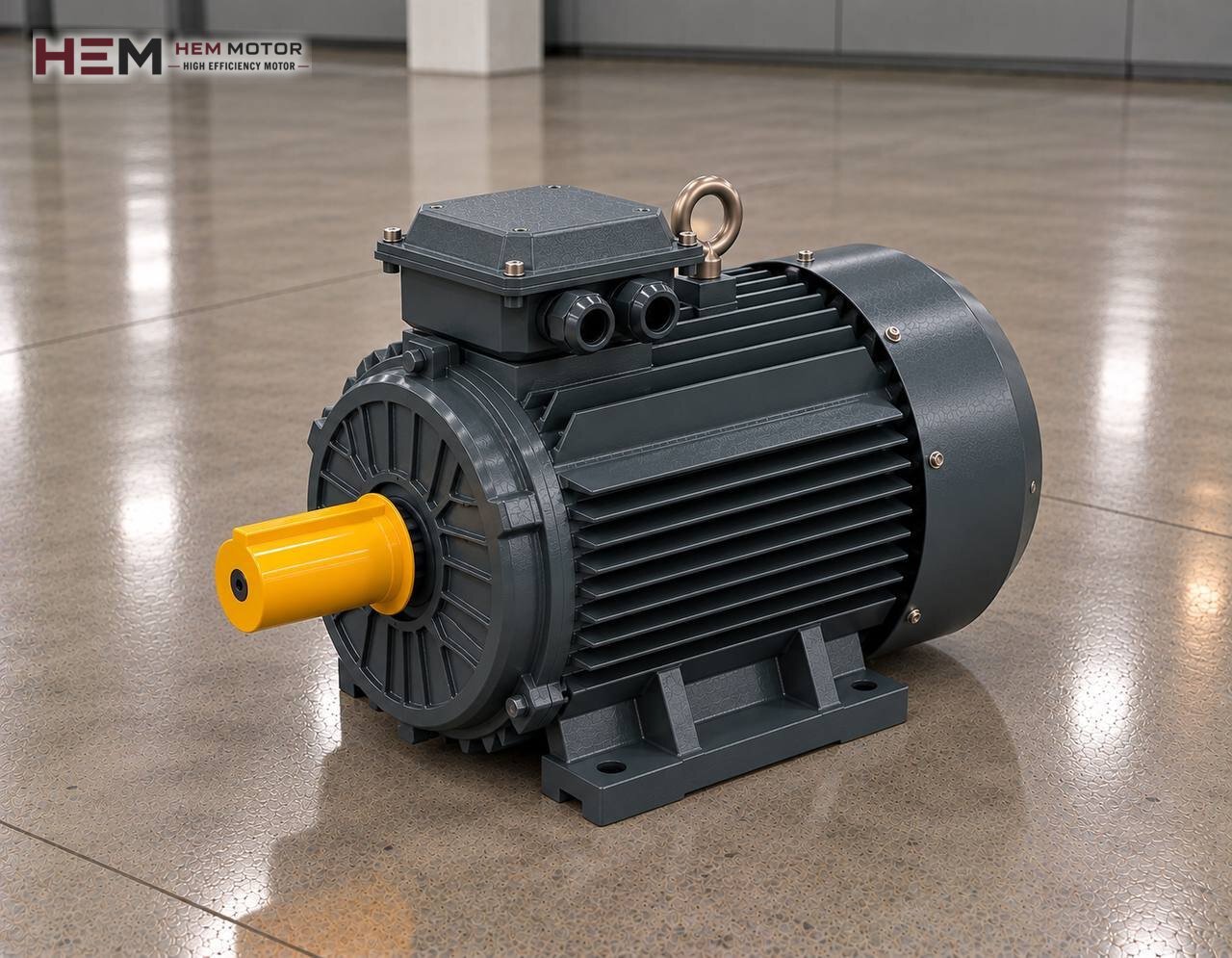
A strapping machine passes PP or PET strap around a carton, a bundle of products or a pallet, tensions the strap, then welds the ends by heat or friction and cuts it. This page describes where a standard three-phase induction motor can be used inside the machine and what to compare when looking for a replacement motor. The rest of the line is summarised on the packaging industry page.

What does the electric motor turn in a strapping machine?
On fully automatic arch-type machines the cycle runs as follows: feed wheels push the strap into the arch channel, when the package arrives the strap is pulled back and settles on the package, the tension wheel tightens it, then the sealing head joins and cuts the ends. The grippers, heater blade, pressure pad and cutter in the sealing head move in sequence via cams lined up on a single camshaft.
On some models this camshaft is turned by a small geared induction motor; the shaft makes one revolution per strap and a position switch stops it at the home point. The roller or belt conveyor on the table, which brings the package under the arch and takes it out, is driven by a separate motor. On pallet strapping lines the main load is carried by the motors of the pallet conveyors.
There are also jobs the motor does not do. The blade that melts the strap is an electric heater; most steel strapping tools are pneumatic; on pallet machines the top compression plate is often lowered by an air cylinder or hydraulics. On many compact machines the feed and tension wheels are driven by a brushed DC motor or a servo system. These motors are machine-specific; general compatibility with a standard induction motor cannot be claimed, and the replacement is decided together with the machine manufacturer.
Information to collect from the machine before looking for a motor
The first step is to identify which mechanism of the machine the motor sits in: camshaft, conveyor belt, roller table or pallet conveyor. The same machine may have two or three different motors, each with its own speed and connection.
Then the following is needed: power and speed from the nameplate, supply voltage (is the machine plugged into a single-phase socket or a three-phase panel), whether the motor is connected to the gearbox by flange or by feet, shaft diameter and key, and whether the motor has a brake or an encoder on the rear cover. The number of packages strapped per minute is also asked; since the camshaft motor restarts on every cycle, this number directly affects motor heating.
Where do you find the power and speed of the camshaft and conveyor motor?
The most reliable sources are the machine manufacturer's technical data and the nameplate of the motor being removed. The camshaft speed is set by the motor speed together with the gearbox ratio. Replacing the motor with a different number of poles also changes the cycle time with the same gearbox: if a 4-pole motor is fitted instead of a 6-pole one, the camshaft turns faster and the timing of the sealing head may be upset.
On a belt or roller drive, the motor speed determines how fast the package passes under the arch. As package weight and friction increase, the required torque increases too; the motors of a heavy pallet line and a tabletop carton machine are not in the same class. For this reason no single kW value is recommended here for a machine type; the nameplate value and the manufacturer's calculation are the basis.
There is a clear limit at low power: HEM Motor's smallest three-phase model is 0.25 kW. If the nameplate shows a lower power, or the machine plug fits only a 220 V socket, the single-phase motor series, with powers from 0.18 to 5.5 kW, can be considered.
How are the gearbox flange, shaft and frame size compared?
Start the comparison with the IEC frame size (63, 71, 80 and so on). Even if the frame is the same, the flange type is checked separately; on strapping machines the motor usually sits on a worm gearbox with a small B14 flange or a B5 flange. Spigot diameter, pitch circle, number of bolts, shaft diameter and length and key size should be measured side by side with the old motor. With a foot-mounted B3 connection, foot hole spacing and shaft height are checked.
On the electrical side, voltage, delta or star connection and rated current are compared. The frame size table can be used for dimensions and the mounting arrangements page for available connection types. Without this comparison it would not be correct to say the new motor will sit in the old place without problems.
Dispatch area, heater blade and cold store conditions
Strapping machines work in places with carton dust, cut strap scraps and forklift traffic. Scraps collecting on the fan cover weaken cooling; cleaning intervals should be planned accordingly. On motors close to the sealing head, make sure hot air from the heater blade is not directed at the motor.
Our standard motors are designed with IP55 protection, class F insulation and S1 continuous duty. The ambient temperature in the catalogue is between −15 and +40 degrees Celsius and altitude up to 1000 m; conditions outside this are stated in the order. For machines working in a cold store or on an open loading ramp, an anti-condensation heater, and a PTC or PT100 sensor for monitoring winding temperature, are order options.
Start and stop on every package: cycle count, brake and inverter
The camshaft motor does not run continuously; on every strap it starts, makes one revolution and stops. As the number of cycles per minute rises, the starting current heats the winding more often. If the existing machine has an overheating complaint, instead of only increasing the power, also check the cycle count, the setting of the position switch and the friction in the gearbox.
On some machines the camshaft stops exactly at its home point thanks to a motor brake, on others thanks to the self-locking of the gearbox; if a brake motor is required, state it in the order. On the conveyor belt a frequency inverter is used so that the package arrives smoothly without slipping and matches the line speed. Our three-phase series are suitable for use with an inverter; tell us if there is long running at low frequency under full load or a long motor cable. On machines that feed and tension with a servo drive, this movement cannot be set up the same way with a standard motor and a simple inverter.
What to send when requesting a replacement for a faulty strapping motor
The fastest way is to send a photo of the removed motor's nameplate via WhatsApp; the nameplate submission page explains this step by step. Pre-order checklist:
- Legible nameplate photo: power (kW), speed (rpm), voltage and current
- The mechanism where the motor sits: camshaft, conveyor belt, roller table or pallet conveyor
- Mounting type and a photo of the flange (B14, B5 or foot-mounted B3)
- Shaft diameter and length, key width
- Whether the motor has a brake, an encoder or a separate drive connection
- Machine brand, model and supply type (single-phase or three-phase)
- Required quantity and, if any, the number of motors to keep as spares
You can send your request through the WhatsApp line on the contact page.
Product groups in the shop to look at for strapping drives
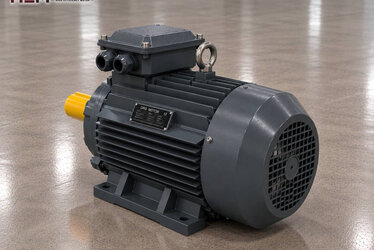
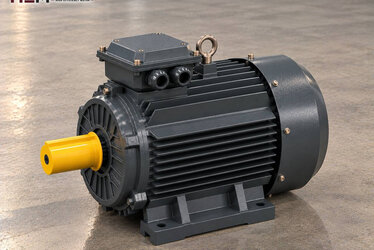
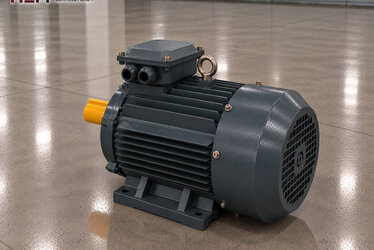
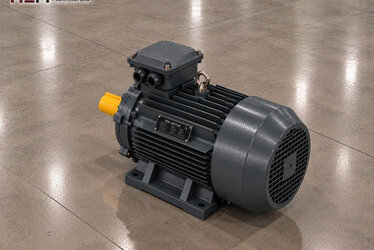
For small strapping drives the light aluminium frame motors can be examined, and for harder-used places such as a pallet line conveyor the cast iron frame motors. All series are listed on the shop page. The models below are examples; their suitability for the machine is verified separately: 71M2-6 gives 2.79 Nm rated torque at 855 rpm, 80M1-4 3.75 Nm at 1,400 rpm, and the cast iron 80M2-4 5.04 Nm at 1,420 rpm.
| Mechanism | Load seen by the motor | To ask when selecting | Example HEM model |
|---|---|---|---|
| Camshaft (sealing head) | Start on every cycle, one revolution | Gearbox ratio, positioned stop, brake | 71M2-6, 0.25 kW, 855 rpm |
| Tabletop conveyor belt | Carries the package under the arch | Belt speed, ramp with inverter | 80M1-4, 0.55 kW, 1,400 rpm |
| Pallet strapping conveyor | Heavy pallet, frequent positioning | Chain and roller load, frame robustness | 80M2-4 cast iron, 0.75 kW, 1,420 rpm |
| Feed and tension wheel | Fast back-and-forth strap movement | DC or servo on most models; confirm with the manufacturer | No standard model recommended |
The models in the table are selection examples; the final decision is made after machine data, load, speed and flange dimensions have been compared. For wrapping drives on the same dispatch line you can also see the pallet stretch wrapping machine motor page.
Frequently Asked Questions
My semi-automatic table machine is plugged into a 220 V socket; can I use a three-phase motor?
If the machine has no three-phase supply, a three-phase motor cannot be connected directly. On a single-phase network our single-phase series or an inverter arrangement approved by the machine manufacturer is considered.
Does replacing the camshaft motor with a more powerful model solve overheating?
Not always. The cause of overheating may be frequent starts, a wrongly set position switch, a sticking cam or gearbox friction; these should be checked first.
Can an induction motor replace the small DC motor on the feed wheel?
In general such a change is not recommended. Speed and direction control of these wheels depends on the machine's own drive; the change should be assessed together with the machine manufacturer.
My current motor has a brake; how should I request the new one?
Together with the nameplate photo, state that there is a brake and give the brake voltage. If a brake motor is required, this information must be clearly stated in the order.
Which motors on a pallet strapping line can be standard induction motors?
On some lines the roller and chain drives of the pallet conveyors run with standard geared induction motors. The strapping head and the compression unit are machine-specific and are handled separately.