English
 Français
 Türkçe
 Español
 Русский

A carton taping machine grips a filled carton with closed flaps from both sides and moves it forward; as the carton passes, the top and bottom tape heads apply adhesive tape along the flap seam, press the ends down and cut the tape. Below you will find which movement the electric motor provides on this machine, which movement has no motor, and the route to follow when choosing a replacement motor. For the general overview of the same sector, go to the packaging machinery page.

The belts that move the carton and the motor's role on the taping machine
In the common design there is a vertical drive belt on each side of the carton. The belts squeeze the carton and carry it between the tape heads. On some models each side belt is turned by its own geared induction motor; on others a single motor drives both sides together through a shaft and gear arrangement. On machines that work with top and bottom belts instead of side belts, the motor's role is the same: to carry the carton at a constant speed.
The tape head itself usually has no motor. The carton's leading edge pushes the head's arm, the tape sticks to the flap, spring-loaded rollers press it down, and as the carton moves on the knife arm cuts the tape. In other words, the tape is driven by the carton's movement; the only part that sets the speed of that movement is the belt motor.
Machines with automatic size adjustment (random-size) have an additional axis that measures the carton's height and width and positions the top head and the side belts. This adjustment is made by hand crank on some machines, by a pneumatic cylinder on others and by a servo or stepper motor on others. These positioning motors are machine-specific; it cannot be said that they can be replaced by a standard induction motor. The movement of the flap folding arms is also mostly pneumatic.
What information should be gathered for a taping machine motor?
First, it must be clear whether the motor to be replaced turns a side belt, a top belt or the infeed conveyor that brings cartons to the taping machine. Then the power, speed and voltage on the nameplate are read, and it is checked whether the machine is supplied from a three-phase panel or from 220 V single phase.
On the mechanical side, the gearbox type (worm, right-angle), whether the motor is flange-connected to the gearbox, and the shaft and key size are needed. It should also be asked whether the belt speed is fixed or adjusted by an inverter, and whether the line runs non-stop through the shift or only when a carton arrives; many taping machines start and stop with a carton sensor.
Factors that determine belt speed and motor power
The linear speed of the belt is determined by the motor speed, the gearbox ratio and the belt pulley diameter. The speed range in which the tape head can apply tape properly is the machine manufacturer's data; changing the motor speed changes this speed too. For example, if a 3000 rpm class motor is fitted to the same gearbox instead of a 1500 rpm class motor, the belt speeds up nearly twofold, and the tape may wrinkle or the cut point may shift.
The power requirement depends on the carton weight, the squeezing force the belts apply to the carton and the unwind resistance of the tape. A machine taping light cartons and a machine taping cartons with heavy contents do not have the same power. The correct value is taken from the nameplate of the motor being removed and from the machine manufacturer; this page does not recommend a kW value by machine type.
Because power is small on these machines, the limits need to be known. Our three-phase series starts at 0.25 kW. If the nameplate shows a lower value such as 0.18 kW, or if the machine will stay on a single-phase line, 220 V single-phase motors (0.18–5.5 kW) are examined as an option.
Right-angle gearbox connection and IEC frame comparison
On side belt machines the motor often stands upright and the gearbox output turns the belt pulley in the horizontal plane; so the motor's mounting position is assessed not only by flange but also by direction of operation and orientation. For vertically standing motors, positions such as V1 or V3 may apply; this must be stated in the order.
The comparison starts with the IEC frame number, then moves to the flange type: the small B14 flange has threaded holes, the larger B5 flange has through holes. Flange spigot diameter, bolt circle, shaft diameter and shaft length, key width and terminal box direction are compared one by one with the old motor. The frame dimensions table and the mounting options page are the reference sources for this work. It should not be assumed that the new motor will sit in the same place before the dimensions are verified.
Carton dust, tape scraps and warehouse temperature
A taping machine works with cardboard fibres rising from carton edges and cut pieces of tape. Since tape pieces are sticky they can cling to the fan cover grille and narrow the air inlet; this area of the motor should be checked during periodic cleaning. Belt dust and worn belt particles also collect at the same point.
Our standard motors are offered with IP55 protection, class F insulation and S1 duty type; the catalogue ambient limit is −15 to +40 degrees Celsius and the altitude limit 1000 m. If the machine stands idle for long periods in an unheated warehouse in winter or in cold-chain packing, an anti-condensation heater can be requested. A PTC or PT100 sensor for monitoring the winding is also an order option. Conditions outside these limits are stated when ordering.
Start-stop by carton sensor, speed adjustment and inverter
On many machines the belt motor runs only when it sees the carton entry sensor and stops some time after the last carton exits. On a line with infrequent cartons these starts are not a problem; on a busy line the motor's starts per hour increase. On such a line, running the motor continuously and controlling only the conveyor feed is also an option; the decision is the machine manufacturer's.
To adjust the speed to the carton size or tape type, the belt motor can be driven by a frequency inverter. The inverter also reduces jolting as the carton enters between the belts. Our three-phase motors can be used with a frequency inverter; state in the order if there will be continuous running at very low speed or a long cable between drive and motor. On machines that do size adjustment with a servo, the drive and motor of that axis are matched to each other; a standard motor and inverter solution is not recommended for this axis.
Information to provide when requesting a spare taping motor
Sending a photo of the motor with a legible nameplate via WhatsApp shortens the process; how to do this is explained on the send motor nameplate page. Pre-order checklist:
- Nameplate photo and the power, speed, voltage and current values on it
- The part the motor turns: left or right side belt, top belt or infeed conveyor
- The motor's orientation (horizontal or vertical) and a close-up photo of the flange
- Gearbox type and the label on the gearbox
- Shaft diameter, shaft length, key width and terminal box position
- The machine's supply: 220 V single phase, 400 V three phase or via an inverter
- Required quantity; an even number if the two side belts have separate motors
It is enough to send the information to the WhatsApp number on the contact page.
Motors in the shop that can be examined for carton taping drives
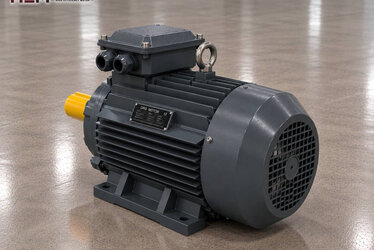
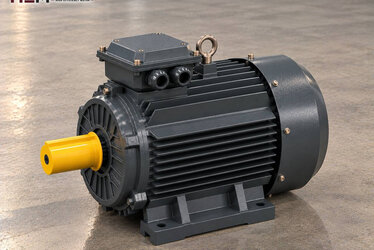
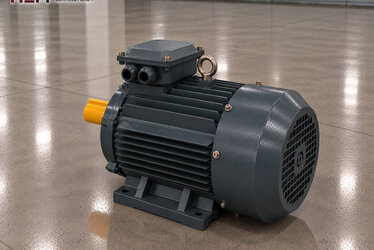
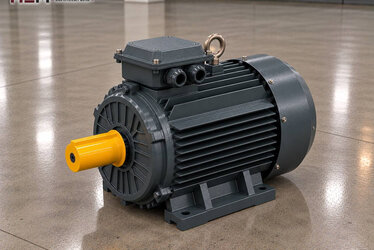
For side belt drives the light, small-frame aluminium frame electric motors stand out; for heavy carton conveyors feeding the taping machine, cast iron frame motors can also be looked at. All series are on the electric motor shop page. The models below are examples; their suitability for the machine is verified separately: 71M1-4 (0.25 kW, 1,340 rpm, 1.78 Nm), 71M2-4 (0.37 kW, 1,340 rpm, 2.64 Nm) and, for the infeed conveyor, 90L-4 (1.5 kW, 1,445 rpm, 9.91 Nm).
| Movement on the taping machine | Drive type | Example HEM model |
|---|---|---|
| Side belt, separate motor on each side | Geared induction motor, start-stop by carton sensor | 71M1-4, 0.25 kW |
| Two side belts or top-bottom belts with one motor | Geared induction motor, shaft and gear transmission | 71M2-4, 0.37 kW |
| Infeed conveyor bringing cartons to the machine | Geared induction motor, often with inverter | 90L-4, 1.5 kW |
| Tape head | No motor; works by carton movement | No motor needed |
| Automatic size adjustment | Pneumatic, servo or stepper motor | No standard model recommended |
The table only gives examples; the final selection is made after machine data, load, speed and connection dimensions have been matched. For the end of line where taped cartons are palletised and wrapped, see the stretch wrapping machine motor page.
Frequently Asked Questions
One of the side belts turns slower than the other; is the motor faulty?
It may be, but belt tension, pulley wear and gearbox oil should be checked first. If the two sides have separate motors, the nameplate speeds should also be compared; a motor with a different speed may have been mixed in.
Does the tape head need a separate motor?
On common taping machines it does not; the head works by the carton's movement. If there are special machines using a motorised head, this information should be obtained from the machine manufacturer.
Can I fit a higher-speed motor to increase belt speed?
It is not recommended. The working speed of the tape head is limited; if a speed change is needed, it should be made with an inverter and within the range given by the machine manufacturer.
Our machine runs on 220 V; is it possible to switch to a three-phase motor?
If there is no three phase in the panel, a three-phase motor cannot be connected directly. On a single-phase supply, the single-phase series or a three-phase motor with a single-phase-input inverter can be considered; the wiring diagram is clarified with the machine manufacturer.