English
 Français
 Türkçe
 Español
 Русский

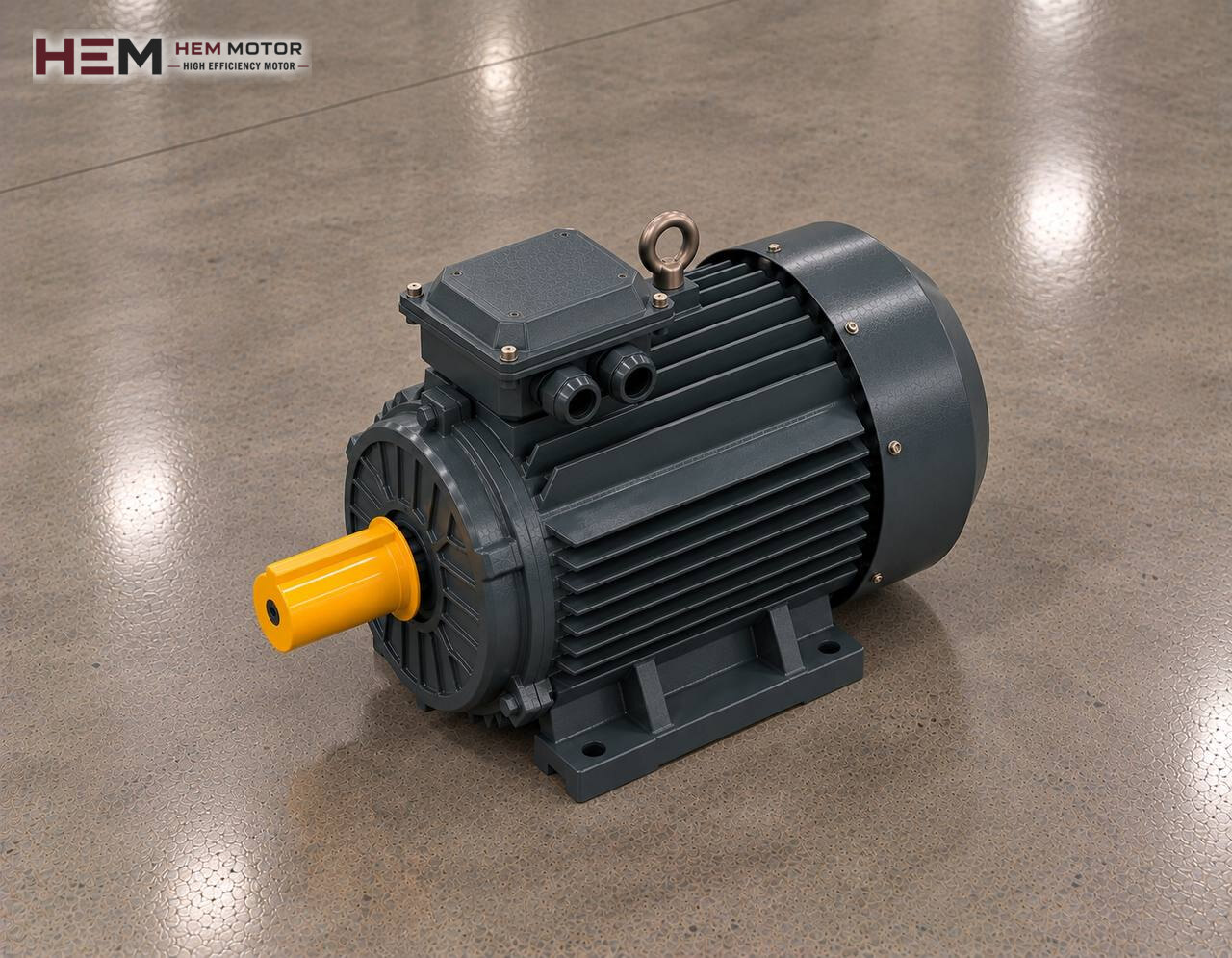
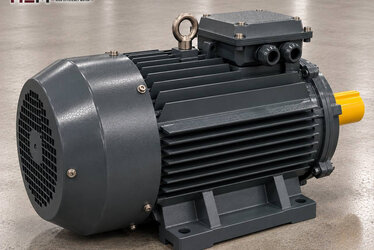
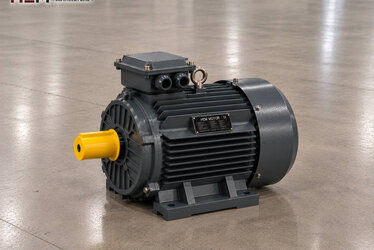
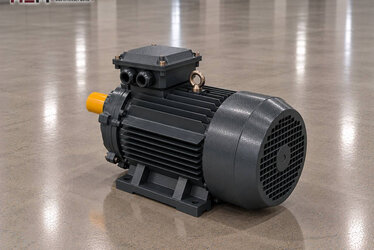
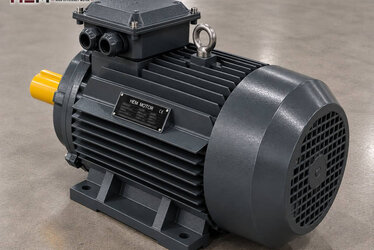
In a flour mill, air is as important a carrier as the product itself. Drawing heat and moisture out of the roller mills, collecting dust from the sifters and cleaning machines, and in some plants lifting the ground stock between floors inside pipes, is always the same kind of machine: a high-pressure centrifugal aspiration fan. This page covers the electric motor that drives that fan; for the mill's other machines, see the flour mill electric motors page.

Three separate air duties in a flour mill
The first duty is machine aspiration. Air is drawn continuously from the housings of roller mills, plansifters and bran finishers; this suction keeps the machine under slight vacuum, prevents flour from escaping and removes the heat and moisture generated during grinding. The second duty is in the cleaning section: separators, aspiration channels and destoners remove light husk and dust with an air stream.
The third duty is pneumatic conveying. In many mills, the stock leaving each passage is blown or sucked through pipes to cyclones on the top floor instead of being lifted by bucket elevators. This line needs the highest pressure and the largest fan power. The three duties may have separate fans; each ends in a bag or cartridge filter that cleans the air of dust.
The relationship between fan and motor
The power drawn by a centrifugal fan changes roughly with the cube of fan speed; a small increase in speed raises power noticeably. This ratio is an approximation that depends on system resistance, but in practice it means that enlarging the pulley ratio or replacing a 4-pole motor with a 2-pole one can easily push the motor beyond its rated power. Fan speed and power should be read from the fan maker's curve.
Because pneumatic conveying fans need high pressure, 2-pole motors with direct coupling are common there. Machine aspiration mostly uses a belt-driven 4-pole arrangement. On belt-driven fans the initial setting is made at commissioning; if a pulley is changed later, the motor current must be measured again.
Filter and dampers: elements that change motor load
Each machine branch of the aspiration line has a balancing damper. If the branches are opened without balancing, the fan draws too much air, some machines are left with weak suction, and the motor runs more loaded than necessary. That is why damper adjustment comes first at commissioning, followed by a motor current measurement.
A dirty filter increases resistance; jet-pulse cleaning keeps it within a range. In the pneumatic conveying line, the load changes with the amount of product in the pipes: the line becomes lighter while the mill is being emptied and heavier at full capacity. The fan's heaviest operating point should be established from the fan maker's data and the motor selected for that point.
Scroll inertia at start-up
A large-diameter fan impeller has high inertia; the motor accelerates for a long time even though the load is light. Starting current persists during this period, and if thermal protection is set wrongly the motor may trip. Fans with long run-up times use star-delta or an electronic starter; starting with the inlet damper closed can reduce the initial load.
Sequence matters in a pneumatic conveying line: the fan must reach full speed before product is fed into the pipes. Otherwise the pipe chokes and the fan has to start under full load. The rotary airlock motors at the end of the line are also switched on after the fan is running.
Speed control and continuous duty
Aspiration fans run all day without stopping. A frequency converter is a good tool for adjusting suction to changing capacity or season; our three-phase series is suitable for use with such drives. When the fan runs at low speed its power demand also drops, so its own cooling is usually sufficient; still, if very low speed is continuous or the motor cable is long, an external fan or cable filter may be needed, so state this in the order (see inverter-compatible motors).
The fan motor stands outside the air stream, on a base beside the scroll. Flour dust sticks to the cooling fins and causes heating; periodic cleaning is the most important maintenance task for this motor. A PTC or PT100 sensor to monitor winding temperature and an anti-condensation heater for days when the mill is closed are order options.
Dust explosion and limits
Flour dust can form an explosive mixture with air at certain ratios, and the aspiration line is where this dust is most concentrated. If the area around the filter, cyclone or fan is classified as hazardous, note that a standard IP55 motor is not produced for this condition; the measure foreseen by the plant designer or fan maker, or a special motor, is required and the order is written accordingly. We make no certification claim for special duties such as high temperature or smoke extraction.
Example HEM motors
For pneumatic conveying fans, models worth considering are 18.5 kW 160L-2 (2,940 rpm), 22 kW 180M-2 (2,955 rpm) and 30 kW 200L1-2 (2,960 rpm). For belt-driven machine aspiration, 11 kW 160M-4 (1,465 rpm) is an example.
| Air duty | Fan and drive | Point to watch | Example HEM model |
|---|---|---|---|
| Roller mill and sifter aspiration | Belt-driven, 4-pole | Damper balance, pulley ratio | 160M-4, 11 kW |
| Cleaning section suction | Direct coupled, 2-pole | Filter resistance | 160L-2, 18.5 kW |
| Pneumatic conveying, medium line | Direct coupled, 2-pole | Start sequence, choking | 180M-2, 22 kW |
| Pneumatic conveying, large line | Direct coupled, 2-pole | Long run-up, thermal setting | 200L1-2, 30 kW |
These models only give direction; the motor for each fan is selected by assessing together the fan's real load, the required speed, the mounting and the working environment.
What to send us for a fan motor
For a quotation, write the fan's duty and machine brand, the power (kW) and speed (rpm) on the fan nameplate, the plant voltage, the mounting type, the drive type (belt or direct), the starting method and the quantity. A nameplate photo of the old motor is the fastest route. The general framework of fan applications is on the industrial fan motors page, and models with current prices are in the shop. For WhatsApp and phone, see the contact page.
Frequently Asked Questions
Can I replace the aspiration fan motor with a higher-speed one?
This is not recommended. Since fan power rises roughly with the cube of speed, fitting a 2-pole motor instead of a 4-pole one can overload both fan and motor. Any speed change should be assessed with the fan maker's curve.
Why does the pneumatic conveying fan trip the thermal relay at start-up?
Accelerating the large impeller takes a long time; if the thermal setting does not suit this period, protection trips. Check the starting method, the thermal class and whether the start was made before product was fed into the line.
Does the fan motor struggle when the filter gets dirty?
With backward-curved fans a dirty filter mostly reduces suction rather than overloading the motor. The moment to watch is the first run after new filters are fitted, when resistance is at its lowest.
Does it make sense to use a frequency converter on an aspiration fan?
It is useful for adjusting suction to capacity or season. If conditions such as a long cable and continuous low speed are stated in the order, suitable cooling and filter measures are planned together.