English
 Français
 Türkçe
 Español
 Русский

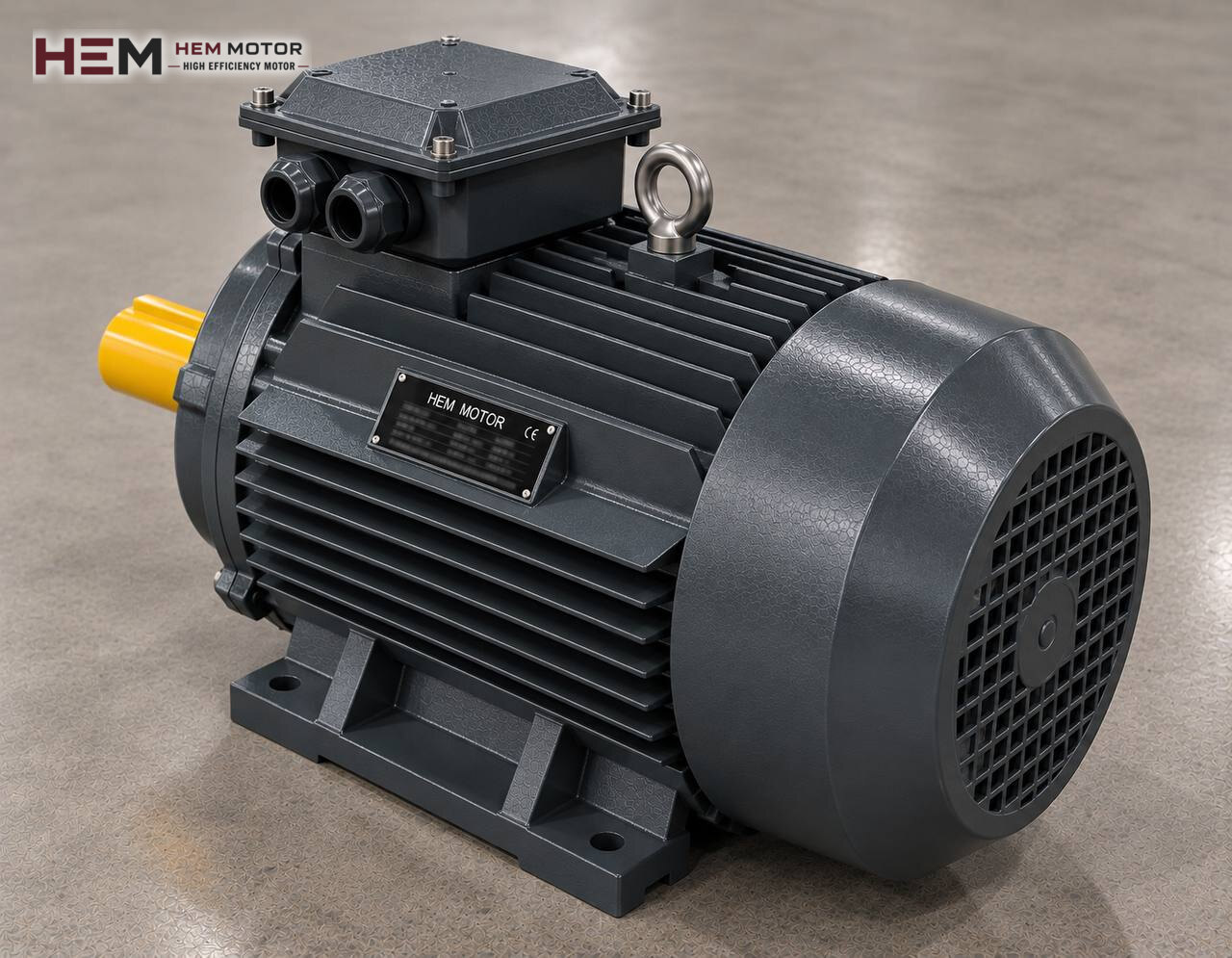
A semolina purifier (sasör in Turkish mills) is the cleaning machine in a flour mill that separates coarse semolina coming from the break rolls from bran particles and husk dust. A slightly inclined sieve box with two or three decks oscillates back and forth while air is drawn upward through the sieve surface; heavy, clean semolina passes through the screen, while light bran-laden particles are lifted by the air or flow off the end of the sieve into a separate channel. This page covers the motor that oscillates the purifier and the small drives around it; the full picture of the mill's machines is on the flour mill electric motors page.

Two separate jobs in a purifier: oscillation and air
The work inside a purifier is split in two. The first is the motion of the sieve box: the box sits on flexible hanger rods or rubber mounts and makes a short-stroke, frequent back-and-forth movement. This movement walks the semolina along the sieve and layers it; heavy grains settle to the bottom, light husk-bearing particles rise to the top. The second is air: the airflow passing under the sieve lifts light particles and carries them to the collecting duct above the machine.
From the motor's point of view the two jobs are quite different. The oscillating drive is low power but carries a continuous, repetitive load. Air, in most plants, is not supplied by the purifier's own motor but by a common aspiration fan drawing on several purifiers at once. The fan side is a separate topic; this page focuses on the oscillating drive.
How is the oscillation produced?
Eccentric shaft with belt drive
On classic purifiers a foot-mounted motor stands beside the machine and turns an eccentric shaft through a belt and pulleys. The eccentric pushes and pulls the sieve box via a connecting rod. Here the motor drives a box moving back and forth with a fixed stroke; the direction of the load changes twice per revolution. The pulley ratio sets the oscillation frequency and should be kept at the value given by the machine builder.
Vibration motor design
On some newer purifiers two external vibration motors carrying unbalanced weights on their shaft ends are attached to the sides of the sieve box. The two motors rotate in opposite directions and produce a linear shaking motion. Such vibromotors are a product group separate from the standard squirrel-cage range and are not included in HEM Motor's 2026 catalog. On a line like this, the motors we can supply are the auxiliary drives such as the semolina screw, the airlock and the aspiration fan.
Load character: low power, long shifts
On an eccentric purifier the motor power is small next to roll or fan motors. But the mill runs for days without stopping and the purifier runs with it; what matters is therefore not the start but heating in continuous duty and bearing life. The repeated thrust from the eccentric and connecting rod reaches the motor shaft as a side load through the belt. An over-tensioned belt wears the motor's drive-end bearing; a loose belt slips, lowers the oscillation frequency and spoils separation quality.
Starting is light: the box is empty or lightly loaded and the stroke is short, so direct-on-line starting is enough on most purifiers. If one of the hanger rods is cracked or the mounts have hardened, the box moves irregularly and the motor current fluctuates; when these signs appear, the hangers should be checked visually first.
Mill environment: flour dust and a hot sifting floor
Purifiers usually stand on the sifting floor above the roll floor, near the plansifters. Even small leaks in the air ducts carry fine flour dust onto the motor frame. An IP55 frame limits dust ingress, but once the cooling fins and fan cover are clogged with dust, cooling weakens; weekly maintenance should include cleaning the frame with a dry brush or air.
Flour dust can ignite at certain concentrations. If the plant's zone classification requires motors of special construction against explosion risk, such motors are not included in HEM Motor's 2026 catalog; share the classification at the quotation stage. In summer the sifting floor under the roof gets noticeably hot; if the ambient temperature is high, state it in the order. For those who want to monitor the winding, a PTC or PT100 sensor is an order option.
Mounting, belt and speed selection
On an eccentric purifier the motor is usually foot-mounted on the machine frame or on a bracket beside it; belt tension is adjusted from the motor's slide base. In some designs the motor sits with its flange on a small gearbox or directly on the eccentric housing. As mounting arrangements we offer B3, B5, B14, B34, B35 and vertical V1, V3, V5, V6, V15 depending on frame size; we confirm shaft diameter and flange size together at the order.
Since oscillation frequency is set by the pulleys, 4- and 6-pole motors are common. Changing the number of poles also requires changing the pulley ratio; staying in the same speed class as the old motor is the least troublesome path. Some mills use an inverter to fine-tune separation. Our three-phase motors can be driven by a frequency inverter; if the motor will run for long periods at very low frequency, or if there is a long cable between the panel and the motor, write it at the start and we will assess the need for an extra fan or filter together. For details see the inverter-compatible motors page.
Example HEM models for a purifier line
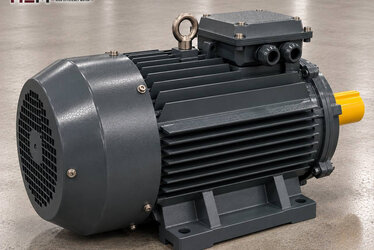
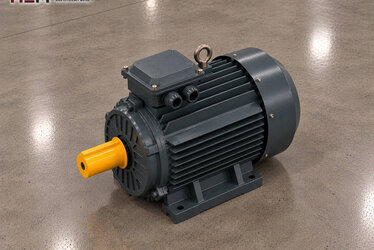
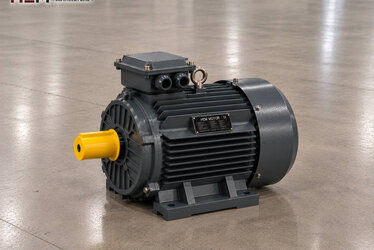
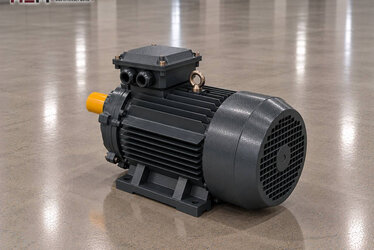
For a small eccentric purifier the 0.75 kW 80M2-4 delivers 5.04 Nm at 1,420 rpm. On a machine with a wider sieve box the 1.1 kW 90S-4 (1,445 rpm, 7.27 Nm), and for a low-speed pulley arrangement the cast iron 0.75 kW 90S-6 (935 rpm, 7.66 Nm) are models worth looking at. For the semolina screw or airlock under the purifier the 1.5 kW 90L-4 can be shown as an example.
| Drive | Operating mode | Point to watch | Example HEM model |
|---|---|---|---|
| Single-box eccentric purifier | Eccentric by belt, continuous | Belt tension, drive-end bearing | 80M2-4, 0.75 kW |
| Double-box eccentric purifier | Eccentric by belt, continuous | Pulley ratio, oscillation frequency | 90S-4, 1.1 kW |
| Low-speed pulley arrangement | Belt, cast iron frame | Keeping the pole number | 90S-6, 0.75 kW |
| Semolina screw, airlock | Geared, continuous | Gearbox flange, dust build-up | 90L-4, 1.5 kW |
| Vibration-motor purifier | Unbalanced-weight vibromotor | Not in the 2026 catalog | Not applicable |
The models are examples only; the final choice depends on the machine load, required speed, mounting and operating conditions.
What a motor request should include
The purifier's make and model, whether the oscillation is eccentric or vibration-motor driven, the power (kW) and speed (rpm) of the motor to be replaced, mains voltage, mounting type, pulley or flange details and quantity are enough. If the mill has several of the same machine, gather them in a single request. If the nameplate is readable, simply follow the steps on the find an equivalent from the nameplate photo page.
Model prices are listed on the shop page. To reach us by WhatsApp or phone, use the numbers on the contact page.
Frequently Asked Questions
Why does the belt on the purifier keep breaking?
The sudden direction changes coming from the eccentric strain the belt on every revolution. Misaligned pulleys or excessive tension speed up this fatigue. Check the motor slide setting and pulley alignment together.
Can I replace the motor of a vibration-motor purifier with a standard motor?
No. A vibromotor produces the shaking itself with the unbalanced weights on its shaft ends; a standard motor cannot do this. This product group is not in our 2026 catalog, but we can supply the screw and fan motors on the line.
Is it a problem to replace a 6-pole purifier motor with a 4-pole one?
If the pulley stays the same, the oscillation frequency rises noticeably, semolina passes over the sieve too fast and separation suffers. If the pole number changes, the pulley ratio should be recalculated according to the machine builder's recommendation.
Why does the purifier motor run hotter than before?
The most common causes are fins clogged with dust, an over-tensioned belt and worn hanger rods. Clean the frame, check the belt and hangers, then measure the current again.