English
 Français
 Türkçe
 Español
 Русский

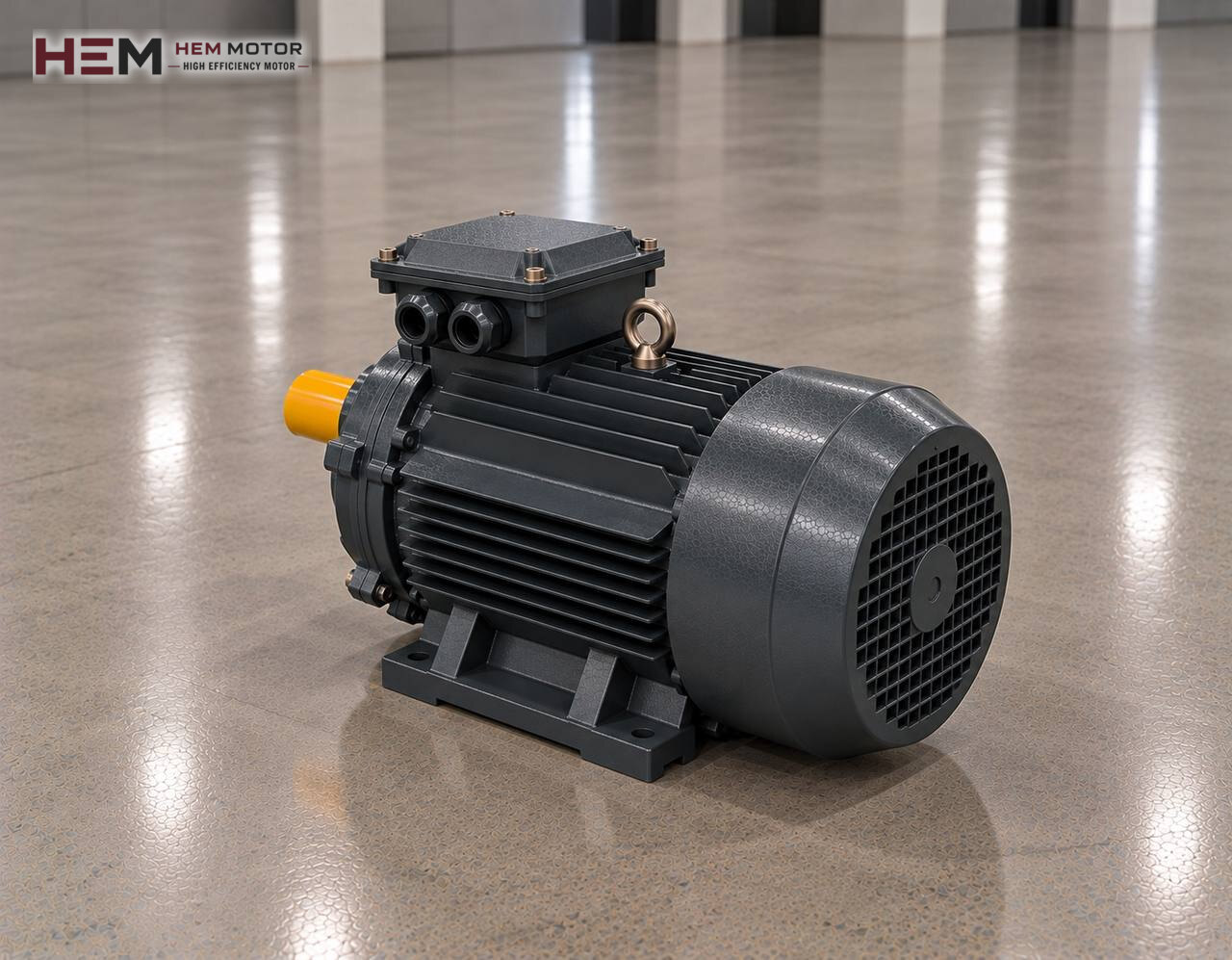
Wheat does not go from the silo straight into the mill; it is first cleaned of stones, straw, wild seeds, metal pieces and dust, and then tempered. This work is done in the cleaning section, made up of several different machines in a row: separator, destoner, indented cylinder (trieur), magnet, scourer and dampening screw. This page looks at the motors driving these machines one by one; for the roller and sifter floors of the mill, see the flour mill electric motors page.

Separator and destoner: eccentric shaking
A separator is a two-deck inclined sieve box. The upper sieve removes coarse foreign matter, the lower one sand and broken kernels. The box is shaken back and forth by an eccentric shaft or by two vibration motors attached to it. On separators with an eccentric shaft, a standard three-phase motor turns the shaft by belt; the load comes from the box mass and spring system, and product flow hardly affects the motor.
The destoner works with the help of air. While an inclined sieve deck vibrates, air is blown or drawn through it from below; light wheat flows down on the air cushion while heavy stones grip the deck and walk upwards. The motor shaking the deck is usually of low power. Vibration motors fitted directly to the box, carrying unbalanced weights on their housing, are not included in HEM Motor's 2026 catalogue; what is meant here is the standard motor driving the eccentric shaft by belt or coupling.
Indented cylinder: a slowly turning drum
An indented cylinder (trieur) is a horizontal drum whose inner surface is covered with small pockets. As the drum turns slowly, round wild seeds and broken kernels settle into the pockets, are lifted and fall into a trough, while long kernels stay inside. The drum speed is low, so the motor is connected through a gear reducer. General information on geared drives is on the electric motors for reducers page; the reduction ratio is the machine maker's data.
The indented cylinder load is smooth and light, but if the drum stops full, the first movement is somewhat harder. Since drum speed determines separation quality, the number of poles and the reducer should stay the same when the motor is changed.
Scourer: friction at high speed
A scourer (surface cleaning machine) abrades the outer surface of the wheat to remove dust, beard and loose bran. Inside, a bladed or abrasive rotor turns fast within a perforated screen. This is the most power-hungry and hardest-working machine of the cleaning line: as the kernels rub between rotor and screen, the motor runs continuously at high load.
The rotor is usually belt-driven by a 4- or 2-pole motor. If the feed rises suddenly or the screen blocks, current climbs quickly; setting the feed gate according to motor current works well on this machine. The start should be made empty, with wheat fed only once the rotor has reached full speed.
Dampening screw and conveyors
Cleaned wheat is mixed with water in the dampening (tempering) screw and left to rest in bins. A fast-turning paddle shaft spreads the water evenly over the kernels; the motor works continuously in a humid environment. An anti-condensation heater is particularly useful in this section, because moisture can collect in the motor housing when the line stops. If the water spray line passes over the motor, a guard should provide protection; a standard IP55 motor is not designed for pressurised water.
Chain conveyors, screw conveyors and bucket elevators between the machines are also part of this section. These are usually geared, low-speed drives, and because they can start loaded, starting torque matters.
Dust, metal and line sequence
The cleaning section is the dustiest part of the mill: soil and husk on the grain are released into the air here. Every machine is connected to aspiration, yet dust still builds up on the motors' cooling fins; regular cleaning and a PTC or PT100 sensor in the winding support long service. Raw grain dust can also be explosive under certain conditions; if the area is classified as hazardous, take into account that a standard IP55 motor is not produced for that environment, and state the required measure or special motor in the order.
The line sequence works backwards: first the aspiration fans, then the last machine of the line, and finally the feeder at the front are started. This way no machine is choked by the one after it filling up. When stopping, the sequence is reversed.
Example HEM motors by machine
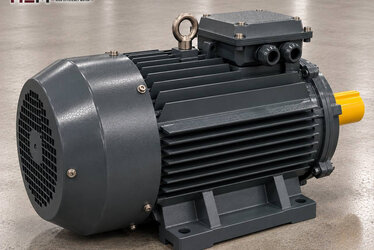
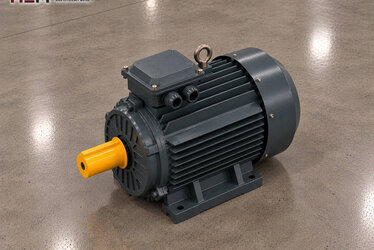
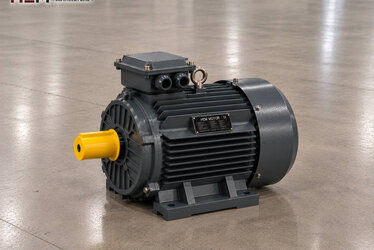
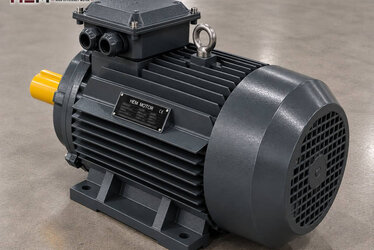
Cleaning machines are of small and medium power compared with the mill's roll drives. Examples to look at are 1.5 kW 90L-4 (1,445 rpm, 9.91 Nm) and 4 kW 132M1-6 (968 rpm, 39.5 Nm), and for the scourer 7.5 kW 132M-4 (49.1 Nm) and 11 kW 160M-4 (71.7 Nm). For small ratings there are also aluminium frame options.
| Cleaning machine | Form of the load | Drive | Example HEM model |
|---|---|---|---|
| Separator, destoner | Swinging box, even load | Eccentric shaft by belt | 90L-4, 1.5 kW |
| Indented cylinder | Slow drum, light load | Gear reducer | 132M1-6, 4 kW |
| Dampening screw | Continuous, humid environment | Belt or coupling | 132M-4, 7.5 kW |
| Scourer | High friction, continuous load | Belt | 160M-4, 11 kW |
The pairings above are meant to give an idea; each machine's motor is chosen by assessing together its real load, the required speed, the mounting arrangement and its environment.
Quotation information for a cleaning line
For a quotation, send a list with the type and machine brand of each machine, the power (kW) and speed (rpm) of the existing motors, the plant voltage, the mounting type, the drive type (belt, coupling, reducer) and the quantity. For nameplate photos you can use the send motor nameplate page. Models and current prices are in our shop; for WhatsApp and phone, see the contact page.
Frequently Asked Questions
Is the separator box shaken by a vibration motor or a standard motor?
Both designs exist. On separators with an eccentric shaft a standard three-phase motor turns the shaft by belt; vibration motors attached directly to the box are not included in HEM Motor's 2026 catalogue.
Why does the scourer motor often run hot?
Friction between rotor and screen creates a constantly high load. Overfeeding, a blocked screen or dust on the cooling fins increase heating; feed should be set by current and the fins kept clean.
Does changing motor speed on an indented cylinder affect separation?
Yes. The drum's speed determines when kernels drop out of the pockets. When the motor is changed, the number of poles and the reducer ratio should be kept.
Which options are recommended for a dampening screw motor?
Because of the humid environment and line stoppages, an anti-condensation heater is recommended. If the water line runs above the motor, a guard should be fitted; a standard IP55 motor is not suitable for pressurised water.