English
 Français
 Türkçe
 Español
 Русский

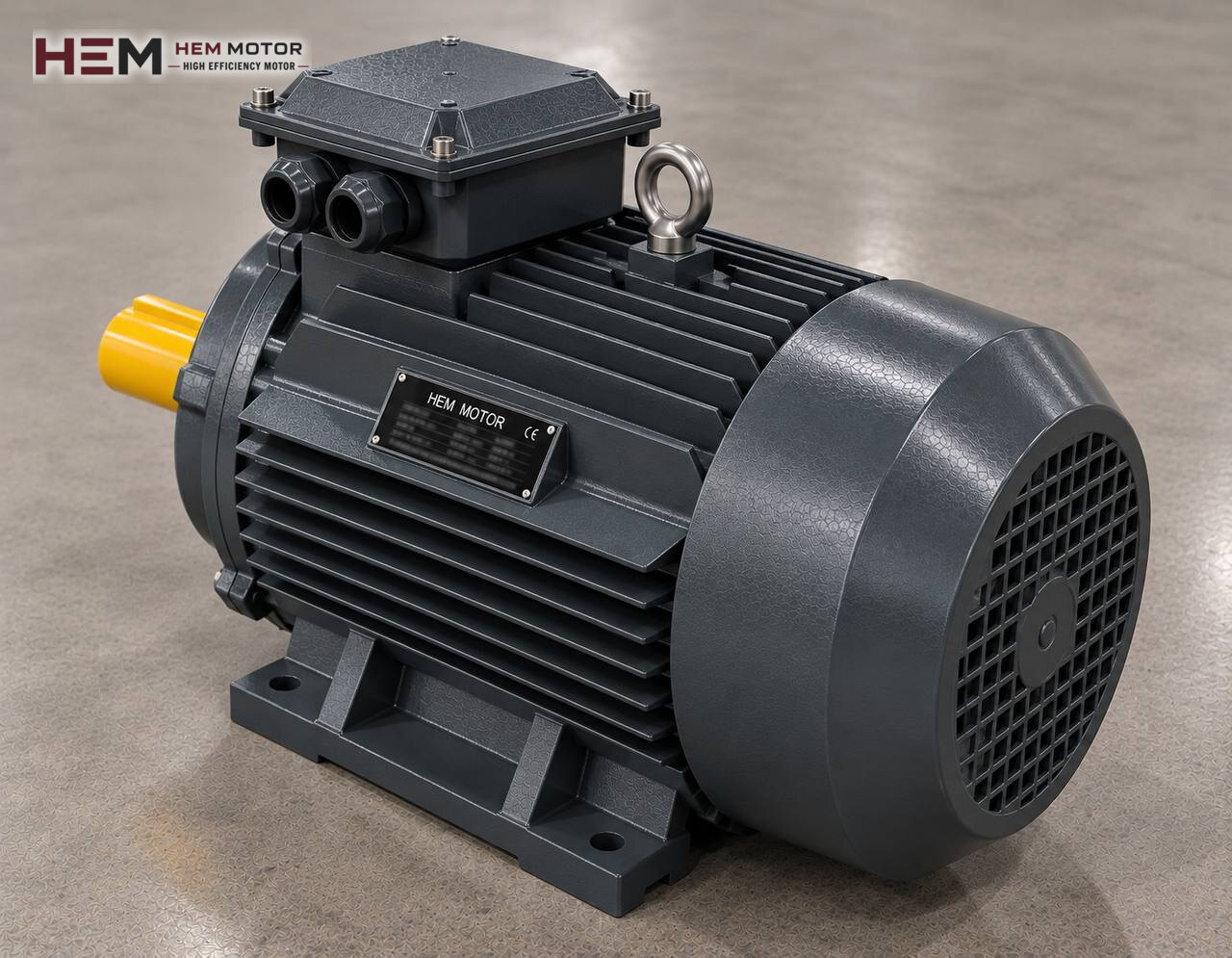
An automatic car wash machine may look like a single unit, yet several electric motors with very different jobs work inside it: drives that spin the brushes, the travel system that moves the machine or the vehicle, the high-pressure water pump and the dryer fan on the final pass. This page looks at these motors one by one in rollover and tunnel car wash machines. For the list of machine motors in other industries, see the electric motors for industries page.

Rollover and Tunnel: Two Different Ways of Moving
In a rollover (gantry) machine the vehicle stays in place while the machine travels on floor rails from the front of the car to the back and returns. Each pass runs a different programme: pre-soak, foam, brushing, rinsing, wax and drying. The travel motor therefore starts, stops and reverses countless times during the day.
Tunnel lines turn this around. The stations are fixed; the vehicle is pulled through the line at constant speed by a chain conveyor or a roller system. Here the conveyor motor turns without a break for hours, but its load grows as more cars are on the line. Both layouts share the same brushing and drying work, yet the duty the motor sees is not alike.
Brush Drives: Changing Contact, Changing Load
The top horizontal brush and the two vertical side brushes press against the body while following the shape of the car. When the bristles reach the bumper, a mirror or the area around the number plate, friction changes abruptly; the motor shaft sees a constantly fluctuating torque. Wet bristles are much heavier than dry ones, which raises both the starting load and the load while turning.
Brush motors are usually connected to the brush shaft through a gear reducer to obtain a low brush speed. Many machine builders monitor how hard the brush presses on the car from the motor current: once the current exceeds a set value, the brush arm pulls back. So a replacement motor must match the rated current and speed of the old one; otherwise the control board's pressure setting drifts. The general picture of geared connections is on the electric motors for reducers page.
Wheel brushes and the small drives that open and close the brush arms or raise and lower the top brush are generally low-power. On some machines these movements are made with pneumatic cylinders; for motorised ones the power and speed given by the machine builder are the reference.
Travel and Conveyor Motors
In gantry travel the motor sets the mass of the gantry in motion on every cycle and slows it down and stops it at the end of the track. Abrupt starts can cause wheel slip on the rails and swinging of the brushes. That is why travel drives commonly use a frequency inverter with ramp settings; the gantry accelerates smoothly and moves at different speeds according to the programme. If the motor has to run slowly on the inverter for long periods or the drive cabinet is far from the machine, cooling and cable filter needs should be discussed with the order; details are on the inverter-compatible electric motors page.
Keeping the gantry in place once it stops is handled by the machine's own brake or locking arrangement. If you need a brake on the motor itself, please state it in your order.
On a tunnel conveyor the issue becomes constant torque and continuity. The chain or roller system is turned through a reducer, and its speed sets how long the car stays at each station. Protection against overload when a wheel jams, such as a shear pin, torque limiter or current monitoring, is installed on the machine side.
High-Pressure Pump and Dryer Fan
Pressurised water unit
The high-pressure water used for pre-wash and rinsing usually comes from a plunger pump. The pump is connected to the motor by a coupling or a belt; motor power is directly related to the pump's flow and working pressure and is selected from the pump manufacturer's data. Even when the pump and motor sit in the machine's technical compartment, the air there is humid. General information on pump drives can be found on the pump electric motors page.
Dryer fan
On the final pass water is stripped off the car surface with high-velocity air. Dryer fans are usually driven directly by two-pole (3000 rpm) motors and run a short but fully loaded period at the end of the programme. Because fan power changes roughly with the cube of speed, lowering the speed slightly with an inverter reduces the motor load noticeably; the real value depends on the fan and duct design. General information on fans is on the fan and extractor motors page.
The Motor in Water, Foam and Chemicals
The toughest test for a motor in a car wash machine is its surroundings. Brush and dryer motors sit right inside the wash area; shampoo water, foam and wax mist reach the frame all the time. Our motors have IP55 protection and are designed against splashing water. However, washing the motor with a high-pressure lance, leaving foam and chemical deposits on the frame or exposing the motor to standing water is not a design condition of this standard motor; the machine builder needs to take a protective measure such as a shield, an enclosure or a special motor, and you should state this requirement in your order.
Alkaline and acidic wash chemicals can, over time, affect the terminal box screws and the fan cover. Placing cable entries facing downwards, checking the seals during periodic maintenance and mounting the frame so that no water stands on it extend the life of the motor. In winter, motors waiting in a cold, wet area can collect condensation in the winding; an anti-condensation heater, and a PTC winding sensor for travel motors with frequent starts, are order options.
For the frame, aluminium is practical for light brush and arm drives; cast iron can be considered for larger drives such as the dryer fan and the pump. You can find the differences in the question aluminium or cast iron frame.
Example HEM Models for a Car Wash Machine
| Machine section | Motor duty | Point to watch | Example HEM model |
|---|---|---|---|
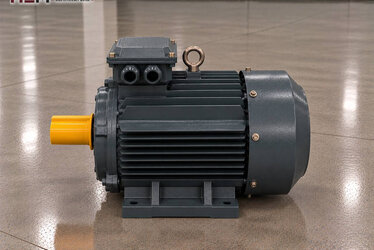
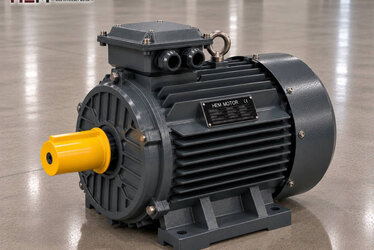
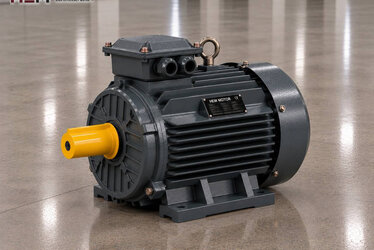
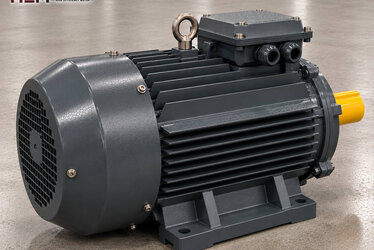
| Side and top brushes | Fluctuating torque, geared | Pressure control by current | 0.75 kW, 1,420 rpm, 80M2-4 aluminium |
| Gantry travel | Frequent starts and reversing | Ramp setting, stopping arrangement | 1.1 kW, 1,445 rpm, 90S-4 aluminium |
| Tunnel conveyor | Continuous, constant torque | Reducer connection, overload | 4 kW, 1,450 rpm, 112M-4 aluminium |
| High-pressure pump | Load set by flow and pressure | Pump manufacturer's power | 5.5 kW, 1,460 rpm, 132S-4 aluminium |
| Dryer fan | Short, fully loaded running | Fan speed, humid air | 7.5 kW, 2,930 rpm, 132S2-2 aluminium |
The models in the table are for guidance; the final choice depends on the machine load, the required speed, the mounting and the operating conditions. When replacing a motor on an existing machine, the old motor's nameplate and the machine builder's technical data are the most reliable basis.
For light drives in small businesses without a three-phase supply, our single-phase electric motor series in the 0.18–5.5 kW range can be considered.
What to Send Us With a Motor Request
To prepare a quotation, please tell us: the machine type (rollover or tunnel) and the motor's task, power (kW), speed (rpm), supply voltage, mounting type, reducer or coupling connection and the quantity required. Depending on frame size, B3, B5, B14, B34, B35 and vertical V1, V3, V5, V6, V15 versions are offered; flange and shaft dimensions are confirmed together with the order.
Sending a photo of the old motor's nameplate speeds up finding the equivalent model. All models and current prices are on the buy electric motors page. Our WhatsApp and phone numbers are on the contact page.
Frequently Asked Questions
Why does the brush press too hard on the car after the brush motor was replaced?
Many machines read brush pressure from the motor current. If the new motor's rated current or speed differs from the old one, the control board interprets the same pressure differently. Choose a motor with equivalent power and speed, or have the board's current threshold readjusted.
Why is a two-pole motor chosen for the dryer fan?
Drying needs high air velocity to strip water from the surface; the fan impeller is usually mounted directly on the motor shaft, so the high speed is obtained with a two-pole motor. The final decision follows the speed given by the fan manufacturer.
Can the gantry travel motor run without an inverter?
It can, but a direct-on-line motor lifts off and stops the gantry harshly; rails, wheels and brush arms are stressed more. Ramp settings on an inverter reduce these shocks and allow the speed to be chosen per programme.
The motor is covered with foam; is that a problem?
Brief splashing is a condition foreseen for an IP55 motor, but chemicals and foam remaining on the frame reduce heat dissipation through the fins and wear seals and fasteners. Fitting a shield around the motor and cleaning the frame during maintenance is recommended.