English
 Français
 Türkçe
 Español
 Русский

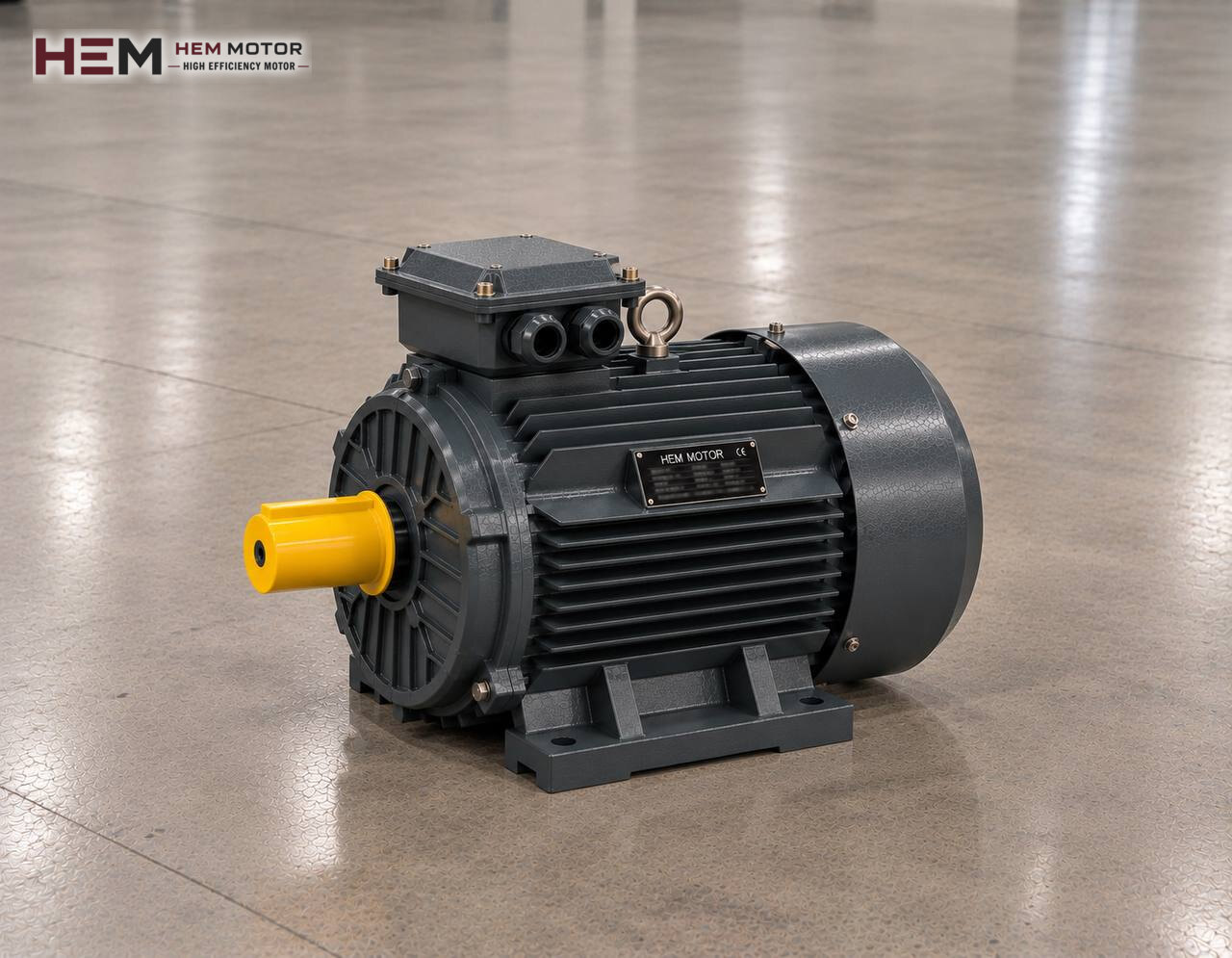
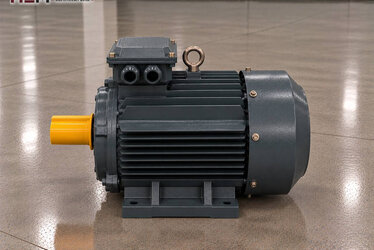
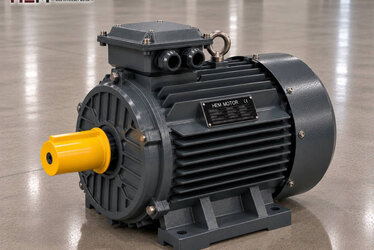
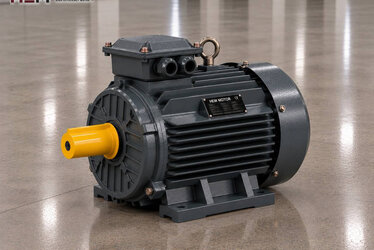
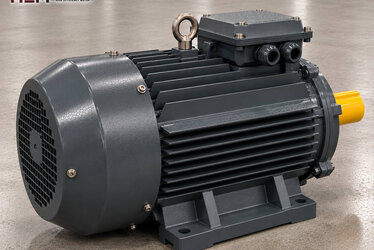
PVC and aluminium profile machines are workshop machines used in window, door and façade fabrication to mitre-cut profiles, machine lock and hinge slots, end-mill profile ends and clean corners. Applications outside this machine group can be found under electric motors for industries. This page covers double-head mitre saws, end milling machines, copy routers and corner cleaning machines, and the standard electric motors inside them.

Which machine does what in a window workshop?
In a window workshop the profile is first cut to length, then hardware slots are machined, welding or corner jointing is done, and finally the corners are cleaned. Within this flow the way the motor works changes a great deal from machine to machine:
- Mitre saw: Single or double head; a large-diameter carbide-tipped circular blade is fitted directly to the motor shaft.
- End milling machine: Shapes the ends of transom and mullion profiles so that they fit the mating profile; the cutter set is stacked on the motor shaft.
- Copy router: Machines lock, handle and drainage slots; uses a very high-speed small spindle.
- Corner cleaning machine: Removes the weld bead from PVC corners with knives and small cutters.
Saw head: directly mounted blade and speed
On profile saws the blade is fixed to the end of the motor shaft with a flange and nut; there is no belt in between. The peripheral speed of the blade therefore depends directly on motor speed and blade diameter. For both PVC and aluminium cutting, heads of this type usually have a 2-pole motor, i.e. one in the 3,000 rpm class.
In this arrangement the motor bearings carry the weight of the blade and the cutting force directly. Run-out at the shaft end determines cut surface quality; so when replacing the motor, the shaft diameter, shaft length and the shoulder dimension where the blade flange seats must be the same as on the old motor. As the saw head swivels between 45° and 90° for mitre cuts, the motor tilts with it; the mounting position varies between horizontal and inclined.
Cutting is short and repetitive: the head comes down, cuts the profile and returns. The motor, meanwhile, usually keeps running at no load. If the blade should stop quickly at the end of the cut, please specify a brake motor in your order.
How aluminium and PVC cutting affect the motor
When cutting aluminium, the blade is cooled with oil mist or minimum quantity lubrication. This mist leaves a thin oil film on the motor frame and fan cover; when aluminium chips stick to it, cooling weakens. In PVC cutting the chips are light and electrostatic, so they cling easily to the motor surface and grille.
In both cases the chip extraction of the cutting cabin protects the motor. A standard IP55 motor is not designed for a position where coolant is sprayed directly at it; the oil nozzle should point at the blade, not at the motor frame.
End milling and copy router drives
On an end milling machine several cutters are stacked one behind another on the motor shaft and the profile is pushed from a side slide towards the tool. The motor sees a short but heavy cutting load. Because the weight and length of the cutter stack load the shaft end, the shaft dimension must be chosen according to the machine builder's data.
The small spindle motors running at tens of thousands of rpm used on copy routers are not included in HEM Motor's 2026 catalogue. On these machines the standard three-phase motor works in auxiliary drives such as the compressor motors supplying air for profile clamping, the pump motor on hydraulically clamped machines and the chip extraction fan.
Multi-head lines and speed control
In workshops doing series production, the profile is cut and machined automatically in cutting–machining centres. On these lines the infeed and outfeed conveyors are turned by geared motors; the electric motors for reducers page can be used as a reference for geared drives.
Some machine builders feed the saw motor from a drive for soft starting or for speed adjustment according to material. HEM's three-phase motors can run on a drive. If the motor is expected to run loaded at low speed for long periods, a separately powered cooling fan may be needed, and if the drive cabinet is far from the motor, a dv/dt or sine filter; it is enough to add this information to your order. If running above 50 Hz, the blade's maximum permitted speed must not be exceeded.
Example HEM motors for profile machines
| Machine | Motor load | Value to check | Example HEM model |
|---|---|---|---|
| Single-head mitre saw | Short, repetitive cuts | Blade diameter, shaft end dimension | 90L-2 aluminium — 2.2 kW, 2,895 rpm |
| Double-head cutting saw (per head) | Large blade, thick aluminium section | Head tilt angle, mounting position | 112M-2 cast iron — 4 kW, 2,905 rpm |
| End milling machine | Full cut with cutter stack | Cutter stack weight, shaft length | 90S-2 cast iron — 1.5 kW, 2,895 rpm |
| Infeed conveyor / chip extraction | Continuous, light load | Gearbox or fan connection | 80M1-4 aluminium — 0.55 kW, 1,400 rpm |
The examples in the table are not a final selection; the decision is made taking into account the machine's actual load, the required speed, the motor's mounting arrangement and workshop conditions. The most reliable starting point is the nameplate of the motor already on the machine.
Mounting, protection and quote information
On saw and milling heads the motor is usually flange-mounted (B5 or B14) or foot-and-flange mounted (B34, B35). These versions, together with foot-mounted B3 and the vertical positions V1, V3, V5, V6 and V15, are available from HEM depending on frame size; we finalise the dimensions of the flange and shaft that will fit the head together during ordering. A PTC or PT100 winding sensor and, for motors waiting in damp storage, an anti-condensation heater are order options.
Small window workshops with a single-phase supply can look at the single-phase electric motor models with power from 0.18 to 5.5 kW.
When requesting a quote, send the machine type (mitre saw, double-head cutting, end milling, corner cleaning), the motor's power (kW) and speed (rpm), the voltage, the mounting arrangement, the shaft end and flange dimensions and the quantity required. For a photo of the old motor's nameplate, see send the nameplate, we find the equivalent. Priced models are on the shop page; WhatsApp and phone details are on the contact page.
Frequently Asked Questions
The cut surface on my profile saw comes out wavy — is the motor involved?
A dull blade or the wrong tooth form is the most common cause. If these are fine, check the run-out at the shaft end and bearing clearance; a worn bearing's vibration is transferred straight to the cut surface.
Can the same motor be used for PVC and aluminium?
On many machines the same head cuts both materials; the difference is mostly in the blade type and cooling. For thick aluminium sections the machine builder may specify a stronger motor.
Can I get the copy router spindle motor from HEM?
Very high-speed spindle motors are not included in HEM Motor's 2026 catalogue. Our three-phase models can be considered for the standard drives on the same machine, such as the compressor, pump and fan.
Does the motor position on a tilting saw head cause problems?
The motor works between horizontal and inclined positions. Stating the head's tilt range and flange orientation in your order makes it easier to choose the right version.