English
 Français
 Türkçe
 Español
 Русский

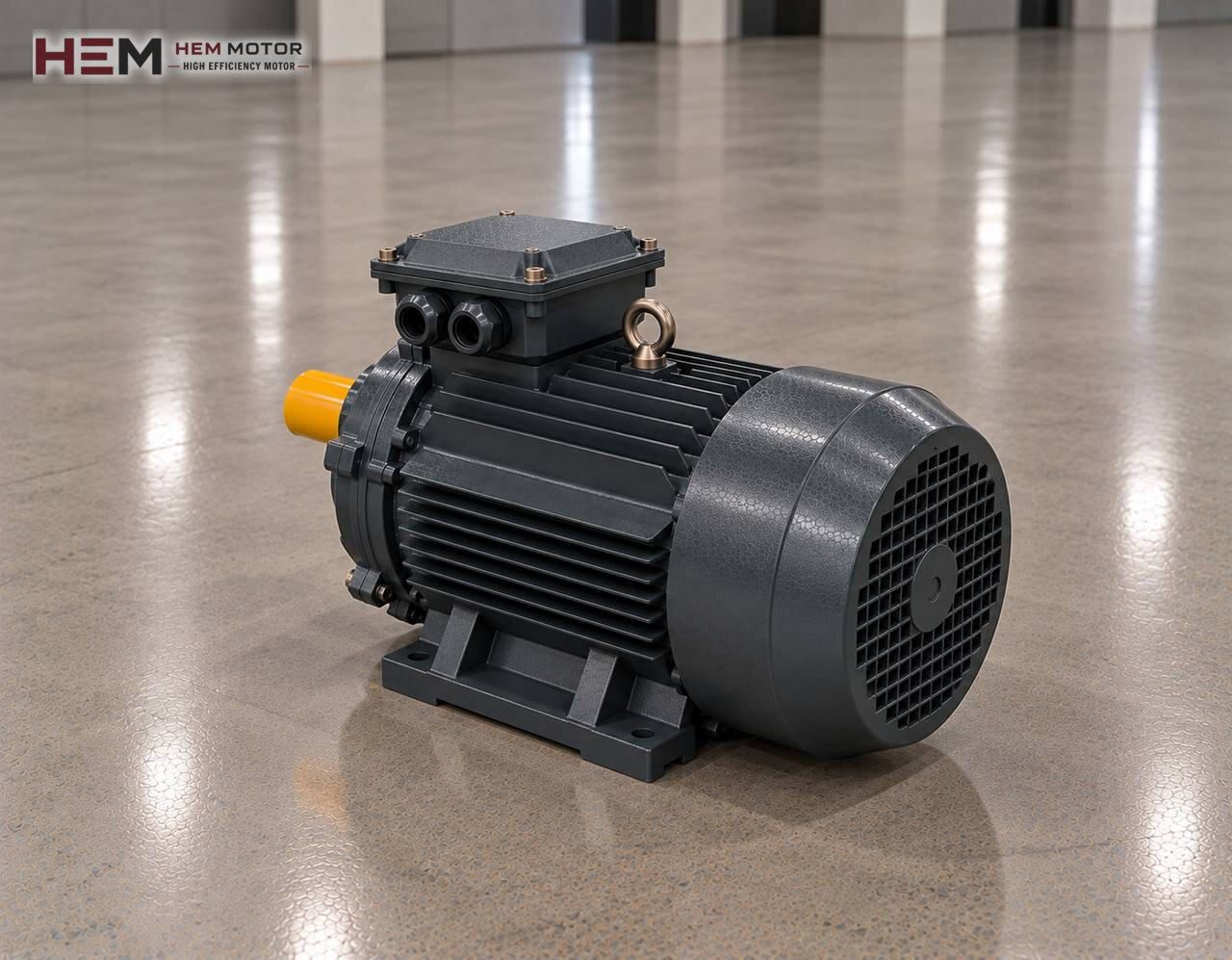
Glass processing and glass washing machines include edging machines that grind the edges of flat glass, machines that drill holes and cut notches, and lines that wash glass with brushes and dry it before insulating-unit assembly or tempering. Machine types outside this group are collected on the electric motors for industries page. Below we describe the working conditions of the standard electric motors that turn the wheels, brushes, rollers and drying fan on these machines.

How motors are distributed on a glass line
A glass processing line does not have one large motor; many small and medium motors do separate jobs. On an edger there is one motor for each wheel, and the conveying pads or rollers advance with a separate geared motor. On a washing machine the brush groups, conveyor rollers, water pumps and drying fan run on independent motors.
So the motor list of a glass line is often long and contains many motors of the same type. When choosing spare motors, recording the power, speed and mounting arrangement of each position separately makes the job easier.
Edge grinding and wheel motors
On a straight-line edger the glass travels horizontally, clamped between two pad belts or chains. The edge is worked by diamond wheels and polishing wheels arranged in sequence. The wheel is fitted to the motor shaft with a flange; the motor is usually 2-pole or 4-pole and is chosen according to glass thickness, edge profile and wheel diameter. On double edgers the same arrangement is repeated opposite each other on both sides.
The load on the wheel depends on the glass feed speed and the amount of material removed. When the line runs at constant speed the motor load is fairly even; short load changes occur as the glass enters and leaves the wheel. For arrissing and bevel angles the wheel head is mounted at an angle, which makes the motor run in a non-horizontal position.
Wet operation and where the motor sits
In edging and drilling the wheel is constantly cooled with water; glass dust mixes with the water to form a slurry. A standard IP55 motor is not designed for a position where this liquid is sprayed directly at it or collects and wets the motor. The machine builder usually separates the motor from the water with a sealed cover or a labyrinth seal; make sure this protection is refitted after maintenance. If additional protection or a special motor is needed, please specify it in your order.
Glass washing machine: brushes, rollers, pumps
In a washing machine the glass travels horizontally or vertically over rollers. Cylindrical brushes scrub both glass surfaces with a rotating motion; brush motors are usually 4-pole and turn the brush through a belt or a direct coupling. Motor load changes as the brush pressure on the glass is adjusted.
Wash water and the demineralised water for final rinsing are delivered by separate centrifugal pumps. The pump electric motors page gives details on pump motor selection. The conveyor rollers turn through a common shaft or chain via a geared motor; speed can be set with a drive to match the rhythm of the line.
Humidity is high in the washing section. When the machine stops and the motor cools, condensation can form inside; especially on lines that stand idle over the weekend, an anti-condensation heater can be considered as an order option.
Drying section and air-knife fan
At the end of washing the glass is dried by air blown at high speed through a narrow slot (air knife). This air is produced by a centrifugal fan or a side channel blower. The fan motor runs continuously as long as the line is running and is usually 2-pole. Since fan power changes roughly with the cube of speed, adjusting air volume with a drive is common practice; the actual value depends on the system. For fan motor selection, see the industrial fan motors page.
If the air-knife intake is close to the washing section, the fan draws in humid air; in that case a filter or droplet separator at the fan inlet protects both motor and fan.
Drive use and protection
On glass lines, conveying speed, brush speed and drying air are often adjusted with frequency inverters. HEM's three-phase motors are suitable for this use. If the roller motor is expected to turn slowly under load for long periods, a separate cooling fan on the motor should be considered, and if the cable between cabinet and motor is long, a dv/dt or sine filter; it is enough to state this operating condition in your order. For details, see the inverter-compatible electric motors page.
A PTC or PT100 sensor can be added when ordering to monitor winding temperature; on lines where many motors are controlled from the same cabinet, these sensors make fault tracking easier.
Example HEM motors for glass line drives
| Position | Motor's job | Value to check | Example HEM model |
|---|---|---|---|
| Edger wheel head | Turning the diamond wheel on a flange | Wheel diameter, glass thickness | 90L-2 aluminium — 2.2 kW, 2,895 rpm |
| Washing brush | Turning the cylindrical brush continuously | Brush length, pressure setting | 90L-4 aluminium — 1.5 kW, 1,445 rpm |
| Conveyor rollers | Slow feeding through a gearbox | Line speed, gearbox flange | 80M2-4 aluminium — 0.75 kW, 1,420 rpm |
| Air-knife fan | Continuously supplying drying air | Fan flow and pressure | 112M-2 cast iron — 4 kW, 2,905 rpm |
The models in the table are only meant to give an idea. The final choice is made according to the machine's actual load, required speed, mounting arrangement and working environment; when replacing a motor, the first place to look is the nameplate of the existing motor.
Mounting and what is needed for a quote
On wheel heads the motor is usually flange-mounted (B5, B14) or foot-and-flange mounted (B34, B35); foot-mounted B3 is common on fans and pumps, and V1 or V3 positions may be seen on vertical washing machines. These versions can be selected at HEM according to frame size; we confirm together with the order the flange and shaft dimensions that will fit the machine. For small workshops with a single-phase supply, there are also single-phase electric motor options with power between 0.18 and 5.5 kW.
When requesting a quote, write the machine type (straight-line edger, double edger, drilling, horizontal or vertical washing), the motor's position, its power (kW) and speed (rpm), the supply voltage, the mounting arrangement and how many are required. You can send a photo of the nameplate as described in send the nameplate, we find the equivalent. Models with visible prices are on the shop page, and WhatsApp and phone on the contact page.
Frequently Asked Questions
The wheel motor on my edger is taking in water — what should I do?
First check that the machine's water guard and seals are in place. A standard motor is not designed for a position where water reaches it directly; if protection is insufficient, the measure recommended by the machine builder or a special motor should be specified in your order.
Can I change the speed of the brush motor on a washing machine?
Brush speed can be adjusted with a drive. If there is long operation under load at very low speed, a separate cooling fan may be needed; please state this in your order.
Will a stronger motor on the air-knife fan improve drying?
Drying depends on the fan's flow, pressure and the air-knife opening. Increasing motor power alone is not the solution; it must be assessed together with fan selection.
The line stands idle for long periods — will the motors have moisture problems?
Condensation can form in motors standing in the humid section. An anti-condensation heater can be added as an order option; measuring insulation before the first start after a long stoppage is also useful.