A no-load run during electric motor acceptance reveals wrong connection, reverse rotation, current imbalance between phases, bearing noise, vibration and mechanical damage from transport before the motor is coupled to the machine. The run takes between half an hour and an hour, and the result is written into the acceptance record.
Why is the no-load run done before coupling to the machine?
Once the motor is connected to the load by coupling or pulley, a noise heard, a vibration measured or a high current reading has two possible sources. Separating whether the problem is in the motor, the pump or the alignment takes hours.
In a no-load run there is no load.
Whatever you hear belongs to the motor.
So during acceptance the motor is run with the shaft end free and the key secured, its feet bolted to a solid bench. The key on the shaft end is held with tape or by a half key seated in the keyway; on a shaft spinning at no load, a loose key can fly out.
Which checks are made before applying power?
The first job is to compare the nameplate with the delivery note and the order: power, speed, voltage pair, connection type and frame. Then the shaft is turned by hand; no rubbing, sticking or uneven resistance should be felt.
Next, insulation resistance is measured. The insulation tester is connected between winding and frame on a motor with the supply cable disconnected, and the value goes into the record (general information; the test voltage to use and how many megohms count as enough are taken from the instructions of the companies that make the motor and the instrument).
If the winding has a PTC or PT100 sensor, the insulation tester is not connected to those leads. If the sensor leads are on separate terminals, they are taken out of the circuit before measuring.
Finally, the links in the terminal box are placed for the connection that suits the supply voltage. On a 400 V plant supply, the links of a motor whose nameplate reads 400/690 V are set in delta, and those of one reading 230/400 V in star. If the links are in the wrong place, the run is spoiled before it starts.
What do rotation direction and starting show in the first seconds?
The first power is given as a short jog. The motor turns for a few seconds, is stopped, and the direction of rotation is checked looking at the shaft end.
If it runs backwards, two of the supply leads are swapped.
It is a simple job, but on direction-sensitive machines like pumps and fans, if it is noticed only after coupling it can loosen an impeller or damage a seal.
If the shaft struggles to accelerate at start, and the hum grows but speed does not settle, the first suspects are the link connection and a missing phase. An unloaded motor reaches full speed in a second or two; if it does not, power is cut rather than waiting.
During the jog the starting current is momentarily high. The clamp meter is used to read not that first peak but the current after the motor has settled at speed.
Which problems does a no-load current measurement reveal?
Once the motor has settled at speed, the current of each of the three phases is read one by one. The three values are expected to be close; if there is a clear difference, the supply voltages are checked first, then a winding or connection problem is sought inside the motor.
No-load current stays well below rated current, but it is not close to zero either. Even with the shaft turning freely, the winding keeps drawing from the supply the current that holds the rotating field up; on small frames the ratio of this current to rated current comes out higher than on large frames. For the exact ratio, the manufacturer's test report is the reference.
If more than one motor of the same model has been received, the most useful comparison is between the motors themselves. If four of five motors read the same current and one is clearly different, that motor is examined separately.
No-load current approaching rated current is a different sign.
A wrong connection, a voltage higher than the nameplate or damage on the rotor side comes to mind. In that case the motor is not coupled to the machine; the supplier is contacted with the measurements, photos and nameplate data. If many motors are to be tested at acceptance, the list of power steps can be seen on a single page in the HEM Motor store.
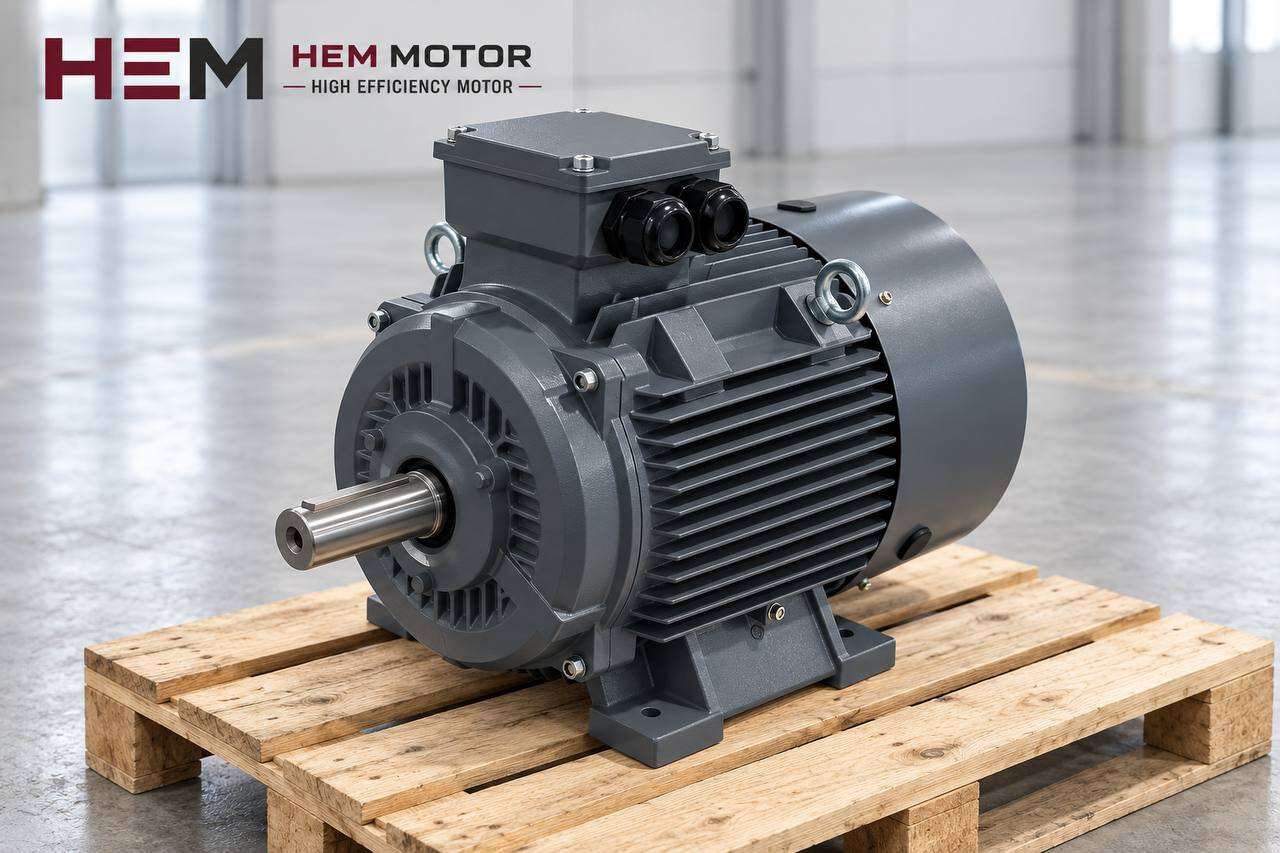
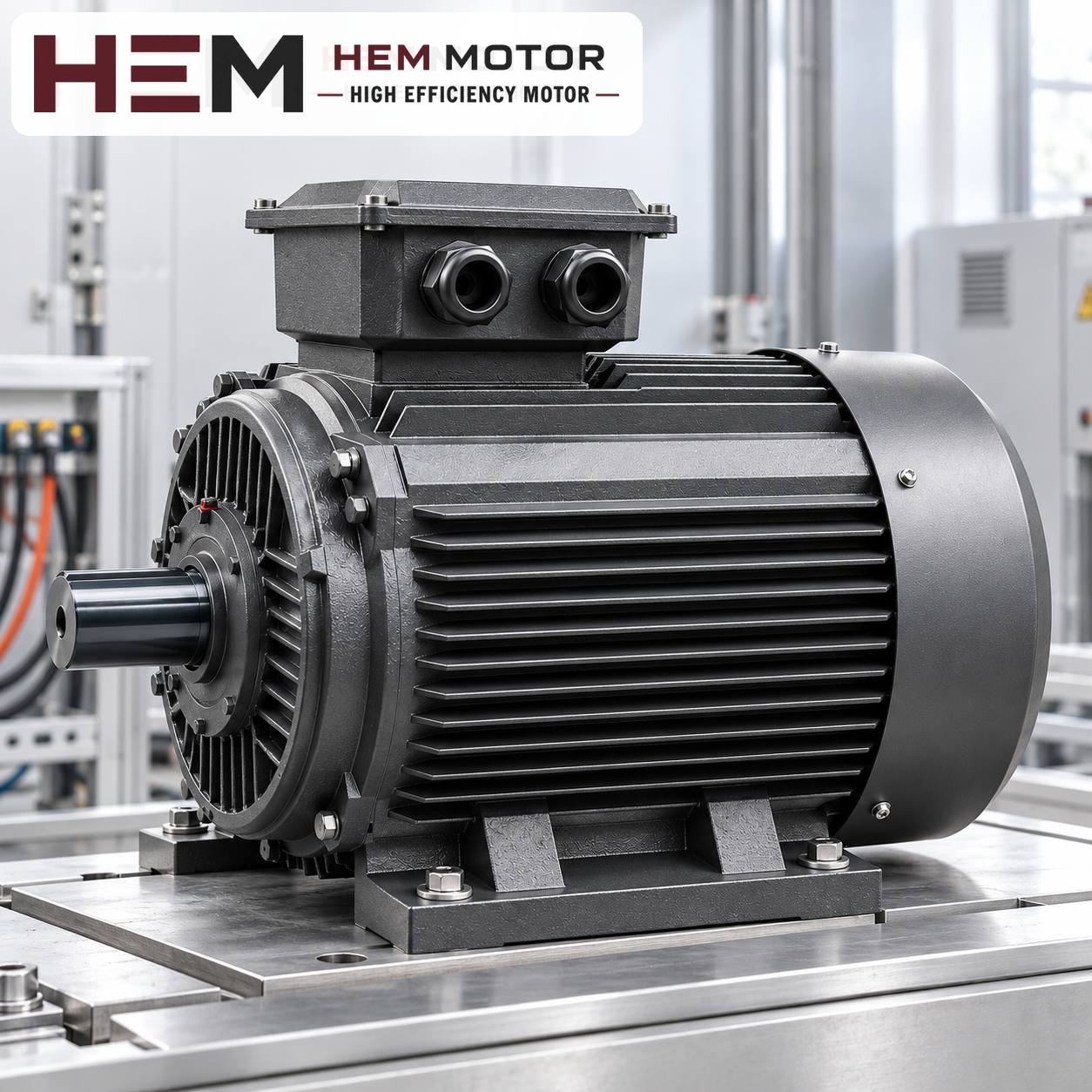
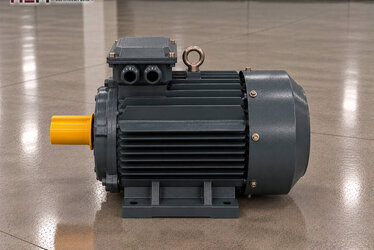
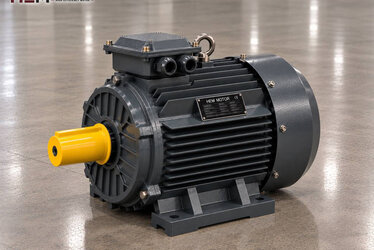
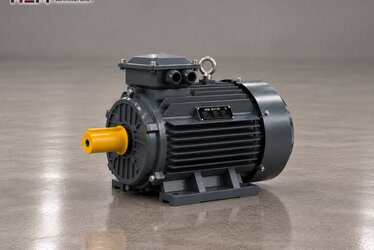
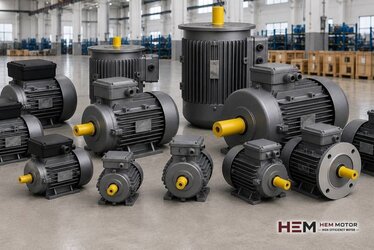
A no-load run lets noise, current and vibration be read as belonging to the motor itself before it is coupled to the machine (representative image).
Prices and technical data are on the product pages; choose a model and order online.
How are noise, vibration and temperature judged on site?
The no-load sound of a healthy motor is a steady hum and fan rustle. A rhythmic ticking, metallic rubbing or a whining sound that changes with speed points to a bearing or to fan cover contact.
The practical way to separate the source of a noise is to cut power and let the motor coast. If the noise stops with the power, the source is electrical; if it continues while the shaft slows, it is mechanical.
Vibration, if an instrument is available, is read in three axes on top of the bearing housings. Without an instrument, a comparison is made by hand and ear; if the feet do not sit fully on the base, that is corrected first, because a springy foot makes the motor look worse than it is.
At the end of the run the temperature of the bearing housings and frame is read with a non-contact thermometer. An unloaded motor gets warm; one bearing housing clearly hotter than the other makes that bearing suspect.
Which finding calls for which decision?
The table below is a starting point to link a finding seen at acceptance to a first decision:
Finding
Likely source
Decision
Rotation reversed
Phase sequence
Two phases swapped, run continues
Phase currents unbalanced
Supply or winding
Voltages measured, reported to supplier if the difference persists
Rhythmic ticking, noise changing with speed
Bearing, transport impact
Motor not coupled, reported with a record
Rubbing at the fan cover
Dented cover
Cover straightened or replaced
One bearing housing clearly hot
Bearing or misaligned end shield
Run extended, reported if it persists
With transport damage, timing matters.
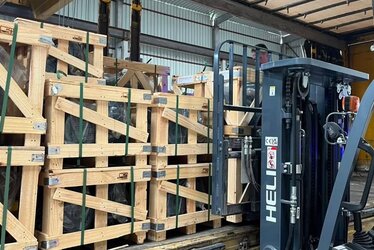
If a finding is reported days after delivery, proving whether the impact came on the road, in the warehouse or during installation becomes hard, and the argument over who is responsible between supplier, carrier and plant drags on. That is why the packaging photo taken as the crate is opened, the nameplate photo and the no-load run record are gathered in one file on the same day; if the delivery note number is written on the file as well, the condition on day one can be shown beyond dispute even in a damage claim opened for the same motor months later.
Which values go into the acceptance record?
The record holds the nameplate photo, insulation resistance, three-phase no-load current, supply voltage, direction of rotation, noise observed, vibration values if any and bearing temperatures at the end of the run. These values also become the reference for measurements taken later while the motor runs on the machine.
The HEM Motor standard series comes with IP55 protection, class F winding insulation and CE marking. Whether a factory test report is supplied with the delivery and which measurements it contains has not been verified here; it must be confirmed with the order.
4-pole cast iron steps often tested at acceptance (all 400/690 V):
132S-4: 10.7 A on the nameplate (400 V), shaft power 5.5 kW.
160M-4: 20.4 A on the nameplate (400 V), shaft power 11 kW.
180M-4: 33.5 A on the nameplate (400 V), shaft power 18.5 kW.
If a suspicious finding appears during the no-load run, share the nameplate photo and the three phase currents you read through the nameplate submission page; we will interpret the values together and, if needed, settle the right model from the sales list.
Frequently Asked Questions
How long should a no-load run last?
The first few minutes are enough for noise, current and vibration. To let bearing temperatures settle, the run is extended to between half an hour and an hour.
If no-load current is far below the nameplate current, is the motor weak?
No. An unloaded motor draws only as much current as magnetising and internal losses need; the nameplate current is the value at rated load.
Should a motor to be driven by a frequency inverter be no-load tested on the inverter?
The first run is done directly on the mains if possible, so the motor is judged on its own. A run on the inverter is a separate step after parameters are entered.
HEM Motor Models Related to This Article
The cards show example models related to the topic. A suitable motor is not chosen by power alone: compare speed, voltage, mounting, shaft and connection dimensions on the product page; if unsure, send a photo of the existing motor’s nameplate on WhatsApp.
In an electric motor renewal, production downtime is costed by multiplying the number of hours stopped by that line's hourly downtime cost; the hourly cost in turn is the sum of it... More Details
Turning the shaft by hand when an electric motor is delivered is the fastest check for damage to the bearings, shaft or rotor during transport: the shaft of a healthy motor should ... More Details
When an electric motor is transported, the shaft end and the flange face are protected separately against impact, scratches, rust and vibration marks. Rust preventive is applied to... More Details
In electric motor procurement, model revisions are tracked by recording in the order, beside the motor's power and speed, its model code, housing material, mounting arrangement, an... More Details
In a framework purchase agreement for electric motors, delivery call-offs are planned once the annual total quantity and price terms are fixed, so that motors are requested in port... More Details
In an electric motor requirements list, annual quantity is defined as the total 12-month consumption for each model, and batch size as the quantity delivered at once in one order, ... More Details
We use necessary and optional cookies to improve your experience, enhance content and analyse traffic. Under the GDPR, optional (analytics/marketing) cookies are only used with your explicit consent. Please choose your preference below.
Cookie Policy
 English
 Français
 Türkçe
 Español
 Русский
 العربية
 Deutsch
 Italiano