How to Define Annual Quantity and Batch Size in an Electric Motor Requirements List

How to Define Annual Quantity and Batch Size in an Electric Motor Requirements List

In an electric motor requirements list, annual quantity is defined as the total 12-month consumption for each model, and batch size as the quantity delivered at once in one order, in separate columns. When delivery frequency and the basis of the estimate (past consumption, project, maintenance plan) are written next to them, the supplier can prepare a comparable quote from the same list.

Why are annual quantity and batch size written in separate columns?

The two figures feed different decisions. Annual quantity tells the supplier whether to plan for that model and which price tier applies; batch size relates to packaging, shipping arrangements and your own storage space.

A list with “120 pcs” in a single column can be read two ways. It could be 120 motors at once, or 120 motors spread over the year. Purchasing does not notice the ambiguity, but the supplier has to calculate for both possibilities. The quotes do not match.

An ambiguous list also spoils the comparison. One supplier prices on a single-batch assumption, another on monthly distribution. Put side by side, the difference comes from the assumption, not the product.

Which data is used to estimate annual quantity?

Annual quantity draws on three sources: past consumption, approved projects and spare requirements in the maintenance plan. Each row notes which source was used, so the supplier can see how solid the figure is.

  • Past consumption: purchase or stock issue records for the last 24 months are totalled per model and halved. One-off large projects are kept separate.
  • Approved project: for a machine builder, number of machines in the order book × motors per machine.
  • Maintenance spare: a spare ratio is set from the installed motor count and past failure frequency.

A hypothetical example: a conveyor builder bought 70 and 90 units of a 4 kW, 4-pole model in the past two years, has approved orders for 30 machines next year and uses two motors per machine. The past average is 80, the project need 60; the overlap between the two is removed, a single annual figure is written and the note “past consumption + approved project” is added.

A figure alone is incomplete.

Adding a confidence level to the estimate helps. Three levels such as “firm”, “likely” and “option” make it easier for the supplier to decide which rows to plan for.

What is taken into account when setting batch size?

Batch size is a balance between storage space, cash flow, production or assembly schedule and shipping arrangements. A large batch lowers unit logistics cost and ties up storage and capital. A small batch gives flexibility. The number of orders rises.

A simple method: find the monthly motor consumption of the assembly line and multiply it by the number of months the store can comfortably hold. In the hypothetical example, monthly consumption is 7 units and the store holds two months of motors, so batch size is kept around 14 units. For 80 units a year that means about six batches. To price the batch, the current model pages can be checked in the HEM Motor shop.

Frame size counts too. Large-frame motors are palletised or crated; pallets and crates need floor space and forklift capacity. Frame material and size affect handling; dimensions are taken from the technical drawings page and handling and packaging information from the 2026 catalogue.

As batches grow, each motor stays longer on the shelf. In a damp store, a motor standing for months can lose winding insulation resistance and its grease settles; for large batches these storage conditions are written into the plan as well.
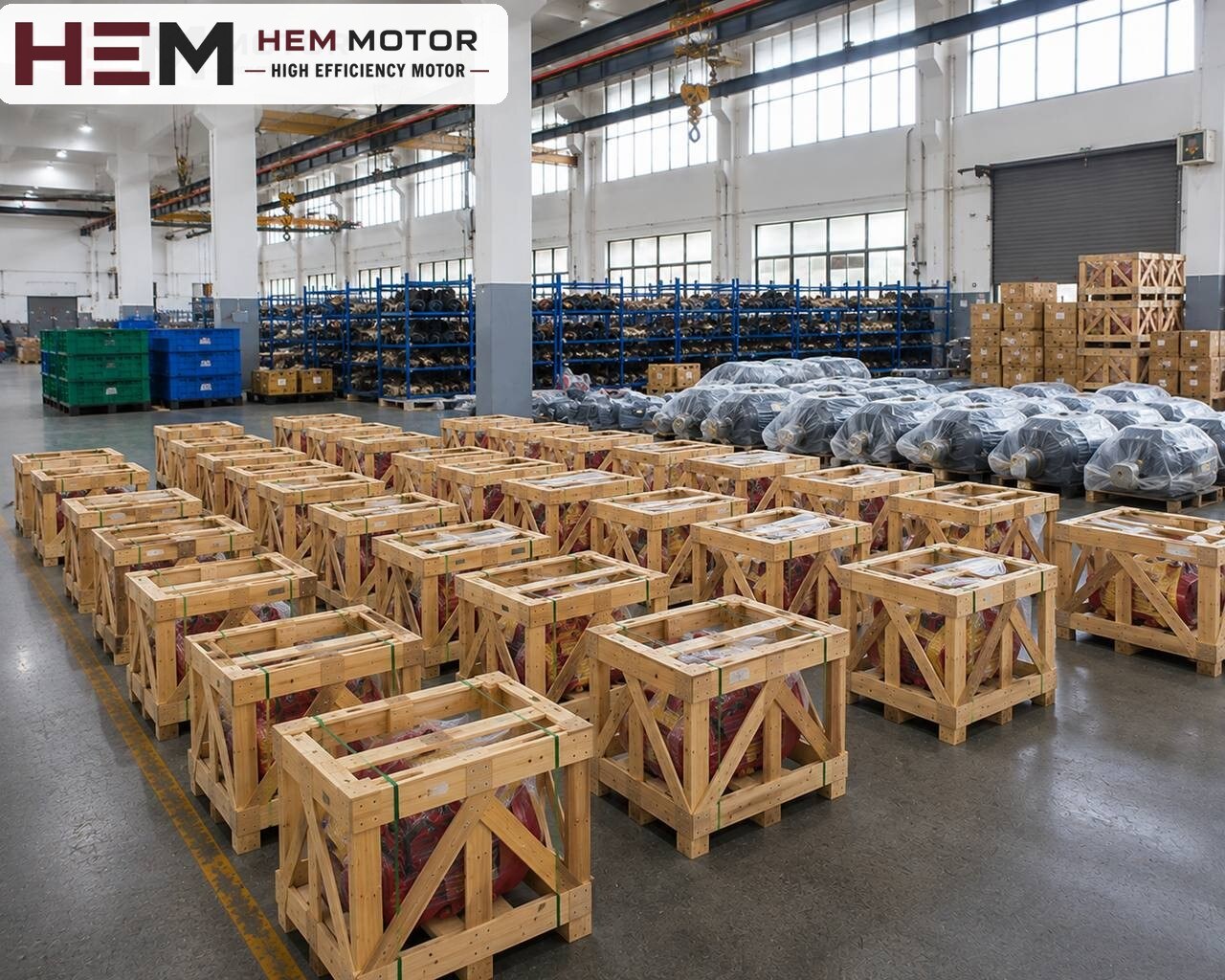
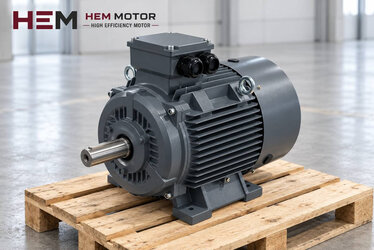
Electric motors prepared for shipment in wooden crates in a warehouse
Batch size is set together with storage space and packaging (representative image).

How are the columns of the requirements list arranged?

A good requirements list carries one model per row with all its technical and logistics information. The column layout below is easy to read on both the purchasing and the supplier side.

ColumnWhat to enterWhy it is needed
Power / poles / speedkW, number of poles, rpmIdentity of the model
Frame and mountingFrame size (e.g. 112M), B3/B5/B14/B35Choosing an equivalent
Voltage / frequency400 V, 50 Hz; connectionSuitability for the mains
Annual quantity12-month totalPlanning and price tier
Batch sizeQuantity per orderPackaging and shipping
Delivery frequencyMonthly, quarterly, call-offSchedule
Basis of estimate and confidencePast / project / maintenance; firm / likelySharing the risk

Adding the application (pump, fan, conveyor, gearbox) to the list speeds up the equivalent proposal. If nameplate photos of existing motors are available, they are sent as an attachment.


Prices and technical data are on the product pages; choose a model and order online.

How are the delivery schedule and call-off orders defined?

Committing the annual requirement in a single order and spreading deliveries over time is called a call-off order. For this, “delivery frequency” and “first delivery month” columns are opened in the requirements list.

Writing the schedule clearly matters. A phrase such as “to be called off as needed” gives the supplier nothing to plan with. A row such as “20 units every three months, first delivery March”, by contrast, contains figures and dates and becomes a workable plan. Delivery timing and available quantity are settled at order stage; the list only defines when the need arises.

The change rule is agreed at the start.

In concrete terms: within what limits can call-off quantities be shifted, and up to which stage is a model change accepted. If these rules are not in writing, the two sides end up with different expectations at the first deviation.

What mistakes do buyers often make in the list?

The most common mistake is writing annual requirements by power rather than by model: a row like “15 kW, 40 pcs” gives no pole number, frame or mounting type. The supplier assumes the most likely model; if the assumption is wrong, the quote is wasted.

  • Writing the same model in different rows under different names; the annual total gets split.
  • Mixing failure spares with project needs; the estimate swells and the confidence level is lost.
  • Enlarging batch size only in hope of a better price, without looking at storage capacity.
  • Leaving delivery frequency blank; the supplier assumes a single batch.

Motor protection should also be considered with the list. Thermal relay and breaker selection depend on motor current; see the motor protection: thermal relay, fuse and MPCB article.

How is the finished list sent to HEM?

When the list is ready, it is sent as a single table with each model on its own row. As long as the technical columns are filled in, model proposal and quote preparation proceed from the same list; there is no need to come back for missing cells, so the first quote can be discussed sooner and the purchasing team can set up its comparison table early. A list in Excel or a similar editable format makes it easy to copy rows straight into a quote.

Examples of steps often found in lists; general series information is on the three-phase induction electric motors page:

  • 112M-4: the 4 kW common on conveyors and small pumps; light aluminium frame, rated current 7.95 A.
  • 160M-4: the 11 kW step widespread on fan lines; aluminium frame, draws 20.4 A.
  • 160L-4: cast iron frame 15 kW for heavy conditions; 27.3 A.

To identify models from existing nameplates, the method on the find an equivalent motor from the nameplate page can be used. Send the list and your questions through our contact page; we will match suitable models from the product list together.

Frequently Asked Questions

What should I write if I do not know the annual quantity exactly?

Write the estimate based on the data you have and add its basis and confidence level. A figure marked “likely” is far more useful than an empty cell.

Is a larger batch size always an advantage?

No. A large batch ties up storage space and capital and lengthens the time motors stand on the shelf. It is assessed together with storage capacity and consumption rate.

Should different mounting types of the same model be separate rows?

Yes. Even with no difference in power, B3 and B5 are two separate products for ordering; each is written in its own row with its own annual quantity and batch size.

Should delivery time be included in the list?

You can write the delivery date you want in the list; the actual date is settled at order stage.

HEM Motor Models Related to This Article

The cards show example models related to the topic. A suitable motor is not chosen by power alone: compare speed, voltage, mounting, shaft and connection dimensions on the product page; if unsure, send a photo of the existing motor’s nameplate on WhatsApp.

4 kW 1500 rpm Aluminium Frame Electric Motor 112M-4

112M-4

4 kW · 1500 rpm

  • Aluminium frame · IEC 112M
  • 1450 rpm · IP55
  • Mounting: B3 foot; flange (B5/B14/B35) depending on frame, confirmed with the order

US$238.15 (€217.96)

View product
11 kW 1500 rpm Aluminium Frame Electric Motor 160M-4

160M-4

11 kW · 1500 rpm

  • Aluminium frame · IEC 160M
  • 1465 rpm · IP55
  • Mounting: B3 foot; flange (B5/B14/B35) depending on frame, confirmed with the order

US$532.46 (€487.32)

View product
15 kW 1500 rpm Cast Iron Frame Electric Motor 160L-4

160L-4

15 kW · 1500 rpm

  • Cast iron frame · IEC 160L
  • 1465 rpm · IP55
  • Mounting: B3 foot; flange (B5/B14/B35) depending on frame, confirmed with the order

US$665.08 (€608.69)

View product

Similar Articles