In electric motor procurement, model revisions are tracked by recording in the order, beside the motor's power and speed, its model code, housing material, mounting arrangement, and technical drawing and catalogue version. At every delivery the nameplate and dimensions are compared with this record; if a difference is seen, the drawing is requested again before installation and compatibility is checked.
What does a model revision mean?
A revision is a change made to the design or a production detail of a motor while its name or power rating stays the same. The end shield design, terminal box position, bearing type, housing material, efficiency class or nameplate layout may change.
Most changes do not affect the user. Some do. These concern installation directly: if the flange hole diameter, shaft end length, overall length or weight differs by a few millimetres or a few hundred grams, the difference is felt immediately on the line of a machine builder producing in series.
Tracking revisions does not mean preventing change. The aim is to see it in time.
Why does the same power rating not mean the same motor?
In purchasing records a motor is often entered as "4 kW 1500 rpm". Yet there can be more than one model at the same power and speed. A concrete example from the HEM Motor catalogue:
Model
Power
Housing
Rated speed
Current at 400 V
Rated torque
112M-4 (aluminium)
4 kW
Aluminium
1450 rpm
7.95 A
26.3 Nm
112M-4 (cast iron)
4 kW
Cast iron
1450 rpm
7.95 A
26.3 Nm
112M-4K (compact)
5.5 kW
Aluminium
1460 rpm
10.7 A
36 Nm
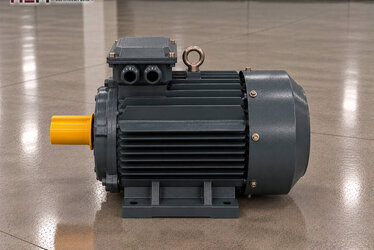
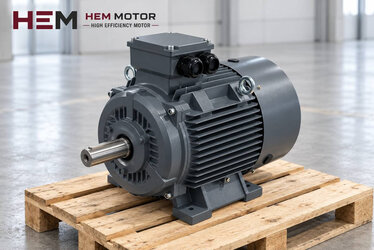
The first two rows have the same electrical values and frame number but a different housing material; weight changes accordingly. The third row uses the same 112M frame size at a higher power. If the record says only "112M-4" or only "4 kW", the question of which one has arrived stays unanswered. People guess.
Hence the rule. Model code, housing material and mounting arrangement are written together on the order line. The shop page can be used to compare power and frame steps.
Which fields should the order record keep?
A good order record allows the person reordering the same motor two years later describe the correct product without asking anything.
Model code and frame number (for example 112M-4)
The material the housing is cast from
Nameplate values: for example 4 kW, 1450 rpm, 400/690 V, 50 Hz
Mounting arrangement code
Flange and shaft end dimensions
IP code and winding insulation class: for example IP55, F
Efficiency class: IE3, IE4 or IE5
Name and date of the technical drawing and catalogue used as reference
Special requests: separate fan, encoder, brake, paint colour and the like
Why are the technical drawing and catalogue version kept?
A technical drawing documents the motor's mounting dimensions as they were at that date. If the drawing used for the decision at ordering is not recorded, showing what changed becomes hard when an incompatibility appears later.
The practical way is to attach the PDF of the drawing and the catalogue page used for the order to the order file. HEM Motor's 2D technical drawings and 2026 catalogue can be downloaded; adding the download date to the file name makes things easier.
For machine builders producing in series there is one more step.
Critical dimensions are written separately on your own assembly drawing: shaft height, flange spigot diameter, shaft end, overall length. That way, even if the supplier's drawing changes, what your own machine needs stays clear.
Prices and technical data are on the product pages; choose a model and order online.
The nameplate of the incoming motor is compared line by line with the order record. Start with the model code on the nameplate, then read power, speed, voltage, star/delta connection, IP code and insulation letter one by one.
In series purchases, the critical dimensions of one motor from the first delivery are measured and recorded; in later batches the same dimensions are checked by sampling. If a difference is found, an updated drawing is requested from the supplier before the motor is sent for installation.
A photo of the nameplate is also archived; the photo must be sharp and every line readable. When a spare motor is requested later, this photo is the quickest reference. The process of finding an equivalent from nameplate data is explained on the send your nameplate, find an equivalent page.
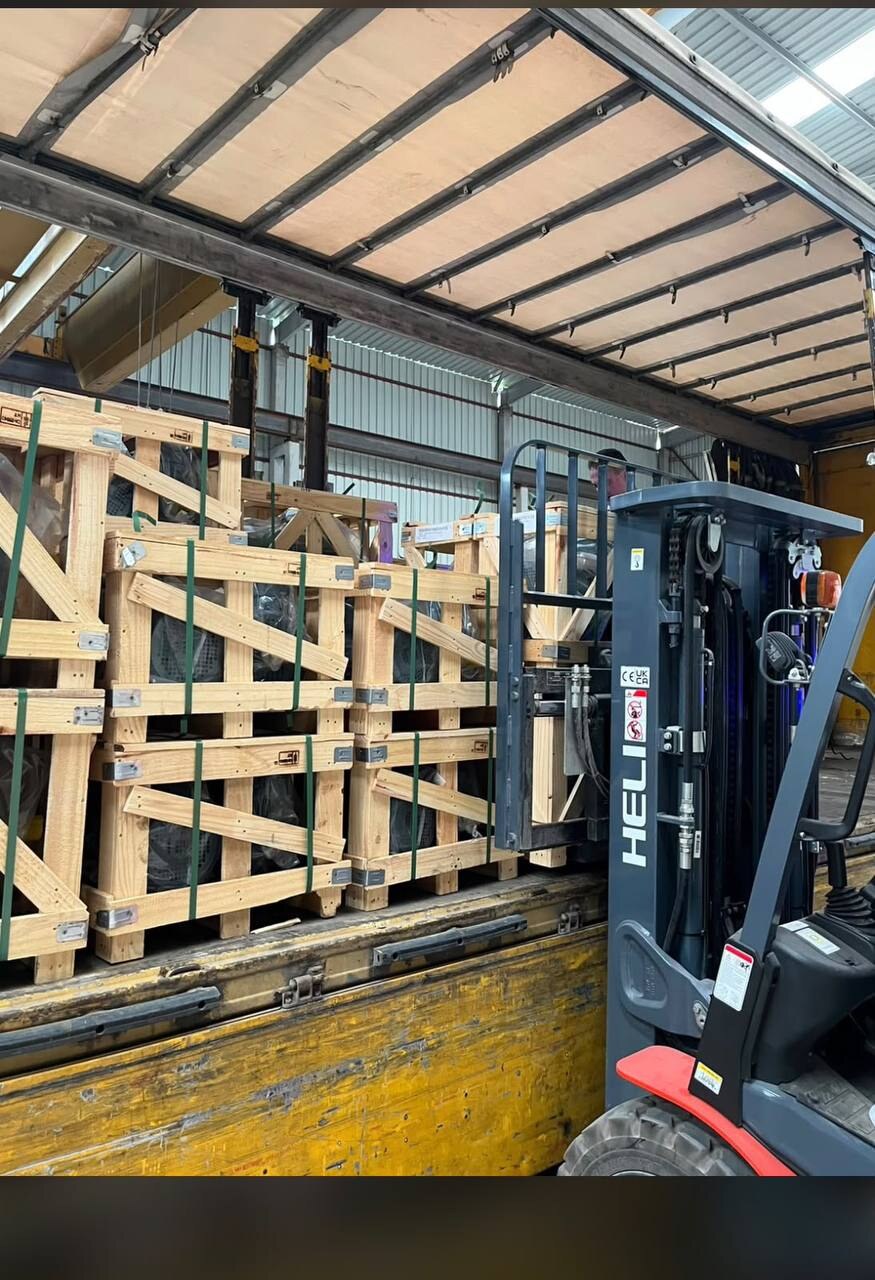
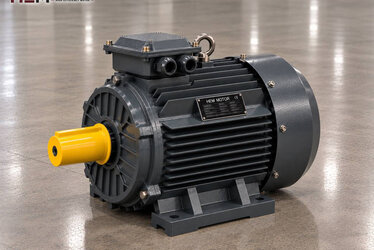
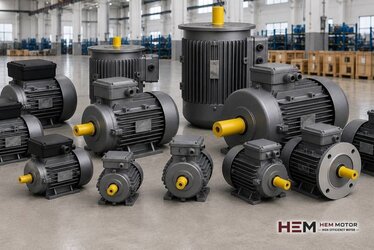
Comparing nameplate and critical dimensions with the order record at delivery catches a revision difference before installation (representative image).
What is done if a revision difference is noticed?
First, the effect of the difference is assessed. If only the nameplate layout has changed, a note in the record is enough.
If there is a dimensional difference, the machine part it affects is identified: flange, coupling, belt line, guard or cable entry. If the difference is small, an adapter or spacer may be the solution; if it is large, the model in the order record is confirmed again.
If there is an electrical change, for example the efficiency class has risen and rated speed has increased by a few rpm, protection settings and frequency inverter parameters are reviewed. Our three-phase series are suitable for speed control with a frequency inverter; long operation at low speed with full torque may require a separate fan; if the drive-to-motor cable is long, a dv/dt or sine filter is considered; these conditions are stated with the order.
How is communication set up in long-term supply?
Sharing a model list with the supplier for regularly purchased models reduces the need to repeat the same description with every new order. The list contains the fields of the order record and carries a version date.
Saying "same model" in the order is not enough. The model code and reference drawing date are written. The supplier is asked to state in the order confirmation if there is a change affecting installation in this model.
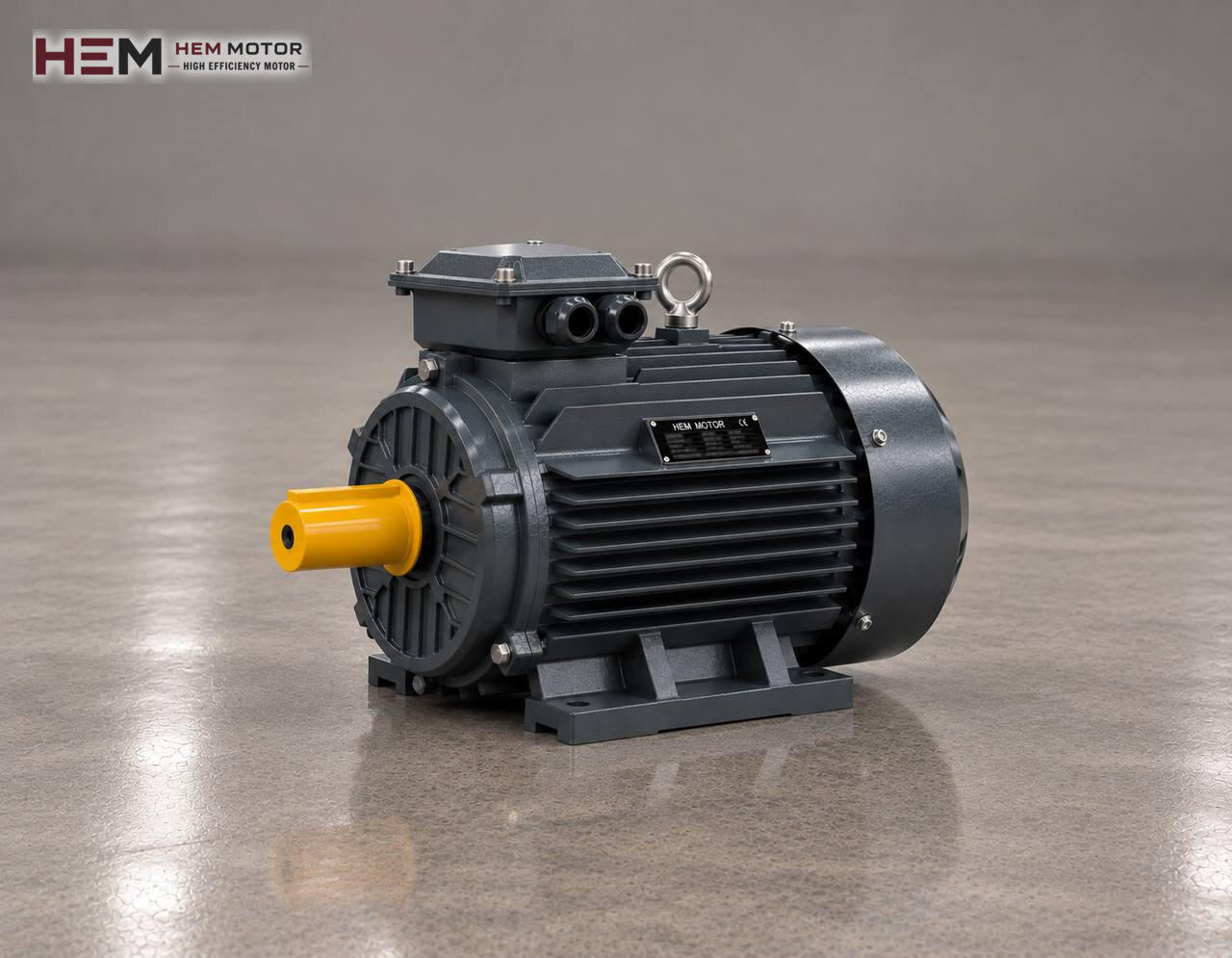
HEM Motor lists its three-phase asynchronous series with frame and speed options on the asynchronous electric motors page. Example models in this article: 112M-4 aluminium, 112M-4 cast iron and 112M-4K compact; all three are 400/690 V, IP55 with class F insulation. B3, B5, B14, B34, B35 and vertical V1/V3/V5/V6/V15 are offered according to frame; the flange size is confirmed with the order.
If you send the list of models you buy regularly or the nameplate of the motor you have through our contact page, we will match model codes and reference drawings together. For current prices, the HEM Motor product list can be opened.
Frequently Asked Questions
If the model code is the same, is the motor always the same?
Even with the same model code, housing material, mounting arrangement or efficiency class may differ. That is why these fields are also written next to the model code in the order record.
How long should the technical drawing be kept?
It is recommended to keep it as long as the motor runs in the machine. It is the first document consulted when a spare motor or part is requested.
Which dimensions must be checked on delivery?
Shaft height, shaft end diameter and length, on flange models the spigot diameter and bolt circle, and overall length are checked. These dimensions directly determine the connection to the machine.
Whom do you contact if a revision difference causes a problem?
The supplier is contacted with the nameplate photo, measured values and order record. The more detailed the record, the faster a solution is found.
HEM Motor Models Related to This Article
The cards show example models related to the topic. A suitable motor is not chosen by power alone: compare speed, voltage, mounting, shaft and connection dimensions on the product page; if unsure, send a photo of the existing motor’s nameplate on WhatsApp.
In an electric motor renewal, production downtime is costed by multiplying the number of hours stopped by that line's hourly downtime cost; the hourly cost in turn is the sum of it... More Details
A no-load run during electric motor acceptance reveals wrong connection, reverse rotation, current imbalance between phases, bearing noise, vibration and mechanical damage from tra... More Details
Turning the shaft by hand when an electric motor is delivered is the fastest check for damage to the bearings, shaft or rotor during transport: the shaft of a healthy motor should ... More Details
When an electric motor is transported, the shaft end and the flange face are protected separately against impact, scratches, rust and vibration marks. Rust preventive is applied to... More Details
In a framework purchase agreement for electric motors, delivery call-offs are planned once the annual total quantity and price terms are fixed, so that motors are requested in port... More Details
In an electric motor requirements list, annual quantity is defined as the total 12-month consumption for each model, and batch size as the quantity delivered at once in one order, ... More Details
We use necessary and optional cookies to improve your experience, enhance content and analyse traffic. Under the GDPR, optional (analytics/marketing) cookies are only used with your explicit consent. Please choose your preference below.
Cookie Policy
 English
 Français
 Türkçe
 Español
 Русский
 العربية
 Deutsch
 Italiano