English
 Français
 Türkçe
 Español
 Русский
 العربية
 Deutsch
 Italiano


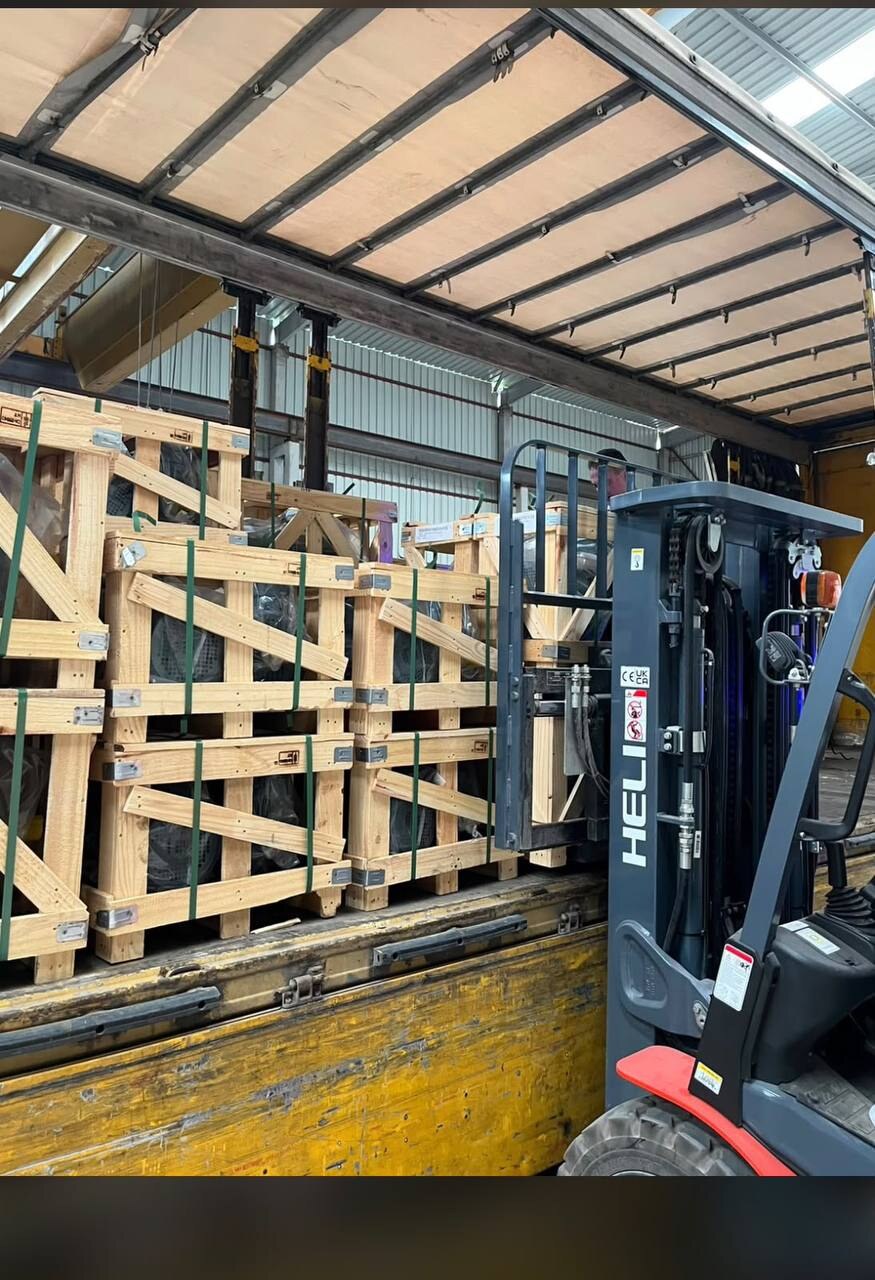

Turning the shaft by hand when an electric motor is delivered is the fastest check for damage to the bearings, shaft or rotor during transport: the shaft of a healthy motor should turn with light, even resistance, without catching and without rubbing or grinding noise. A motor that turns stiffly, catches at a certain point or makes metallic noise from inside should be examined further before it is run.
What does turning the shaft by hand reveal?
A few turns say a surprising amount about the mechanical side of the motor. The condition of the bearings, whether the rotor rubs on the stator, whether the shaft is bent and whether foreign matter has entered the housing can all be felt by hand.
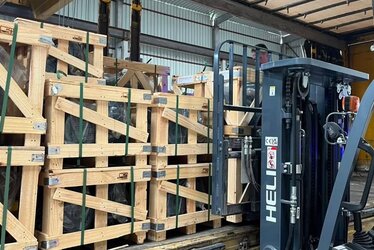
The most common transport damage is caused by impact. When a crate is dropped or a forklift tine hits the motor, the bearing balls can leave dents in their races. The dents are not noticed in the first days.
As the motor runs, every ball passes over those pits and the damage grows as noise, vibration and heat. A few weeks later the complaint arrives as "the motor is very noisy", although the mark could have been felt by hand on the day of delivery. A light ticking felt at regular intervals while the shaft is turned slowly describes exactly this.
How is the check done?
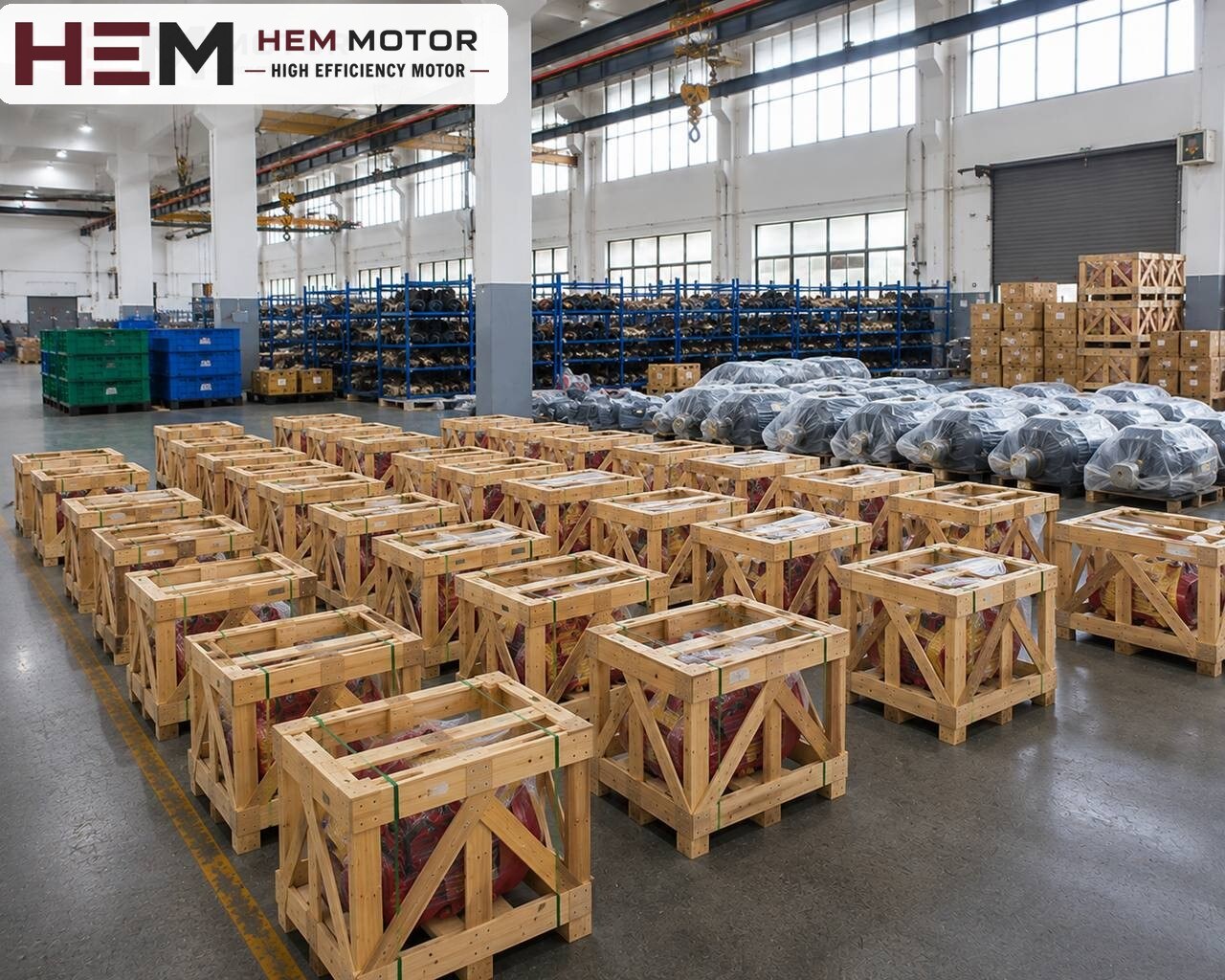
- First inspect the packaging. If the crate is broken, dented or wet, photograph it and note it on the delivery document.
- Place the motor on a level surface; use the lifting eye if there is one, and do not lift the motor by its shaft or fan cover.
- Remove the protective cap or tape on the shaft end. If there is a key, make sure it does not fall out.
- Turn the shaft slowly by hand a few full turns in both directions.
- Then spin it a little faster and let go; the shaft should keep turning freely for a short time.
- Move the shaft gently up and down and back and forth to check the play.
No cable should be connected during this.
A separate note for large motors: on these frames turning the shaft by hand can be hard; in that case a suitable coupling half or lever is fitted to the shaft end to turn it.
What does a healthy motor feel like?
On small frames the shaft turns with finger force. Resistance stays the same throughout the turn. Because bearing grease is a little thicker in the cold, the first few turns may feel slightly heavy; after a few turns the difference disappears. The fan blades can be watched turning behind the fan cover. The blades must not rub on the cover. The shaft may move very slightly in the axial direction; this is normal play resulting from the bearing arrangement.
There is also a listening check. When the shaft is spun quickly and released, the sound from a clean bearing with its grease in place is a soft whisper. If you hear a hiss as if grains of sand were passing, or an intermittent ticking, something inside is not right. This short test in a quiet store often gives an answer before any measuring instrument.
Which symptoms indicate a problem?
| Symptom | Possible cause | What to do |
|---|---|---|
| Catching at a certain point | Rotor rubbing on stator, bent shaft, foreign object inside | Contact the supplier before running the motor |
| Regular ticking or roughness | Impact damage to the bearing | Record the condition with photos and video, request a bearing check |
| Hissing and gritty noise | Dirt or moisture in the bearing | Examine packaging and storage conditions |
| Noticeable radial play | Damage to the bearing housing or bearing | Do not use the motor, request an inspection |
| Rubbing noise at the fan cover | Dented fan cover | Straighten or replace the cover |
Running a damaged motor makes the problem worse. It also becomes harder to tell whether the mark came from transport or from use. If in doubt, record first and run later.
Here is briefly how to make the record. First take a general photo of the crate and packaging, then move in on the damaged area. Record a short video on your phone while turning the shaft, with the sound audible. Always add a clear photo of the nameplate, because the serial number and production date are there. If the delivery document is signed in the carrier's presence with the note "received damaged", a later damage claim is settled much more easily. These few minutes of work prevent weeks of correspondence.
The order is always the same: look first, then turn, and record if in doubt.