In a framework purchase agreement for electric motors, delivery call-offs are planned once the annual total quantity and price terms are fixed, so that motors are requested in portions close to the moment they are needed. A good plan rests on three things: a schedule showing how many call-offs are made for which model and code, a notice period agreed in advance for each call-off, and an update routine that reports deviations from the plan early. Actual dates are settled at order stage according to model and quantity; the plan is built with enough margin to carry that uncertainty.
What is the difference between a framework agreement and a one-off order?
In a one-off order everything is fixed at once. In a framework agreement the total need and terms for a set period are negotiated; within that period the motors are requested separately through "call-offs". Purchasing negotiates once, while the warehouse accepts only as much as is needed.
This structure suits machine builders and multi-site operators. If the same motor is used regularly all year, asking for a new quotation every month is a waste of time.
But if the agreement text is left with only total quantity and duration, call-offs arrive irregularly and both sides are caught unprepared. The plan's real job is to fill that gap.
Which data is the call-off schedule built from?
The schedule rests on past consumption and the production plan for the coming period. For a machine builder this is the sales forecast. For a plant, it is the maintenance and renewal plan. Each model is tracked on its own line, because a 1.5 kW and a 22 kW motor are not consumed at the same rhythm.
Column
What is written
Why it is needed
Model and code
Frame, power, speed, mounting, voltage
Prevents wrong-code call-offs
Estimated annual quantity
Forecast and confidence range
Basis of the total commitment
Call-off frequency
Monthly, bimonthly, quarterly
Balances warehouse and cash load
Quantity per call-off
Fixed or a range
Lets preparation and shipping be planned
Notice period
How many weeks before delivery the call-off is made
Brings order to preparation time
Flexibility margin
Allowed plus or minus ratio on call-off quantity
Absorbs sudden changes
The "notice period" column is often the most debated part of the table. It does not have to be the same for every model; it can be longer for large, rarely used frames and shorter for frequently used small ones. The figures are set together at order stage according to model and quantity.
How is the flexibility margin defined?
Real consumption deviates from the forecast. The flexibility margin defines by what ratio the planned quantity can be raised or lowered on each call-off and how much notice is given for it. Without a margin, even a small increase becomes a new negotiation.
A hypothetical example: 120 four-pole 7.5 kW motors a year are planned in call-offs of 10 a month. The agreement defines a margin of plus or minus 30 percent per call-off and an extra notice period for using it. So asking for 13 one month and 7 the next needs no negotiation. The ratio is an example; the real value is discussed according to both sides' capacity. Current list prices for building an estimated budget table can be taken from our shop page.
Writing a lower and upper limit for the annual total itself is also useful. What happens to the remaining quantity at the end of the period, whether it rolls over to the next period or is called off at closing, is clear from the start.
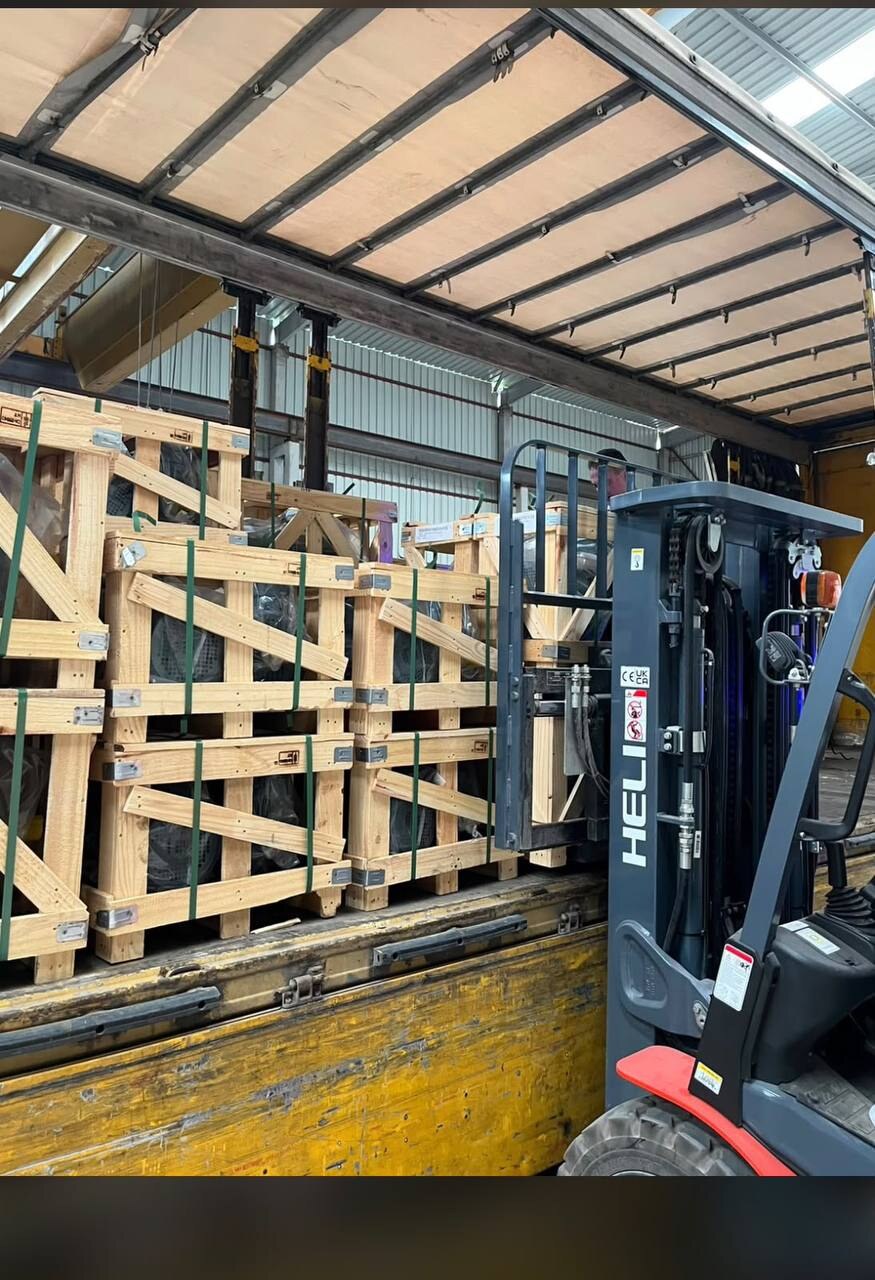
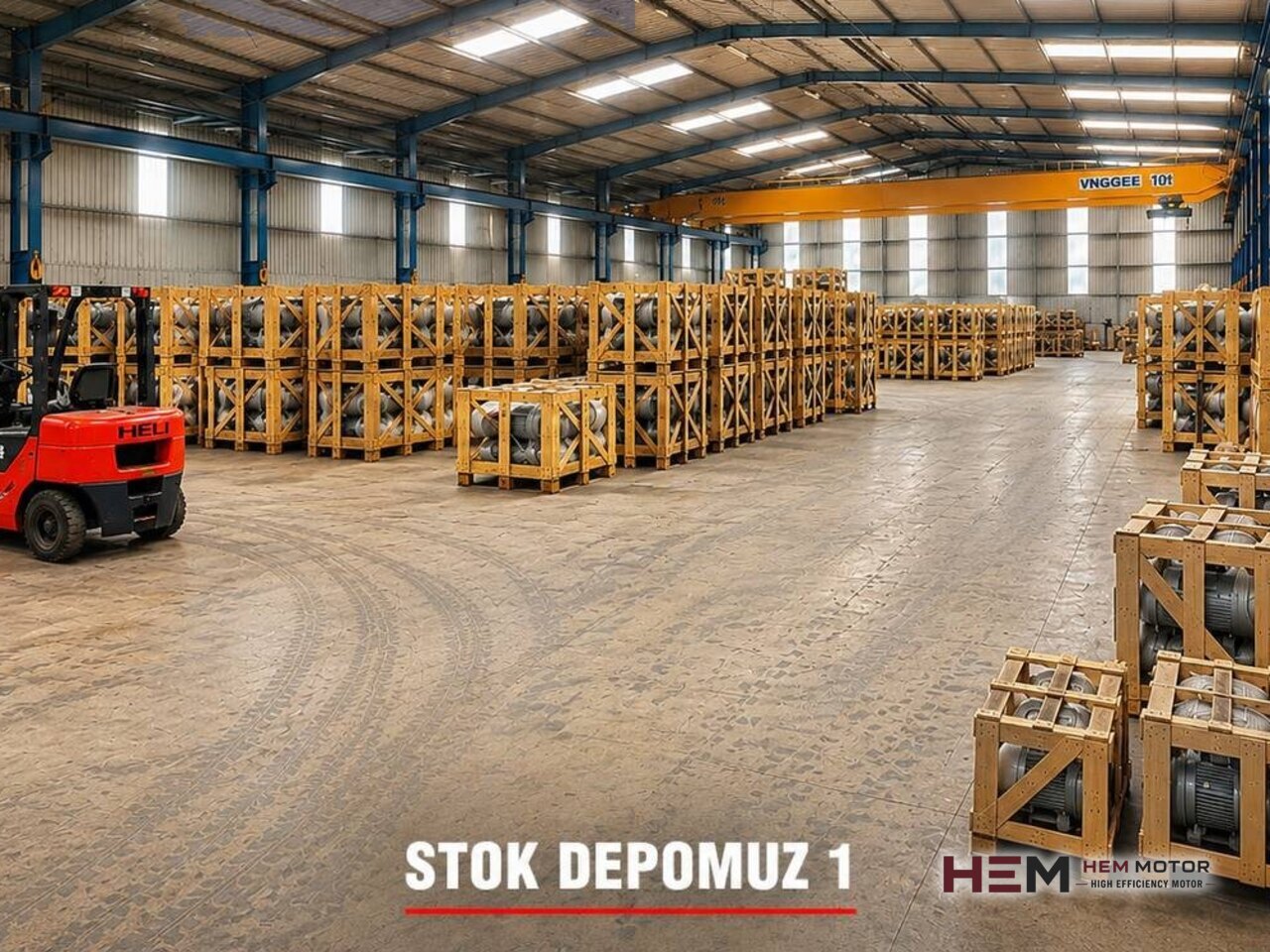
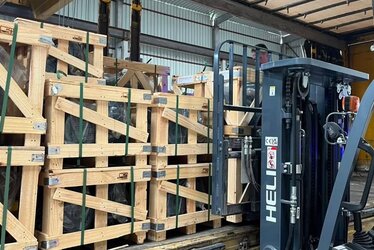
When call-offs are planned close to the moment of need, the number of motors waiting in store and their waiting time fall (representative image).
Prices and technical data are on the product pages; choose a model and order online.
How are model changes and technical revisions reflected in the agreement?
Within a one-year period the machine design may change: voltage moves from 230/400 V to 400/690 V, mounting switches from B3 to B35, or a power step grows. The agreement should define how such changes are notified and after what period the new code applies.
A common mistake goes like this: the change is noted only in a corner of the call-off form. Instead, a technical revision is sent as a separate letter showing the old and new codes side by side, and what happens to the remaining quantity of the old code is agreed. For mounting and dimension checks, the technical drawings and the technical and product catalogue are used as reference.
A change in electrical values also affects protection settings. For rechecking thermal relay and fuse selection on a model whose voltage or power changes, see our protection selection article.
How is the call-off process managed day to day?
The call-off itself should be a short, standard document. If the same fields are filled in every time, the chance of error drops and shipping preparation speeds up.
The agreement number and call-off sequence number are written.
Each line states model, code, quantity and requested delivery week.
Delivery address and unloading conditions (forklift, ramp, working hours) are added.
If there is a deviation from plan, a short explanation is added; if the flexibility margin is used, this is stated.
Receipt of the call-off and confirmation of the delivery date are recorded in writing.
An hour a month is enough. A short review catches most problems before they arise. Completed call-offs, remaining annual quantity and the forecast for the next three months are compared in the same table.
Which models are often placed in framework agreements?
Examples of steps that recur regularly in machine builders' annual plans are below; the full range is on the asynchronous electric motors page:
90L-4: cast iron, 1.5 kW, 1445 rpm, 3.30 A at 400 V, 230/400 V.
132M-4: cast iron, 7.5 kW, 1460 rpm, 14.3 A at 400 V, 400/690 V.
180L-4: cast iron, 22 kW, 1470 rpm, 39.7 A at 400 V, 400/690 V.
Pinning each line down to the model code when preparing the list prevents misunderstandings later. The information needed for a quotation is in our article on what to provide when requesting a quote; all steps and prices are on our shop page.
If you share your annual needs table and preferred call-off frequency via our contact page, we will discuss notice periods and flexibility margins model by model together. Other models are on the HEM Motor sales page.
Frequently Asked Questions
Does the price stay fixed in a framework agreement?
Price terms and validity are written separately in the agreement. If the conditions for updating them are discussed at the start, no dispute arises later.
What happens if call-off quantity deviates a lot from plan?
A deviation outside the flexibility margin is notified separately and the delivery date is reconfirmed. The more clearly the margin is written, the more smoothly the process runs.
Can delivery time be written into the agreement as a number?
Because it varies with model and quantity, the time is settled at order stage. Instead, the agreement defines a notice period and a confirmation step.
What happens to the remaining quantity at the end of the period?
This is decided in the agreement itself from the start: options such as rolling over to the next period or a closing call-off are written down.
HEM Motor Models Related to This Article
The cards show example models related to the topic. A suitable motor is not chosen by power alone: compare speed, voltage, mounting, shaft and connection dimensions on the product page; if unsure, send a photo of the existing motor’s nameplate on WhatsApp.
In an electric motor renewal, production downtime is costed by multiplying the number of hours stopped by that line's hourly downtime cost; the hourly cost in turn is the sum of it... More Details
A no-load run during electric motor acceptance reveals wrong connection, reverse rotation, current imbalance between phases, bearing noise, vibration and mechanical damage from tra... More Details
Turning the shaft by hand when an electric motor is delivered is the fastest check for damage to the bearings, shaft or rotor during transport: the shaft of a healthy motor should ... More Details
When an electric motor is transported, the shaft end and the flange face are protected separately against impact, scratches, rust and vibration marks. Rust preventive is applied to... More Details
In electric motor procurement, model revisions are tracked by recording in the order, beside the motor's power and speed, its model code, housing material, mounting arrangement, an... More Details
In an electric motor requirements list, annual quantity is defined as the total 12-month consumption for each model, and batch size as the quantity delivered at once in one order, ... More Details
We use necessary and optional cookies to improve your experience, enhance content and analyse traffic. Under the GDPR, optional (analytics/marketing) cookies are only used with your explicit consent. Please choose your preference below.
Cookie Policy
 English
 Français
 Türkçe
 Español
 Русский
 العربية
 Deutsch
 Italiano