English
 Français
 Türkçe
 Español
 Русский





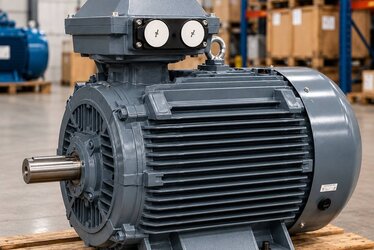
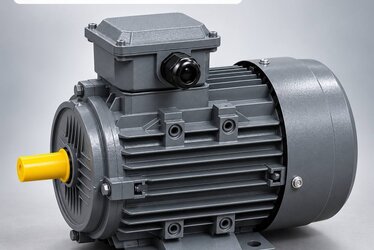
Replacing a single burnt-out pump motor rarely needs anyone to visit the plant. A clear nameplate photo, a few dimensions and a note of the machine it drives are usually enough. Scale the job up and things change. Picture an old textile mill planning to replace 38 motors with IE3 or IE4 units: half the nameplates are painted over, several motors have been rewound with a different rating, and a few sit inside a duct that is hard to reach. A quote prepared at a desk in that situation will almost certainly be revised more than once.
A site survey closes that uncertainty on the spot. This article covers when a survey really pays off, what should be recorded on site whether the survey is done by a supplier, an electrical contractor or your own maintenance team, and what you should have in hand afterwards.
Survey or photos?
- Photos and dimensions are usually enough for a like-for-like swap of one motor with a legible nameplate, never rewound, staying on the same machine. Our emergency replacement checklist covers most of that.
- A site visit is worth it for group replacements and efficiency projects, unreadable or rewound motors, a change of frame, efficiency class or a move to a drive, motors that keep tripping, overheating or failing, and cramped, hot or humid installations.
What these cases share is that the answer is not on the nameplate. It is in the machine, the panel and the surroundings.
Preparation and safety
A productive survey starts with preparation inside the plant. Share in advance the list and location of motors in scope, which can be measured running and which only during a stop, any planned shutdown dates, and the site's safety rules: induction, PPE, hot work or work-at-height permits.
Any measurement inside a panel and any opening of a terminal box should be done with the site's authorised electrical staff and under its lock-out/tag-out procedure. Even when the surveyor is external, isolating and re-energising equipment remains the plant's responsibility.
What to record on site
The motor
Readable nameplate data, any rewind tag, frame size, mounting arrangement, shaft diameter, flange dimensions and terminal box position. If the plate is unreadable, measure shaft height (base to shaft centre), shaft diameter and length, foot hole spacing, flange outside diameter and bolt circle. How shaft height maps to IEC frame and power is shown in frame size to kW mapping.
The driven machine
Coupling or belts, pulley diameters, gearbox ratio, machine speed, type of load (pump, fan, conveyor, crusher) and whether it starts empty or loaded. For motors with a doubtful rating, these details define the real requirement.
Panel and supply
Starting method, overload or motor protection setting, contactor size, cable size and length, and the drive model and current rating where fitted. If the new motor's current differs, protection settings may need to change too.
Environment
Ambient temperature and airflow around the motor, dust, moisture, wash-down, chemical vapours, sun and rain. HEM Motor catalogue ratings apply from −15 °C to +40 °C ambient and up to 1000 m altitude; anything outside that should be noted and passed on at quotation stage.
Access and removal
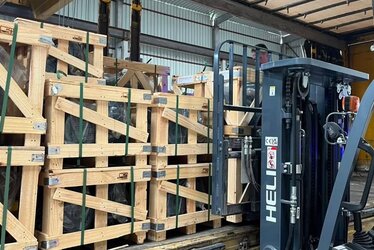
Is there a lifting point, will the motor pass through doors and corridors, will a new motor of a different length fit the base? On group replacements this often takes longer to sort out than the quote itself.
Running measurements: what current tells you
One of the most useful survey readings is the current in all three phases with the motor at normal load, plus the supply voltage. Clear imbalance between phases can point to a supply or winding problem; readings far below nameplate current suggest the motor may be oversized.
Converting current straight into load percentage is misleading, though. An induction motor draws a sizeable magnetising current even at no load, so at half load the current is well above half the rated value. A power analyser reading of active power, or an estimate from speed and slip, is more reliable; see motor load ratio. On variable loads such as crushers, mixers or pumps whose flow changes over a shift, repeat the reading at different times or log it for a while.