English
 Français
 Türkçe
 Español
 Русский
 العربية
 Deutsch
 Italiano

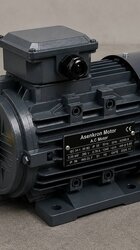

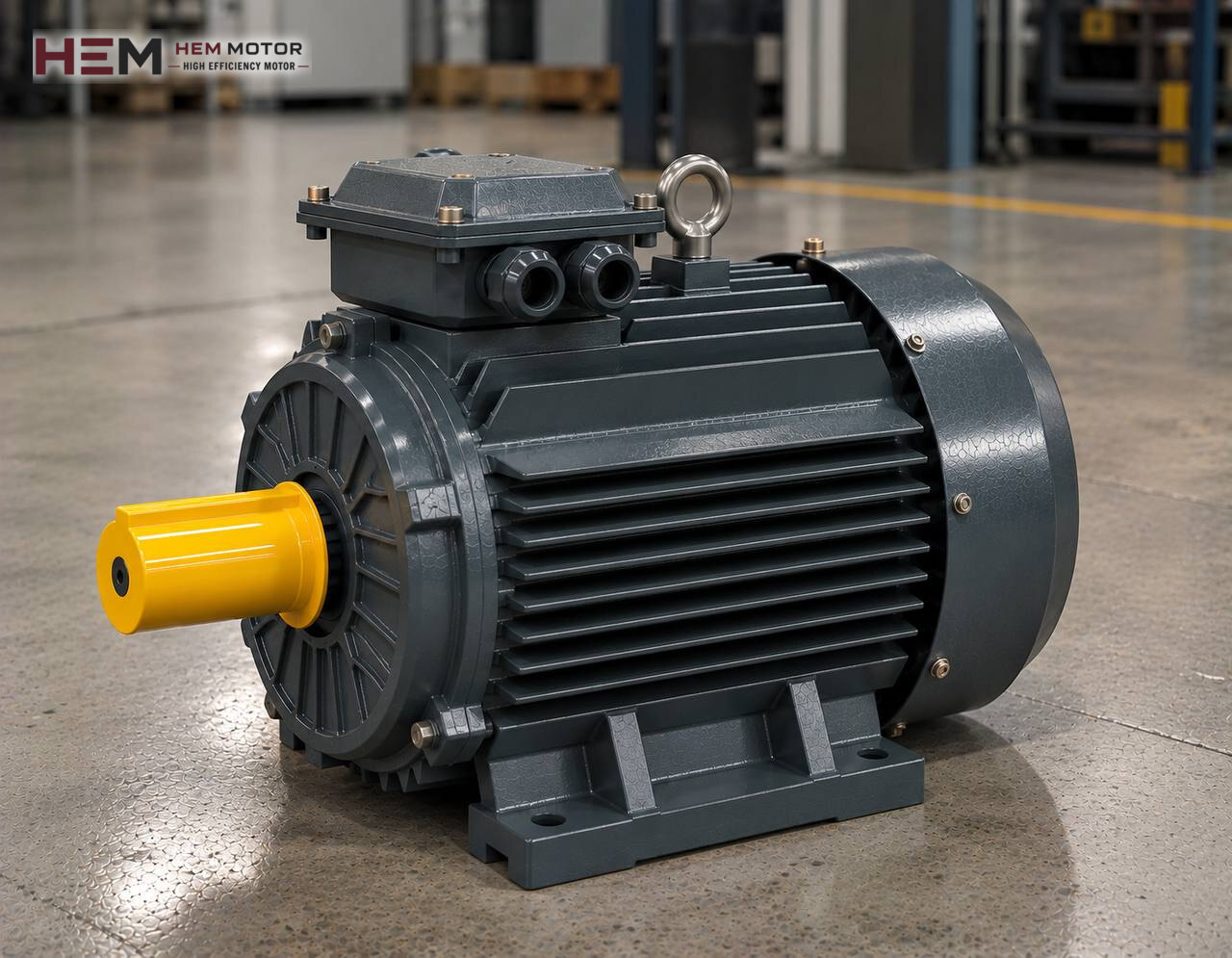

When buying an electric motor, the bearing brand alone is not a quality indicator; what really needs asking is bearing type and size, clearance class, lubrication method, bearing arrangement and permissible shaft loads. If efficiency class, winding and insulation details, protection class, mounting arrangement and a technical drawing are requested alongside these, two quotations become genuinely comparable.
Why is the bearing brand not enough on its own?
The same brand of bearing does a different job in a different type and clearance class. For a motor with radial load on the shaft end in a belt application, the right choice may differ from that in a fan motor coupled directly.
The brand does not show this difference.
Bearing life also depends heavily on installation, alignment and lubrication. A badly aligned coupling will finish off a bearing from the best-known brand within a few months too. Focusing on the brand at purchasing stage without asking about the bearing arrangement means missing the real risk.
The brand question is not meaningless, though. A widespread brand makes spare parts easier to find; that is the only reasonable ground for asking about it.
Which technical bearing details should be requested?
When requesting a quotation, the following bearing details can be asked for in writing:
- Type and size code of the drive-end and non-drive-end bearings, for example 6309 or NU309.
- Radial clearance class (normal or C3); C3 is common in motors that run hot or are driven by an inverter.
- Whether they are sealed (greased for life) or fitted with grease nipples and relubricable.
- If relubricable, the grease type, quantity and relubrication interval.
- Which bearing is locating and which is non-locating, and which side carries axial load.
If these details are missing from the quotation, they are found from the nameplate or technical drawing after the motor arrives; but by then it is too late for comparison.
Why should permissible shaft loads be asked about?
In belt, chain or gear drives a sideways force acts on the shaft end. How much of this force the motor can carry is given in the catalogue as permissible radial load, usually at two points: the middle and the end of the shaft extension.
As pulley diameter decreases, belt tension and therefore radial load increase. As the pulley moves towards the shaft end, the load arm lengthens. When these two factors combine, the bearing can fatigue early even on a motor whose power is correctly chosen. With vertical mounting the same question is asked for axial load.
If these values are not in the quotation, the application's pulley diameter, belt type and pulley position on the shaft are stated, and the supplier confirms suitability accordingly (general information; the motor manufacturer's data take precedence).
Apart from bearings, which details should a quotation contain?
The information that makes comparison meaningful can be put into a table. When every quotation is filled in with the same rows, the differences appear by themselves.
| Detail | Why it matters | How it is verified |
|---|---|---|
| Efficiency class and full-load efficiency | Determines operating cost | Catalogue value, nameplate |
| Rated current and starting current ratio | Affects cable, switchgear and thermal relay choice | Catalogue table |
| Starting and breakdown torque | Decisive for loads that start heavily | Catalogue table |
| Insulation class and temperature rise | Winding life and thermal reserve | Nameplate and catalogue |
| Protection class (IP) | Suitability for the environment | Nameplate |
| Mounting arrangement and flange size | Physical fit to the machine | Technical drawing |
| Shaft diameter, key width, shaft length | Coupling and pulley fit | Technical drawing |
| Frame material and weight | Impact resistance, handling and baseframe | Catalogue |
The table may look long, but most of the information is on a single catalogue page and one technical drawing. If the quotation is requested with these two documents, most rows fill themselves.