Electric Motor Selection for Plastic Washing Lines: Moisture, Splashing and Operating Time

Electric Motor Selection for Plastic Washing Lines: Moisture, Splashing and Operating Time

A plastic washing line consists of a series of machines that clean crushed PET, PE or PP flakes of labels, soil, oil and paper residues: a pre-wash drum, a friction washer, a sink-float tank and its screws, a hot wash tank, a centrifugal dryer and the pumps that feed the system. All these machines have two things in common: water and long operating hours. This is exactly what makes motor selection difficult. In this article we look in turn at the moisture and splash conditions the motor faces on a washing line, how far a standard IP55 enclosure is sufficient, and how operating time affects the choice.
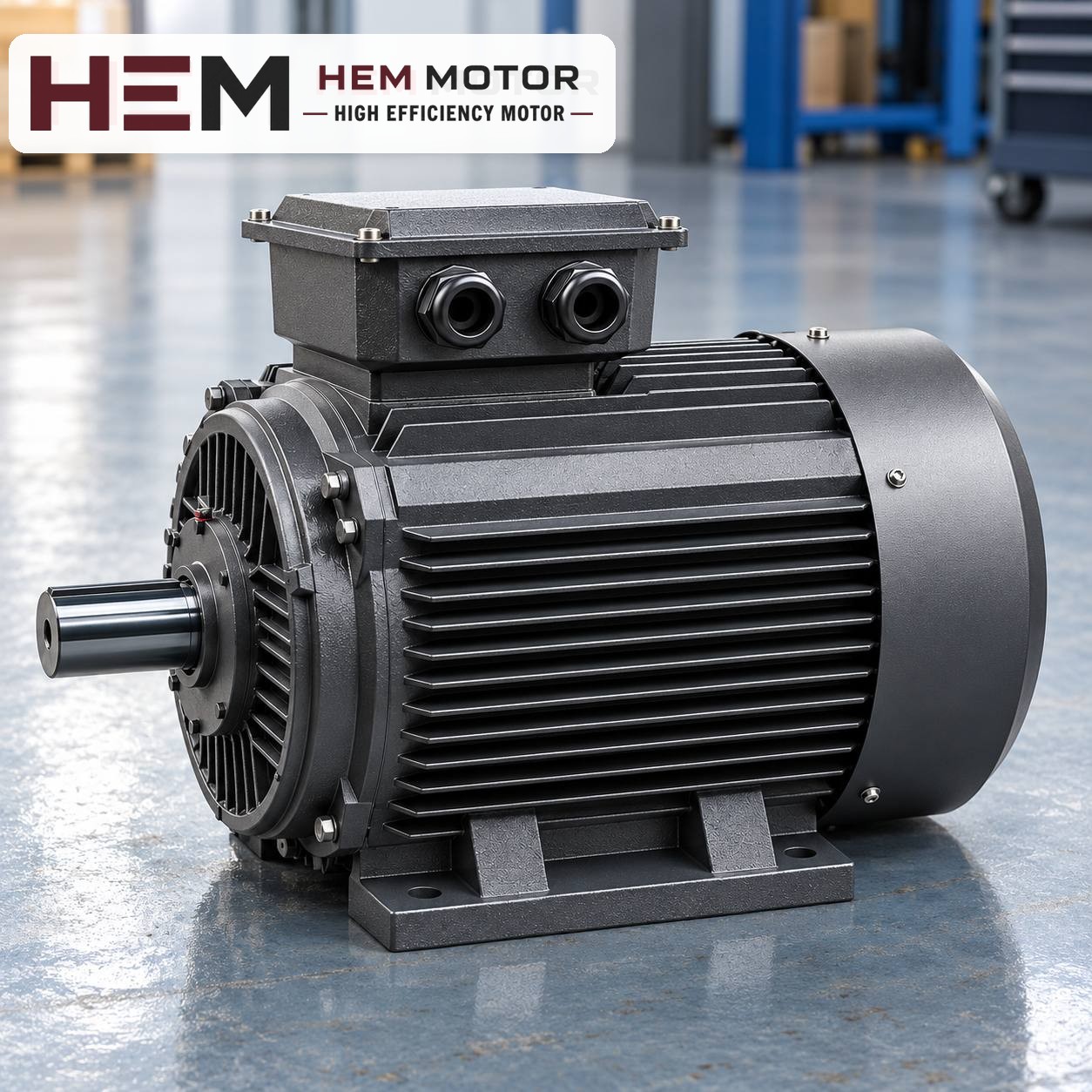
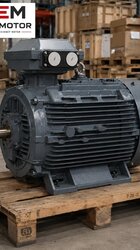
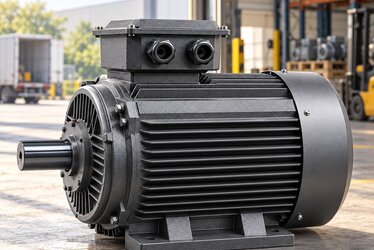
Three-phase electric motor in a workshop setting
On washing lines, the motor's location directly determines how it comes into contact with water (representative image).

Where do motors run on a washing line?

Each machine exposes the motor to a different load and a different kind of contact with water. Before starting the selection, it is necessary to distinguish which machine the motor is on and how close it sits to water.

  • Friction washer: A high-speed rotor cleans the material by scrubbing it in water. The motor usually sits at one end of the machine, connected by belt or coupling; water splashing and leakage from the rotor side are most often seen at this point.
  • Sink-float tank and screws: These are low-power motors running at low speed through a gearbox. They are mounted at the edge of the tank, close to the water level.
  • Centrifugal dryer: It removes water from the wet material by spinning it at high speed. Rotor inertia is significant at start-up; there is humid air and water droplets around the motor.
  • Pumps: They carry wash water and dirty water. The motor is right next to the pump casing; leakage from the gland packing or mechanical seal can drip water onto the motor.
  • Hot wash tank agitator: The motor is often above the tank, in a vertical position; hot steam rises towards the motor.

How much does IP55 protect, and where is it not enough?

All three-phase models HEM Motor has on sale are IP55. The two digits of this rating describe different things:

  • First digit (5): Dust-protected. Dust ingress is not completely prevented, but dust cannot enter in a quantity that would interfere with the motor's operation.
  • Second digit (5): Protected against low-pressure water jets from any direction. Splashing water, dripping leakage and low-pressure hose water fall within this definition.

This protection is sufficient for many locations on a washing line. However, there are also conditions that IP55 does not cover, and these need to be separated honestly:

  • High-pressure washing: Cleaning the line with a pressure washer and holding the jet directly at the motor is outside the IP55 definition. Water can force its way past the seals and gaskets.
  • Immersion or being under water: In situations such as a tank overflow or the pit housing the motor filling with water, an IP55 motor is not protected. A motor with a standard frame is not used in submersible applications.
  • Operating under a continuous flow of water: A motor that remains inside a continuous curtain of water is in a different situation from a short jet test.
  • Chemicals and hot steam: Steam from caustic or detergent hot wash water can wear down the frame paint and seals over time.

If the motor's location involves one of these conditions, state the need for higher protection clearly in the order. Whether and with which model and under which conditions this need can be met is assessed separately at the quotation stage; a protection rating other than IP55 should not be assumed without confirmation.

Mounting habits that reduce splashing

More often than not, the problem lies less in the motor's protection rating than in where and how it is mounted. The following measures help an IP55 motor last longer on a washing line:

  • Raise the motor above the water level: Lift the screw motors at the tank edge on a base or bracket in case of overflow.
  • Use a shield: A simple sheet metal shield that blocks splashing from the rotor side is very effective as long as it does not obstruct the motor's airflow. The area in front of the fan cover must remain open.
  • Turn the terminal box in the right direction: Cable entries should face downward and the cable should enter the motor with a drip loop, so that water running along the cable does not reach the box.
  • Keep track of seal leaks: If water dripping from a pump gland or machine seal is directed at the motor's shaft entry, fix the leak first.
  • Issue washing instructions: Inform the maintenance team in writing that pressure jets must not be directed at the motors during line cleaning.

Condensation

On a line that stops at night and runs during the day, the humid air inside the motor can condense as the motor cools down. Having the insulation resistance measured before the first start after long stoppages is a good habit. If you have special requirements for locations with a high risk of condensation, state them in the order; their feasibility is confirmed at the quotation stage.


Prices and technical data are on the product pages; choose a model and order online.

Operating time and load type

Washing lines mostly run in shifts or continuously. For the motor, this means continuous duty (S1): the motor runs close to rated load for long periods and cools itself only with its own fan. In this case the points to watch are:

  • Load margin: Running the motor continuously above its nameplate current raises the winding temperature and shortens its life. At the first start, the current under load should be measured and compared with the nameplate value.
  • Cooling: Plastic fibres and dirt accumulating on the frame fins impair heat dissipation. Regular cleaning is as important as the load margin.
  • Starting: The friction washer and the centrifugal dryer may have long run-ups because of their heavy rotors. If the machine stopped while full, starting becomes even harder; choose the starting method based on this information.
  • Speed control: A drive can be used on screws and feed belts. Our three-phase series are suitable for speed control with a frequency inverter; for long periods at low speed with full torque an external fan may be required, and if the cable between drive and motor is long, a dv/dt or sine filter is considered; these conditions are stated in the order.

Example cast iron models for a washing line

The cast iron frame is often preferred on washing lines for its rigidity in humid and vibrating environments. The models below are examples for different tasks on the line; the power your machine requires depends on the manufacturer's values and the capacity.

Model codePowerSynchronous / rated speedIEC frameVoltageExample task
90L-41.5 kW (2 HP)1,500 / 1,445 rpm90L230/400 V (Δ/Y)Geared sink-float tank screw
160M-411 kW (15 HP)1,500 / 1,465 rpm160M400/690 V (Δ/Y)Belt-driven friction washer
160L-218.5 kW (25 HP)3,000 / 2,940 rpm160L400/690 V (Δ/Y)Dryer or pump requiring high speed

All models are IP55, have class F insulation and are 50 Hz. The 90L-4, rated 230/400 V, is connected in star on a 400 V network; models rated 400/690 V are connected in delta on a 400 V network. The number of poles should be kept the same as the motor on the existing machine. Other information on the plastics sector is on the plastic and rubber processing motors page; for the pump side you can also see the pump electric motors page.

Hypothetical example: recurring motor failure on a friction washer

This scenario is an illustration, not a real customer case. Assume that the 11 kW, 4-pole motor of the friction washer on a PET washing line fails at short intervals.

  • Inspection: The motor sits directly below the rotor seal; water leaking from the seal runs over the frame towards the terminal box. The cable entries face upward. The line is washed with pressurised water every evening.
  • Assessment: The main source of the problem is the continuous water flow and pressure jet, which fall outside the IP55 definition. A new motor in the same location would meet the same fate.
  • Corrective measures: The seal is renewed, a shield that does not cover the fan cover is added above the motor, the terminal box is positioned with the cable entries facing downward, and the maintenance team is told not to direct jets at the motors.
  • Motor: The 160M-4 cast iron model with the same power and number of poles; if the frame code is the same as the old one, the base and belt arrangement are retained.
  • Remaining risk: If, even after these measures, there is a location where the motor will be continuously exposed to water, the need for higher protection is stated in the order and assessed at the quotation stage.

Information to send with your order

  • The machine the motor is on and its task on the line
  • A photo of the old motor's nameplate: power, rated speed, voltage, frame code
  • Mounting arrangement (foot-mounted, flange, vertical) and connection type (belt, coupling, gearbox)
  • Water contact: splashing, dripping, pressure washing, overflow risk; hot water or chemical steam
  • Daily operating time, number of starts, starting method and supply voltage

Review suitable models and current prices on the buy electric motors page. To ask about the right model using the nameplate details of the motor on your line, you can use the nameplate submission page and send us your protection requirements via our contact page.

HEM Motor Models Related to This Article

The cards show example models related to the topic. A suitable motor is not chosen by power alone: compare speed, voltage, mounting, shaft and connection dimensions on the product page; if unsure, send a photo of the existing motor’s nameplate on WhatsApp.

1.5 kW 1500 rpm Cast Iron Frame Electric Motor 90L-4

90L-4

1.5 kW · 1500 rpm

  • Cast iron frame · IEC 90L
  • 1445 rpm · IP55
  • Mounting: B3 foot; flange (B5/B14/B35) depending on frame — confirmed with the order

US$143.22 (€127.82)

View product
11 kW 1500 rpm Cast Iron Frame Electric Motor 160M-4

160M-4

11 kW · 1500 rpm

  • Cast iron frame · IEC 160M
  • 1465 rpm · IP55
  • Mounting: B3 foot; flange (B5/B14/B35) depending on frame — confirmed with the order

US$565.14 (€504.35)

View product
18.5 kW 3000 rpm Cast Iron Frame Electric Motor 160L-2

160L-2

18.5 kW · 3000 rpm

  • Cast iron frame · IEC 160L
  • 2940 rpm · IP55
  • Mounting: B3 foot; flange (B5/B14/B35) depending on frame — confirmed with the order

US$709.45 (€633.13)

View product

Similar Articles