An IE5 electric motor makes sense on drives that run thousands of hours a year at high load, where energy cost weighs heavily in operating expenses and which are, more often than not, already driven by a frequency converter. On machines that run briefly, rarely or at low load, the extra cost of the top efficiency class is not recovered within a reasonable time by the energy accumulated from the loss difference.
How does the IE5 class differ from IE3 and IE4?
IE5 is the top step in the efficiency classification of the IEC 60034-30 family, and it means that, for the same power and number of poles, motor losses are clearly reduced even compared with IE4. The class is not a description of a design but of a loss level; that level can be reached with different designs.
The detail that matters on site is this: some of the IE5 designs on the market are built to run through a drive rather than connected directly to the mains. So when choosing IE5, the first question should be "Will this motor be connected directly to the mains, or will it run on a drive?" For HEM Motor's IE5 option, the design and the need for a drive are confirmed with the order; the class choice alone does not tell you this (general information; confirm with the motor manufacturer's technical data).
Which operating conditions make IE5 economical?
The extra investment in IE5 pays back fastest on drives where three conditions are present at the same time: high annual operating hours, the motor spending most of that time close to rated load, and a high unit energy cost. If one is missing the calculation stretches out; if two are missing, IE3 or IE4 usually remains the more sensible choice.
Typical candidates are: continuously running air compressors, mains water and process water booster pumps, cooling tower and dry cooler fans, supply and exhaust fans of central air handling units, and aeration blowers in treatment plants. What these machines have in common is that they turn without stopping for most of the year. Their stoppages are planned, too.
Heat load is another criterion. The losses of a motor running in a closed pump room or an air-conditioned electrical room pass into the room as heat. Removing that heat costs energy as well.
A motor with low losses pays off twice in such places.
We have collected the general features of motors in this class on our IE5 Ultra Premium Efficiency Electric Motors page; the efficiency class in which a listed model is supplied is confirmed with the order.
How are the loss difference and payback period calculated?
The annual energy difference between two motors is the difference between their loss powers at the same shaft power multiplied by operating hours: ΔE = (Ploss,A − Ploss,B) × t. Loss power is found for each motor with Ploss = Pshaft × (1/η − 1), using that motor's efficiency at the load it will run at. The payback period is the motor price difference divided by the annual energy difference multiplied by the unit energy cost.
Measure the drive's actual shaft power; use the value found with an analyser, not the nameplate power.
Take the loss powers of the two candidate motors at that load from the manufacturer's data.
Set the annual operating hours from the production plan, deducting maintenance stops.
Calculate ΔE and multiply it by the plant's unit energy cost.
Divide the motor price difference by this annual amount; if a drive is needed, add the drive cost to the difference.
Hypothetical example: a 30 kW booster pump runs 7,000 hours a year, using most of its power. According to the manufacturer's data, the IE3 candidate's loss at this load is 1.9 kW and the IE5 candidate's loss is 1.1 kW. The difference is 0.8 kW × 7,000 hours = 5,600 kWh/year. Had the same pump run only 1,500 hours a year, the difference would have stayed at 1,200 kWh; the payback period would have been roughly five times longer. Operating hours decide the result.
The loss values in the example are there to show the method; in your own calculation use the real catalogue data of both motors.
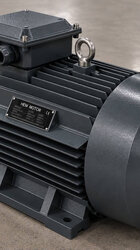
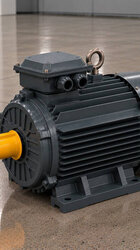
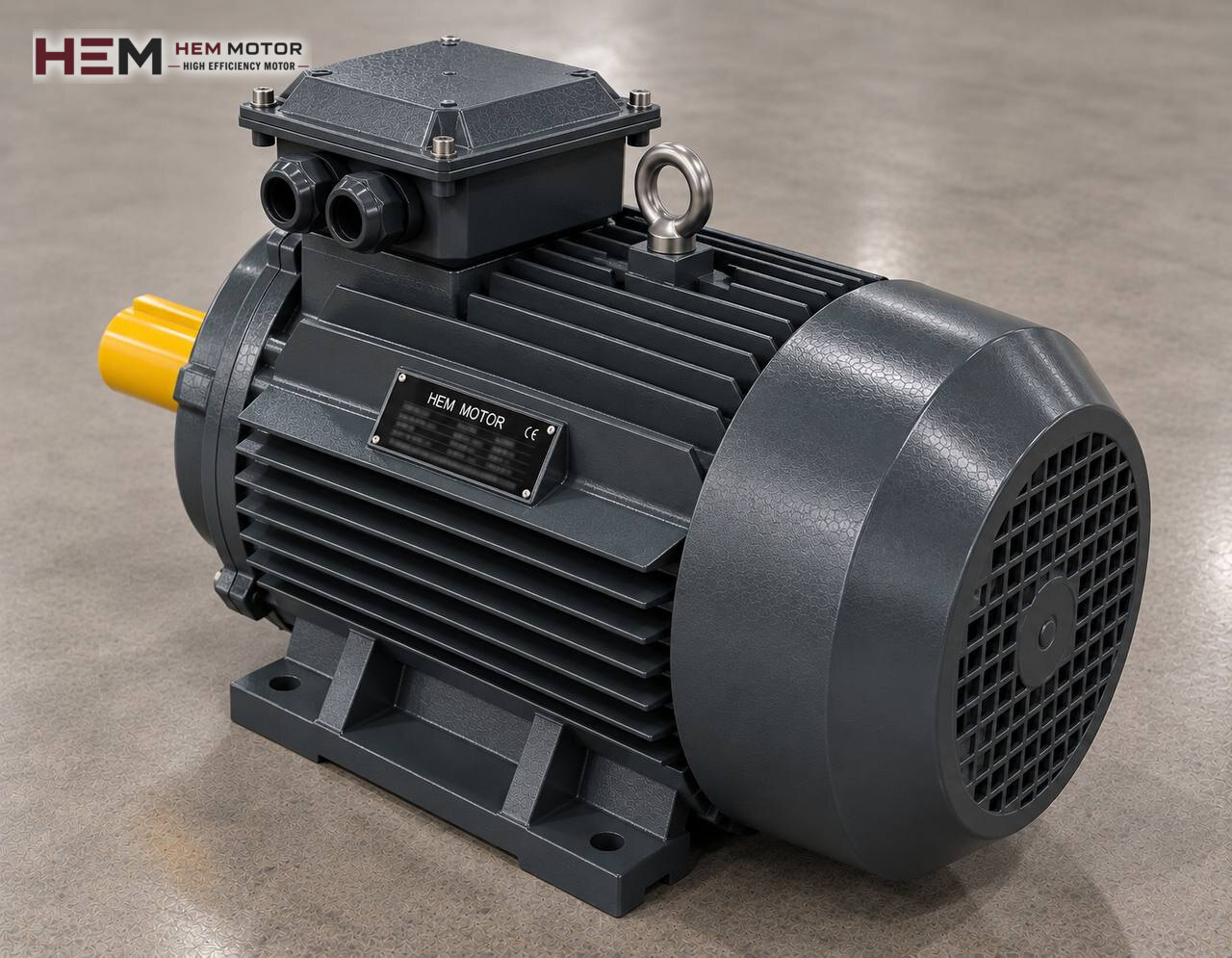
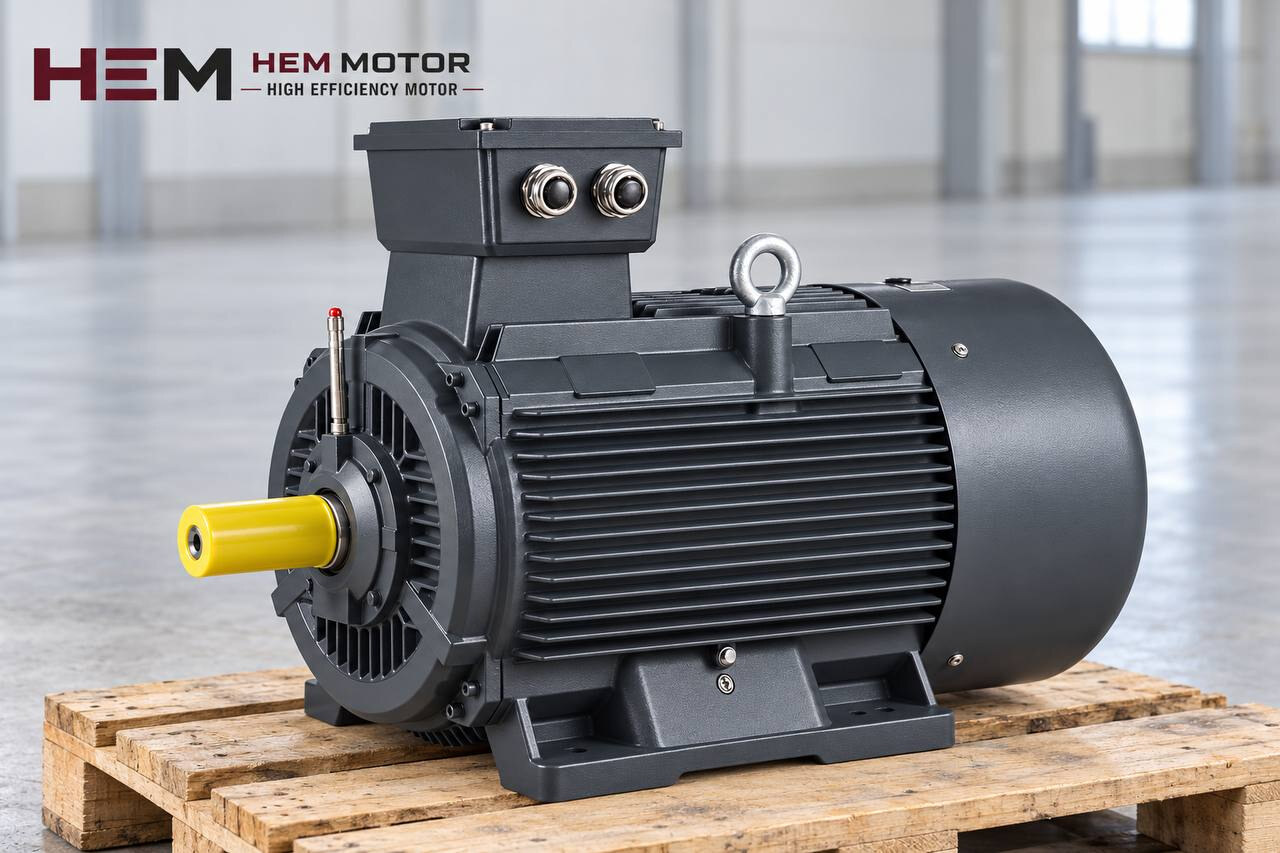
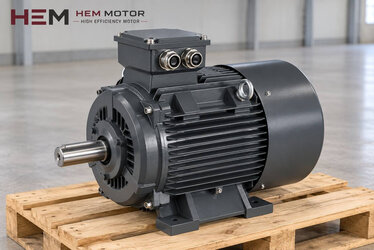
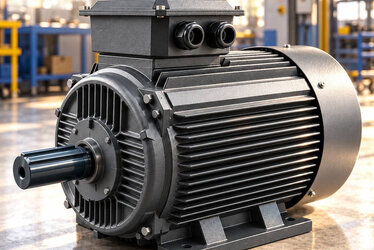
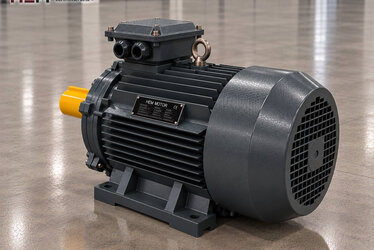
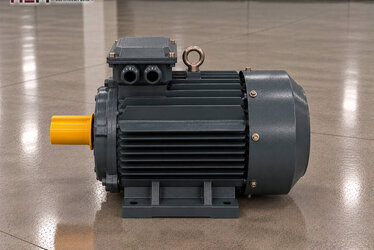
On high-power drives that run long hours, the loss difference turns into a noticeable amount of energy each year (representative image).
Prices and technical data are on the product pages; choose a model and order online.
In which applications does IE5 not make a difference?
On drives that run a few hundred hours a year, stand idle most of the time or turn continuously at low load, IE5 usually loses its point. A fire pump, a standby unit, a crushing or mixing machine that runs a few times a week fall into this group. The loss difference is spread over few hours and does not accumulate.
Drives that start frequently and start a high-inertia load direct on line also need care. On these machines, starting losses and the number of cycles determine the energy picture; the efficiency difference in steady running stays in the background.
If the motor runs continuously below half load, reducing the power step first usually saves more energy than moving to IE5.
Application
Operating pattern
Assessment for IE5
Continuous air compressor
Multiple shifts, close to load
Strong candidate; a loss difference calculation is made
Booster and circulation pump
Long hours, mostly on a drive
Strong candidate; considered together with the drive
Air handling unit supply and exhaust fan
All day, variable flow
Candidate; part-load loss data is requested
Crusher, mill, mixer
Shift work, impact load
Load profile first; IE3 or IE4 is often enough
Fire pump, standby unit
Short running, long standby
Low economic return
The table is a rough ranking to speed up the decision process; the definitive result comes from the loss difference calculation made for each drive.
What information should be gathered for an IE5 project running on a drive?
If the motor is going to run on a frequency converter, the speed range, the torque demand within that range, the cable length and the drive's output filter should be defined from the start. Pumps and conveyors differ here. On variable-speed pumps and fans, torque falls with speed; on a conveyor or positive displacement pump, full torque is needed at low speed too, and the motor's cooling is assessed accordingly.
System efficiency is the combined efficiency of the motor and the drive. The drive loses energy too. Its losses can take away part of the gain on the motor side, so the comparison should be made on the drive package of motor plus drive, not on the motor nameplate. Our three-phase series are suitable for speed control with a frequency converter; prolonged running at low speed with full torque may require a separate fan; if the drive-to-motor cable is long, a dv/dt or sine filter is considered; these conditions are stated in the order.
Example electric motors for drives that run long hours
Below are examples from the series for 22–37 kW, 4-pole pump and compressor drives similar to the example calculation above; other powers and speeds are listed in the electric motor shop.
180L-4 cast iron, 22 kW, 1470 rpm, 400/690 V; for medium-size booster pumps and screw compressors.
200L-4 cast iron, 30 kW, 1475 rpm, 400/690 V; the power step in the example calculation.
225S-4 cast iron, 37 kW, 1485 rpm, 400/690 V; for drives whose measured shaft power exceeds 30 kW.
The HEM Motor range includes the IE3, IE4 and IE5 efficiency classes. Whether the codes above can be supplied as IE5, and if so the motor's design and its part-load loss values, must be confirmed separately with the order. The series comes with IP55 protection and class F insulation; general information on the family is on the asynchronous electric motors page, and power and current values are in the 2026 technical and product catalogue.
If you share the measured power, annual operating hours and drive details of the drive you are assessing for IE5 through the contact page, we can check the loss difference calculation together with your figures. If the calculation favours a power step below or above, the HEM Motor model list is open to see the options side by side.
Frequently Asked Questions
Does an IE5 electric motor always run on a frequency converter?
No, it depends on the design. Some IE5 designs are built to run on a drive, others can be connected to the mains; confirm with the order which group your chosen motor belongs to.
Does it make sense to replace a working IE3 motor with an IE5?
If the motor runs long hours at high load, it is worth doing the calculation. For a motor that runs a few hundred hours a year, waiting until it fails is usually more economical.
Does choosing IE5 change the motor frame?
It can; frames and dimensions of different efficiency classes at the same power are not always the same. Check mounting compatibility by comparing the technical drawing with the existing motor's nameplate.
How is the return of IE5 on a variable-flow fan calculated?
The fan's flow distribution over the year is split into bands, and the loss difference in each band is multiplied by the hours in that band and summed. Ask the manufacturer for part-load loss data for this.
HEM Motor Models Related to This Article
The cards show example models related to the topic. A suitable motor is not chosen by power alone: compare speed, voltage, mounting, shaft and connection dimensions on the product page; if unsure, send a photo of the existing motor’s nameplate on WhatsApp.
When an IE5 electric motor investment pays for itself depends largely on how many hours a year the motor runs and at what load: the annual energy difference is the loss difference ... More Details
An IE5 electric motor fits an existing base frame only after the IEC frame number, mounting type, foot hole spacing, shaft and flange data have been compared with the old motor; a ... More Details
The maintenance interval of an IE5 efficiency-class electric motor is calculated from operating hours, speed and ambient conditions rather than from the calendar, and the spare par... More Details
Panel planning for an IE5 electric motor starts once it is clear whether the motor will run on a drive or directly from the grid: magnet-based synchronous designs usually depend on... More Details
At part load, an electric motor built to the IE5 level holds its efficiency and power factor across a wider load range than an IE3 induction motor. In the IE3 motor, once load fall... More Details
In an electric motor renewal, production downtime is costed by multiplying the number of hours stopped by that line's hourly downtime cost; the hourly cost in turn is the sum of it... More Details
We use necessary and optional cookies to improve your experience, enhance content and analyse traffic. Under the GDPR, optional (analytics/marketing) cookies are only used with your explicit consent. Please choose your preference below.
Cookie Policy
 English
 Français
 Türkçe
 Español
 Русский
 العربية
 Deutsch
 Italiano