For an IE3 electric motor running at 50 percent load, the renewal decision is made by first measuring the real load and then comparing two options on the basis of loss difference: keeping the rating and moving to IE4 or IE5, or stepping down to the size that fits the measured load. Because the efficiency of IE3 motors usually stays high at half load, the decision depends less on efficiency class than on annual running hours, power factor and peak load.
Was the 50 percent load actually measured, or estimated from current?
Seeing half of rated current on a clamp meter does not mean the motor is at half load. Because no-load current is almost independent of load, the ratio of current to rated current overstates load at light loads.
A more accurate picture is obtained in two ways. The first is to measure active power (kW) directly at the motor input with an energy analyser; this value is compared with the nameplate power divided by efficiency. The second is the slip method: the ratio between speed measured with a tachometer, synchronous speed and nameplate speed gives a rough but useful idea of load (general information; confirm with the machine manufacturer). Load ratio = (ns − nmeasured) / (ns − nnameplate).
A single reading is not enough.
A line that is low in the morning and reaches full load in the afternoon is easily misclassified by a spot measurement; that is why the analyser is left recording for at least one full shift.
How much does IE3 motor efficiency drop at half load?
In standard IE3 motors the efficiency curve is usually close to its highest value around 75% load and stays close to rated efficiency at 50% load; a clear drop mostly begins below 25% load. The exact figure differs for every model. It must be taken from the manufacturer's efficiency table at 50%, 75% and 100% load.
The quantity that really deteriorates at half load is power factor. As magnetising current stays the same while active current halves, cosφ falls noticeably. This affects not the motor's own losses but the plant's reactive energy consumption and the current in the lines; the compensation panel covers this difference to some extent.
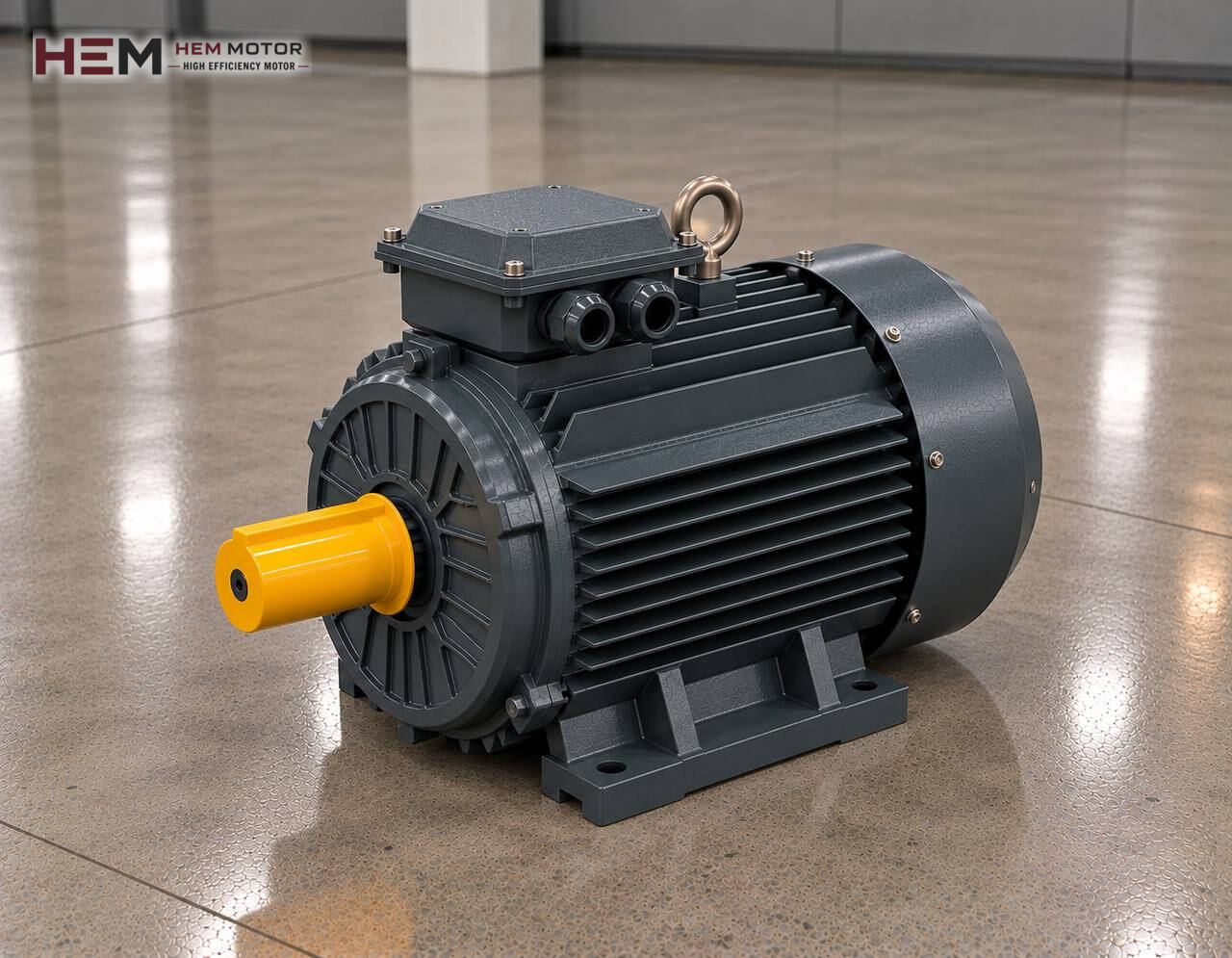
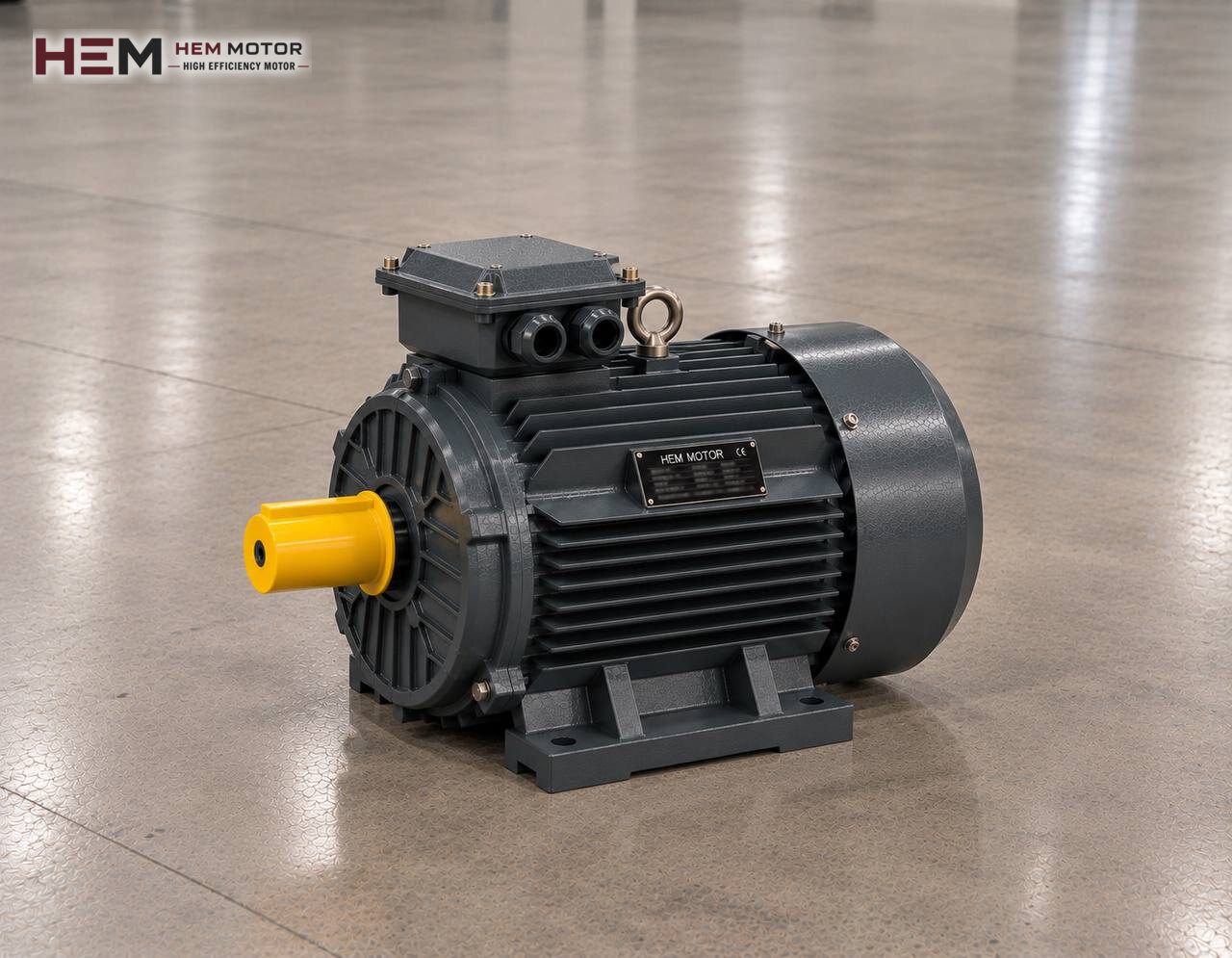
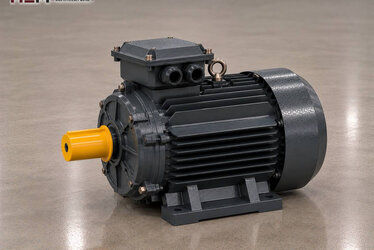
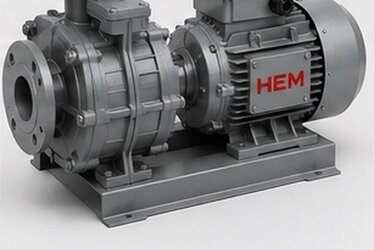
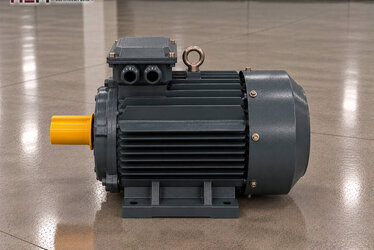
Before a renewal decision, the motor's real load is measured over a shift (representative image).
How are loss difference and annual energy calculated?
The return of a renewal is calculated not from the efficiency percentage but from the difference in loss power. A motor's loss is found with Ploss = Pshaft × (1/η − 1); multiplying the difference between the losses of two options by annual running hours gives the kWh difference.
Hypothetical example: a 22 kW IE3 motor delivers an average shaft power of 11 kW over the year. Assume the catalogue gives an efficiency of 0.92 at this load point. Loss ≈ 11 × (1/0.92 − 1) ≈ 0.96 kW. For an option with an efficiency of 0.935 at the same shaft power, loss ≈ 0.76 kW. The difference is about 0.2 kW; at 6,000 hours a year that is 1,200 kWh.
Multiplying this kWh difference by your plant's unit energy price gives the annual monetary difference, and dividing the motor price difference by it gives the payback period. The efficiency values in the example are hypothetical; put the catalogue values of your own motor and the candidate model into the calculation.
Prices and technical data are on the product pages; choose a model and order online.
Higher class at the same rating, or IE3 one size down?
The two routes gain from different sources and carry different risks. The table below puts the main points affecting the decision side by side.
Criterion
IE4/IE5 at the same rating
IE3 one size down
Loss difference
Comes from the efficiency class difference
The motor runs at a higher load ratio, near the top of its efficiency curve
Power factor
Still low at half load
Improves because the load ratio rises
Peak load and starting
Existing margin is kept
Margin shrinks; peak torque and starting must be checked separately
Mounting fit
Frame may be the same, confirmed with the order
Frame size may change; base and coupling need checking
Future capacity increase
Not affected
The motor may fall short if the line grows
Stepping down always looks attractive. But half load is an average value; on a crusher, a mill or a conveyor that starts loaded, the peak moments are decisive. On such machines, starting torque and breakdown torque should be compared in the catalogue before going one size down.
When can renewal be put on hold?
On a motor that runs few hours a year, for example one that only comes on during morning filling hours, the loss difference corresponds to a small kWh value; the investment takes years to pay for itself.
In that case it may be more sensible to wait until the motor fails or needs a rewind and choose the right rating at that point.
A motor waiting for a rewind is a different calculation. If the difference between repair cost and a new motor is small, a new motor selected for the measured load solves two problems at once. Whether efficiency is preserved after repair must be verified separately; this depends on the rewind quality and on whether the core has suffered thermal damage. A common mistake on site is taking “it runs at half load” from an earlier maintenance report without measuring load. The process may have changed, the pump impeller may have been trimmed or the line speed increased.
Which example models fit this decision?
Three cast iron models for the 22 kW motor of the hypothetical example and possible lower steps are listed below. The series is offered in IE3, IE4 and IE5 efficiency classes; which class is available for each model is confirmed with the order. Full power and speed tables can be seen in the HEM Motor shop.
160L-4: 15 kW, 1465 rpm, 27.3 A at 400 V, rated torque 97.8 Nm. The step to look at if measured average load is around 11 kW and peak load is limited.
180M-4: 18.5 kW, 1470 rpm, 33.5 A at 400 V, rated torque 120.2 Nm. A more cautious intermediate step on lines with uncertain peaks.
180L-4: 22 kW, 1470 rpm, 39.7 A at 400 V, rated torque 142.9 Nm. For those who want to keep the same rating and change only the efficiency class.
If you have a power measurement recorded over a shift and a photo of the existing motor's nameplate, send them via our contact page; we will calculate the loss difference between the two options together with catalogue values. For a price comparison, current model information is available on our sales page.
Frequently Asked Questions
Does a motor running at half load heat up more?
No; losses, and therefore winding temperature, are lower than at full load. The downside of half load is not heating but low power factor and the initial cost of an oversized motor.
Does the overload setting change when moving to a smaller motor?
Yes, protection is reset to the new motor's nameplate rated current. The suitability of the cable and breaker selection should also be checked by the person responsible for the panel.
Can fitting a frequency converter replace a renewal?
On a pump or fan with variable load, a drive can have a bigger effect than a motor change; on a constant load its effect is limited. Our three-phase series are suitable for speed control with a frequency converter; long running at low speed with full torque may need a separate fan; with a long drive–motor cable a dv/dt or sine filter is considered; these conditions are stated with the order.
Where can part-load efficiency values be found?
Manufacturer catalogues contain efficiency and cosφ tables for the 50%, 75% and 100% load points. For HEM Motor models these values are confirmed with the order.
HEM Motor Models Related to This Article
The cards show example models related to the topic. A suitable motor is not chosen by power alone: compare speed, voltage, mounting, shaft and connection dimensions on the product page; if unsure, send a photo of the existing motor’s nameplate on WhatsApp.
No, it is not enough. An IE3 label only states the efficiency level of the motor at rated load; it does not say whether the motor will fit the machine, carry the load or match the ... More Details
The efficiency class of a rewound IE3 electric motor is verified by measurement, not by the nameplate: the motor is tested under load and input power is compared with shaft power, ... More Details
A smaller IE4 motor cannot be chosen in place of an IE3 electric motor just because the efficiency class is higher; a motor's power is set by the torque and speed demanded at the s... More Details
Almost all of the cost difference between the same IE3 electric motor running four hours and twenty hours a day comes from energy, and the difference is directly proportional to ru... More Details
A 4-pole, 250 kW IE3 motor on a 400 V supply draws about 418 A at rated load. Started direct on line, that climbs to roughly 3000 A. The motor weighs over a tonne and delivers arou... More Details
In an electric motor renewal, production downtime is costed by multiplying the number of hours stopped by that line's hourly downtime cost; the hourly cost in turn is the sum of it... More Details
We use necessary and optional cookies to improve your experience, enhance content and analyse traffic. Under the GDPR, optional (analytics/marketing) cookies are only used with your explicit consent. Please choose your preference below.
Cookie Policy
 English
 Français
 Türkçe
 Español
 Русский
 العربية
 Deutsch
 Italiano