Power and Transmission Components When Replacing a Concrete Mixer Electric Motor

Power and Transmission Components When Replacing a Concrete Mixer Electric Motor

The mixer in a concrete batching plant is the most heavily loaded machine on site: each batch is filled with coarse aggregate, sand, cement and water, made homogeneous in a short time and discharged. When the mixer motor fails, production stops; that is why the replacement is often rushed, and this is where the most frequent mistakes occur. Finding a motor similar in power to the old one is not enough; how the motor connects to the transmission components, whether there is a second motor on the same mixer and under what conditions the line starts must all be checked together. This article looks at motor replacement on a batching plant mixer from the point of view of the transmission components.
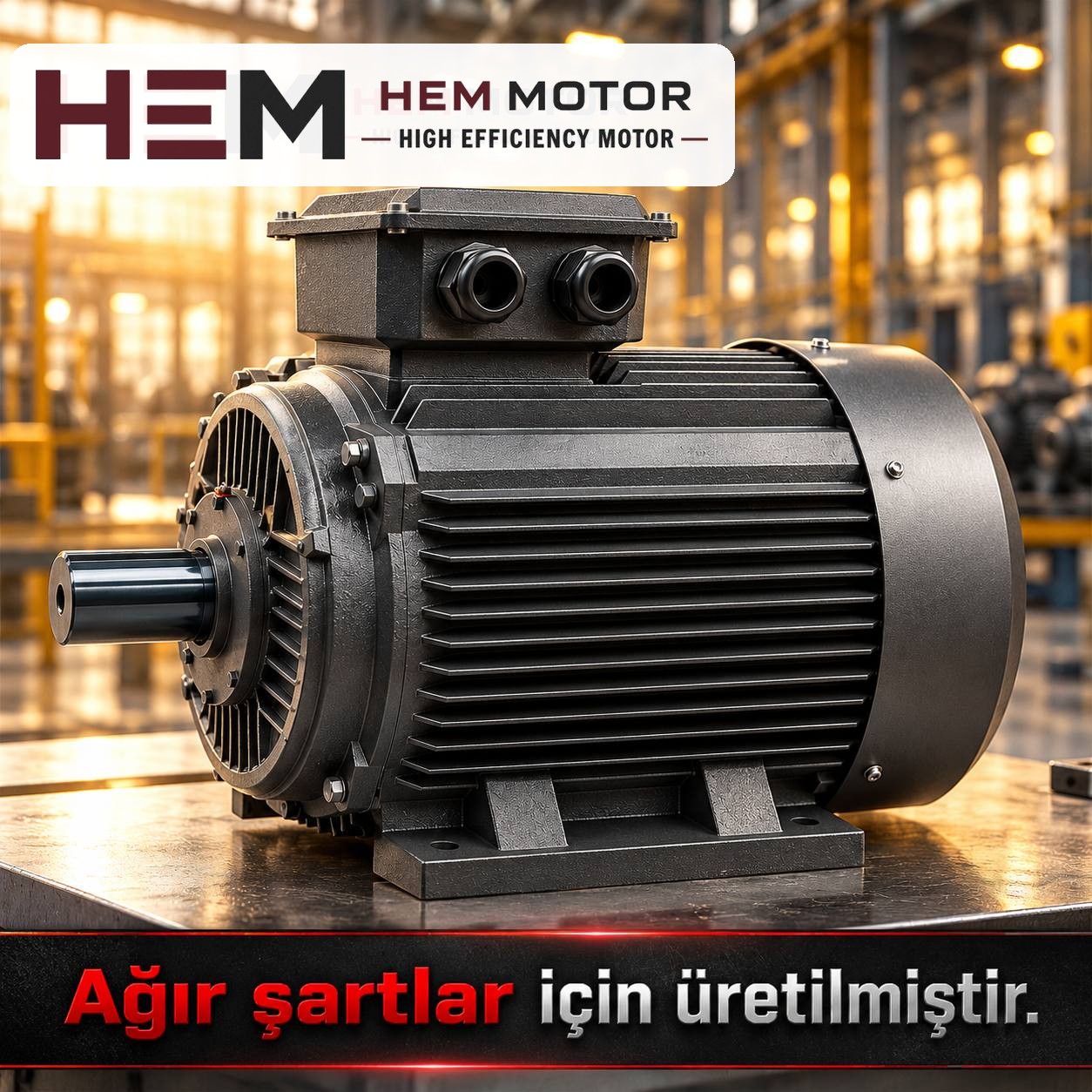
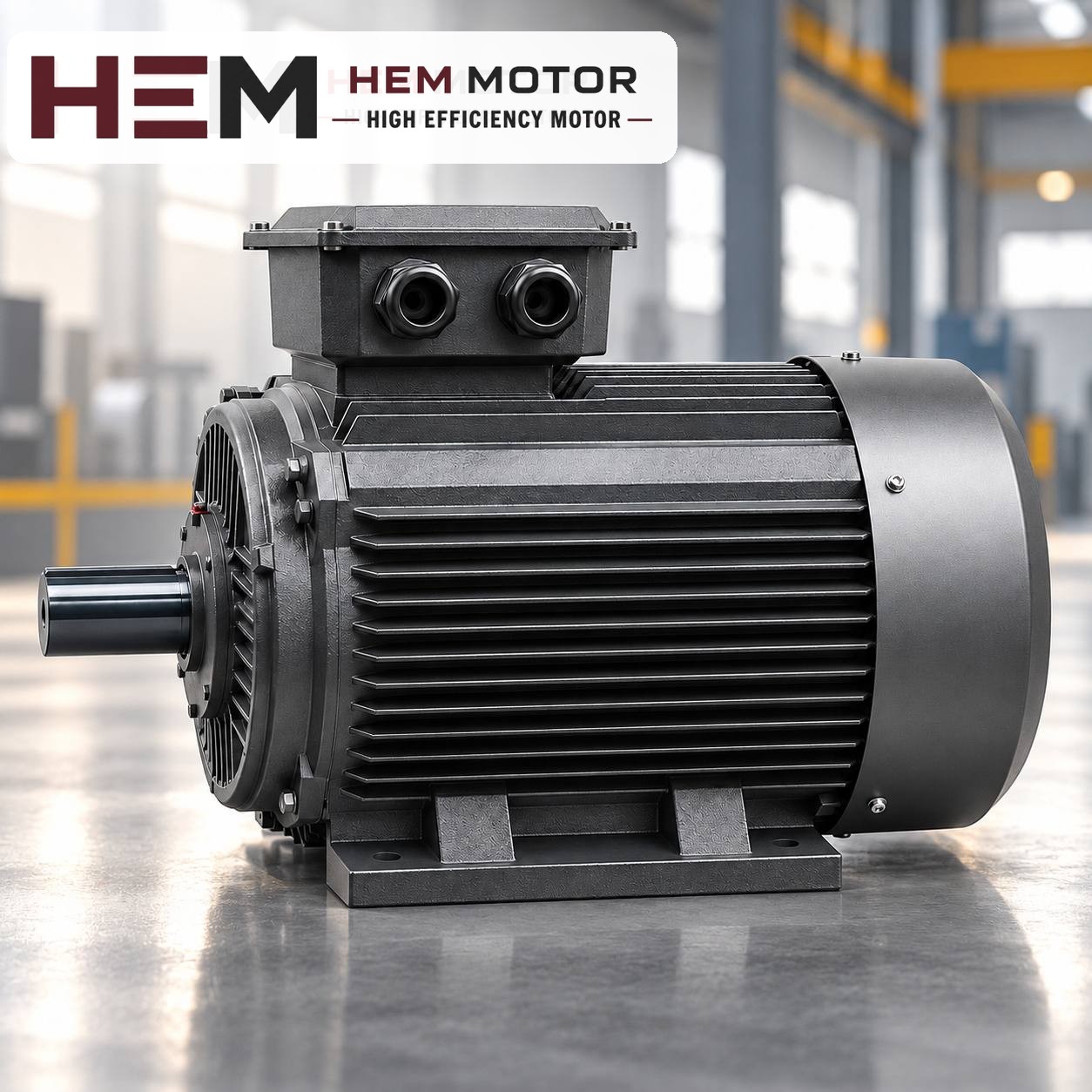
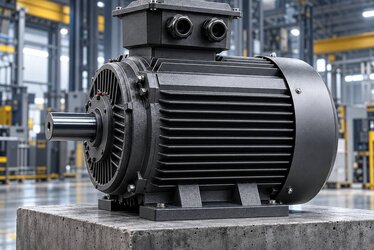
Three-phase electric motor in a heavy industrial setting
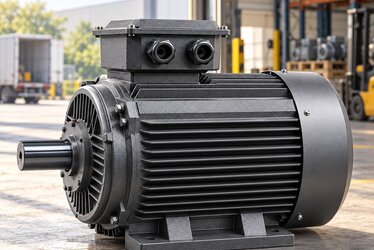
In the dusty, vibrating environment of a batching plant, a cast iron frame stands out (representative image).

Mixer types and drive arrangements

The mixers used in batching plants differ clearly from one another in their drive arrangement. Identifying the arrangement you have before starting the replacement makes it clear which motor connects where.

  • Twin-shaft mixer: Two horizontal shafts mix the material with arms rotating in opposite directions. On large capacities each shaft may have its own motor-gearbox unit; on smaller ones a single motor turns both shafts together through synchronising gears.
  • Planetary mixer: Mixing arms rotating on a vertical axis are usually driven through a gearbox located on top. The motor is often connected to the gearbox vertically or by flange.
  • Single-shaft and pan mixers: Found in smaller plants and in precast production; the motor may sit on a foot base and be connected to the gearbox by belt or coupling.

Whatever the type, the power and speed of the motor are the result of the choice made by the mixer manufacturer according to batch volume and mix design. Departing from that choice when replacing should only be done together with the manufacturer or a project engineer.

How do transmission components affect motor selection?

A mixer motor does not work on its own; it is connected to the mixing shaft through components such as a gearbox, belt and pulley or a fluid coupling. Each of them expects something different from the motor.

Motor flanged to a gearbox

If the motor connects directly to the gearbox input flange, the most critical point is the flange and shaft match. Two motors of the same power may have different IEC frames; in that case both the flange size and the shaft diameter may change. Compare the frame code on the old motor's nameplate with that of the new model. Mounting arrangements are offered according to the frame as B3, B5, B14, B34, B35 and vertical V1/V3/V5/V6/V15; the flange size is confirmed with the order. A flange merely being called "B5" does not show that it fits your gearbox.

Belt and pulley drive

In arrangements where a foot-mounted (B3) motor is connected to the gearbox by belt, the motor speed together with the pulley ratio determines the mixing speed. If you change the motor speed, the pulley ratio must be recalculated. Belt tension puts a side load on the motor bearings; fitting the pulley close to the shaft end and keeping the tension at the manufacturer's value is important for bearing life. The belt can provide some protection by slipping under overload, but this should not be regarded as a safety device.

Fluid coupling

On some mixers there is a hydraulic (fluid) coupling between the motor and the gearbox. This coupling allows the motor to accelerate before it takes up its load and softens the start when the mixer is full. When replacing, the coupling bore and the shaft height of the new motor must match; if the coupling is kept, the motor speed must also stay the same as before.

Loaded starting and two-motor mixers

The heaviest moment for a mixer is restarting with a full drum after a power cut or emergency stop. If the concrete has started to set, the resistance rises even further. Whether a standard motor can start in this situation depends on assessing the starting torque, the starting method and the transmission components together.

  • Starting method: Star-delta starting lowers the starting current but also lowers the starting torque. If a loaded start is possible, the choice between direct-on-line, soft starter or frequency inverter is made on site by an engineer, based on the load calculation.
  • Two-motor arrangement: On a mixer where each shaft is turned by its own motor, the power, speed and electrical values of the two motors must be identical. If you are replacing only one, make sure the new motor is equivalent to the old one; motors with different slip values may not share the load equally.
  • Thermal protection: Protection is set according to the rated current on the new motor's nameplate. Leaving the old motor's setting unchanged can result in incorrect protection when the motor changes.
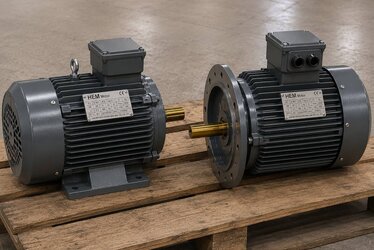
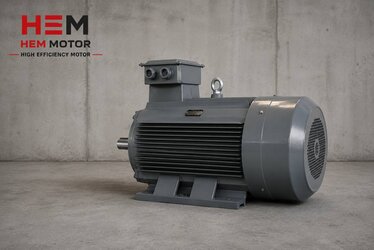
Prices and technical data are on the product pages; choose a model and order online.

Plant environment and frame selection

A batching plant is a site where cement dust, aggregate impacts, wash water and vibration all occur together. The mixer motor is often exposed to every one of these conditions.

  • The models HEM Motor offers are IP55 protected with class F insulation. IP55 protects against dust ingress and water splashing; however, aiming pressurised wash water directly at the motor is beyond this scope.
  • Cement dust builds up on the finned frame and weakens cooling; regular cleaning of the fan cover and frame should be added to the maintenance plan.
  • On mixer platforms with heavy vibration and impact, a cast iron frame is the option that stands out for its more rigid structure.
  • In outdoor plants, if there is a risk of condensation this is stated in the order; order-time options such as an anti-condensation heater can be discussed.

For the other drives across the plant (aggregate belts, cement screws, compressors) you can look at the concrete plant electric motors page.

Example models and a hypothetical replacement

Geared drives on batching plant mixers are mostly built with a 1,500 rpm motor. The models below are cast iron frame options at this speed. The power values are examples only; the right power for your mixer comes from the old nameplate and the manufacturer's data.

  • 200L-4 cast iron: 30 kW, 4 poles, rated 1,475 rpm, IEC 200L, 400/690 V (Δ/Y), 50 Hz; rated current at 400 V 53.8 A, rated torque 194.2 Nm.
  • 225S-4 cast iron: 37 kW, 4 poles, rated 1,485 rpm, IEC 225S, 400/690 V (Δ/Y), 50 Hz; rated current 66.1 A, rated torque 237.9 Nm.
  • 250M-4 cast iron: 55 kW, 4 poles, rated 1,485 rpm, IEC 250M, 400/690 V (Δ/Y), 50 Hz; rated current 97.6 A, rated torque 353.7 Nm.

Hypothetical example: suppose that on a twin-shaft mixer each shaft turns with its own motor-gearbox unit and one of the motors has failed. The nameplate reads 37 kW, 1,485 rpm and frame 225S; the motor is flanged to the gearbox. The model to compare is the 225S-4. In the first step, the gearbox input flange and shaft size are compared with the technical drawing. In the second step, the other motor's nameplate is also read and the two motors are confirmed to be equivalent. In the last step, the thermal setting is made according to the current on the new nameplate, and the direction of rotation of both shafts is checked at the first start.

For dimensions, see the 2D technical drawings and the 2026 technical and product catalogue. Current prices are on each model's product page.

Pre-replacement checklist

  • A photo of the old motor's nameplate: power, speed, frame code, voltage and connection
  • Transmission arrangement: flanged gearbox, belt and pulley or fluid coupling
  • How many motors the mixer has and the nameplate data of the other motor
  • Mounting arrangement (B3, B5, B35 or vertical) and gearbox input size
  • The starting method used and the likelihood of a loaded start
  • Supply voltage, and whether the plant is outdoors or indoors

Conclusion

When replacing a concrete mixer motor, power, transmission components, number of motors and starting conditions must be considered together. An equivalent motor is one with the same power and speed that fits the gearbox or coupling arrangement exactly and, on a twin-motor mixer, carries the same values as its partner. You can review suitable models and current prices on the buy electric motors page. You can ask for the equivalent model by sending a photo of the old motor's nameplate, or reach us through our contact page.

HEM Motor Models Related to This Article

The cards show example models related to the topic. A suitable motor is not chosen by power alone: compare speed, voltage, mounting, shaft and connection dimensions on the product page; if unsure, send a photo of the existing motor’s nameplate on WhatsApp.

30 kW 1500 rpm Cast Iron Frame Electric Motor 200L-4

200L-4

30 kW · 1500 rpm

  • Cast iron frame · IEC 200L
  • 1475 rpm · IP55
  • Mounting: B3 foot; flange (B5/B14/B35) depending on frame — confirmed with the order

US$1,227.13 (€1,095.13)

View product
37 kW 1500 rpm Cast Iron Frame Electric Motor 225S-4

225S-4

37 kW · 1500 rpm

  • Cast iron frame · IEC 225S
  • 1485 rpm · IP55
  • Mounting: B3 foot; flange (B5/B14/B35) depending on frame — confirmed with the order

US$1,517.45 (€1,354.22)

View product
55 kW 1500 rpm Cast Iron Frame Electric Motor 250M-4

250M-4

55 kW · 1500 rpm

  • Cast iron frame · IEC 250M
  • 1485 rpm · IP55
  • Mounting: B3 foot; flange (B5/B14/B35) depending on frame — confirmed with the order

US$2,052.56 (€1,831.77)

View product

Similar Articles