English
 Français
 Türkçe
 Español
 Русский
 العربية
 Deutsch
 Italiano

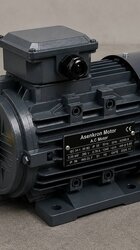

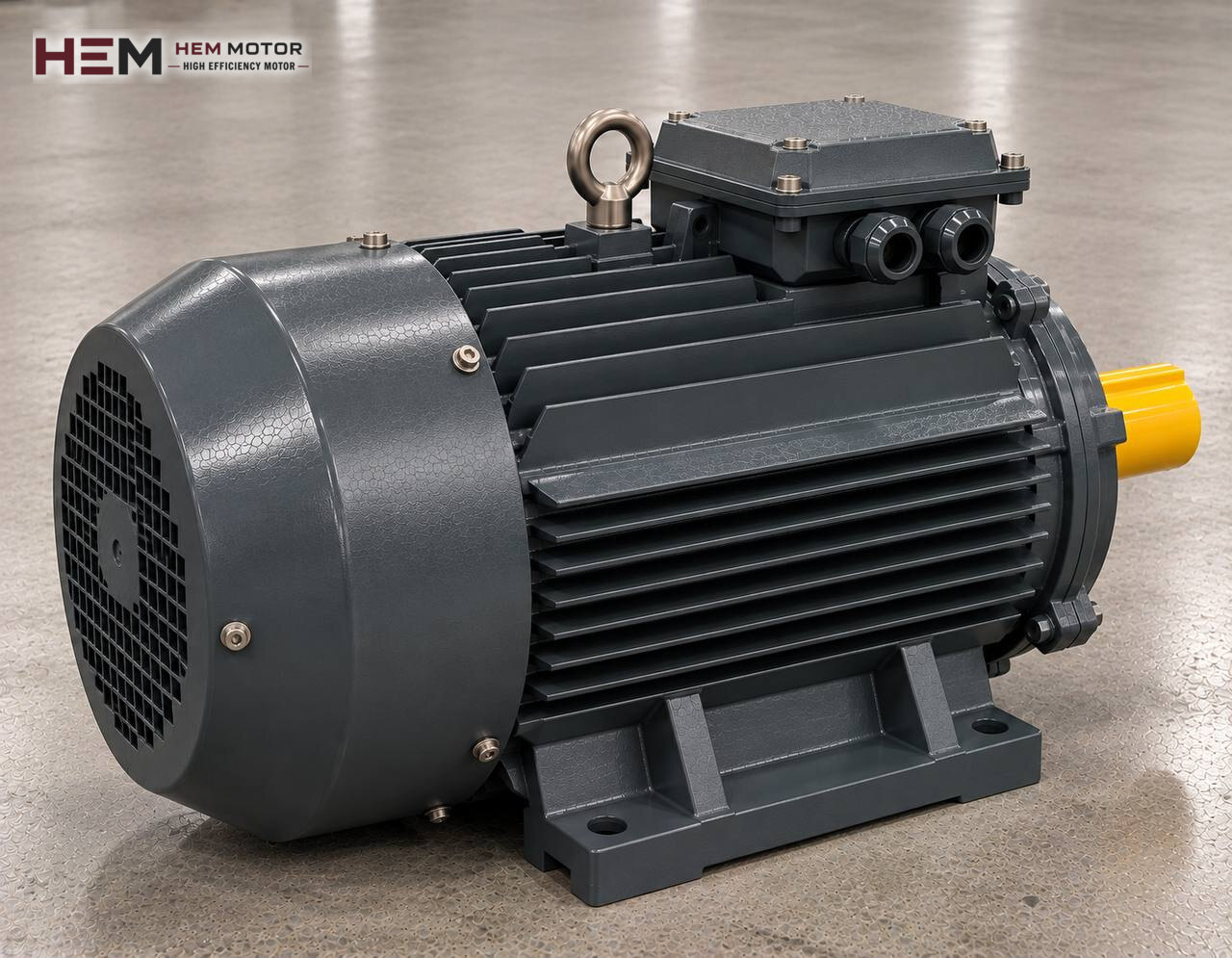

When buying an electric motor for the chemical and paint industry, the first thing to check is not the kilowatt rating but the explosion risk at the point where the motor will stand and how corrosive the surrounding air is. A standard motor does not go into a filling room where solvent vapour may be present; in a dry pump house, on the other hand, the right frame, the right speed and the drive information decide the choice. The checklist below is built around real duties on site, from the reactor agitator to the bead mill and from the transfer pump to the tank farm. Environment first, power second.
Why check the area class and solvent vapour before the order form?
A standard motor does not go where solvent vapour may be present, so the choice starts with the area class. A paint factory contains very different zones under one roof. The water-based paint preparation line, the powder coating grinding section and the solvent-based varnish filling room may be only a few metres apart, yet for an electric motor they are separate worlds.
The plant's explosive atmosphere risk assessment states which point falls into which zone; purchasing should not start without looking at that document.
Agitators and pumps in areas with solvent, thinner, alcohol or combustible dust require a special flameproof or increased-safety motor. Such a duty may fall outside the standard series in HEM Motor's 2026 catalogue; if you contact us with the zone information and the existing nameplate, we will assess it together. In areas outside the risk zones, general-purpose three-phase motors can be used without difficulty.
What determines motor power for reactor agitators and dissolvers?
Motor power is chosen for the torque demand at the thickest moment of the batch. A resin reactor agitator turns a thin mixture at the first charge; as cooking progresses the product thickens and the shaft torque rises noticeably. A dissolver used in paint preparation also goes into heavy load within a short time while pigment is being added. The current drawn with an empty tank is not the yardstick.
On vertical agitators the motor is usually flange-mounted on top of the gearbox. Keep in mind that vertical mounting such as V1 is offered according to frame size and that the flange dimension is confirmed in the order. Product and wash water may drip onto the motor. The orientation of the fan cover should therefore be added to the checklist.
What needs attention on the bead mill, transfer pump and filling line?
On the mill, heating and bearing life come first; on the pumps, a frame and speed standard. A bead mill spins the ceramic beads in the grinding chamber at high speed and runs under continuous load; whether the motor runs close to its rated current should be measured after commissioning. When the product temperature rises, the mill is stopped and cooled. Frequent stop-start is therefore normal.
The centrifugal and gear pumps that carry raw material and finished product between the tank farm and production form the largest motor group in the plant. Setting a frame and speed standard makes the job easier. Spare holding and replacement both become simpler. Series suited to pump drives are gathered on the pump electric motors page.
| Checklist item | Meaning in chemicals and paint | To state in the order |
|---|---|---|
| Area class | Solvent filling, varnish and thinner sections | Zone from the risk assessment; special motor request if needed |
| Load profile | Thickening resin, dissolver with pigment being added | Torque at the heaviest moment and running time |
| Environment | Acid and ammonia vapour, wash water | IP55 standard; IP56 special order; paint and sealing note |
| Mounting | Vertical agitator on gearbox, foot-mounted pump | Mounting type such as B3, B5, B35 or V1 |
| Speed control | Mixing adjusted to viscosity | Drive use, low-speed duration, cable length |
How do acid vapour and wash water damage the motor?
Acid, chlorine or ammonia vapour blisters the paint, oxidises the connections in the terminal box and thins the fan cover over time. In chemical plants, what wears a motor most is often not the load but the air. Here the cable entries must be tightened carefully and unused gland holes must be closed.
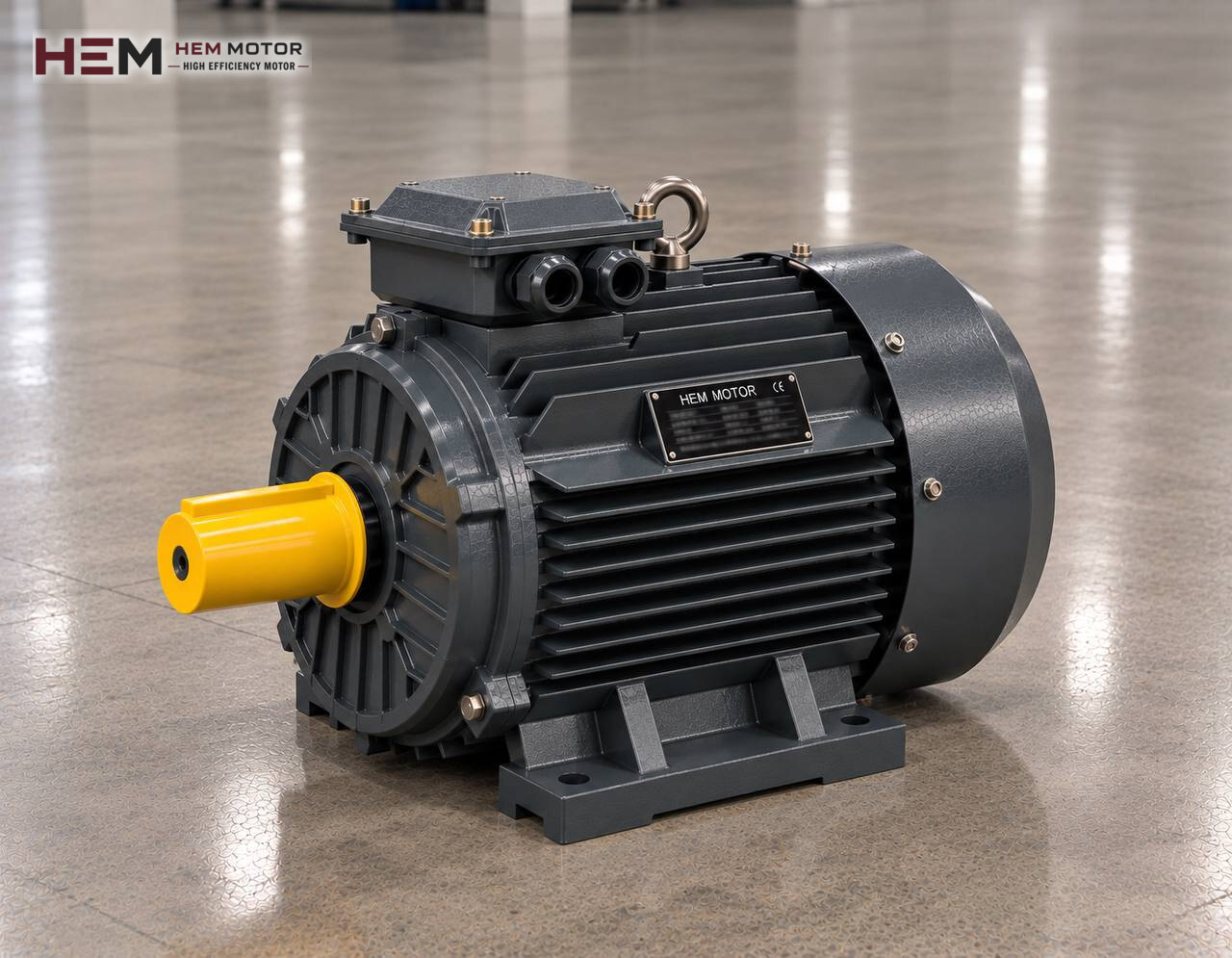
HEM Motor series come with IP55 protection and class F insulation; for places with harsher washing, IP56 can be requested as a special order.
A PTC or PT100 sensor to monitor winding overheating, and an anti-condensation heater for outdoor pumps that see condensation during night stops, are order options. When choosing the frame, cast iron is a more robust starting point in corrosive atmospheres and on vibrating bases.