English
 Français
 Türkçe
 Español
 Русский

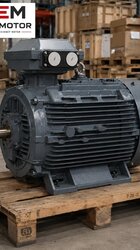
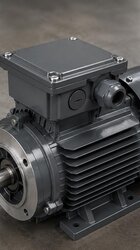

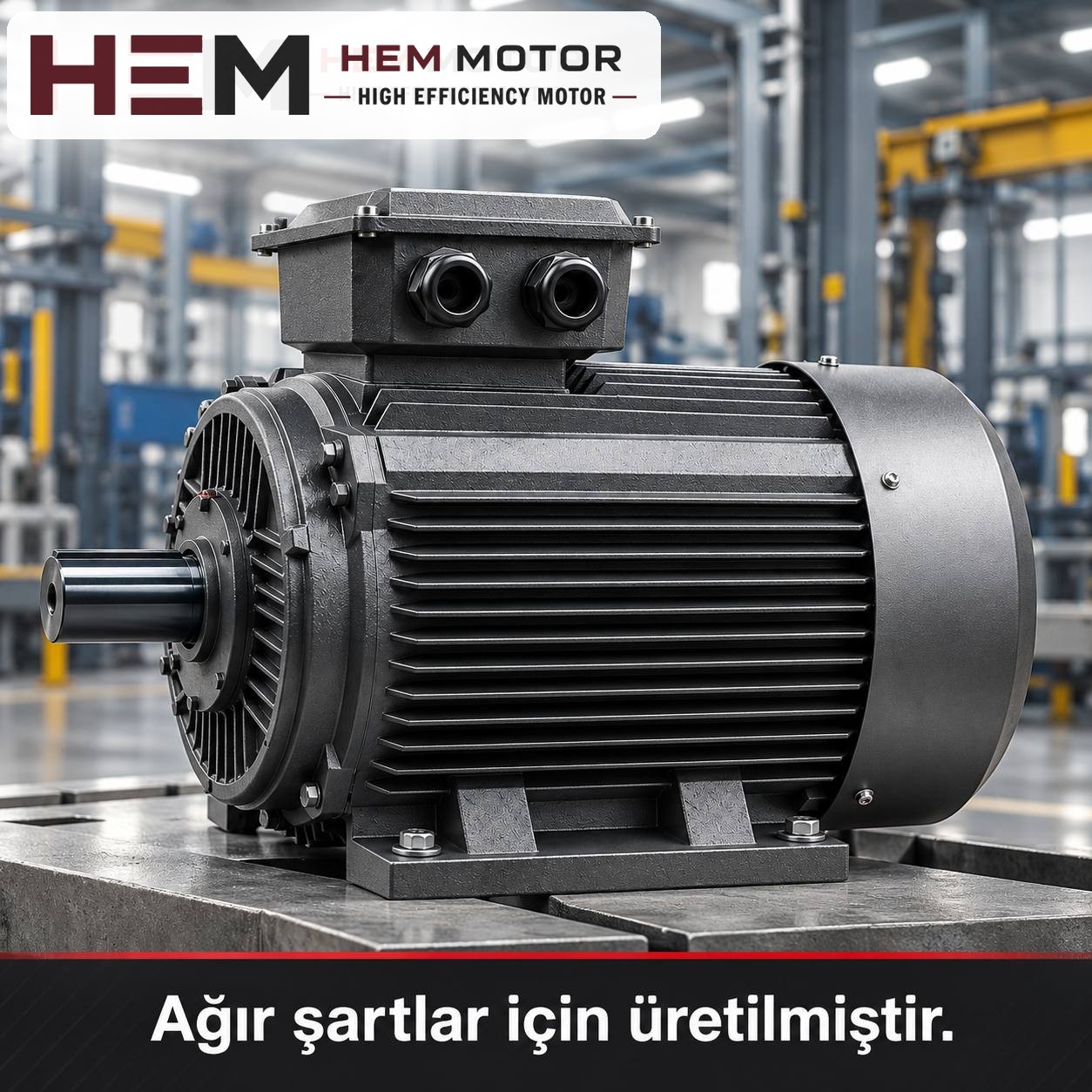

A plastic crushing machine, or granulator, reduces parts such as bottles, crates, pipes or production scrap by cutting them between rotating knives and fixed knives. From the motor's point of view, this machine combines two difficult situations: accelerating a heavy rotor from standstill and absorbing sudden cutting impacts during operation. When a granulator motor is replaced, people often look only at the kilowatts on the old motor's nameplate; yet the rotor's inertia at start-up, the torque peaks that occur during feeding and the belt drive are at least as decisive as power. In this article we take up these points in order and give examples from the cast iron models HEM Motor has on sale.

What does a granulator rotor demand from the motor?
A granulator rotor is a solid cylinder carrying knives. In most machines, the pulley side is designed like a heavy flywheel to increase the rotor's inertia. The purpose of this design is to absorb the sudden load created when a knife enters the material with the energy of the rotating mass, so that the motor is not strained at every impact.
The flywheel effect makes the motor's job easier during operation but does the opposite at start-up. To bring a stationary heavy mass up to operating speed, the motor has to produce high torque for a long time. During this period the motor draws several times its rated current and the winding heats up quickly. The longer the start, the more important it becomes that the motor and the protective devices tolerate this situation.
Factors that increase the rotor load
- Large rotor diameter and long rotor length: Mass and inertia increase, and the run-up time lengthens.
- Heavy flywheel pulley: It smooths operation but makes starting heavier.
- Material left in the hopper: If the machine stopped with a full hopper, on restart the rotor has to overcome not only its own mass but also the jammed material.
- Blunt knives: Crushing starts instead of cutting; for the same material, higher torque and longer current peaks occur.
Starting load: why the nameplate power alone is not enough
Two different granulators may carry motors of the same power but behave very differently at start-up. The kilowatts on the nameplate show the power the motor can deliver in continuous operation; they say nothing about the run-up time, the rotor's inertia or the severity of feeding impacts. For this reason, when replacing a granulator motor, answers to these three questions should be sought:
- Does the machine start with an empty hopper, or while full of material?
- How many seconds did the start take with the old motor, and did the protective device trip during it?
- How many times a day does the machine stop and restart?
Frequent starting places a thermal load on the motor winding every time. In a machine that starts many times a day, the motor is stressed more than in a machine delivering the same power in continuous operation. Sharing this information in the order is necessary for a correct selection.
The starting method also directly affects the start. Star-delta starting reduces the starting current but also reduces the starting torque; in a granulator with a heavy rotor, if the changeover to delta happens before the motor has accelerated enough in star, the current peak is still high. If a soft starter or frequency inverter is to be used, the settings must be made according to the rotor inertia. Our three-phase series are suitable for speed control with a frequency inverter; for long periods at low speed with full torque an external fan may be required, and if the cable between drive and motor is long, a dv/dt or sine filter is considered; these conditions are stated in the order.
Belt drive and speed
In most granulators, the motor turns the rotor through V-belts and pulleys. This arrangement both reduces the speed and protects the motor and rotor by allowing the belt to slip somewhat in a sudden jam. The points to watch on the belt side when replacing the motor are:
- Keep the number of poles: If the old motor is 4-pole (1,500 rpm synchronous), the new one should be too. A different number of poles changes the rotor speed unless the pulleys are changed, and impairs cutting performance.
- Take the radial load into account: Heavy starting and impact operation increase belt tension. The motor pulley should sit close to the shaft shoulder and the belt should not be overtightened.
- Check the pulley hub: Shaft diameter and key size depend on the frame code; the old pulley may not fit the new shaft. Compare the dimensions using the catalogue and technical drawings.
- Replace the belt set together: Running with partly worn belts leads to uneven load sharing between belts and to vibration.