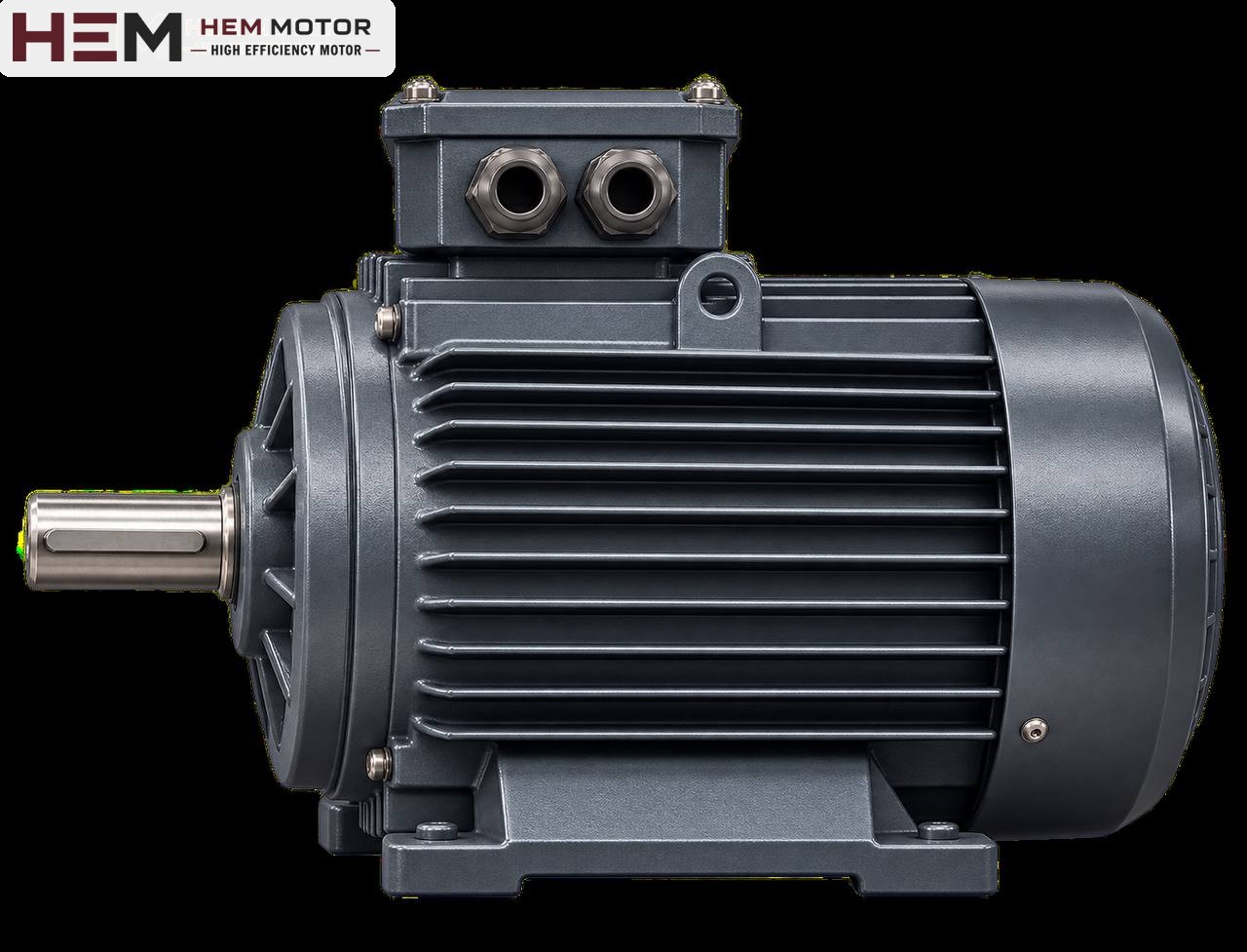
A rating plate reading 400/690 V means each phase winding is designed for 400 V: the electric motor is connected in delta (Δ) on a 400 V supply and in star (Y) on a 690 V supply. Since the line-to-line voltage in Turkish factories is 400 V, this motor runs in delta in normal service and can be started with Y/Δ starting.
What does 400/690 V on the plate tell you about the winding?
The smaller figure is the voltage that must appear across a single phase winding. The larger one is the line voltage that may be applied when the same windings are joined in star; 690 is √3 times 400 (400 × 1.732 ≈ 693).
The slash does not mean "either one will do". The motor never works on both voltages at once, and the links in the terminal box decide which one it suits. The Δ/Y symbol usually sits next to the figures and the order matches one to one: the first voltage belongs to delta, the second to star.
Confusion usually comes from the old 380 V habit.
For many years the supply was called 380 V, today the valid figure is 400 V; if a technician still carries the rule "link a three-phase motor in star", he may wire a 400/690 V frame the same way by reflex. Small ratings are mostly plated 230/400 V and those motors really do run in star on the factory supply, while larger ratings switch to 400/690 V plates. In the HEM Motor three-phase range, according to the package data, models up to 3 kW are plated 230/400 V and those of 4 kW and above 400/690 V. Even so, the decision is made from that motor's own plate, not from a general rule.
How is this electric motor connected on a 400 V supply in Turkey?
In delta. Three links are fitted vertically in the terminal box, each one joining the start of one winding to the end of the neighbouring winding, and the three incoming phases land on the lower row of terminals; each phase winding then sees the full 400 V.
In star the links lie horizontally and the three upper terminals are shorted together. If a 400/690 V motor is left like this on the factory supply, about 231 V falls across each phase. Because torque is proportional to the square of the applied voltage, what remains is roughly one third of rated torque (general information; confirm with the machine manufacturer). At no load nobody notices. Once the load comes on, the speed collapses.
Measuring the voltage before fitting the links takes two minutes. With the multimeter on the AC volts range, L1–L2, L2–L3 and L1–L3 are read at the panel outlet; if all three are around 400 V and close to each other, the links go vertical, and if the reading is near 690 V (some large industrial sites use this voltage in their distribution) the links stay horizontal and the final word belongs to the site's electrical supervisor.
How are the two current values on the plate read?
The larger current belongs to delta, that is to 400 V service; the smaller one is the line current of the star connection at 690 V. Since shaft power stays the same, line current is inversely proportional to voltage: I690 ≈ I400 / √3.
Take a hypothetical reading. If a 15 kW, 4-pole motor has a rated current of 27.3 A at 400 V, its 690 V equivalent comes out at about 27.3 / 1.732 ≈ 15.8 A. Someone who sees the second line on the plate and sets the overload to 15.8 A will trip a motor running in delta in the factory at full load. Every trip gets blamed on the motor, while the fault sits in the adjusting screw.
In panels with Y/Δ starting the calculation gets one step longer, because the thermal overload relay usually sits at the output of the main contactor, on the branch carrying the current of a single winding. The current through that point is 1/√3 of the line current. The relay's position is shown by the panel diagram, not by the plate, and the setting follows from it; how protection devices are selected is covered separately in the article on thermal relays, fuses and MPCBs.
Prices and technical data are on the product pages; choose a model and order online.
Why look for this plate when Y/Δ starting is planned?
Y/Δ starting requires the motor to run in delta in service, and on the factory supply only a motor plated 400/690 V meets that condition. In the first seconds the windings are in star with 231 V per phase; once speed settles the contactors change over to delta and the winding reaches its rated voltage.
The same circuit cannot be built with a motor plated 230/400 V. That winding already has to stay in star at 400 V; the moment it goes to delta it sees √3 times its design voltage, current shoots up and, if the protection does not open, the coils burn out quickly.
In the star position both starting current and starting torque are about one third of the values with direct-on-line connection (general information; confirm with the machine manufacturer). A fan started with its damper closed, a centrifugal pump with a throttled valve or a vented screw compressor accelerates comfortably with that torque. A full auger under a bunker or a belt with material left on it may fail to accelerate in star, and the whole line jolts at changeover, so on such machines the starting method should be chosen together with the machine manufacturer. When searching for a model in the HEM Motor store, reading the voltage line together with power and speed stops a wrongly plated motor from ever reaching the panel.
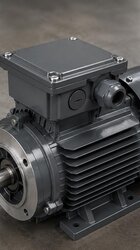
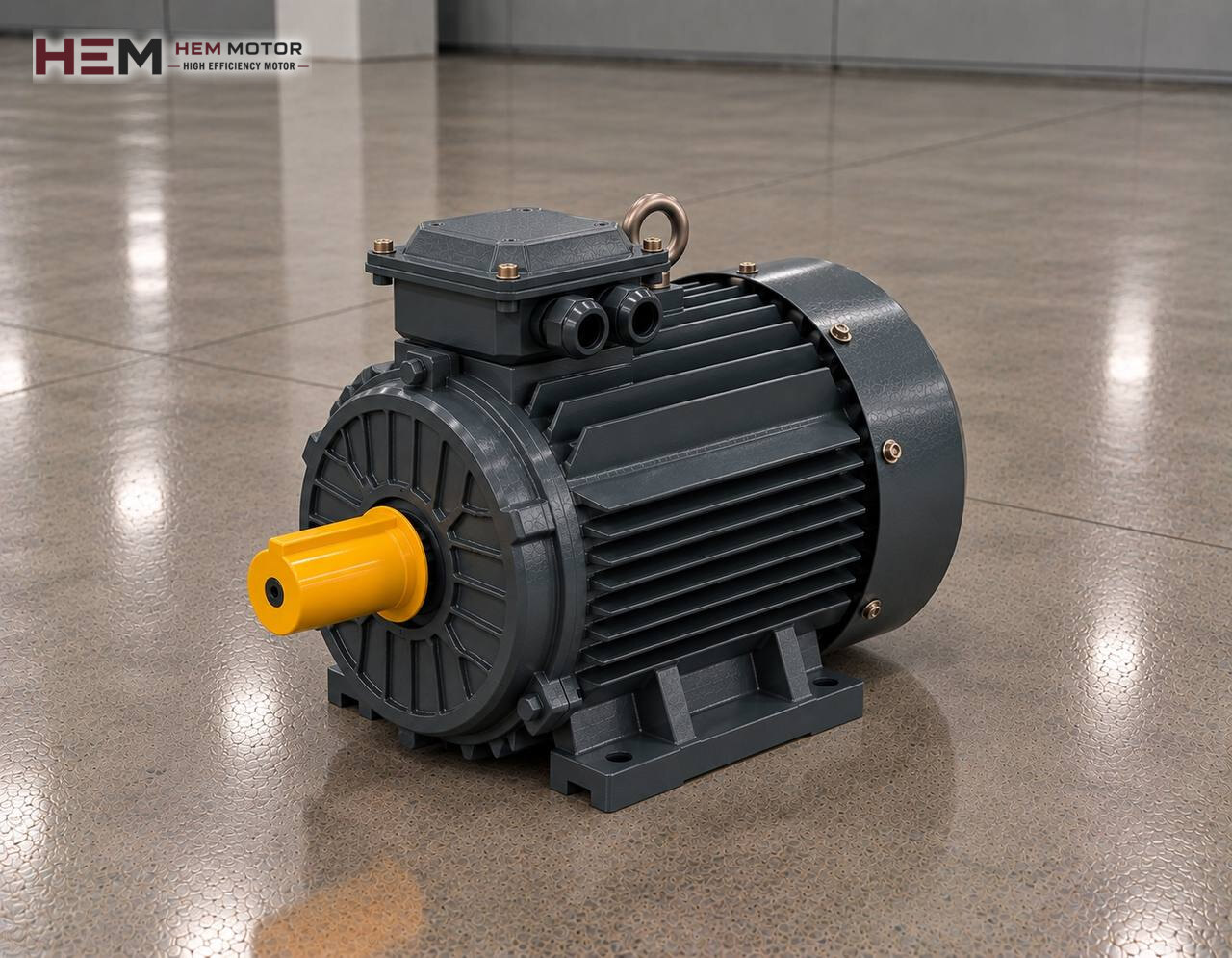
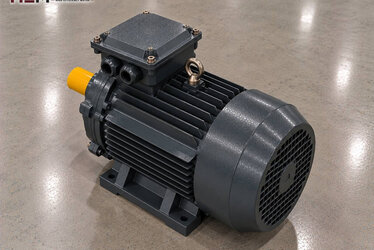
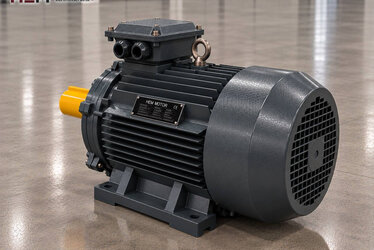
The connection is chosen by comparing the voltage line on the plate with the terminal links (representative image).
How is a wrong connection spotted on site?
The most frequent mistake is leaving a 400/690 V motor in star on the factory supply, and the first clue is speed dropping under load while current exceeds the plate value. A trial run without the coupling hides this fault.
Symptom
Likely connection state
First check
Normal at no load, speed drops under load, frame heats up
400/690 V motor in star on the factory supply
Direction of links, loaded speed with a tachometer
Loud hum at start, protection opens within seconds
230/400 V motor in delta on the factory supply
Voltage line on the plate
Hard current surge and jolt at star-to-delta changeover
Changeover time too long or wrong contactor sequence
One phase current clearly different from the others
Loose link nut or oxidised terminal
Nut tightness, terminal temperature with a thermal camera
Motor brakes briefly when changing to delta
Two of the six cables swapped
Matching of winding starts and ends
Measurement starts only after the supply is isolated and locked off. The links are removed and the resistance between the two ends of each winding is read with a precise ohmmeter; the three readings should not differ noticeably. Then the insulation tester is connected between each winding and the frame. The job is done when the links are refitted the right way and the nuts are tightened to the torque recommended by the terminal maker, since excessive force cracks the brass stud.
How is the plate data matched in a replacement order?
If the old motor runs in delta and the panel has a Y/Δ starting circuit, the new one must also be plated 400/690 V; matching power and speed is not enough while the voltage line does not match. Next the IEC frame number and mounting arrangement are compared, and the 2D technical drawings are used for shaft and flange dimensions.
Three models from the package data show where the voltage boundary changes:
100L2-4, cast iron, 3 kW, 1450 rpm, 230/400 V, 6.02 A at 400 V. Runs in star on the factory supply and is not suitable for Y/Δ starting.
112M-4, cast iron, 4 kW, 1450 rpm, 400/690 V, 7.95 A at 400 V. One step up at the same speed, the plate switches to 400/690 V.
160L-4, cast iron, 15 kW, 1465 rpm, 400/690 V, 27.3 A at 400 V. The figures in the current example come from this model.
All three are IP55 with class F insulation and carry CE marking; which of the IE3, IE4 and IE5 classes can be supplied is confirmed per model with the order. The power steps of the asynchronous family are on the asynchronous electric motors page, and the first start-up sequence is in the commissioning checklist.
If you are replacing a motor whose plate has worn off, open the terminal cover and photograph the position of the links and the number of cables coming from the panel. Six cables usually mean Y/Δ starting. Send these two pictures through the channels on the contact page and we will check the voltage match together; suitable powers and speeds are listed by frame in the sales list.
Frequently Asked Questions
Does an electric motor plated 400/690 V run on a 380 V supply?
380 V, the old name, is the same as today's 400 V supply; the motor runs connected in delta. If the voltage stays well below the plate value all the time, current rises, and this has to be measured on the site side.
Can a motor plated 230/400 V be converted to 400/690 V?
The winding decides this, not the plate; conversion is only possible by rewinding and the calculation is done by the rewind shop. In a replacement, choosing a correctly plated motor is usually the shorter route.
What does it mean if the plate only says 400 V Δ?
The motor is wound to run in delta on the factory supply. The star connection is only for the first seconds of starting; the missing 690 V line does not change this use.
Can the connection be changed if only three cables come out in the terminal box?
No, in such motors the star or delta point is made inside the winding and cannot be changed from outside. The motor is then run on the supply that matches the single voltage on the plate.
HEM Motor Models Related to This Article
The cards show example models related to the topic. A suitable motor is not chosen by power alone: compare speed, voltage, mounting, shaft and connection dimensions on the product page; if unsure, send a photo of the existing motor’s nameplate on WhatsApp.
In compact electric motor selection, power density shows how small a frame the same kilowatts are taken from; cooling area is the outer surface through which that frame can shed he... More Details
An aluminium frame is a sound choice for drives with low vibration, coupling alignment or moderate pulley load, no shocks and a flat base. Where small pulleys put a large radial lo... More Details
IEC and NEMA nameplates are not compared directly but field by field after translation: power from HP to kW, protection from enclosure type to IP code, while efficiency class and s... More Details
IP55 protection is enough in most cases for an electric motor working outdoors, provided the motor does not take rain directly, condensation water can drain from the frame, and the... More Details
Class F insulation means the winding materials are chosen to withstand up to 155 °C; Class B temperature rise means that at rated load the motor's winding rises no more than 80 K a... More Details
No, they are not the same thing. The insulation class defines the thermal ceiling of the insulating material around the winding; the permitted ambient temperature shows how warm th... More Details
We use necessary and optional cookies to improve your experience, enhance content and analyse traffic. Under the GDPR, optional (analytics/marketing) cookies are only used with your explicit consent. Please choose your preference below.
Cookie Policy
 English
 Français
 Türkçe
 Español
 Русский
 العربية
 Deutsch
 Italiano