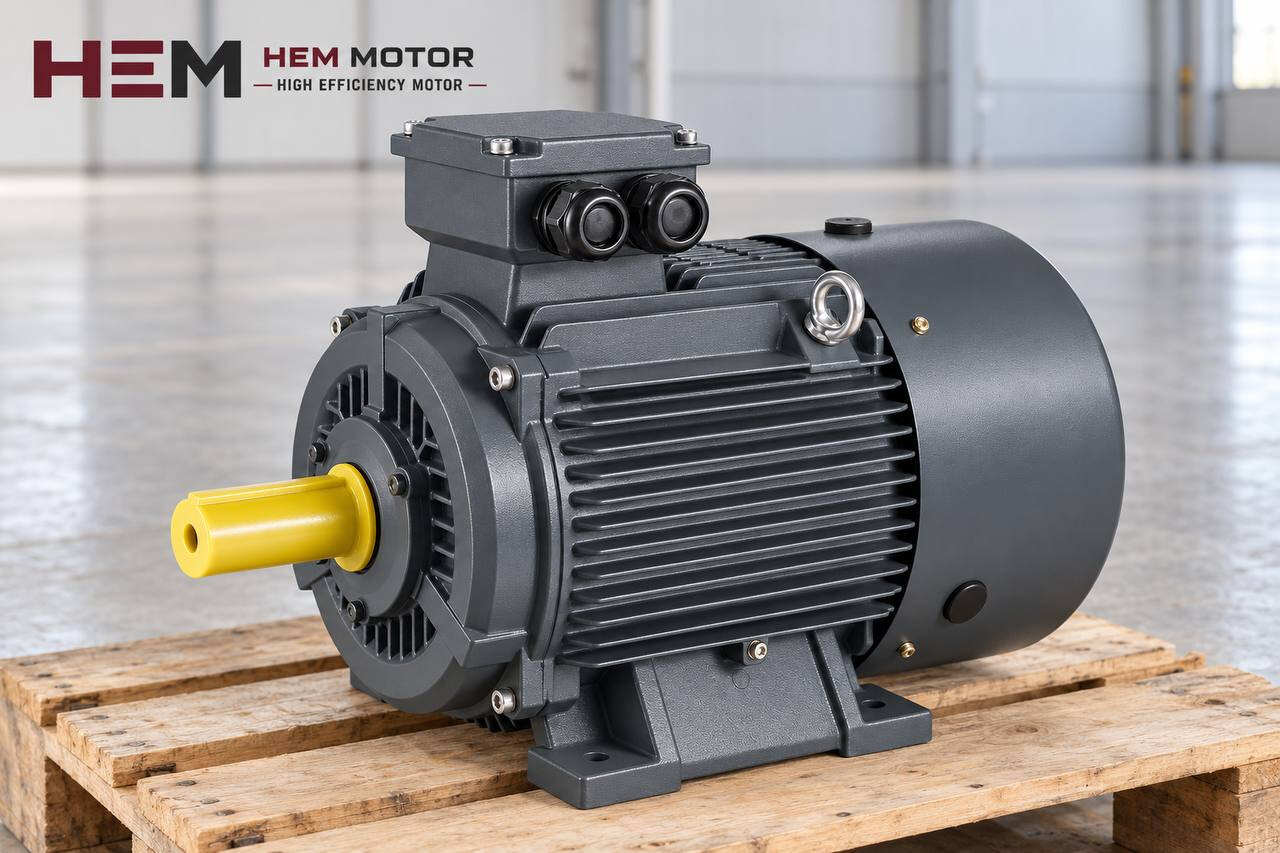
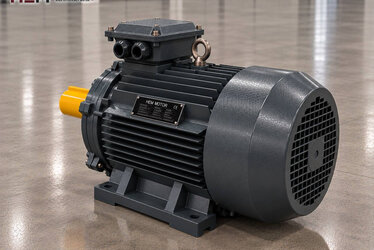
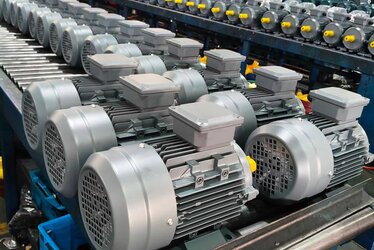
In compact electric motor selection, power density shows how small a frame the same kilowatts are taken from; cooling area is the outer surface through which that frame can shed heat. When power stays the same and the frame shrinks, the heat falling on each square centimetre of surface rises, so a compact motor is the right choice only if ambient temperature, airflow and duty type allow it.
What does power density mean on site?
In its simplest definition, it is the ratio of the motor's shaft power to the volume it occupies or to its IEC frame size. The same 11 kW may come from a 160 frame on one motor and a 132 frame on another; the second has the higher power density.
For a machine builder this difference is tangible. The space left above a hydraulic power unit tank, inside a packaging machine body or under a conveyor chassis is often only one frame number tight.
A small frame saves space. The price is heat.
The loss generated inside the motor, that is the sum of copper, iron, friction and fan losses, is related to the power delivered regardless of frame size. When the same loss has to be shed through a smaller outer surface, winding temperature rises; the designer tries to balance this with better lamination steel, fuller slots and a more efficient fan profile.
Why does cooling area shrink along with frame size?
Almost all three-phase asynchronous motors in factories are cooled by the impeller on their own shaft end. The impeller draws air through the fan cowl and blows it between the fins on the outside of the frame; heat passes from that fin surface to the surroundings.
When the frame number drops one step, both fin length and circumference shorten. Surface area falls roughly with the square of the frame's linear dimension (general information; the manufacturer's thermal data are the basis for exact values).
An aluminium frame helps here. Aluminium conducts heat better than cast iron and suits thin-fin casting; more fin surface can be obtained within the same outer dimensions.
Frame material and length also change the load on the chassis; these values are taken from the technical drawings and the 2026 catalogue before ordering.
What site conditions does one frame smaller at the same power require?
On the HEM Motor sales list some powers also appear one frame smaller than their standard counterpart. The table below puts this difference side by side with model data:
The electrical values are the same. The difference is that the same loss is shed from a smaller frame. The current list of both frames can be seen side by side in the HEM Motor store.
So four pieces of information come to the table in a compact selection: ambient temperature, breathing space in front of the impeller, whether the machine runs non-stop all day or in fits and starts, and how close the load is to plate power. For a motor that will run at full load all day, and sit in a hot, closed machine compartment as well, the standard frame leaves a more comfortable heat margin. The difference looks small. It shows in summer.
Which efficiency class, insulation class and temperature rise class the compact model comes with must be confirmed with the order. In the standard series protection is at IP55 level, winding insulation is class F and CE marking is present.
Prices and technical data are on the product pages; choose a model and order online.
How is airflow checked in a closed machine compartment?
The trap a compact motor falls into most often is being placed in an airless compartment. The impeller draws in the same hot air again and again and frame temperature climbs step by step.
The check sequence on site is short. First, look at whether there is enough space behind the fan cowl, between cowl and wall, for a hand to fit comfortably. Then, with the machine covers closed, leave a thermometer inside the compartment and read the internal temperature at the end of a shift.
In the third step the motor frame is scanned with a thermal camera. If dust, oil mist or fibre has built up between the fins, surface temperature looks patchy; this picture is common in textile and woodworking shops.
If internal temperature approaches the ambient limit on the motor plate, opening a ventilation grille in the compartment is often simpler than moving to a larger frame. Those who want to monitor the winding can request a PTC or PT100 temperature sensor embedded in the winding when ordering.
Whether the grille worked shows a week later in the same thermal camera image.
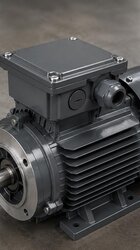
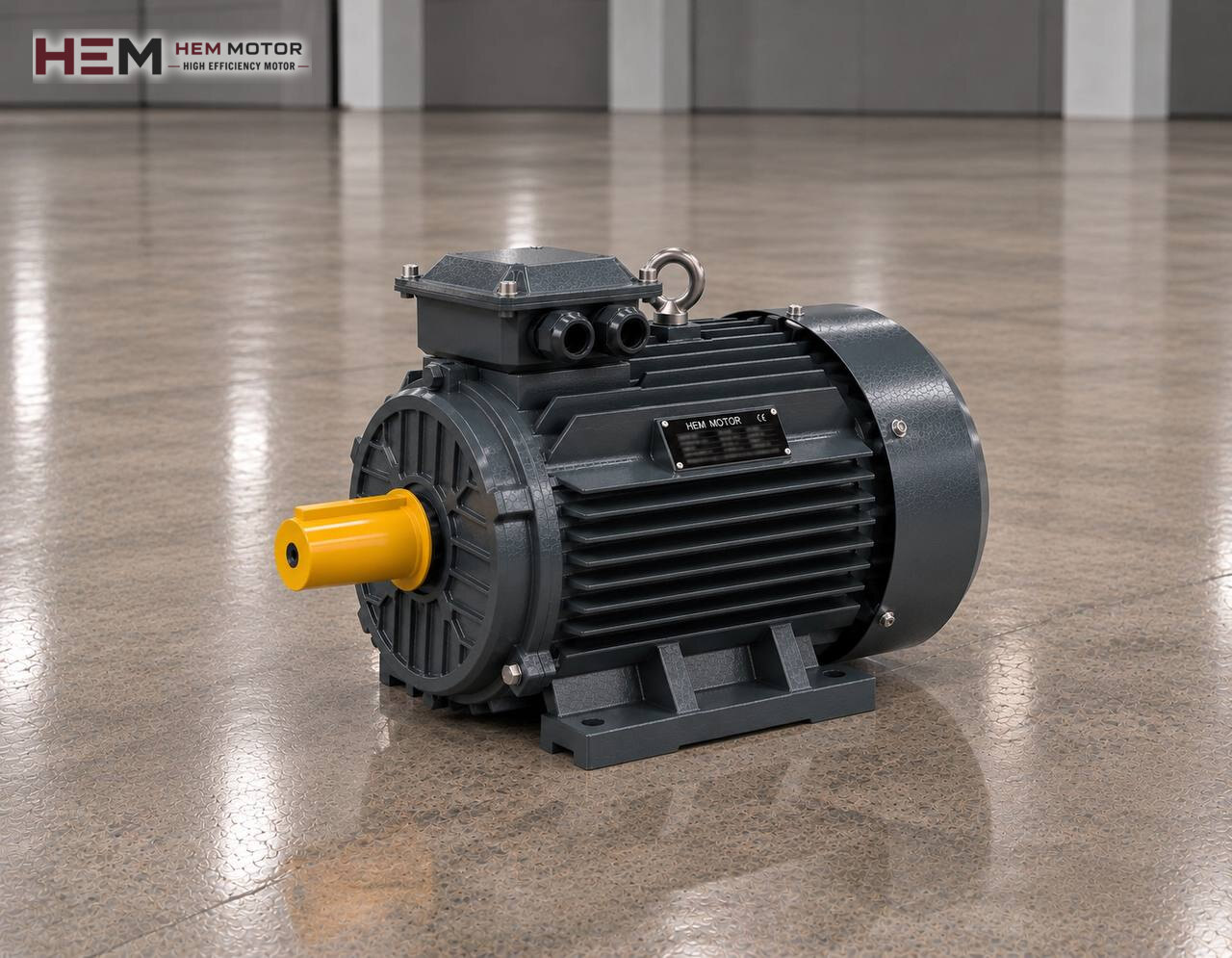
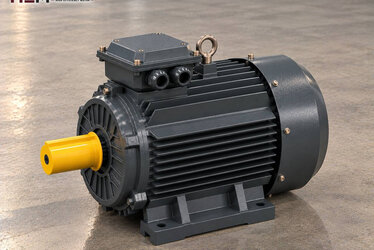
The thin fins of an aluminium frame provide more cooling surface within small outer dimensions (representative image).
How do duty type and drive affect a compact motor?
On machines that run briefly or intermittently a compact motor is at ease. Stop intervals give the frame time to cool; packaging machines and door and barrier drives fall into this group.
Frequent starting is another story.
At each start the current through the winding jumps to several times the plate value, and short but intense heat builds in rotor and winding. Since the small frame's thermal mass is small too, in an application that starts dozens of times an hour temperature can rise faster than in continuous running (general information; the hourly start limit should be assessed using machine and motor data together).
Running at low speed with a frequency converter also weakens cooling, because the impeller on the shaft end slows down. HEM Motor's three-phase series are suitable for speed control with a drive; if full torque is wanted at slow speed for hours, a separately powered fan is considered and this is written into the order.
Compact or standard frame: how is the decision made?
If space is genuinely tight and operating conditions are favourable, the compact model makes sense. If space is not an issue or conditions are borderline, the standard frame keeps the winding cooler and widens the margin for error.
The information to gather for the decision is short:
Internal temperature of the machine compartment, measured at the end of a shift.
The space behind the fan cowl and whether fresh air enters the compartment.
Ratio of load to plate power, measured with a clamp meter.
Number of starts per hour and whether it runs at low speed on a drive.
Foot, flange and vertical mounting arrangements are offered according to frame; the actual flange size is matched with the drawing at order stage. For general-purpose series see the general-purpose industrial motor family and the asynchronous electric motors pages; the values to watch at first start-up are explained in the commissioning guide.
Share the compartment temperature you measured, the load current and a photo of the space in the machine through the contact page; we will make the choice between compact and standard frame using these data and pick the model from the sales list.
Frequently Asked Questions
Does a compact motor run hotter than a standard motor?
Under the same load and ambient, the frame surface usually feels hotter, because the same loss is shed from a smaller surface. Whether winding temperature stays within limits is assessed together with the insulation class and real operating conditions.
Can a compact model replace the old motor one-for-one?
Because the frame number is different, foot holes, shaft and flange dimensions may change. Fit must be confirmed with the technical drawing and with photos of the old motor's plate and connections.
What is recommended for a motor running in a closed compartment?
First the compartment's internal temperature is measured and an air gap is left behind the fan cowl. If necessary a ventilation grille is opened or winding temperature is monitored with a PTC sensor.
HEM Motor Models Related to This Article
The cards show example models related to the topic. A suitable motor is not chosen by power alone: compare speed, voltage, mounting, shaft and connection dimensions on the product page; if unsure, send a photo of the existing motor’s nameplate on WhatsApp.
An aluminium frame is a sound choice for drives with low vibration, coupling alignment or moderate pulley load, no shocks and a flat base. Where small pulleys put a large radial lo... More Details
IEC and NEMA nameplates are not compared directly but field by field after translation: power from HP to kW, protection from enclosure type to IP code, while efficiency class and s... More Details
IP55 protection is enough in most cases for an electric motor working outdoors, provided the motor does not take rain directly, condensation water can drain from the frame, and the... More Details
Class F insulation means the winding materials are chosen to withstand up to 155 °C; Class B temperature rise means that at rated load the motor's winding rises no more than 80 K a... More Details
No, they are not the same thing. The insulation class defines the thermal ceiling of the insulating material around the winding; the permitted ambient temperature shows how warm th... More Details
The S3 percentage should be stated in the order because an electric motor that delivers the same shaft power in intervals heats up differently from one that runs continuously, and ... More Details
We use necessary and optional cookies to improve your experience, enhance content and analyse traffic. Under the GDPR, optional (analytics/marketing) cookies are only used with your explicit consent. Please choose your preference below.
Cookie Policy
 English
 Français
 Türkçe
 Español
 Русский
 العربية
 Deutsch
 Italiano