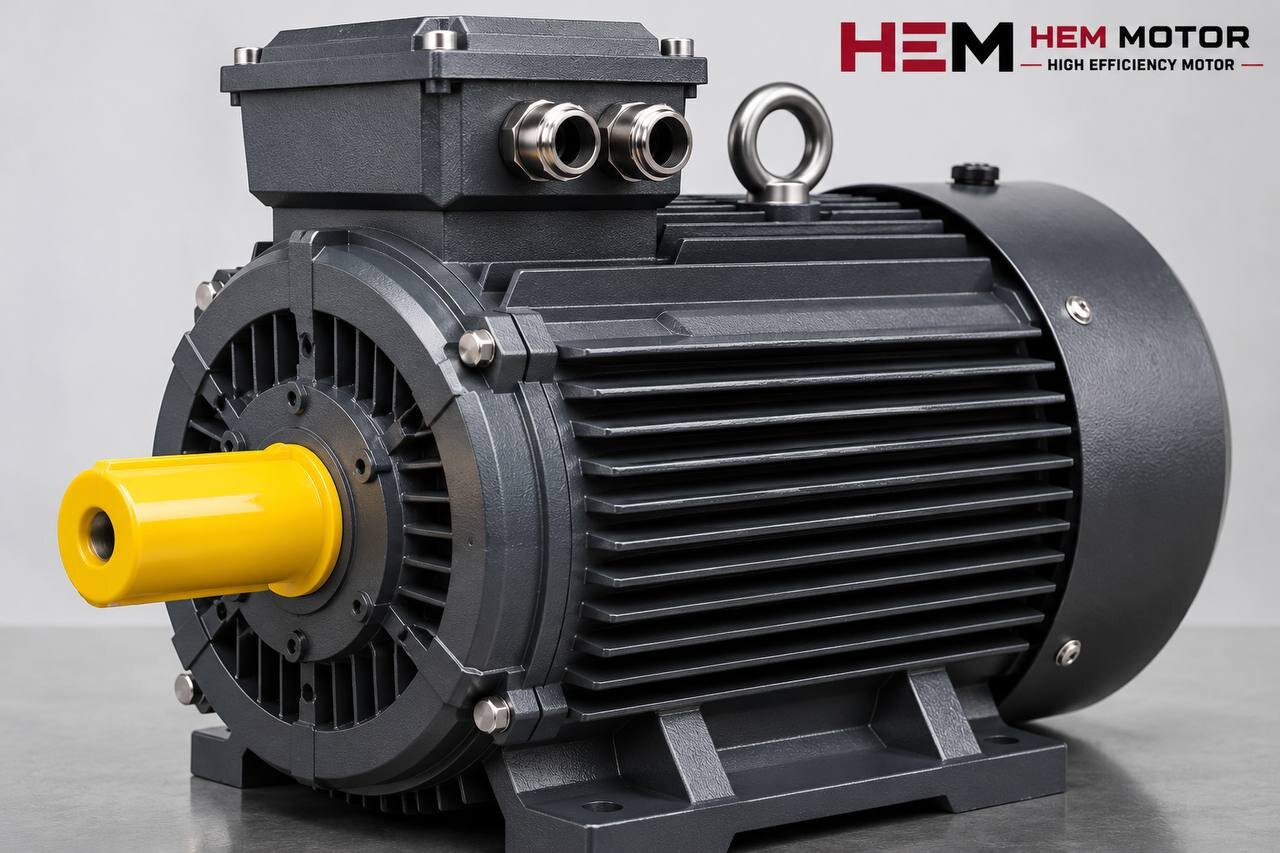
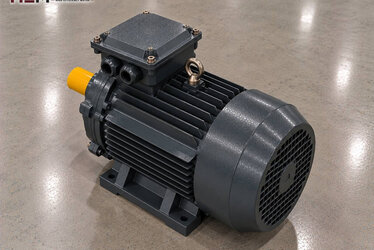
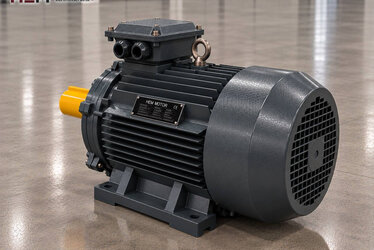
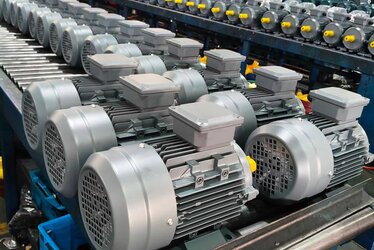
In practice, yes: the three-phase supply that people in Turkey still call "380 V" is defined today as 230/400 V, and an electric motor with 400 V on its nameplate is designed for exactly that network. What really matters is not the number but the connection made in the terminal box (Y or Δ) and the actual voltage measured at the panel.
Why do people on site still say "380 V"?
The nominal value of the network was moved from 220/380 V to 230/400 V years ago, but everyday language never caught up. Old catalogue tables, machine manuals and stickers on panel doors kept saying "380".
The change comes from IEC 60038 adopting 230/400 V as the common nominal voltage. Networks in Europe that had been running at 220/380 V and 240/415 V met at a single value, and the output of distribution transformers in Turkey was gradually set to match. A technician reading line-to-line voltage in a factory today usually sees a figure close to 400 V. On the night shift the value climbs by a few volts. During busy daytime hours and on lines far from the transformer it drops (general information; confirm with data from the network operator).
Writing "380 V motor" on a purchase request is rarely a mistake.
What the person preparing the quotation has to do is read the voltage pair on the nameplate and confirm which connection the motor will use on a 400 V network.
How far outside the supply voltage can an electric motor run?
IEC 60034-1 expects a motor to deliver rated output continuously within ±5% of rated voltage and ±2% of rated frequency (zone A). In the wider zone B outside this band the motor still runs, but temperature rise increases and long-term operation is not recommended (general information; confirm with the machine manufacturer).
The arithmetic is simple. 380 V is exactly 5% below 400 V, so a motor rated 400 V sits at the lower edge of zone A on a line that measures 380 V. The reverse case looks similar: an old motor rated "380 V" sees roughly 5.3% above its rated voltage on a 400 V network and slightly exceeds the zone A limit. Neither case burns the motor. Its behaviour does change.
At low voltage, torque falls with the square of voltage: 0.95² ≈ 0.90, so starting and breakdown torque drop by roughly a tenth. The shaft still has to carry the same load, so current rises. At high voltage the opposite happens: the current drawn to magnetise the lamination stack grows, more energy turns into heat in the iron, and the power factor at light load gets noticeably worse.
Hypothetical calculation: how much does current change?
Picture a 4 kW motor with a nameplate current of 7.95 A at 400 V; the shaft is at rated load and the panel reads 380 V. If shaft power is taken as constant, current rises roughly in proportion to the voltage ratio: 7.95 × 400 / 380 ≈ 8.4 A. This is a rough estimate. Small changes in efficiency and power factor were ignored. The thermal relay is set to nameplate current; rather than raising the relay to 8.4 A, the right move is to find the cause of the voltage drop.
What does the 230/400 V or 400/690 V pair on the nameplate mean?
The voltage pair gives the rated voltage of the same winding in its two connections: the lower figure is for Δ, the higher one for Y. On a 400 V network, then, a motor rated 230/400 V is connected in Y and a motor rated 400/690 V in Δ.
Nameplate voltage
Connection on a 400 V network
Y/Δ starting
Note
220/380 V (old nameplate)
Y
Not suitable
The winding sees about 5% overvoltage; record the no-load current
230/400 V
Y
Not suitable
Direct-on-line start or soft starter
380/660 V (old nameplate)
Δ
Suitable
If the load is close to the limit, watch frame temperature
400/690 V
Δ
Suitable
With Y/Δ starting, current and torque fall to about 1/3
The trap maintenance crews fall into most often is fitting Δ links in the terminal box of a 230/400 V motor and connecting it to 400 V. The winding receives about 1.7 times its design voltage. The motor hums heavily in the first seconds, the clamp meter shows several times the nameplate figure, and unless the overload trips the winding is damaged within a short time. Comparing the link positions with the diagram inside the cover is the final check before switching on. You can see different power ratings and voltage pairs model by model in the electric motor shop.
Prices and technical data are on the product pages; choose a model and order online.
Voltage should be measured separately with the motor stopped and running under load, both at the panel and at the motor terminals. One reading is not enough.
Read L1-L2, L2-L3 and L3-L1 at the panel with a True-RMS multimeter whose measurement category suits the panel.
Repeat the same three readings at the terminal box with the motor at full load; the difference between the two sets gives the cable and connection drop.
Find the arithmetic mean of the three readings. Take the volt difference between the mean and the reading furthest from it, divide by the mean and convert to a percentage.
Take one reading each on the morning, afternoon and night shifts, or if possible log for 24 hours with a power analyser.
Sample readings: 398 V, 402 V and 389 V. The mean is about 396 V and the largest deviation 7 V; unbalance is around 1.8%. This result matters more than the mean voltage itself, because once phase unbalance reaches a few percent, winding heating rises much faster than it does from a small difference in voltage level. For the other steps on the first energising day, our first start-up guide shows where this measurement goes on the form.
Voltage is measured separately at the panel and at the terminal box (representative image).
Does an old "380 V" motor overheat on a 400 V network?
Usually not. A motor with a sound winding and a load below its nameplate power generally does not heat up noticeably. Things change if the load is close to the limit and the line rises above 410 V at night.
The practical way to find out is to measure the no-load current with the coupling removed. As voltage rises, no-load current grows disproportionately; a clear increase over the earlier record shows that the lamination stack is approaching saturation. Weekly readings with an infrared thermometer from the same spot on the frame, for example under the terminal box, also help. If the readings climb, moving the transformer tap one step down is the first thing to try before replacing the motor; evaluate this setting together with the plant's electrical engineer and the distribution company.
Rewound old motors carry one more detail: the rewinder may have changed the winding data for 400 V while the nameplate stayed the same. If the repair record does not say so, comparing no-load current is the only reliable clue.
Example models for a 400 V network and the connection check
In the models listed in our package, ratings up to 3 kW are marked 230/400 V and 4 kW and above 400/690 V. The link layout in the terminal box and the starting method change with this split:
100L1-4: aluminium frame, 2.2 kW, 1450 rpm, 230/400 V; connected in Y on a 400 V network, 4.52 A at 400 V.
112M-4: aluminium frame, 4 kW, 1450 rpm, 400/690 V; runs in Δ at 400 V, 7.95 A, suitable for Y/Δ starting.
160M-4: cast iron, 11 kW, 1465 rpm, 400/690 V; 20.4 A at 400 V, the frame preferred in harsh environments.
All three models are IP55 protected, insulation class F and CE marked. The series is offered in IE3, IE4 and IE5 efficiency classes; which class a given model is supplied in is confirmed with the order. Power and speed tables for the same family are available in the asynchronous electric motors section.
If the nameplate of your motor says 220/380 V or 380/660 V and you are looking for a replacement suited to a 400 V network, send the nameplate photo together with a shot showing the links in the terminal box through the equivalent-from-nameplate page; we will match the voltage pair and the connection together. The full list of power steps is grouped by frame type on the HEM Motor sales page.
Frequently Asked Questions
Does running a 400 V motor on a line that measures 380 V damage it?
No, 380 V is 5% below rated voltage, at the edge of zone A. At full load current rises slightly and torque drops; on machines with heavy starting, the cause of the voltage drop should be investigated.
Should I write 380 V or 400 V when asking for a quotation?
Writing 400 V describes the network more accurately. What really matters is stating which connection (Y or Δ) and which starting method the motor will use.
Can a 230/400 V motor be used with a Y/Δ starter?
Not on a 400 V network, because in normal operation the motor is already connected in Y. Y/Δ starting needs a motor that runs in Δ at 400 V, in other words a 400/690 V motor.
If line-to-line voltages differ, is the problem in the motor?
Usually it is in the network or in the plant's internal distribution; single-phase loads spread unevenly across the phases are a common cause. Work out the unbalance and share it with the plant's electrical engineer.
HEM Motor Models Related to This Article
The cards show example models related to the topic. A suitable motor is not chosen by power alone: compare speed, voltage, mounting, shaft and connection dimensions on the product page; if unsure, send a photo of the existing motor’s nameplate on WhatsApp.
In compact electric motor selection, power density shows how small a frame the same kilowatts are taken from; cooling area is the outer surface through which that frame can shed he... More Details
An aluminium frame is a sound choice for drives with low vibration, coupling alignment or moderate pulley load, no shocks and a flat base. Where small pulleys put a large radial lo... More Details
IEC and NEMA nameplates are not compared directly but field by field after translation: power from HP to kW, protection from enclosure type to IP code, while efficiency class and s... More Details
IP55 protection is enough in most cases for an electric motor working outdoors, provided the motor does not take rain directly, condensation water can drain from the frame, and the... More Details
Class F insulation means the winding materials are chosen to withstand up to 155 °C; Class B temperature rise means that at rated load the motor's winding rises no more than 80 K a... More Details
No, they are not the same thing. The insulation class defines the thermal ceiling of the insulating material around the winding; the permitted ambient temperature shows how warm th... More Details
We use necessary and optional cookies to improve your experience, enhance content and analyse traffic. Under the GDPR, optional (analytics/marketing) cookies are only used with your explicit consent. Please choose your preference below.
Cookie Policy
 English
 Français
 Türkçe
 Español
 Русский
 العربية
 Deutsch
 Italiano