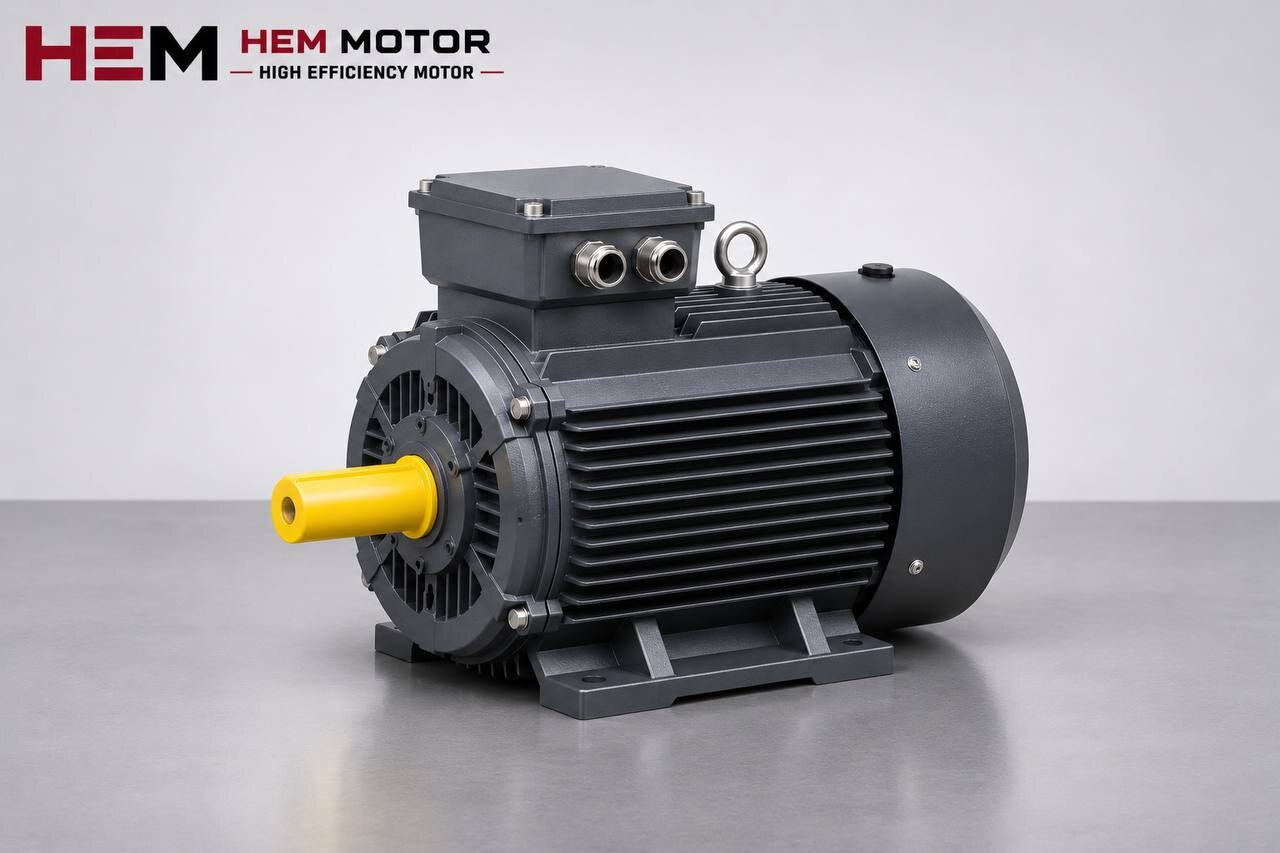
A three-phase electric motor whose nameplate reads 230/400 V is connected in star (Y) to the 400 V industrial supply used in Turkey. Delta (Δ) linking only makes sense on a three-phase source that measures 230 V between lines; on site today that source is usually the output of a frequency converter with a single-phase input.
What does 230/400 V tell you about the winding?
It tells you that each phase winding is wound for 230 V. On the nameplate the value left of the slash belongs to the delta connection, the value right of the slash to the star connection.
In star, each winding carries the line voltage divided by 1.73. At 400 V that gives 400 / 1.73 ≈ 230 V, so the winding sees exactly its design voltage. In delta the winding sits directly between two lines; on a source with 230 V between lines it again carries 230 V. Shaft power and torque stay the same with either link arrangement. The only thing that changes is line current: in delta the current drawn from the supply is about 1.73 times the star value, and the nameplate usually lists both currents side by side.
The rule to remember is short. If the line voltage you measure in the panel matches the smaller number on the plate, use delta; if it matches the larger one, use star.
How is this motor connected on a 400 V factory supply?
It is linked in star. On one row of the terminal board, the W2, U2 and V2 terminals are joined with two horizontal links; the three cores of the supply cable go to the U1, V1 and W1 screws on the opposite row.
Measuring the panel voltage before opening the cover should be a habit. Set the multimeter to AC volts and read L1-L2, L2-L3 and L1-L3 in turn; if all three sit between 380 and 410 V and close to each other, the supply is normal. Then measure each phase to neutral: you should see about 230 V. This second reading confirms on site, with your own eyes, why the links must be in star.
A common mistake when fitting the links is to tighten the terminal nuts by feel instead of with a torque wrench. A link left loose heats up after a few weeks, the plastic terminal board darkens and one phase opens.
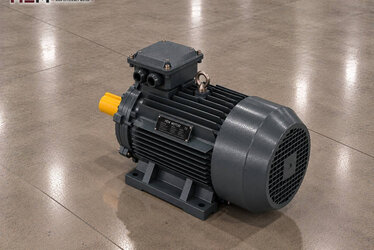
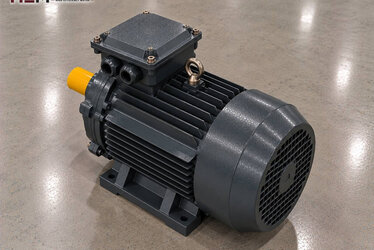
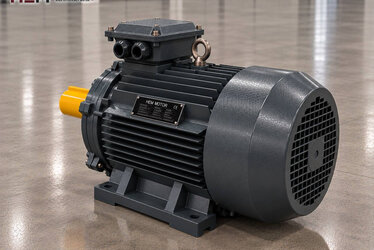
The connection type is set by how the links are arranged in the terminal box (representative image).
On which supply is the delta connection correct?
It is correct on a three-phase source giving 230 V between lines. That level does not exist in the Turkish distribution network, so places where delta linking is met are few.
The case seen most often on site is a small frequency converter fed from a 220 V single-phase socket. The output of these drives is three-phase 230 V. If a 0.75 or 1.5 kW conveyor or mixer motor is to be connected to such a drive, the links are turned to the vertical position and each one pairs an upper terminal with the lower terminal diagonal to it. Some imported machines also arrive with a panel prepared for a local three-phase 230 V supply; trusting the nameplate without measuring the panel leads to a wrong connection on these machines.
Our three-phase series are suitable for speed control with a frequency converter; long running at low speed with full torque may need a separate fan; with a long drive–motor cable a dv/dt or sine filter is considered; these conditions are stated with the order.
Prices and technical data are on the product pages; choose a model and order online.
The symptoms are completely different depending on which way the connection is wrong. The table below puts the two mistakes and the correct cases side by side.
Supply (line to line)
Connection
Voltage across the winding
What you see on site
400 V
Star
≈ 230 V
Correct connection; current close to the nameplate 400 V value
400 V
Delta
400 V
Current very high even at no load, humming rises, the overload trips at once; if it does not, the winding burns quickly
230 V
Delta
230 V
Correct connection; line current about 1.73 times the star value
230 V
Star
≈ 133 V
Running at no load looks normal, speed drops once load comes on; torque falls to about one third, the frame heats up
The second row is the most dangerous. If the clamp meter shows no-load current above the nameplate current, stop the motor at once and check the links.
The fourth row is more deceptive, because at first glance the motor seems to work. The conveyor runs with an empty belt, slows down when material is loaded and after a while the overload trips. In such a fault the technician often suspects the bearings or the gearbox, whereas the first job is to open the terminal box.
Does this motor run directly on a 220 V single-phase line?
Not directly. A three-phase winding needs three separate phases to create a rotating field; the phase and neutral of a socket cannot provide that.
A small three-phase motor can be made to turn on a single-phase line by shifting phase with a capacitor (the Steinmetz connection), but the power available at the shaft in this arrangement cannot approach the plate value, and the machine struggles at start (general information; confirm with the machine manufacturer). The lasting solution is one of two routes. Either a frequency converter with single-phase input is used and the motor is connected in delta, or a single-phase (220 V) electric motor is chosen directly; HEM Motor's single-phase models range from 0.18 to 5.5 kW.
How does it differ from a motor rated 400/690 V?
In a motor plated 400/690 V each winding is wound to carry 400 V, so its running position on the 400 V factory line is delta. Whether a Y/Δ starting arrangement can be built depends on this winding design too.
In Y/Δ starting the motor accelerates in star at reduced voltage for the first seconds, then contactors switch it to delta. A 230/400 V motor already runs in star on a 400 V line and has no second position to move to; if it is switched to delta, the second row of the table happens. For such a motor a soft starter or a drive is considered to lower starting current.
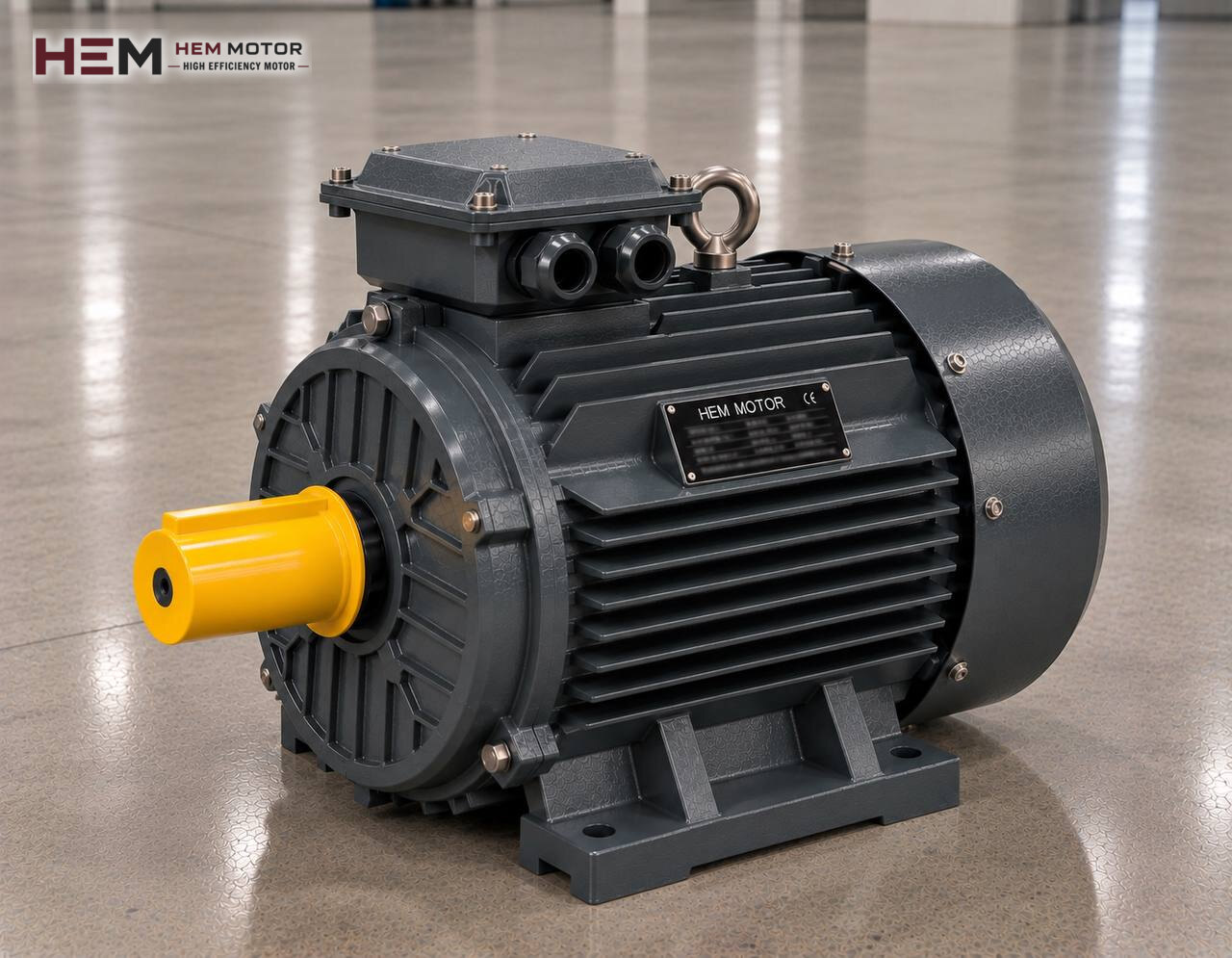
In HEM Motor's sales list, three-phase models up to 3 kW are given as 230/400 V and those of 4 kW and above as 400/690 V; when ordering, always compare the voltage statement on the nameplate. Examples that fit this split:
90L-4: aluminium frame, 1.5 kW, 1445 rpm, 3.30 A at 400 V, 230/400 V. A typical rating that can be connected in delta to a small drive with single-phase input.
100L2-4: cast iron, 3 kW, 1450 rpm, 6.02 A at 400 V, 230/400 V. Connected in star on a 400 V supply.
112M-4: aluminium frame, 4 kW, 1450 rpm, 7.95 A at 400 V, 400/690 V. Runs in delta on the same supply and suits star-delta starting.
All three models have IP55 frame protection and class F winding insulation; the family features are gathered on the asynchronous electric motors page. For the order of checks before first energising, see the commissioning guide.
If the nameplate of your motor and the line voltage you read in the panel do not agree, send a photo of both through our contact page; we will settle the connection type together and, if needed, the voltage option for a replacement. Models sorted by power and speed are listed with their voltage in the HEM Motor shop.
Frequently Asked Questions
If the nameplate only says 400 V Δ, can the motor be connected in star?
In that case the winding is designed for 400 V per phase and runs in delta on a 400 V supply. Star is used only in the first moment of star-delta starting; in continuous running the motor cannot deliver its torque.
Is a 230/400 V motor affected if the supply rises to 420 V at night?
The voltage across the winding rises in the same proportion, and no-load current and iron losses increase. If night logs show this pattern all the time, the transformer tap setting should be reviewed with the plant's electrical supervisor.
Does changing the position of the links affect the direction of rotation?
Changing from star to delta does not change the direction of rotation. To reverse the shaft, two of the supply cores swap places on the terminal board.
If the nameplate is worn off, how can you tell whether the winding is 230/400 V or 400/690 V?
For certain information, check the manufacturer's catalogue using the motor code and IEC frame number. If nothing can be found, have a rewind shop check the winding data; connecting in delta on a guess puts the winding at risk.
HEM Motor Models Related to This Article
The cards show example models related to the topic. A suitable motor is not chosen by power alone: compare speed, voltage, mounting, shaft and connection dimensions on the product page; if unsure, send a photo of the existing motor’s nameplate on WhatsApp.
In compact electric motor selection, power density shows how small a frame the same kilowatts are taken from; cooling area is the outer surface through which that frame can shed he... More Details
An aluminium frame is a sound choice for drives with low vibration, coupling alignment or moderate pulley load, no shocks and a flat base. Where small pulleys put a large radial lo... More Details
IEC and NEMA nameplates are not compared directly but field by field after translation: power from HP to kW, protection from enclosure type to IP code, while efficiency class and s... More Details
IP55 protection is enough in most cases for an electric motor working outdoors, provided the motor does not take rain directly, condensation water can drain from the frame, and the... More Details
Class F insulation means the winding materials are chosen to withstand up to 155 °C; Class B temperature rise means that at rated load the motor's winding rises no more than 80 K a... More Details
No, they are not the same thing. The insulation class defines the thermal ceiling of the insulating material around the winding; the permitted ambient temperature shows how warm th... More Details
We use necessary and optional cookies to improve your experience, enhance content and analyse traffic. Under the GDPR, optional (analytics/marketing) cookies are only used with your explicit consent. Please choose your preference below.
Cookie Policy
 English
 Français
 Türkçe
 Español
 Русский
 العربية
 Deutsch
 Italiano