The five operating mistakes that age an asynchronous electric motor early are: forcing a motor chosen for continuous duty into frequent starts, running it on unbalanced or low voltage, cutting off its cooling air, greasing the bearing wrongly or loading it mechanically, and energising it after a long standstill without measuring insulation. The common result of all five is a winding or bearing that runs hotter than it was designed for.
How much does temperature affect winding life?
Winding insulation ages quickly as it heats up; by the rough rule used in the field, if the winding runs continuously 10 °C hotter, the expected insulation life is roughly cut in half. Heat quietly consumes insulation. Most of the mistakes below do not burn the motor outright, but by running it a little hotter every day they bring the failure forward by years.
The rule is written with this simple relation:
L ≈ L0 × 2(T0 − T) / 10
Here L0 is the life at reference temperature T0, and L is the life at temperature T. Hypothetical example: if the winding runs 20 °C above the reference, life falls to roughly a quarter. This is an estimating method, not an exact life calculation (general information; confirm with the machine manufacturer). Class F insulation leaves a certain temperature margin, but it does not cancel thermal stress repeated every day.
Mistake 1: Why do frequent stops and starts wear the motor out?
At starting, the motor draws a current that reaches several times the nameplate current for a few seconds; the rotor bars and stator winding gather intense heat in that short time. Heat builds within seconds. If the time between starts is not enough to cool the motor, temperature climbs a little higher with each cycle.
Typical field examples: a drainage pump with a narrowly set level switch, a conveyor the operator starts and stops again and again to adjust the load, or a screw conveyor restarted repeatedly when it blocks. In these cases, even if the motor appears to run at nameplate current, its average heating is higher than that of a motor in continuous duty.
Get the number of starts per hour from panel counter records or the PLC.
Time the start with a stopwatch; a long start is a sign of heavy inertia or low voltage.
Reduce unnecessary starts by widening the hysteresis of the level or pressure switch.
If the start frequency comes from the process, look at a soft starter or a speed drive and state the number of starts per hour with the order.
Mistake 2: How does voltage unbalance heat the motor?
A difference of a few volts between phases on the supply grows many times over in the currents the motor draws and creates a magnetic field in the rotor that tries to turn the opposite way. This reverse field does no work; it only produces extra heat.
To calculate unbalance, the three line-to-line voltages are measured and the largest deviation is divided by the average:
Unbalance (%) = (largest deviation from average / average voltage) × 100
Hypothetical example: suppose 404, 398 and 392 V are read. The average is 398 V and the largest deviation 6 V; unbalance is about 1.5%. Current unbalance can be several times this, so currents must be recorded at the same time as voltage. For the acceptable limit, refer to the standard and the motor manufacturer's assessment; we do not give a numerical limit here.
Common sources of unbalance are single-phase loads piled onto one phase in the same panel, loose terminals and oxidised contactor contacts. Setting the thermal relay above the nameplate rated current hides the problem; it does not protect the motor.
Mistake 3: In which situations is cooling air cut off?
These motors are cooled by their own fan at the rear end; if the holes of the fan guard or the cooling fins on the frame are blocked, or the motor is placed in a closed cabinet where hot air recirculates, heat cannot be removed. Heat stays trapped in the frame. Even if the outside of the frame looks clean, a layer of flour, sawdust or fibre trapped between the fins acts like an insulating blanket.
Space must be left between the fan cover and the wall for air intake, and the fins should be cleaned regularly with compressed air or a brush. On a motor held below half speed by a speed drive, the fan slows down in proportion and the air it blows drops. If such operation is planned, long periods of low speed with full torque should be written in the order and, if needed, a separately powered cooling fan discussed.
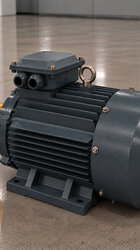
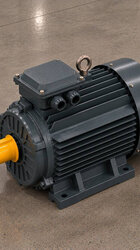
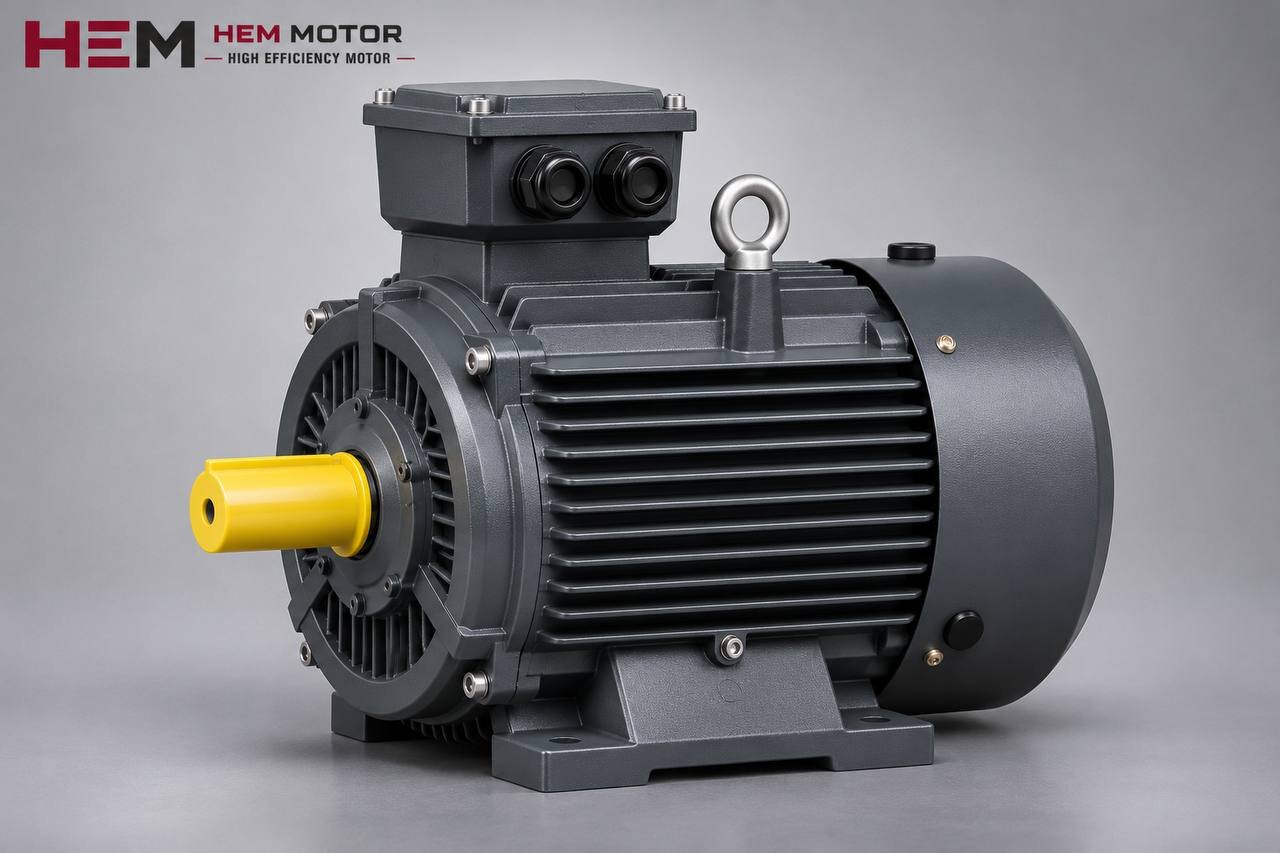
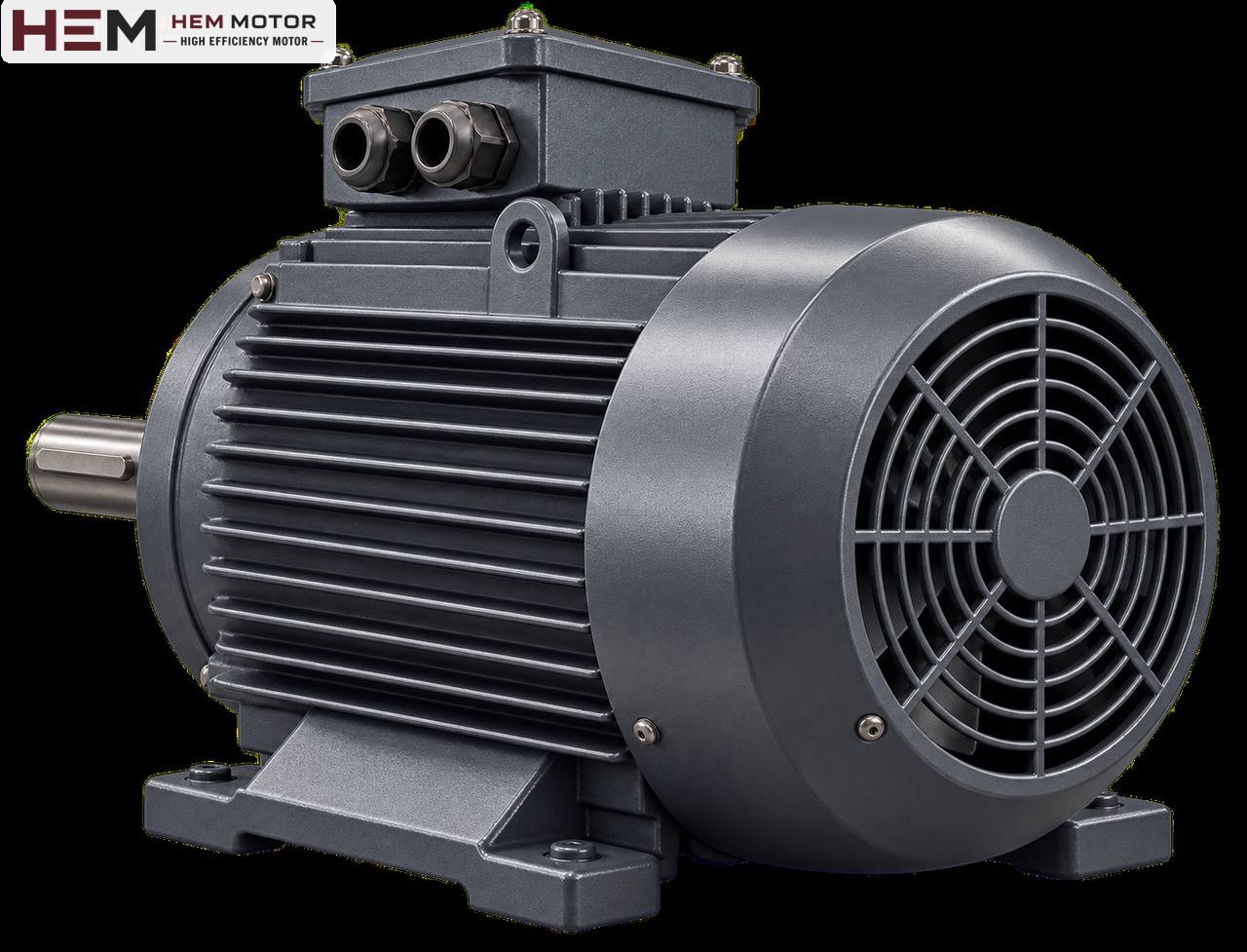
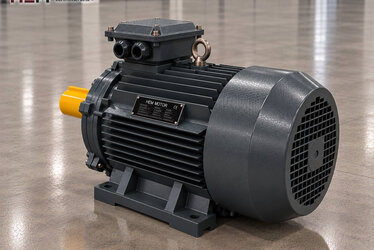
The fan guard and cooling fins must stay open; blocked holes heat the winding more than intended (representative image).
Prices and technical data are on the product pages; choose a model and order online.
Mistake 4: Where do bearing greasing and mechanical loading go wrong?
In bearing damage seen in the field, the culprit is usually not the brand of grease but the amount pumped in and the external load on the bearing. Too much grease also does harm. Filling the bearing housing completely with a grease gun churns the grease inside the bearing and raises its temperature; not greasing at all starts metal contact.
On motors with regreasable bearings, the grease type and quantity are given on the motor label or in its catalogue; do not mix different types of grease. Sealed (greased-for-life) bearings are not greased from outside. On the mechanical side two habits stand out: tightening the belt too much "so it won't slip" and aligning the coupling by eye with a straight edge.
An over-tensioned belt puts a constant radial load on the bearing at the shaft end. A misaligned coupling tries to bend the bearing and shaft on every revolution; vibration rises and the bearing heats up. Alignment should be done with a dial indicator or a laser alignment kit, and belt tension measured using the method recommended by the belt manufacturer.
Mistake 5: Why is it risky to energise a motor that has stood for weeks without a megger test?
Inside a motor that has stood for weeks, condensation forms with the day-night temperature swing and the winding insulation absorbs moisture. This moisture is invisible from outside. Energising a damp winding directly can cause a flashover between turns or between winding and frame.
Seasonal irrigation pumps, plants idle all winter and spare motors kept in storage for a long time are typical examples of this risk. Before the first energising, winding-to-frame insulation resistance should be measured with a megger and the value interpreted as recommended by the instrument and motor manufacturers. If it is low, the motor is dried in a controlled way and the measurement repeated.
For damp sites with long standstills, an anti-condensation heater and a PTC or PT100 temperature sensor placed in the winding are options that can be added when ordering. The other checks during commissioning are explained step by step in the electric motor commissioning guide.
How are the symptoms of the five mistakes told apart in the field?
The same symptom (a hot frame) can come from different mistakes; telling them apart means knowing what each measurement shows. The table below is a rough mapping prepared to set the order of checks.
Mistake
Field symptom
Confirming measurement
Frequent stop-start
Current normal, frame still hot; the thermal relay trips now and then
Starts per hour and starting time
Voltage unbalance
Current of one phase clearly higher, motor humming
Simultaneous recording of line-to-line voltages and phase currents
Cooling cut off
No large temperature difference between fan end and shaft end, whole frame hot
Check of fins and guard, ambient temperature
Bearing and alignment
Shaft-end bearing housing hotter than the other end, high vibration
Residual current device trips at first start, or winding-to-frame short
Insulation resistance with a megger
Which electric motors stand out in this kind of operation?
On dusty, damp sites with frequent stops, the durability of the frame material and cooling fins is decisive; that is why cast iron frames are often preferred in such plants. The models below are examples for different duties and are listed with their nameplate data in the electric motor shop:
160M1-2: cast iron, 11 kW, 2945 rpm, 19.6 A at 400 V. In pump applications run by a level switch, it is assessed with the number of starts stated in the order.
180M-4: cast iron, 18.5 kW, 1470 rpm, 33.5 A at 400 V. For belt-driven fans and crusher feeders, it is chosen taking the shaft-end load into account.
200L-4: cast iron, 30 kW, 1475 rpm, 53.8 A at 400 V. For plants that stand idle for long periods and run seasonally, it can be discussed together with the anti-condensation heater option.
The series has IP55 frame protection and class F winding insulation as standard; protection and insulation options for harsher environments are confirmed with the order. The series is offered in IE3, IE4 and IE5 efficiency classes, and the class for each model is confirmed with the order. For dusty and damp sites, the general introduction of the family is under general-purpose industrial electric motors, and power and speed tables under 3-phase asynchronous electric motors.
If you have a motor that fails often, send its failure records, running hours and a photo of the motor label through our contact page; we will assess together which of the five mistakes stands out and choose the replacement motor accordingly. Options at other powers and speeds are sorted by frame in the HEM Motor model list.
Frequently Asked Questions
Does setting the thermal relay slightly above rated current protect the motor?
No; this setting hides problems such as overload and unbalance and lets the winding run hot. The thermal relay should be set to the rated current on the nameplate.
How often should the fan cover be cleaned?
It depends on the environment rather than a fixed interval; in plants with flour, sawdust or fibre, a weekly visual check is suitable. If a layer is seen between the fins, the cleaning interval is shortened.
Can a spare motor that has been in storage for a long time be fitted straight away?
First turn the shaft by hand and check that the bearing turns freely, then measure insulation resistance. If the value is acceptable the motor is commissioned; if it is low, it is dried.
How is a motor chosen for an application with many starts?
The number of starts per hour, the load inertia and the starting method are stated with the order. Based on this information, solutions such as the next power step or a soft starter are assessed.
HEM Motor Models Related to This Article
The cards show example models related to the topic. A suitable motor is not chosen by power alone: compare speed, voltage, mounting, shaft and connection dimensions on the product page; if unsure, send a photo of the existing motor’s nameplate on WhatsApp.
In an asynchronous electric motor, slip grows roughly in proportion to load across the normal operating range: the rotor, which turns just below synchronous speed at no load, falls... More Details
An asynchronous electric motor is an AC machine whose rotor turns because the rotating field set up by the stator windings induces current in the rotor bars, so the shaft always ru... More Details
When selecting an asynchronous electric motor for a heavy inertia load, the deciding factor is not continuous running power but whether the motor can bring the load up to rated spe... More Details
Shaft end load on an asynchronous electric motor is the radial force that the belt pull on the pulley places on the shaft and, through it, on the drive-end bearing; the closer the ... More Details
To verify the values on an asynchronous electric motor nameplate in the field, you turn the nameplate into a measurement plan: voltage and connection type are checked in the termin... More Details
In an asynchronous electric motor, most of the no-load current is magnetising current and is almost independent of load; the part that grows as load is applied is the active compon... More Details
We use necessary and optional cookies to improve your experience, enhance content and analyse traffic. Under the GDPR, optional (analytics/marketing) cookies are only used with your explicit consent. Please choose your preference below.
Cookie Policy
 English
 Français
 Türkçe
 Español
 Русский
 العربية
 Deutsch
 Italiano