When one phase is lost, a three-phase electric motor keeps turning on two phases, but it has to draw the same shaft power through the remaining windings at a much higher current; within minutes the winding and rotor heat up beyond the limit of their insulation class. If a stopped motor is energised with a phase missing, it cannot start at all and sits humming at locked-rotor current.
What happens inside the winding when a phase is lost?
The rotating field of a three-phase motor is built by currents flowing through the three windings 120 degrees apart. When one phase breaks, the remaining two lines carry the same current and the stator no longer produces a rotating field but a pulsating one.
A rotor that is already turning sees this pulsating field as one component in its direction of rotation and one in the opposite direction. The reverse component induces current in the rotor at roughly twice supply frequency. In the rotor bars and end rings this extra current produces far more heat than the slip frequency of normal operation ever would. Part of the motor torque is also spent against the reverse field; speed drops slightly, slip grows and current rises further.
The result is a vicious circle.
As long as the load stays the same, the ammeter on the two remaining lines shows roughly 1.7 to 2 times normal current. The ratio depends on the connection, the load level and slip (general information; confirm with the machine manufacturer). Because winding heat grows with the square of current, 1.7 times the current means about three times the heat in the same zone.
Why can't a motor start if a phase is missing at standstill?
A stationary rotor faces no rotating field; two phases only build a field that oscillates back and forth, and that field pushes the rotor in neither direction. Starting torque is close to zero.
In this state the motor hums loudly, and if the shaft is nudged by hand it may start in that direction. This is not a test method. The current through the winding is at locked-rotor level, several times rated current, and unless the protection trips within a few seconds the winding varnish starts to burn. On loads that do not turn by themselves, such as pumps or fans, the first thing the operator usually notices is this hum and a hot smell from under the contactor.
How does the mark on the winding reveal phase loss?
When a motor burnt by phase loss is opened, the winding shows a characteristic pattern: some phase groups have darkened while others are almost clean. Rewinders recognise this pattern at a glance.
In star-connected motors two phase groups usually blacken, because no current flows through the winding on the broken line and the other two carry the whole load. In delta-connected motors the picture is different: the two windings attached to the broken line end up in series, while the winding sitting directly between the two healthy lines carries the largest current, and often a single phase group darkens clearly (general information; confirm with the rewinder's inspection).
The distinction matters, because a burn caused by winding ageing or overload gives the whole winding a similar colour. If the repair shop's report says "one phase burnt", find the cause of the phase loss before fitting the new motor; otherwise the new winding will go the same way.
Prices and technical data are on the product pages; choose a model and order online.
What cuts the phase is usually not the motor itself but a component on the way to it. The places to check in the panel and along the cable come in a known order:
Location
Typical cause
Sign seen on site
Fuse
A single fuse blown, wrong fuse rating fitted
Fuse indicator window changed, voltage difference between input and output
Contactor
Contact surface of one pole burnt
Blackening on the contact, temperature difference between poles
Terminal and lug
Loose screw, oxidised connection
Discoloured insulation, hot spot on the thermal camera
Cable
Crushed in the tray, rodent damage
Intermittent rather than permanent break, current changing with vibration
Supply
One phase dropping on the distribution line
Symptoms on all three-phase loads in the plant at the same time
A loose connection is more insidious than a broken phase. The phase does not disappear completely, its resistance just rises; the motor runs with unbalanced current and the overload relay often does not trip. Scanning the terminal box and contactor outputs with a thermal camera every three months catches this kind of fault before it burns anything. To compare a replaced motor with a new one of the same power, the electric motor shop lists models by frame and speed.
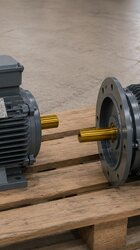
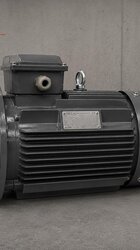
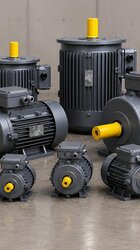
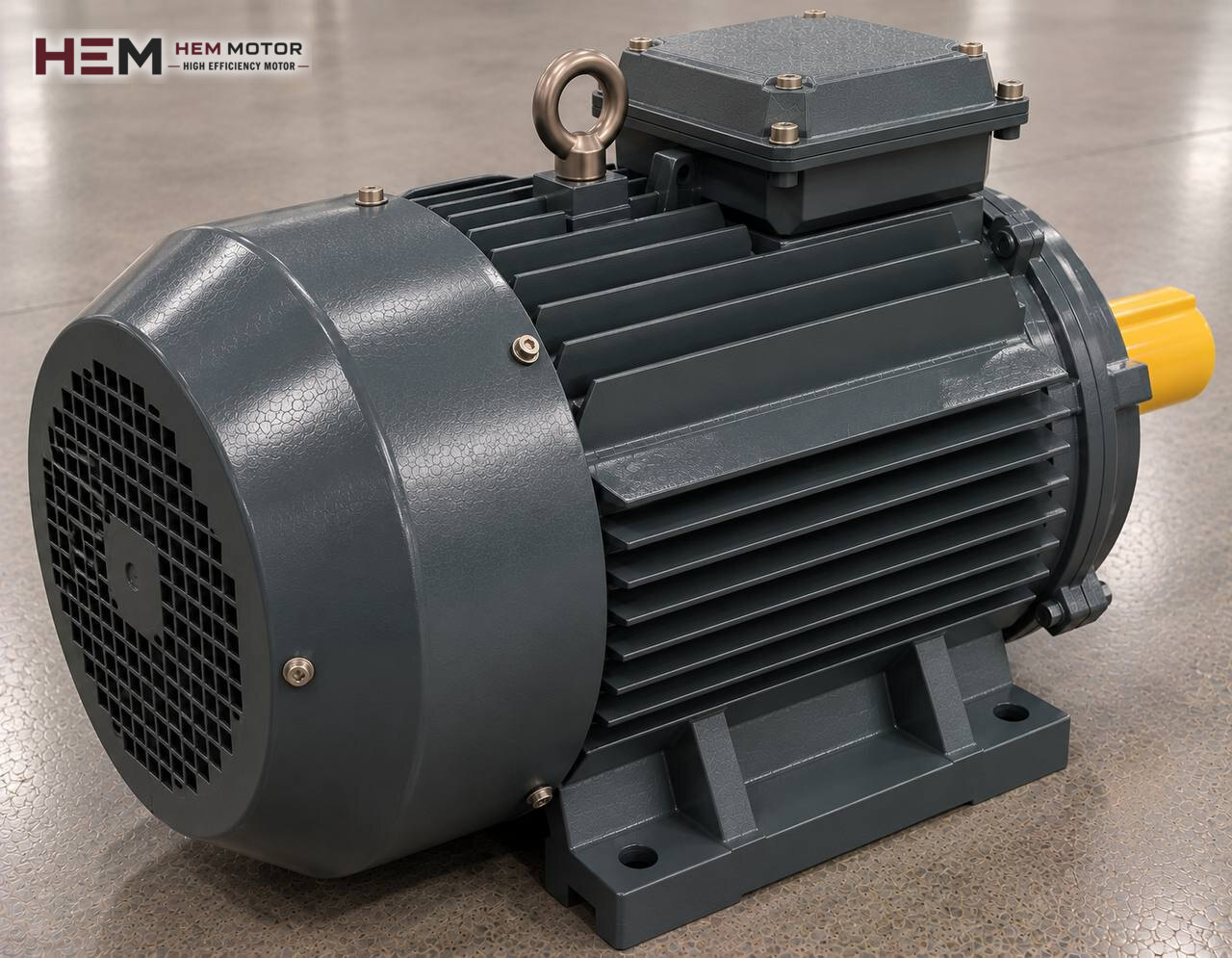
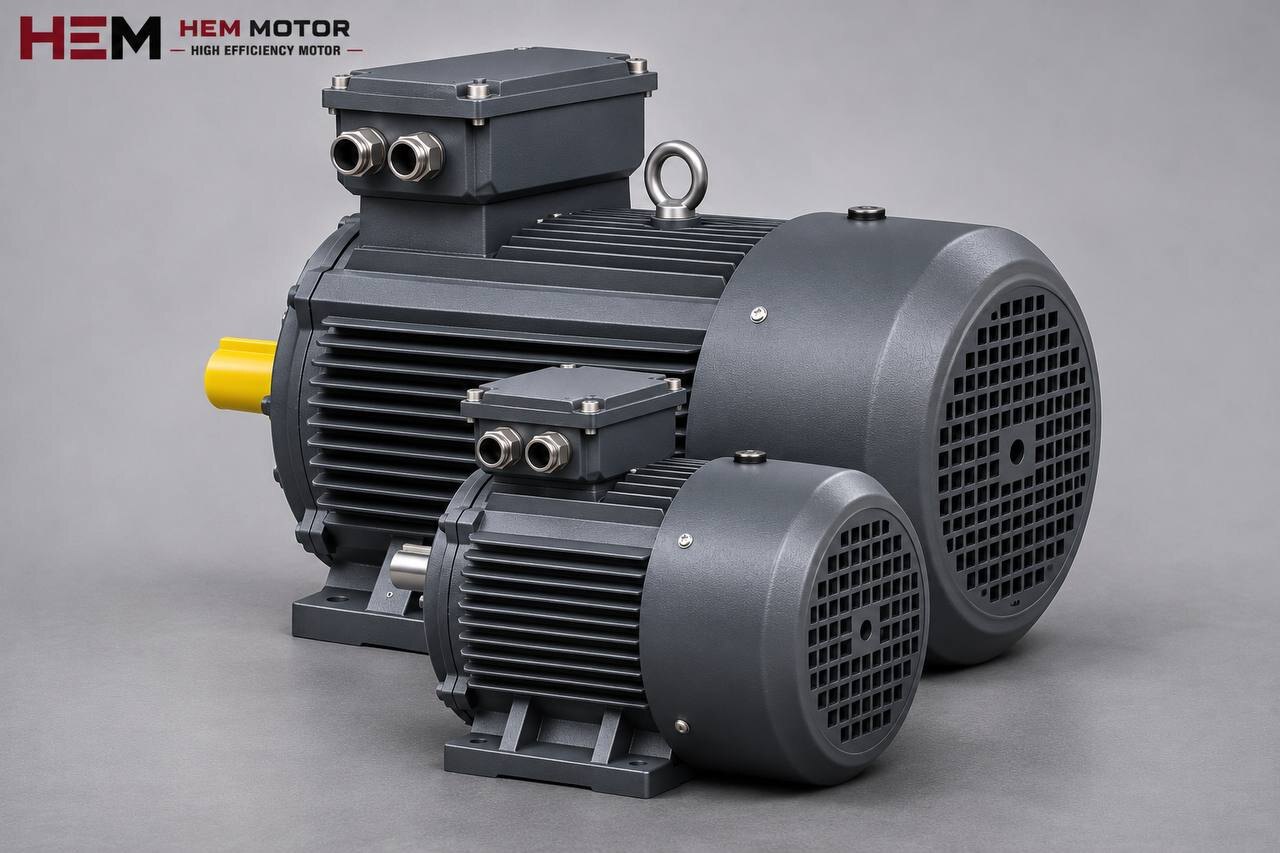
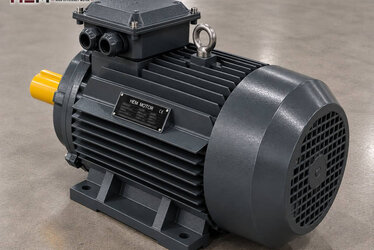
During phase loss cooling stays the same while winding and rotor temperature rise quickly (representative image).
Which protection cuts off phase loss in time?
The reliable solution for catching phase loss is a phase-failure-sensitive overload relay or motor protection circuit breaker, together with a separate phase monitoring relay. Fuses alone are not enough in this case.
Fuses protect against short circuits. When one phase breaks, current in the remaining two phases often does not rise enough to blow the fuse, especially if the motor is running at part load. Phase-failure-sensitive overload relays detect imbalance between the three poles and trip earlier than the normal overload curve. A phase monitoring relay watches the voltage side and drops the contactor on phase loss, wrong phase sequence or marked imbalance.
The order of settings is often mixed up on site. The overload relay is set to the rated current on the motor nameplate; raising the setting because "the motor trips too often" is the same as disabling protection against phase loss. Selecting and setting protective devices is the responsibility of the plant's electrical engineer; our article on overload relays, fuses and motor protection breakers explains in detail which information is needed. On larger motors a PTC sensor embedded in the winding adds safety; on HEM Motor models PTC/PT100 is an order option.
Check sequence: when a motor has burnt on one phase
Switch off and lock out the panel, then inspect the fuses and contactor poles visually.
Measure continuity of each line and the tightness of each lug from the contactor output to the motor terminals.
Measure insulation resistance on every core of the cable with a megger; a crushed core shows up here.
Before connecting the motor, energise and read the three line-to-line voltages at the contactor output.
After connecting the new motor, log the current of each of the three phases separately with a clamp meter during the first hour.
Which model can replace the burnt motor?
Once the cause of the phase loss is removed, the replacement motor is matched to the old one by power, speed, frame and mounting data. Examples from common 4-pole steps:
132S-4: aluminium frame, 5.5 kW, 1460 rpm, 400/690 V, 10.7 A at 400 V; for medium loads such as conveyors and fans.
132M-4: cast iron, 7.5 kW, 1460 rpm, 400/690 V, 14.3 A at 400 V; for dusty and vibrating environments.
160L-4: cast iron, 15 kW, 1465 rpm, 400/690 V, 27.3 A at 400 V; for pump and crusher drives with Y/Δ starting.
These models are IP55 protected, insulation class F and CE marked; the series is offered in IE3, IE4 and IE5 efficiency classes, and the class for each model is confirmed with the order. Frame and speed tables are collected on the asynchronous electric motors page.
Send the nameplate of the burnt motor and a photo of its terminal box through the equivalent-from-nameplate page; we will look at it together with the mark left by the phase loss and settle the right frame and connection. Other power steps are in the HEM Motor product list.
Frequently Asked Questions
How long does a motor survive phase loss?
It depends on the load level and the motor's thermal capacity; at full load it can be minutes, at light load longer. If a stopped motor is energised with a phase missing, the time is measured in seconds.
Why does the overload relay not always trip on phase loss?
If the motor is at part load, current in the remaining two phases can stay below the setting. A relay that is not phase-failure sensitive trips late in this case or not at all.
Is a motor driven by a frequency converter affected by phase loss?
If a phase drops at the converter input, the unit usually stops on its own protection. A broken line between converter and motor, however, creates phase loss on the motor side; most converters report it as an output phase loss fault, so check that the parameter is enabled.
Can a motor burnt by phase loss be used safely after rewinding?
It can if the winding is renewed with the correct data and the rotor is undamaged. The rewinder should check the rotor bars for cracks caused by overheating.
HEM Motor Models Related to This Article
The cards show example models related to the topic. A suitable motor is not chosen by power alone: compare speed, voltage, mounting, shaft and connection dimensions on the product page; if unsure, send a photo of the existing motor’s nameplate on WhatsApp.
Checking that electric motor pulleys lie in the same plane means seeing whether the side faces of both pulleys meet on one straight line. In practice a taut string, a steel straigh... More Details
If an electric motor's coupling element fails often, the first thing to investigate is shaft misalignment, followed by coupling selection, starting and shock loads, environmental e... More Details
The quickest way to tell foundation looseness from unbalance in electric motor vibration is to loosen the foot bolts one at a time while measuring and watch the change, and to comp... More Details
When building a sound enclosure around an electric motor, cooling is preserved by giving the enclosure a labyrinth or silenced inlet large enough for the air the motor fan draws, p... More Details
In an electric motor running in a hot environment, winding and bearing temperatures are monitored separately because they heat up from different sources, have different limits and ... More Details
When an electric motor is started for the first time at sub-zero temperatures, three things need checking: winding insulation resistance and any moisture or ice inside, bearing gre... More Details
We use necessary and optional cookies to improve your experience, enhance content and analyse traffic. Under the GDPR, optional (analytics/marketing) cookies are only used with your explicit consent. Please choose your preference below.
Cookie Policy
 English
 Français
 Türkçe
 Español
 Русский
 العربية
 Deutsch
 Italiano