How Are Winding and Bearing Temperatures Monitored Separately When an Electric Motor Runs in a Hot Environment?

How Are Winding and Bearing Temperatures Monitored Separately When an Electric Motor Runs in a Hot Environment?

In an electric motor running in a hot environment, winding and bearing temperatures are monitored separately because they heat up from different sources, have different limits and warn of different faults: winding temperature shows load and insulation ageing, while bearing temperature shows lubrication and mechanical load. An embedded sensor is used for the winding, and a measurement on the cover or a separate bearing sensor for the bearing.

Why do winding and bearing heat up differently?

The winding heats up from copper losses proportional to the square of the current through it. When load rises, voltage drops or there is phase imbalance, winding temperature climbs quickly. Heat passes from the winding to the lamination stack, then to the frame fins and the air blown by the fan.

The bearing heats up from its own friction and from heat coming along the shaft. When grease runs low, the wrong grease is used or belt tension increases, bearing temperature rises. This rise can be independent of winding temperature.

In a hot environment the common enemy of both is cooling air. Once the hall passes 40 degrees, the air blown by the fan is hot too; winding and bearing both start from a higher base temperature.

But the causes are separate.

Against which limits is winding temperature assessed?

The insulation class sets the temperature the winding can withstand. In the IEC 60085 table the letter F corresponds to 155 °C and B to 130 °C; these are upper values for the hottest point of the winding. The power on the plate, under IEC 60034-1, is valid at no more than a thousand metres above sea level in 40 °C air (general information; confirm with the machine manufacturer).

If the air is hotter there are two ways: load the motor below its plate rating or move to a frame one size larger. The derating factor is taken from the manufacturer's table; it is not guessed. Current and torque values of the next step can be seen on the electric motor sales page.

Reading winding temperature from the frame is misleading. The frame surface can be tens of degrees cooler than the winding's hot spot. The winding may be near its limit while the frame shows 80 °C.

That is why an embedded winding sensor is preferred in hot environments.

Which sensor is used in the winding?

There are two common types. A PTC thermistor's resistance jumps sharply when it reaches its threshold temperature; it is connected to a separate relay and stops the motor or raises an alarm when the limit is exceeded. It does not read a continuous value, only “below / above the limit”.

A PT100 is a resistance that changes linearly with temperature. Through a transducer or a PLC input, winding temperature is read and recorded continuously. It gives more information to plants that want to follow trends.

Both are order options on HEM Motor series. Adding them later requires opening the winding, so if the hot environment is known from the start, state it with the order.

Measuring pointMethodWhat it shows
Winding hot spotEmbedded PTC (protection) or PT100 (continuous reading)Load, voltage and adequacy of cooling
Front bearing coverInfrared reading or a sensor fitted to the coverBelt/coupling load and lubrication
Rear bearing coverSame method, same marked pointLubrication and fan-side cooling
Middle of the frameInfrared readingGeneral trend, fin contamination
Ambient airThermometer within 1 m of the motorComparison baseline

How is bearing temperature measured and interpreted?

Bearing temperature is read at a point on the cover in line with the bearing. Mark the point with paint and measure from the same place every time. With an infrared thermometer the surface's reflectivity affects the reading; a painted surface is chosen rather than bright metal.

If continuous monitoring is wanted, a temperature sensor screwed or bonded to the cover can be used. Because this needs a suitable hole or surface on the motor, the mounting is discussed with the order.

In interpretation the difference matters more than the absolute value. The difference between front and rear covers and the rise found by subtracting ambient temperature from cover temperature are monitored. A cover at 75 °C on a summer day with 50 °C ambient is very different from 75 °C with 20 °C ambient.

If the front cover heats up on its own, first look at belt tension and coupling alignment. If both covers heat up together, lubrication and ambient temperature come to the fore.

Prices and technical data are on the product pages; choose a model and order online.

Why do grease and relubrication interval change in a hot environment?

The base oil of grease thins and oxidises at high temperature. The relubrication interval shortens as bearing temperature rises above a certain value. Grease manufacturers give this relationship as a table or curve (general information; confirm with the machine manufacturer).

A grease suited to high temperatures may be needed for a hot environment. However, greases with different soaps can lose consistency when mixed; if the grease is changed, the old grease is cleaned out. Which grease is used and the bearing type are confirmed with the order for HEM Motor models.

Too much grease also heats. If the bearing housing is filled completely, the grease churns and temperature rises. On motors with grease nipples, the quantity given by the manufacturer is not exceeded.

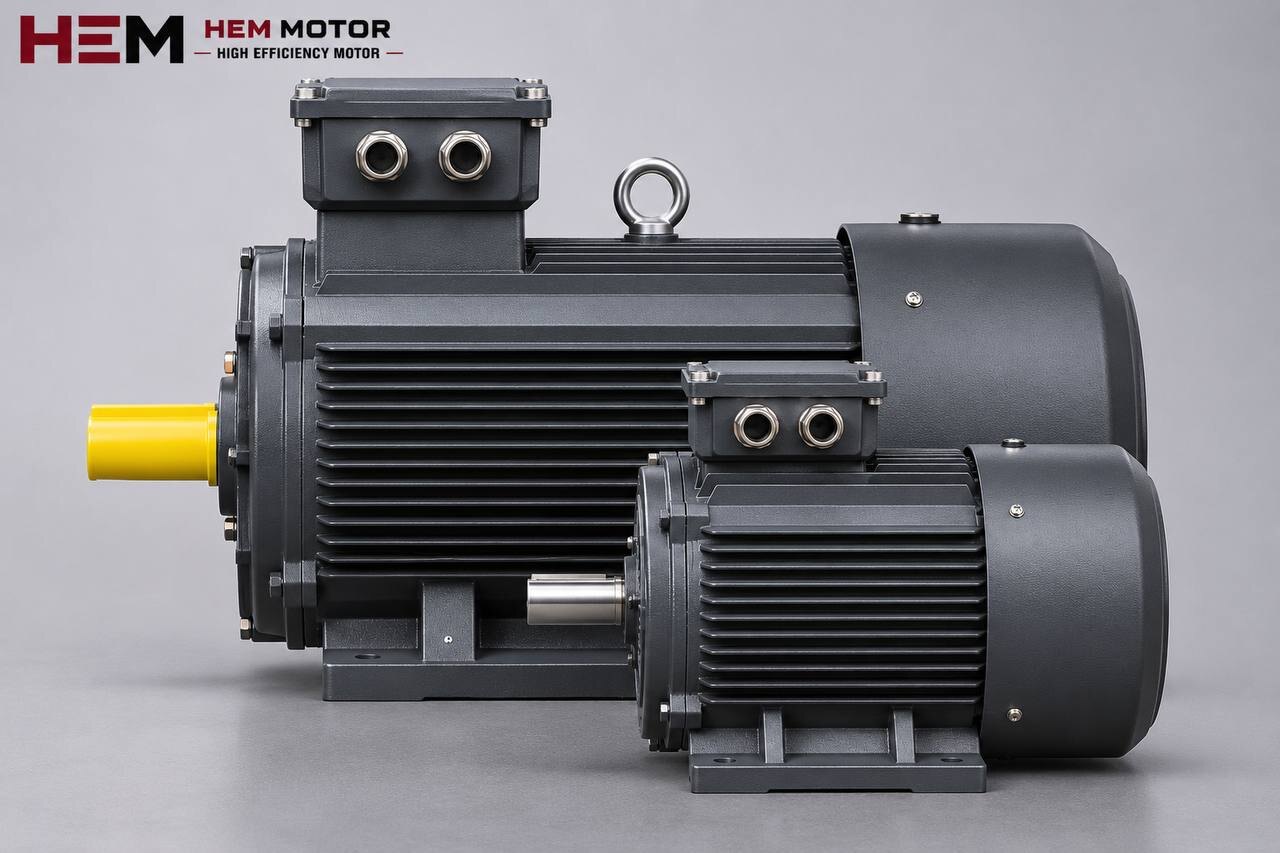
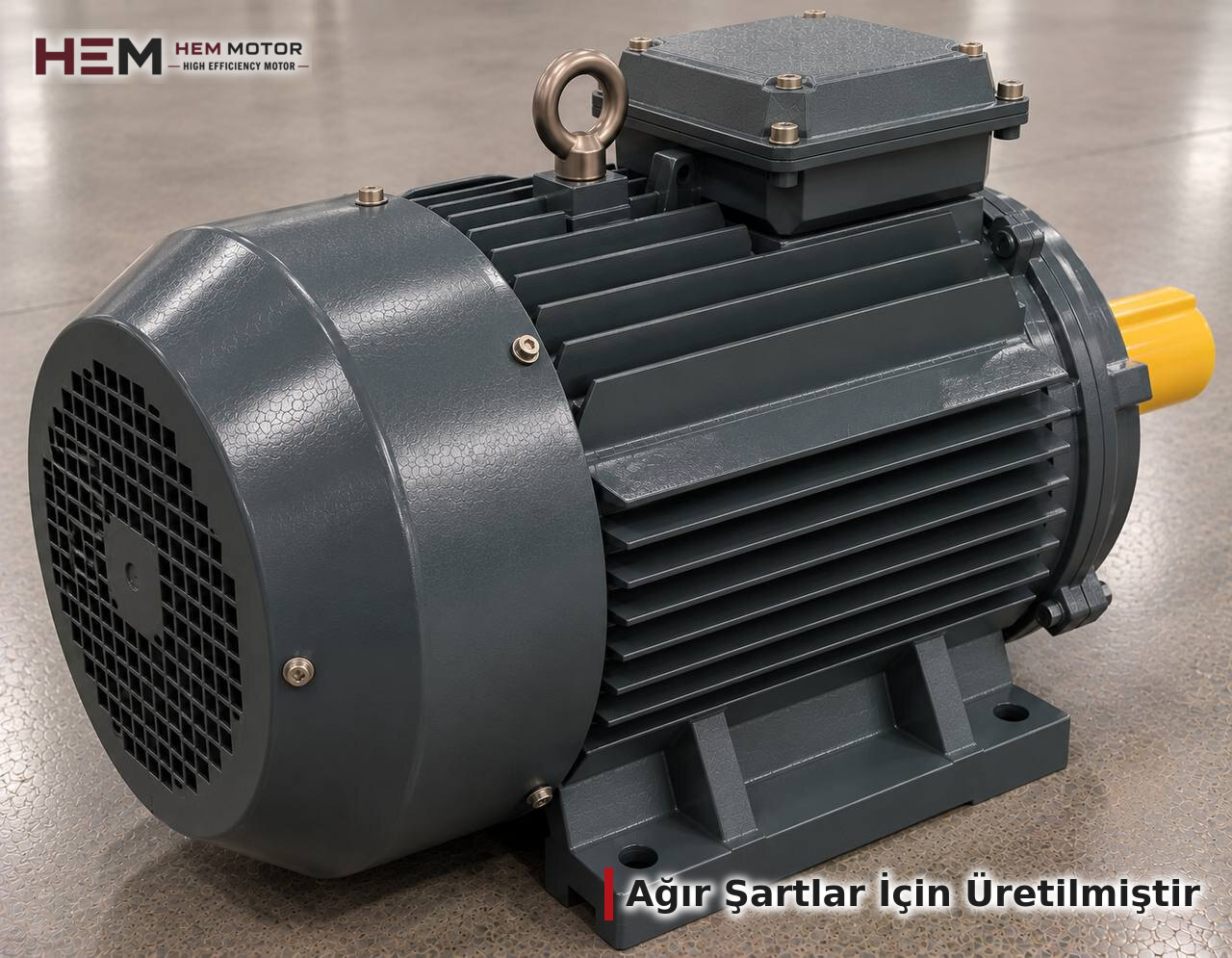
Cast iron frame electric motor for heavy duty
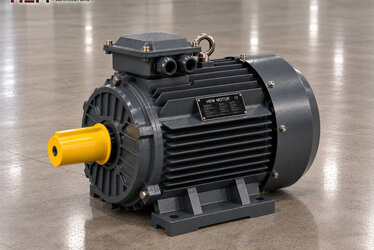
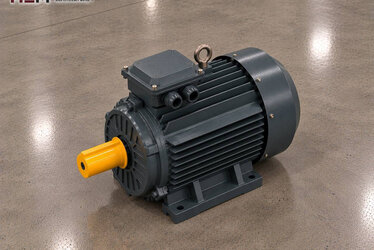
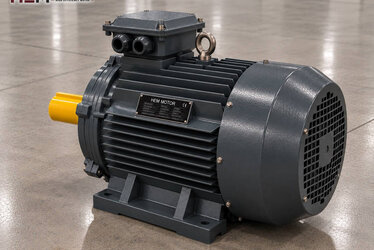
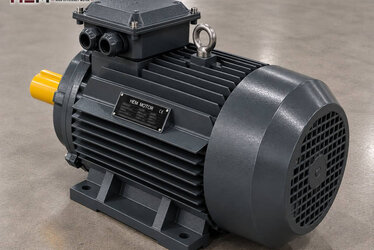
In a hot environment, using a winding sensor together with bearing cover measurement separates the source of a fault earlier (representative image).

How are the readings interpreted together?

The measurements make sense together, not one by one. Four common situations:

  1. Winding hot, bearings normal: load too high, voltage low or cooling air insufficient. Current and voltage are measured and the fan cover checked.
  2. Winding normal, front bearing hot: mechanical load from belt or coupling. Tension and alignment are checked.
  3. Winding normal, both bearings hot: lubrication problem or ambient heat. Grease condition and the ambient reading are compared.
  4. Everything risen together: ambient temperature may have exceeded the design value. Ventilation or frame selection is reviewed.

The list points the way; it does not pass judgement. Do not decide by guesswork; changing a bearing without a measurement record moves the problem to the next bearing.

Which models and options are considered for a hot environment?

On furnace, drying and foundry lines the motor is often large-framed and low-speed. When derating is needed, moving up one frame increases thermal margin. 6-pole steps from our cast iron frame series often considered on hot lines:

  • 160M-6: 7.5 kW, 970 rpm, 400/690 V (Δ/Y), 15.4 A at 400 V, 73.8 Nm.
  • 160L-6: 11 kW, 970 rpm, 22.0 A at 400 V, 108.3 Nm.
  • 180L-6: 15 kW, 978 rpm, 29.3 A at 400 V, 146.5 Nm.

Standard insulation is class F; anything above that is a special order matter. An embedded winding temperature element (PTC or PT100) and a heater that prevents moisture at standstill are selected on the order form. If line air exceeds 40 degrees, write it in the order note; derating and frame selection are made accordingly. All power steps can be seen in the electric motor store.

Send the ambient temperature, the motor's current winding and cover readings, the load type and the plate photo through the find an equivalent from the nameplate page; we will assess the sensor option and the frame together. Prices can be seen in the HEM Motor sales list.

Frequently Asked Questions

If the frame is too hot to touch, is the motor faulty?

Not always. The outer shell of a machine with class F insulation can get too hot to touch at full load; the decision is made with the winding sensor and a current measurement.

Should PTC or PT100 be chosen?

If only protection is wanted, PTC is enough. If temperature is to be recorded continuously and trends followed, PT100 gives more information.

Should grease be pumped in as soon as bearing temperature rises?

Separate the cause first. Too much grease also raises temperature; pumping grease without checking belt tension and alignment can make the problem worse.

If ambient temperature is high, is upsizing the motor enough?

It increases thermal margin, but the cooling air path must also be open. An arrangement that stops the motor from drawing in its own hot air again is as effective as upsizing the frame.

HEM Motor Models Related to This Article

The cards show example models related to the topic. A suitable motor is not chosen by power alone: compare speed, voltage, mounting, shaft and connection dimensions on the product page; if unsure, send a photo of the existing motor’s nameplate on WhatsApp.

7.5 kW 1000 rpm Cast Iron Frame Electric Motor 160M-6

160M-6

7.5 kW · 1000 rpm

  • Cast iron frame · IEC 160M
  • 970 rpm · IP55
  • Mounting: B3 foot; flange (B5/B14/B35) depending on frame, confirmed with the order

US$568.33 (€520.15)

View product
11 kW 1000 rpm Cast Iron Frame Electric Motor 160L-6

160L-6

11 kW · 1000 rpm

  • Cast iron frame · IEC 160L
  • 970 rpm · IP55
  • Mounting: B3 foot; flange (B5/B14/B35) depending on frame, confirmed with the order

US$656.04 (€600.42)

View product
15 kW 1000 rpm Cast Iron Frame Electric Motor 180L-6

180L-6

15 kW · 1000 rpm

  • Cast iron frame · IEC 180L
  • 978 rpm · IP55
  • Mounting: B3 foot; flange (B5/B14/B35) depending on frame, confirmed with the order

US$818.68 (€749.27)

View product

Similar Articles