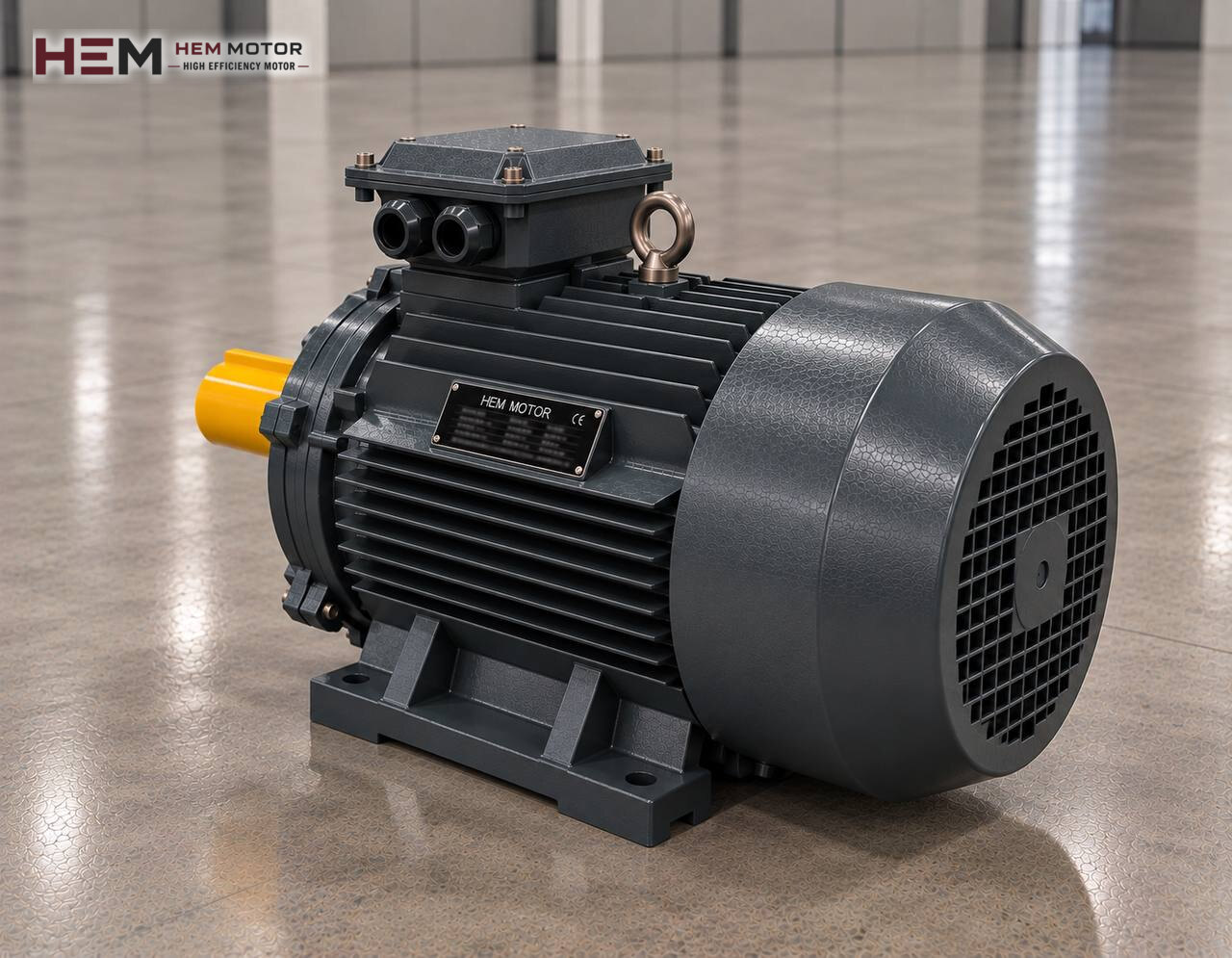
In areas cleaned with water jets, what damages an electric motor is usually not the washing water itself but where and how the water strikes, the thermal shock of cold water on a hot housing, and the moisture left inside after washing. A standard IP55 housing is designed to withstand a light water stream sprayed under test conditions; IP56 can be requested as a special order for powerful jets, but cleaning with high-pressure, hot water held a few centimetres away goes beyond the test conditions of both classes. That is why the washing method, mounting orientation, drain holes and cable entry need to be arranged just as carefully as the protection class is chosen.
Where does the IP rating fall short under pressure washing?
The second digit of the IP code describes the housing's resistance to water sprayed in a specific test set-up. For IP55 this test is a light stream applied all around, for IP56 a stronger stream; in both, nozzle diameter, flow rate, distance and duration are defined. A pressure washer on site, by contrast, delivers water in a narrow jet, from a few centimetres away and often hot.
A housing that passes the test will not necessarily stay tight against spraying outside the test conditions. The test and the site are not the same. A lance held perpendicular to a seal lip can shift the seal; a jet aimed at the edge of the terminal box cover finds its way in through a small paint blister on the clamping face. In food and beverage plants where hygiene washing with foaming detergent and high pressure is required at the end of every shift, this duty needs a special motor; it may fall outside the scope of the standard series in HEM Motor's 2026 catalogue, so ask us with the nameplate and application details.
Why does washing a hot motor with cold water draw moisture inside?
Cold water shrinks the internal air and the housing draws in moist air from outside. This is called the breathing effect. The internal air of a running motor heats up and expands. When the motor is stopped and cold water is sprayed on it, the internal air cools quickly, its pressure drops and the housing draws in air from outside. This air enters through the weakest point of the seal lip, terminal box gasket or cable gland, together with the water film on it.
The amount of air drawn in can be roughly estimated with the ideal gas approximation (general information; confirm with the machine manufacturer):
ΔV / V ≈ 1 − (Tcold / Thot) (temperatures in kelvin).
Hypothetical example: if the internal air is at 70 °C (343 K) and the housing is cooled with water at 20 °C (293 K), 1 − 293/343 ≈ 0.15. In other words, outside air amounting to about fifteen per cent of the housing's internal air volume tries to get in. When this cycle repeats at every wash, even small amounts accumulate and condense on the winding overhangs and in the bearing housing.
The practical conclusion is clear: if possible, stop the motor and let it cool for a while before washing, or wash while the motor is still running and warm, without aiming the jet directly at the housing. The worst scenario is stopping a hot motor and immediately washing it with cold water.
How should the motor, drainage and cable entry be arranged on a wash line?
The drain hole should be at the bottom, the gland mouth facing the floor and the terminal box turned away from the washing direction. In a washed area, the position of the motor is as decisive as its protection class. The following arrangements often reduce problems considerably at no extra cost:
Check that the drain holes really are at the lowest point in the position in which the motor is mounted. If the motor is mounted on its side or vertically, the hole position should be stated in the order.
Turn the mouth of the gland towards the floor and give the cable a drip loop before the gland, so that water running along the cable drops off at the bottom of the loop instead of reaching the gland.
Turn the box away from the washing direction; check the cover gasket every time it is opened and replace a crushed or hardened gasket.
The seal or V-ring on the drive end should not be the target of the jet; in a vertical mounting with the shaft end facing down, water runs along the shaft into the seal, and an extra splash guard helps here.
A sloping guard above the motor cuts off the direct jet, but it must not block the air intake of the fan cover, otherwise the motor overheats.
A guard that throttles the air or a grille clogged with dirt directly affects cooling; how air circulates on surface-cooled motors is explained in the article on IC411 and IC416 cooling methods.
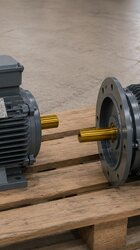
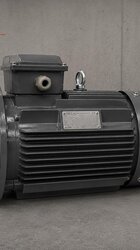
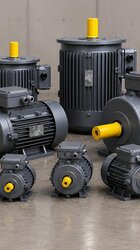
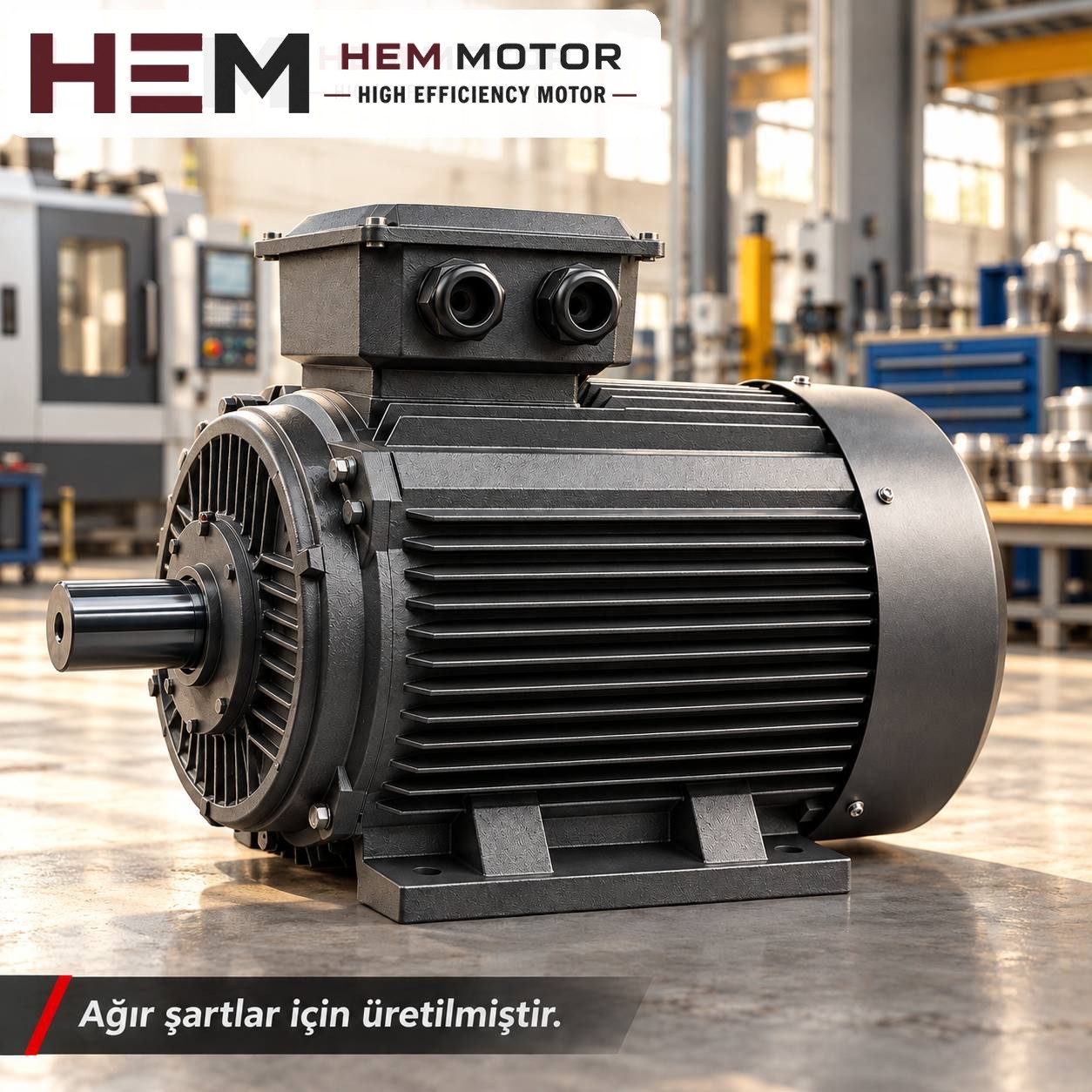
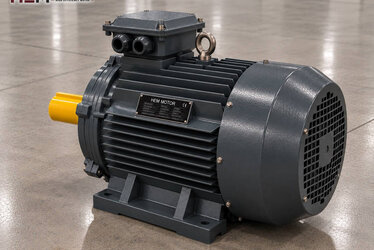
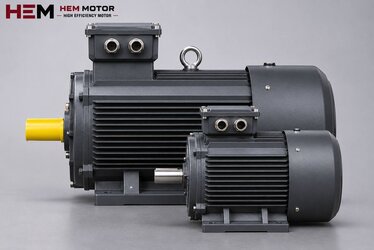
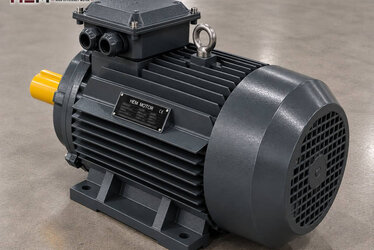
On crate and pallet washers the motor is exposed both to wash spray and to steam and hot water (representative image).
Prices and technical data are on the product pages; choose a model and order online.
Which motor items should be added to the washing instruction?
The lance distance, the jet direction and the top-down washing rule should be written down. A written instruction for the cleaning team reduces motor failures at almost no cost. It should state clearly the minimum distance at which the lance is held from the motor housing, that the jet is not aimed directly at the seal, terminal box or fan cover, and that the motor is washed from the top downwards rather than horizontally or from below. The distance and pressure values are set according to the data of the washer and the plant's hygiene plan.
The compatibility of the detergent and disinfectant with the motor paint, gaskets and aluminium housing should also be checked. Some alkaline foams and chlorinated products wear the aluminium surface and gasket material over time; the chemical manufacturer's compatibility table is decisive here.
You can see which frames and power ratings are available in our electric motor shop.
Washing condition
Risk
Recommended approach
Low-pressure rinsing with a hose
Low
Standard IP55, check drainage and gland orientation
Regular washing with a powerful jet
Medium
IP56 special order, guard, terminal box orientation
Cold water on a hot motor
Medium-high
Washing timing, anti-condensation heater option
Close-range high-pressure, hot and chemical hygiene washing
High
Special motor for this duty; ask with application details
When can a motor be energised again after washing?
A motor suspected of water ingress, or one that is to be restarted after a long standstill, should not be energised before its insulation resistance is measured. The measurement is made between winding and frame with an insulation tester of suitable voltage, and the result is recorded together with the winding temperature. Insulation resistance falls as temperature rises; according to a rough field rule, the value roughly halves for every 10 °C increase (general information; confirm with the measuring instrument manufacturer's instructions). Values taken on different days should therefore be corrected to the same temperature before comparison.
If the value has dropped markedly compared with earlier records, the motor is dried. The terminal box is opened and checked, drain holes are opened, the motor is dried with warm air or by controlled heating in the workshop, and the measurement is repeated. For motors that are washed often and stand idle for long periods, an anti-condensation heater and a PTC fitted in the winding are options that can be requested in the order.
How is the motor housing chosen for wet and washed areas?
For conveyor, mixer and pump drives used in washed areas, the choice of housing type is made according to the environment and the chemicals. General-purpose series and housing options are summarised on the general-purpose industrial electric motors page. The pairings below are hypothetical:
For a light belt conveyor on a wash line, the 0.75 kW, 4-pole aluminium frame 80M2-4: 1420 rpm, 230/400 V.
For the circulation pump of a crate washer, the 2.2 kW 100L1-4: 1450 rpm, 14.5 Nm.
For a mixer with heavy detergent and chemical contact, the 3 kW cast iron 100L2-4: 1450 rpm, 19.8 Nm.
If you share the washing method, the chemical used and the motor's mounting position with a photo through our contact page, we will assess together whether the standard series, the IP56 option or a special motor suits this washing regime. The full list of power and speed steps is on the HEM Motor product catalogue page.
Frequently Asked Questions
Can an IP55 motor be cleaned with a pressure washer?
The IP55 test uses a light, dispersed stream; a high-pressure lance held a few centimetres away goes far beyond that condition. Keep the lance at a distance and do not aim it at the seal or terminal box.
Should the motor's drain hole stay open in a washed area?
Yes, so that condensed water can escape, the drain hole must be at the lowest point in the mounted position and open. A closed hole allows accumulated water to reach the winding.
Why does the motor trip or the residual current device operate after washing?
Moisture that has entered weakens the insulation of the winding against the earthed housing. The motor should not be energised again until it has been dried and its insulation resistance measured.
Does wrapping the motor in plastic sheet help?
A tightly wrapped cover cuts off the fan air and increases condensation inside. A sloping guard that does not block the airflow is a safer choice.
HEM Motor Models Related to This Article
The cards show example models related to the topic. A suitable motor is not chosen by power alone: compare speed, voltage, mounting, shaft and connection dimensions on the product page; if unsure, send a photo of the existing motor’s nameplate on WhatsApp.
Checking that electric motor pulleys lie in the same plane means seeing whether the side faces of both pulleys meet on one straight line. In practice a taut string, a steel straigh... More Details
If an electric motor's coupling element fails often, the first thing to investigate is shaft misalignment, followed by coupling selection, starting and shock loads, environmental e... More Details
The quickest way to tell foundation looseness from unbalance in electric motor vibration is to loosen the foot bolts one at a time while measuring and watch the change, and to comp... More Details
When building a sound enclosure around an electric motor, cooling is preserved by giving the enclosure a labyrinth or silenced inlet large enough for the air the motor fan draws, p... More Details
In an electric motor running in a hot environment, winding and bearing temperatures are monitored separately because they heat up from different sources, have different limits and ... More Details
When an electric motor is started for the first time at sub-zero temperatures, three things need checking: winding insulation resistance and any moisture or ice inside, bearing gre... More Details
We use necessary and optional cookies to improve your experience, enhance content and analyse traffic. Under the GDPR, optional (analytics/marketing) cookies are only used with your explicit consent. Please choose your preference below.
Cookie Policy
 English
 Français
 Türkçe
 Español
 Русский
 العربية
 Deutsch
 Italiano